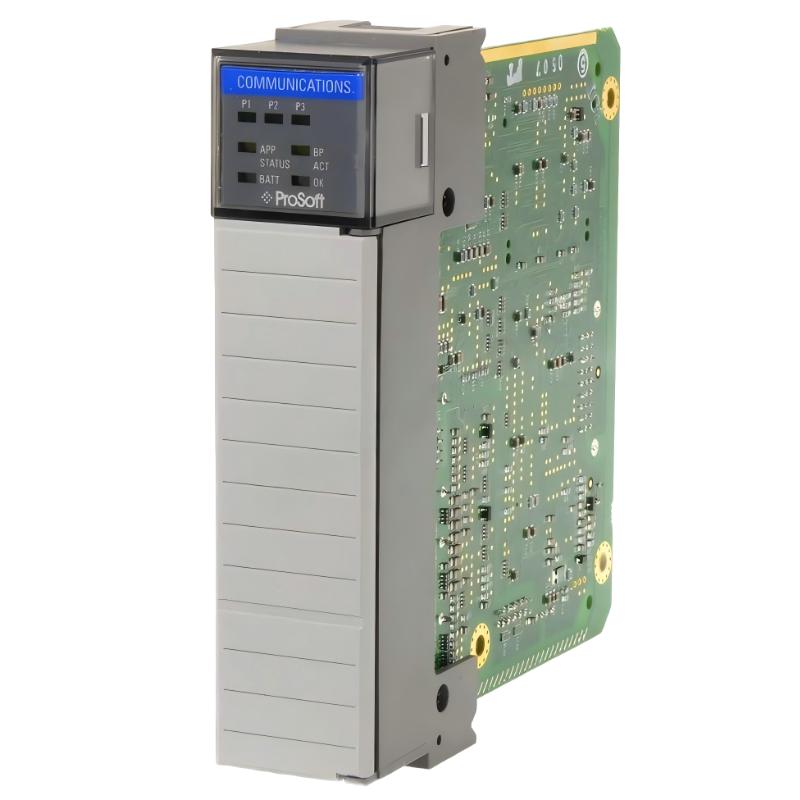
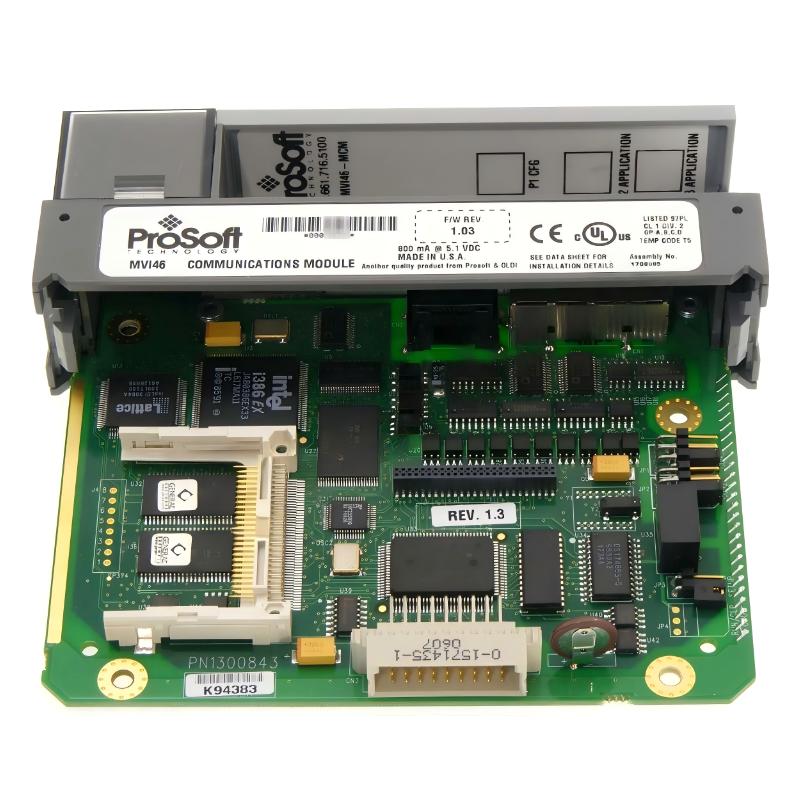
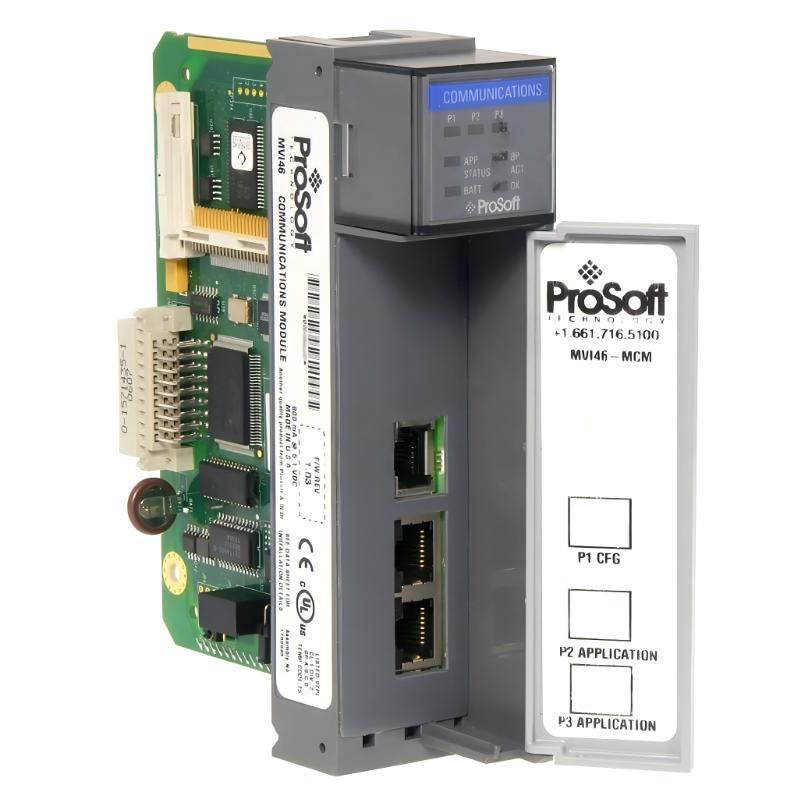
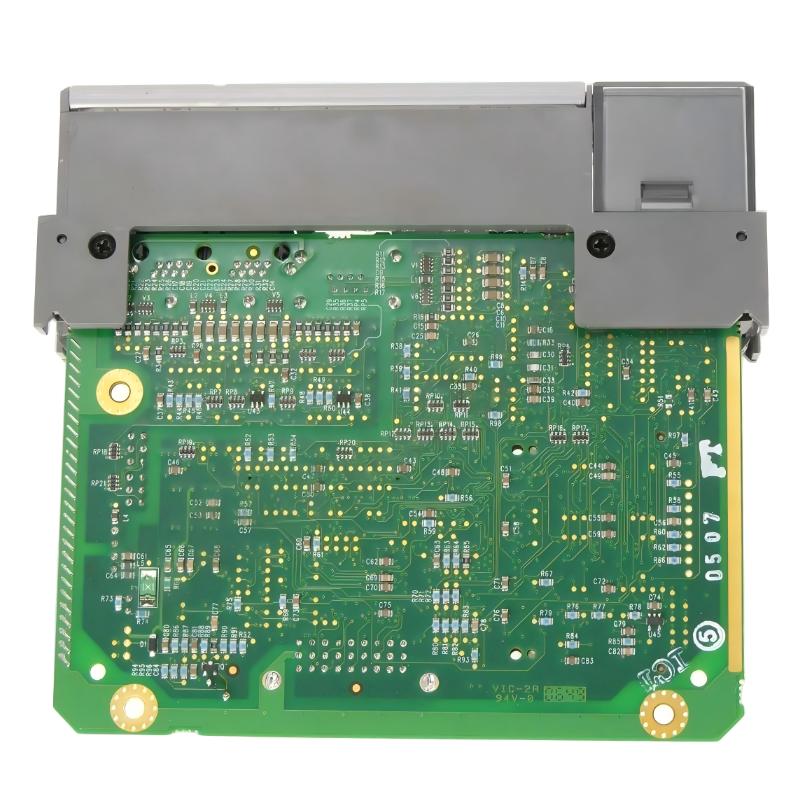
ProSoft MVI46-MCM Modbus Master/Slave Communication Module
ProSoft MVI46-MCM Modbus Master/Slave Communication Module
0.0
Points
Brand:Allen Bradley PLC Item No.:MVI46-MCM Product Origin:USA Product Dimensions:144.5 × 34.6 × 130.18 mm Product Weight:0.16 kg Payment:T/T, Western Union, Credit Card Goods_stock:15 Shipping Port:Xiamen, China Lead Time:1-3 Days Condition:Brand New And Original Warranty:1 Year Certificate:COO
The ProSoft MVI46-MCM is a Modbus Master/Slave communication module designed for Rockwell Automation SLC 500 platforms. It enables seamless data exchange between PLC systems and Modbus-compatible devices, making it an effective solution for industrial communication integration, system expansion, and legacy system modernization.
Technical Specifications
Parameter
Specification
Model
MVI46-MCM
Manufacturer
ProSoft
Type
Modbus Communication Module
Function
Modbus Master/Slave gateway
Protocol
Modbus RTU
PLC Platform
SLC 500 (1746 backplane)
Mounting
Single-slot chassis module
Dimensions
144.5 × 34.6 × 130.18 mm
Weight
0.16 kg
Application
Industrial communication integration
Recommended Related Models
Model
Product Name
MVI56E-MCM
ProSoft Enhanced Modbus Master/Slave Module
MVI69-MNET
ProSoft Modbus TCP/IP Communication Module
MVI46-MNET
ProSoft Modbus TCP Ethernet Module
5201-MNET-DFCM
ProSoft Modbus TCP to DF1 Gateway Module
Popular Related Models
Model
Product Name
BMENOC0301C
Schneider Modicon Ethernet Communication Module
1756-EN2T
Allen-Bradley ControlLogix Ethernet Module
1769-SM2
Allen-Bradley CompactLogix Communication Module
1785-KE
Allen-Bradley Data Highway Plus Interface Module
Applications
• In industrial automation systems, the module is used to enable Rockwell Automation SLC 500 processors to communicate with Modbus RTU or Modbus TCP-compatible devices such as PLCs, drives, and field instruments.
• It is deployed in process industries where centralized PLC control is required to integrate heterogeneous equipment from different vendors through a unified Modbus communication network.
• In SCADA systems, the module is used to collect and exchange real-time process data between SLC controllers and distributed Modbus field devices for monitoring and supervisory control.
• It is applied in retrofit and upgrade projects where legacy SLC-based control systems need to interface with modern Modbus-enabled automation equipment without replacing existing PLC infrastructure.
• It is suitable for manufacturing plants and utilities where reliable multi-device communication is required for sequencing, data acquisition, and system coordination tasks.
Key Advantages
• It supports both Modbus Master and Slave modes, allowing flexible integration with a wide range of industrial devices and network topologies.
• It provides high-capacity data handling, enabling efficient exchange of process information between PLC memory and Modbus registers.
• It integrates directly into the SLC 500 backplane architecture, ensuring seamless communication without major hardware modifications.
• It simplifies multi-vendor system integration, reducing engineering complexity in mixed automation environments.
• It is designed for industrial reliability, ensuring stable communication performance in continuous-duty control applications.
Technical FAQs
1. What is the main function of this module?
It enables communication between SLC 500 PLC systems and Modbus devices.
2. Does it support both master and slave modes?
Yes, it can operate as both Modbus Master and Modbus Slave.
3. Which PLC platform is it designed for?
It is designed for the Rockwell Automation SLC 500 platform.
4. What protocols does it support?
It supports Modbus RTU communication.
5. Where is it commonly used?
It is used in manufacturing, process automation, and SCADA systems.
6. Can it be used for system upgrades?
Yes, it is commonly used in retrofit and modernization projects.
7. Does it require replacing the PLC system?
No, it works with existing SLC 500 systems.
8. Is it suitable for multi-device networks?
Yes, it supports communication with multiple Modbus devices.
9. What is its main industrial benefit?
It allows integration of different vendors’ equipment into one control system.
10. Is it suitable for continuous operation?
Yes, it is designed for long-term industrial use.