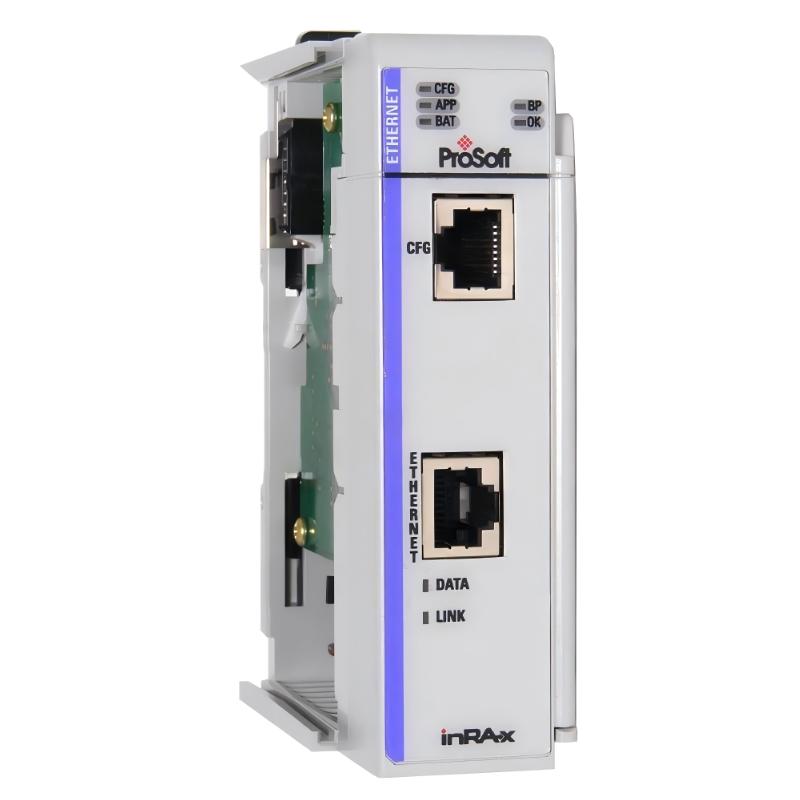
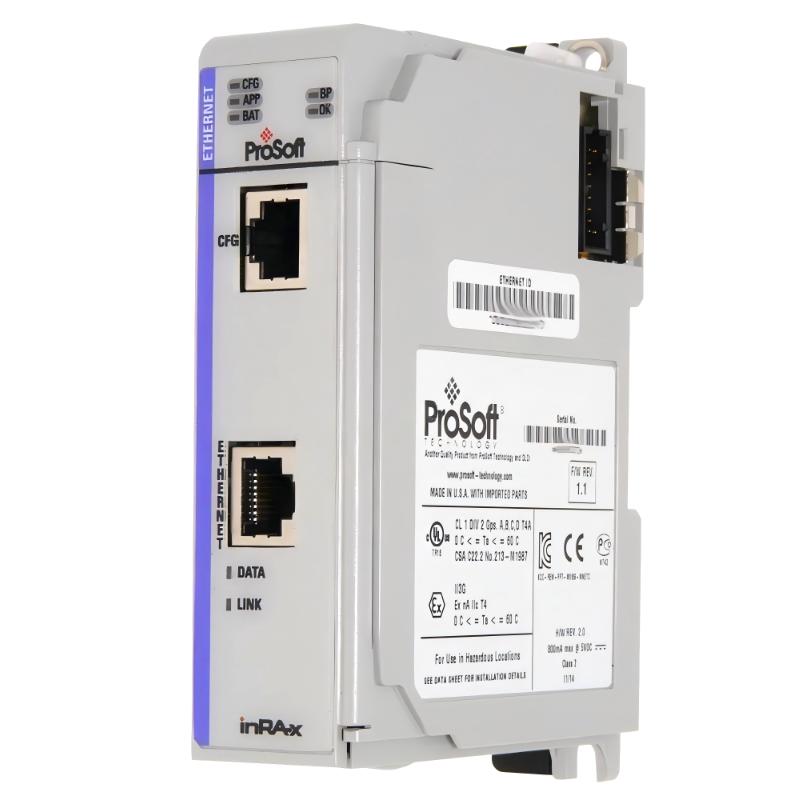
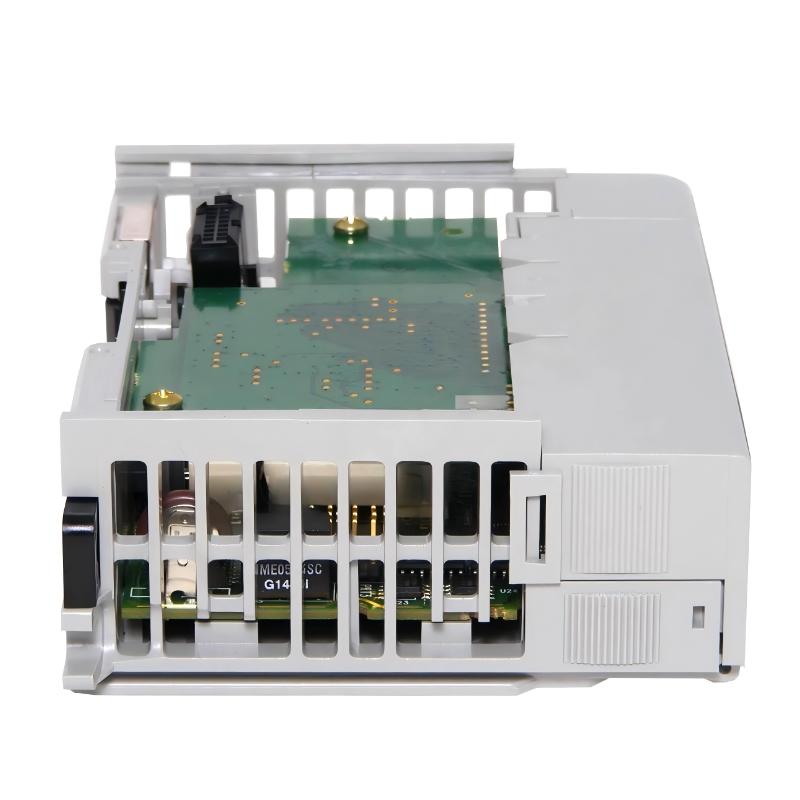
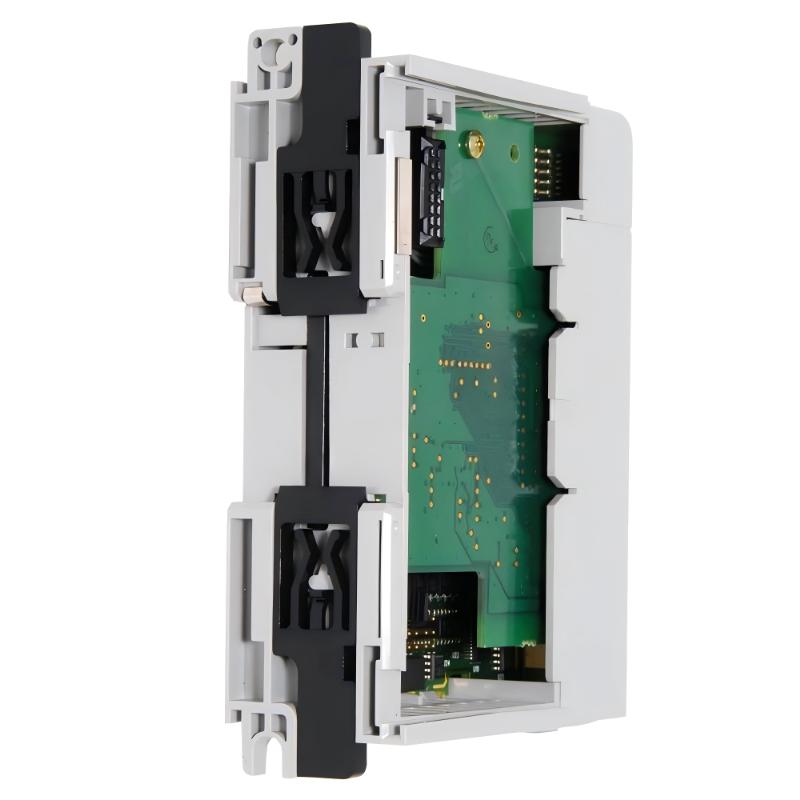
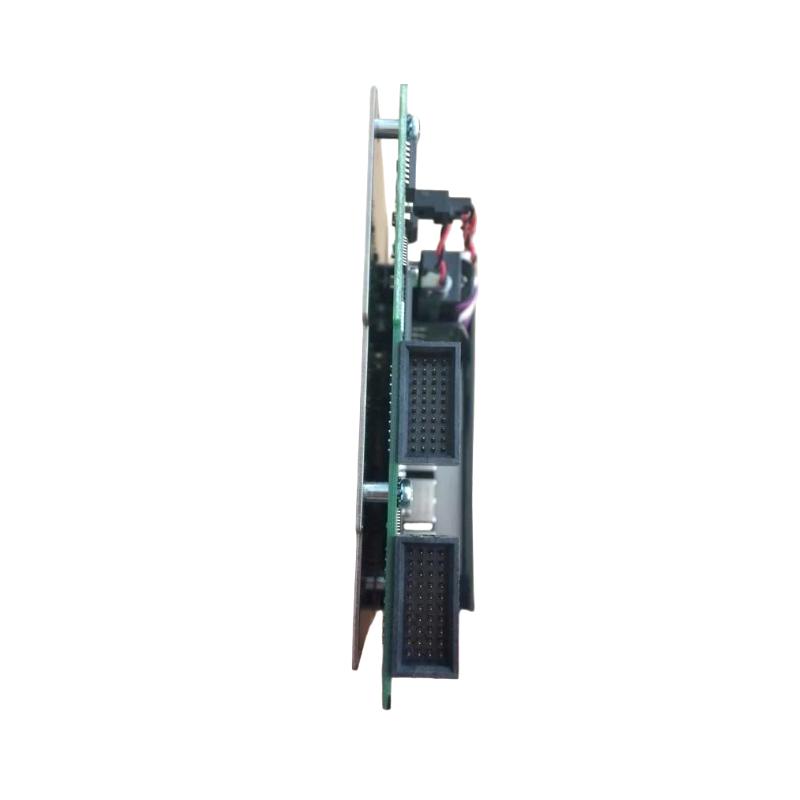
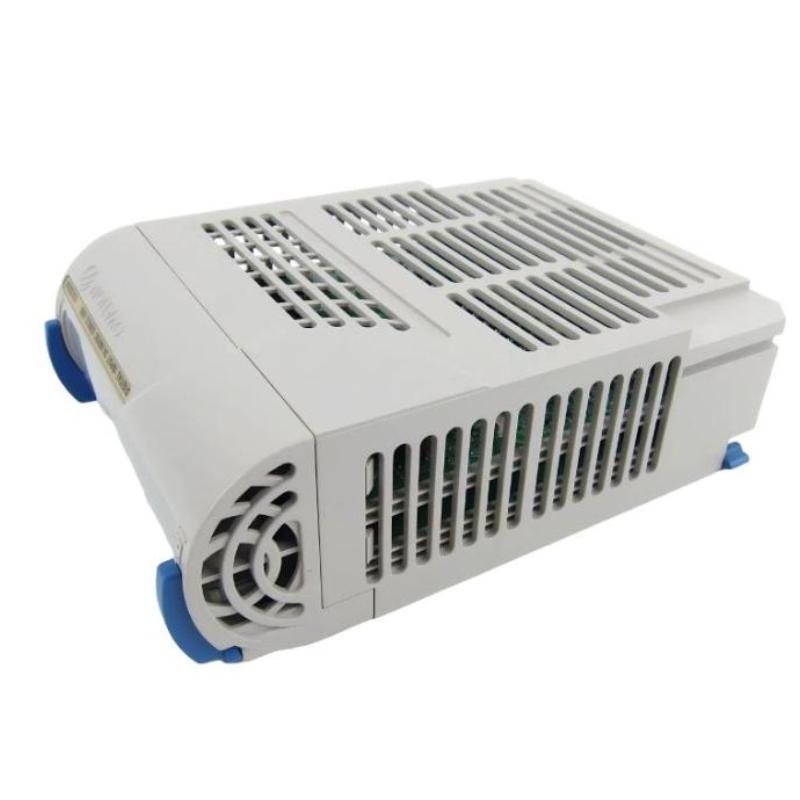
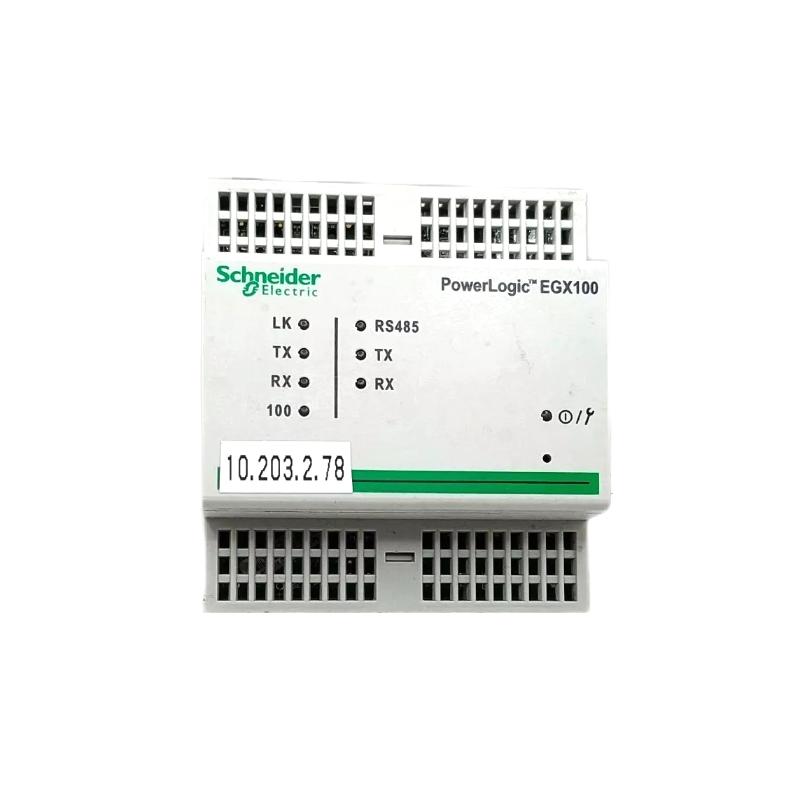
Brand:Allen Bradley PLC Item No.:MVI69-FLN Product Origin:USA Product Dimensions:118 x 35 x 87 mm Product Weight:0.28 kg Payment:T/T, Western Union, Credit Card Goods_stock:15 Shipping Port:Xiamen, China Lead Time:1-3 Days Condition:Brand New And Original Warranty:1 Year Certificate:COO
The ProSoft MVI69-FLN is a FL-net network interface module designed for CompactLogix and MicroLogix 1769 platforms. It enables seamless integration between Rockwell Automation PLC systems and FL-net compatible industrial devices, supporting peer-to-peer communication in advanced factory automation networks.
Technical Specifications
Parameter
Specification
Model
MVI69-FLN
Manufacturer
ProSoft
Type
FL-net Network Interface Module
Protocol
FL-net (OPCN-2, JEMA standard)
Network Type
Peer-to-peer, master-less Ethernet
PLC Platform
CompactLogix / MicroLogix 1769
Function
Industrial communication gateway
Data Handling
Cyclic dual-database exchange
Mounting
Single-slot 1769 chassis module
Dimensions
118 × 35 × 87 mm
Weight
0.28 kg
Application
Factory automation and multi-vendor integration
Recommended Related Models
Model
Product Name
MVI69-MNET
ProSoft Modbus TCP/IP Client/Server Module
MVI69-DFNT
ProSoft EtherNet/IP Communication Module
MVI69-MCM
ProSoft Modbus Master/Slave Module
MVI56E-MNETC
ProSoft Enhanced Modbus TCP/IP Module
Popular Related Models
Model
Product Name
BMENOC0301C
Schneider Modicon Ethernet Communication Module
1756-EN2T
Allen-Bradley ControlLogix Ethernet Module
1769-SM2
Allen-Bradley CompactLogix Communication Module
1785-KE
Allen-Bradley Data Highway Plus Interface Module
Applications
• In industrial automation systems, the module is used to enable CompactLogix and MicroLogix 1769 platforms to communicate with FL-net (FA Control Network) devices across multi-vendor control environments.
• It is deployed in manufacturing plants where peer-to-peer data exchange is required between PLCs, motion controllers, and CNC systems using FL-net protocol architecture.
• In Japanese-standard industrial networks, it is used to integrate equipment following JEMA-defined FL-net specifications into Rockwell Automation control systems.
• It is applied in system integration projects where master-less Ethernet-based control networks must be connected to PLC backplane architectures for unified data exchange.
• It is suitable for factory automation systems where deterministic cyclic data sharing is required between distributed controllers and production equipment.
Key Advantages
• It supports FL-net version 2.00 (OPCN-2), enabling standardized integration with compliant industrial automation devices.
• It operates as a master-less, peer-to-peer communication interface, reducing dependency on centralized network control structures.
• It provides dual database cyclic data exchange, allowing efficient mapping of process data between PLC and network systems.
• It integrates directly into the CompactLogix/MicroLogix backplane, simplifying system architecture and reducing external gateway requirements.
• It ensures stable industrial communication performance, making it suitable for continuous operation in production environments.
Technical FAQs
1. What is the main function of this module?
It enables communication between Rockwell PLC systems and FL-net industrial networks.
2. What type of network does FL-net use?
It is a master-less peer-to-peer Ethernet-based control network.
3. Which PLC platforms is it compatible with?
It is designed for CompactLogix and MicroLogix 1769 systems.
4. What standard does FL-net follow?
It follows JEMA-defined FL-net version 2.00 (OPCN-2) specification.
5. Is it suitable for multi-vendor systems?
Yes, it is designed for multi-vendor industrial interoperability.
6. Does it require a central controller on the network?
No, FL-net operates without a master controller.
7. Where is it commonly used?
It is used in factory automation, robotics, and motion control systems.
8. Can it handle cyclic data exchange?
Yes, it supports structured cyclic data transfer between systems.
9. Does it require external gateways?
No, it installs directly into the PLC backplane.
10. Is it suitable for continuous industrial operation?
Yes, it is designed for long-term reliable use in automation environments.