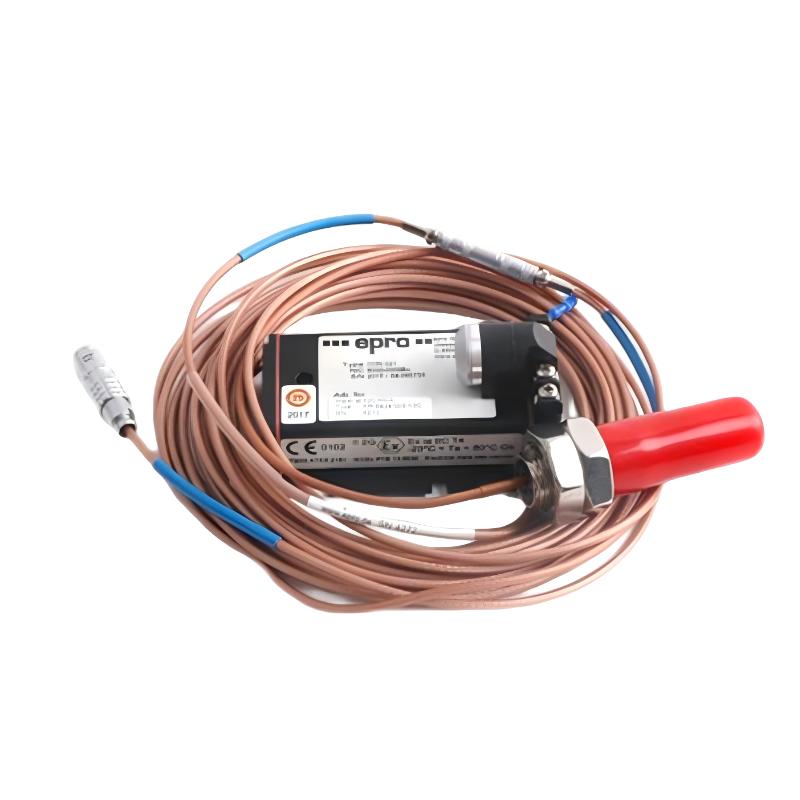
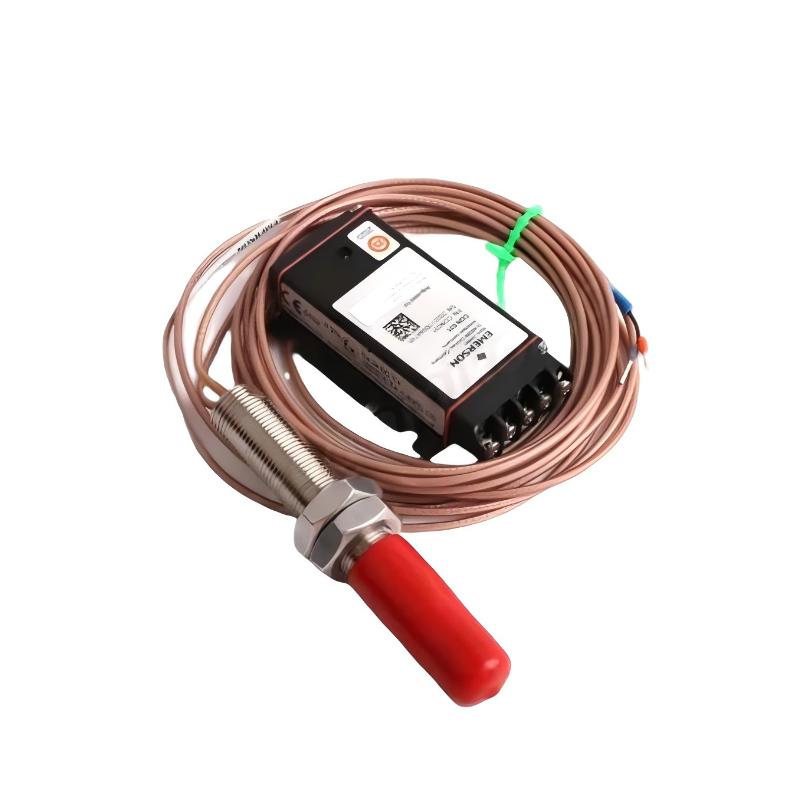
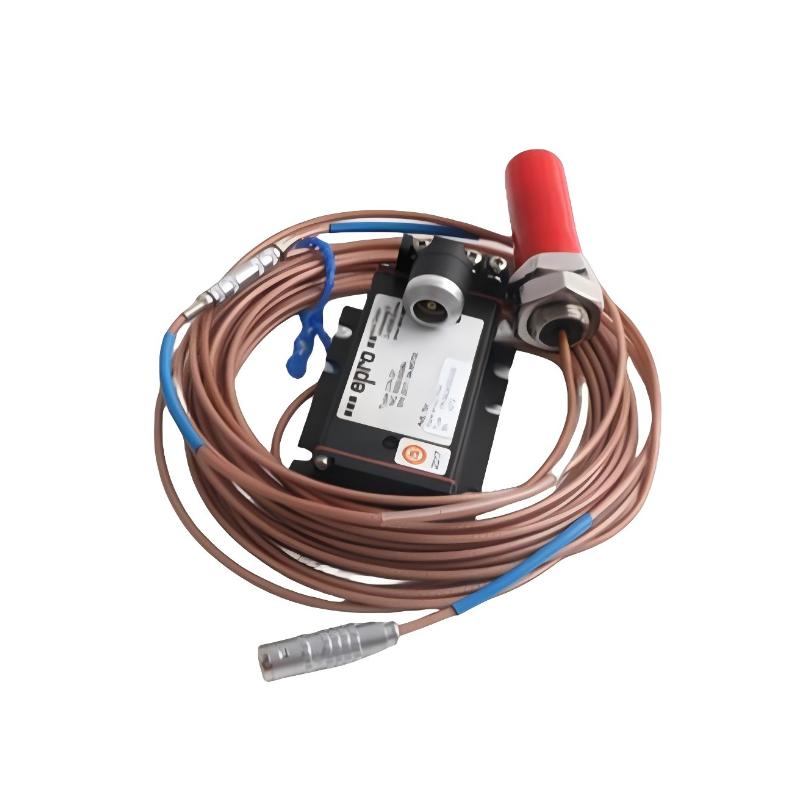
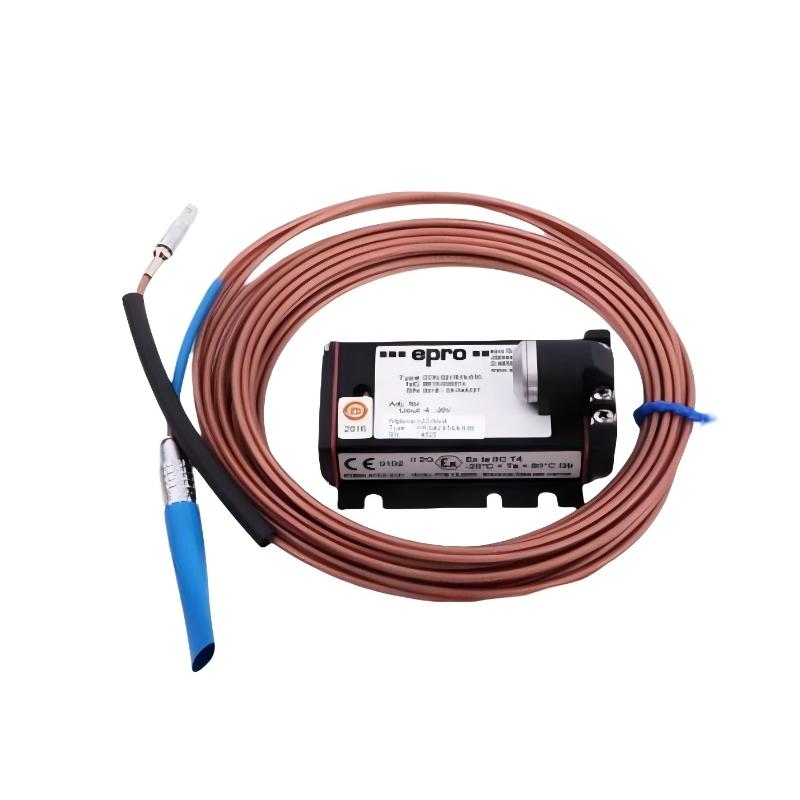
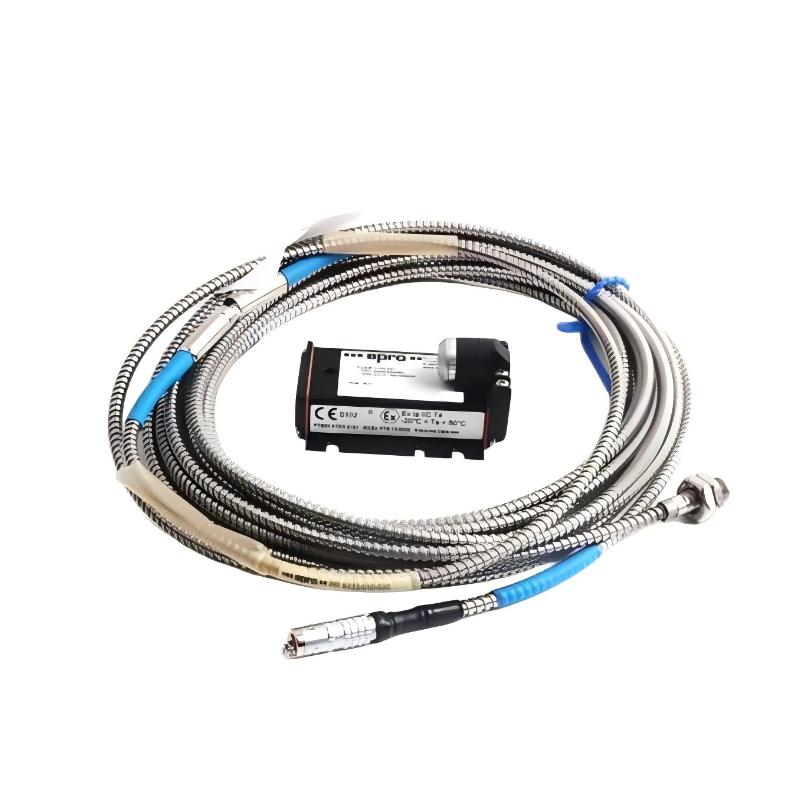
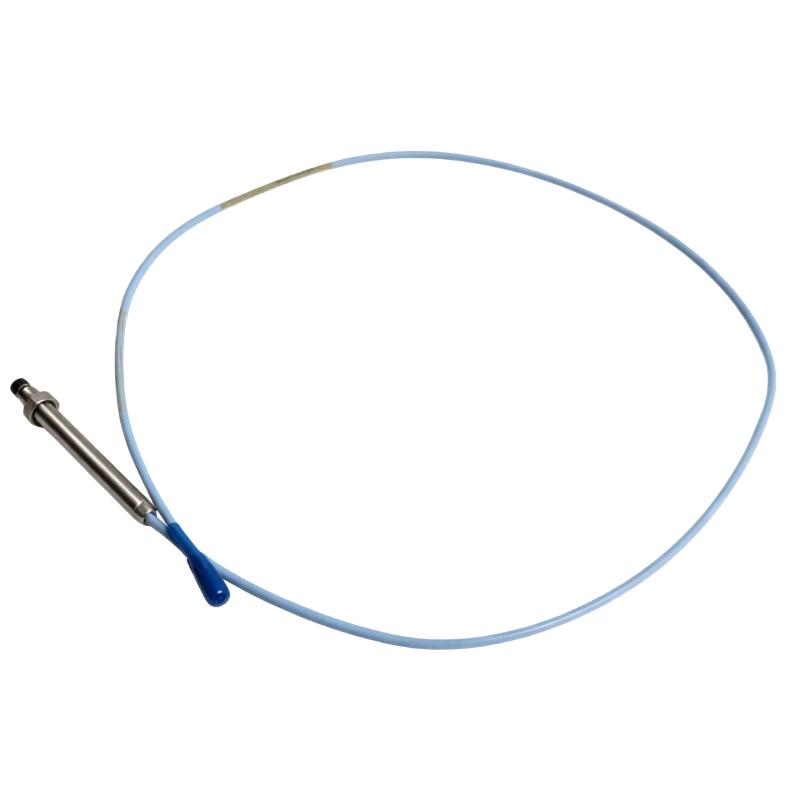
Brand:Epro PLC Item No.:PR6424/103-000 Product Origin:Germany Product Dimensions:Sensor Head Diameter: 16 mm Product Weight:0.2 kg Payment:T/T, Western Union, Credit Card Goods_stock:15 Shipping Port:Xiamen, China Lead Time:1-3 Days Condition:Brand New And Original Warranty:1 Year Certificate:COO
The PR6424/103-000 is part of the 16mm eddy current sensor family designed for precision monitoring of rotating machinery dynamics in industrial protection systems.
It plays a key role in condition monitoring frameworks by delivering continuous real-time shaft displacement data, enabling early detection of mechanical abnormalities and improving overall operational reliability in critical production environments.
Technical Specifications
Parameter
Specification
Product Type
Eddy Current Proximity Sensor
Series
Epro PR6424
Model
PR6424/103-000
Sensor Head Diameter
16 mm
Measurement Principle
Eddy current (non-contact)
Sensitivity
4 V/mm
Linearity
±1.5%
Static Measurement Range
±2.0 mm
Dynamic Range
0 to 1000 µm
Nominal Air Gap
~2.7 mm
Operating Temperature
-35 to 180°C
Target Material
Ferromagnetic steel
Minimum Shaft Diameter
≥80 mm
Weight
0.2 kg (0.44 lb)
Applications
The PR6424/103-000 is widely deployed in condition monitoring architectures where continuous and accurate shaft movement data is required to support machinery protection and predictive maintenance strategies.
It is commonly used in steam turbines, gas turbines, hydro turbines, centrifugal compressors, pumps, and heavy industrial rotating equipment. In turbine systems, it provides real-time monitoring of radial vibration and axial shaft position. In compressor and pump applications, it supports early identification of mechanical degradation such as rotor instability, imbalance, misalignment, and bearing wear progression.
In power generation and process industries, it is typically integrated into API 670-compliant protection systems, where uninterrupted vibration feedback is essential to prevent operational excursions and equipment failure in high-value assets.
Advantages
This model is built on eddy current sensing technology, enabling accurate non-contact displacement measurement without mechanical wear or contact degradation.
It delivers stable linear response characteristics across its measurement range, ensuring reliable signal consistency even under high-speed shaft rotation. The 16mm probe geometry provides a stable electromagnetic field profile, improving repeatability across varying shaft surface conditions and installation configurations.
The PR6424 series is designed for industrial resilience, with strong immunity to vibration, thermal variation, and electromagnetic interference. Its long-term drift behavior is optimized for continuous monitoring environments, supporting extended calibration intervals and reduced maintenance demand in critical systems.
Technical FAQs
Q1: What measurement principle does this sensor use?
It uses eddy current induction for non-contact displacement measurement.
Q2: What is the primary function of this model?
It measures shaft vibration, eccentricity, and axial displacement in rotating machinery.
Q3: Where is it typically applied?
It is used in turbines, compressors, pumps, and industrial rotating equipment.
Q4: Does it require physical contact with the shaft?
No, it operates without physical contact.
Q5: Is it suitable for high-speed machinery?
Yes, it is designed for turbomachinery and high-RPM applications.
Q6: What type of output signal does it provide?
It is used with a compatible signal converter to generate a proportional analog voltage signal.
Q7: Can it measure both static and dynamic displacement?
Yes, it supports both steady-state position and dynamic vibration monitoring.
Q8: How does it perform in harsh environments?
It is resistant to vibration, temperature variation, and electromagnetic interference.
Q9: Does it require frequent recalibration?
No, it is designed for long-term stability with minimal signal drift.
Q10: What industries commonly use it?
Power generation, oil and gas, petrochemical, and heavy industrial sectors.