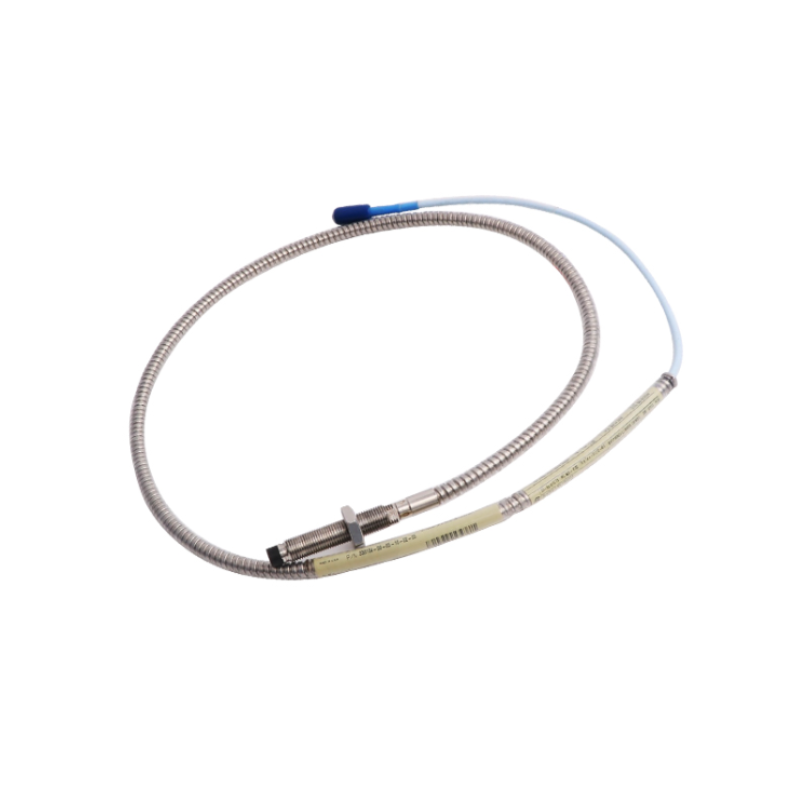
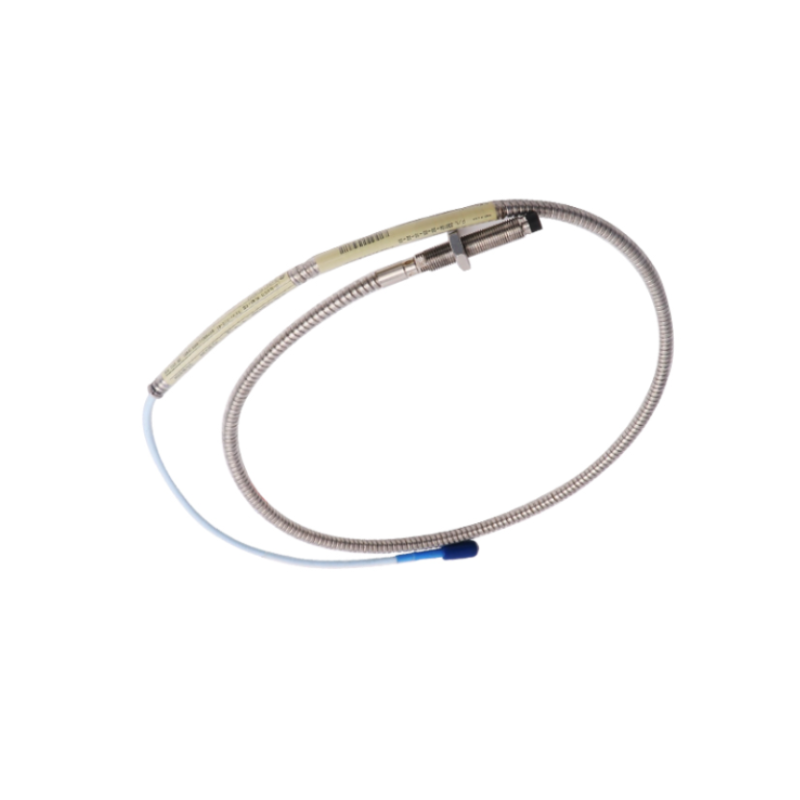
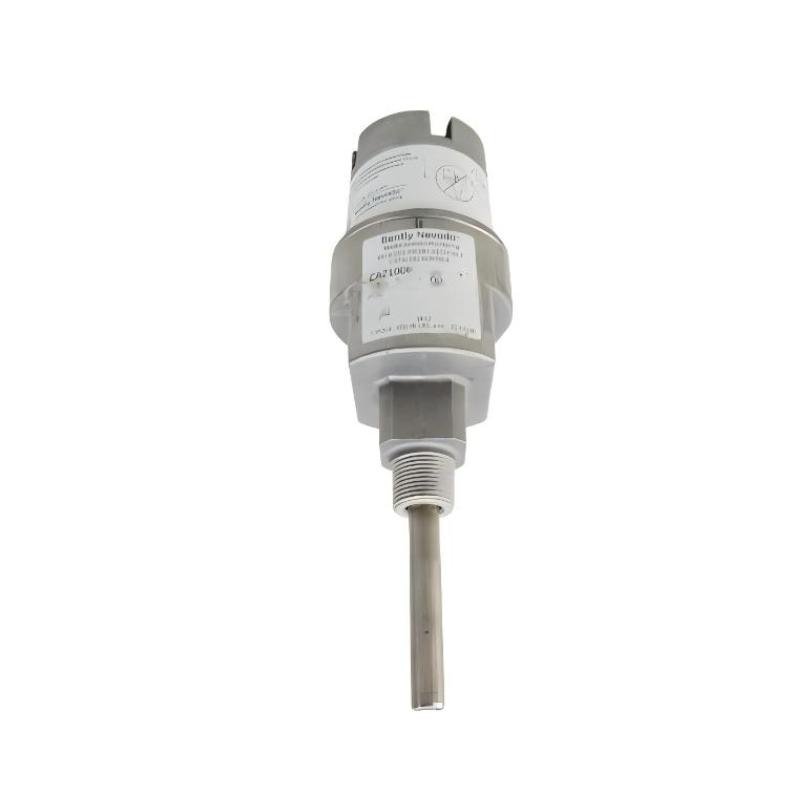
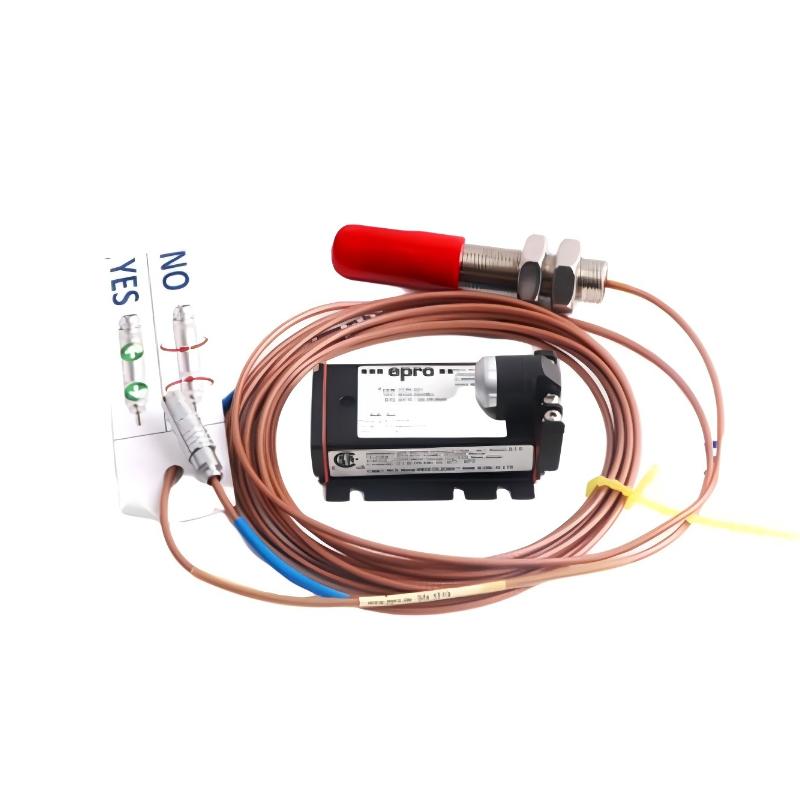
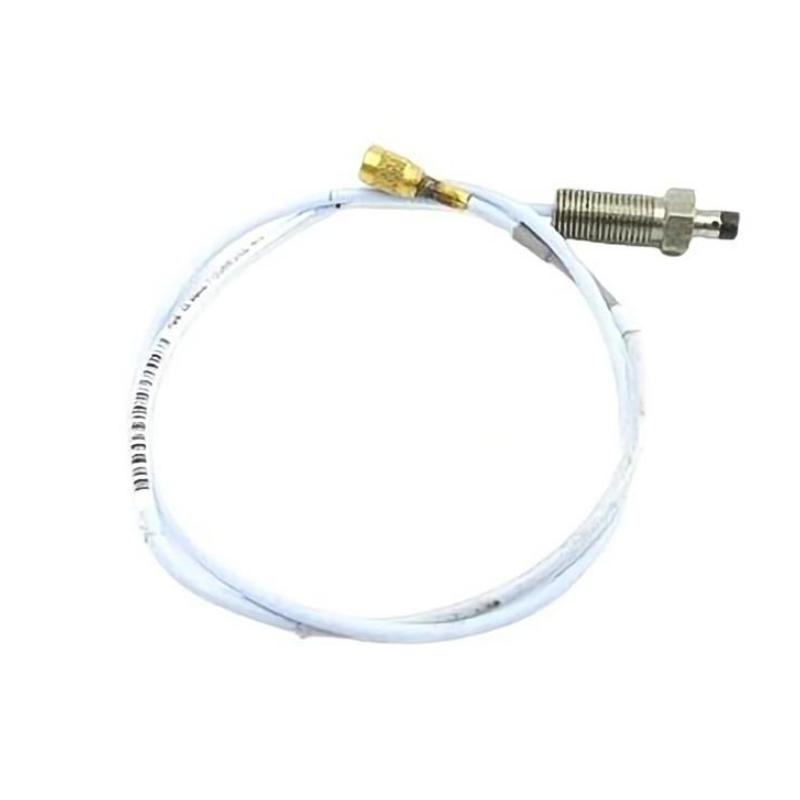
The Bently Nevada 330104-00-60-50-02-00 Proximity Probe Module is a high-performance eddy-current sensor used within the 3300 XL 8 mm proximity transducer system . It is designed for continuous, non-contact measurement of shaft vibration and displacement in critical rotating equipment, particularly where extended mechanical reach is required.
This configuration is generally interpreted as a 60 mm probe case length option (60), 5.0 m total cable length (50), ClickLoc connector system (02), and standard configuration (00) . It is typically selected for installations where deeper probe mounting geometry and long-distance signal routing are necessary, such as large turbines, compressors, and industrial drive trains.
Technical Specifications Parameter Specification Manufacturer Bently Nevada Series 3300 XL 8 mm Product Type Proximity Probe Module Model Number 330104-00-60-50-02-00 Measurement Technology Eddy Current (Non-Contact) Probe Diameter 8 mm Thread Type M10 × 1 Case Length 60 mm Total Cable Length 5.0 m Connector Type Miniature coaxial ClickLoc connector Cable Type Industrial shielded cable Housing Material Stainless Steel Probe Tip Material PPS (Polyphenylene Sulfide) System Compatibility 3300 XL Transducer System Environmental Resistance Oil, moisture, vibration, industrial contamination resistant Installation Type Threaded mounting Weight Approx. 0.30–0.36 kg
Recommended Related Models Model Description 330180-90-00 3300 XL Proximitor Sensor 330130-080-00-00 Extension Cable Assembly 3500/42M Machinery Protection Monitor Module 3500/22M Communication Gateway Module 3500/15 Power Supply Module 330105-02-12-10-02-00 11 mm High-Sensitivity Probe
Popular Bently Nevada Models Model Product Type 3500/15 Power Supply Module 3500/22M Communication Module 3500/42M Vibration Monitoring Module 3500/60 Temperature Monitoring Module 330180-90-00 Proximitor Sensor 330104-00-60-50-02-00 Proximity Probe Module
Typical Applications
Large steam turbine vibration monitoring
Gas turbine shaft displacement measurement
High-capacity compressor condition monitoring
Generator rotor dynamic tracking
Industrial gearbox and drive train monitoring
Petrochemical processing plants
Oil & gas offshore and onshore facilities
Power generation stations
Heavy-duty rotating machinery systems
Predictive maintenance in critical infrastructure
Key Advantages
High-precision non-contact eddy-current measurement
Extended 60 mm probe geometry for deep installation scenarios
Long 5.0 m cable for large plant layouts
Stable performance under continuous industrial operation
Strong resistance to oil, moisture, and vibration
Seamless integration with 3300 XL monitoring architecture
Supports early fault detection and predictive maintenance
Reduces unplanned downtime and repair costs
Durable stainless-steel construction for harsh environments
Optimized for long-life industrial asset protection
Technical FAQs 1. What is the main function of this probe? It measures shaft vibration, displacement, and position in rotating machinery using eddy-current non-contact sensing.
2. What system is it designed for? It is designed for the Bently Nevada 3300 XL proximity transducer system.
3. What does the “60” code represent? It typically indicates a 60 mm probe case length configuration used for extended installation depth.
4. What does the “50” code represent? It indicates a 5.0 m total cable length configuration.
5. Does this probe require physical contact with the shaft? No, it uses non-contact eddy-current technology.
6. Which industries use this model? Power generation, oil & gas, petrochemical, and heavy industrial sectors.
7. Can it operate in harsh environments? Yes, it is designed for oil, dust, vibration, and moisture-prone conditions.
8. What equipment is it typically installed on? Turbines, compressors, pumps, and large rotating machinery systems.
9. Why is probe length important? Longer probe bodies allow installation in deeper or constrained mechanical housings.
10. Why is the 3300 XL series widely trusted? Because it provides consistent measurement accuracy, rugged construction, and long-term reliability in critical machinery protection systems.
Look forward to your comments! Comment