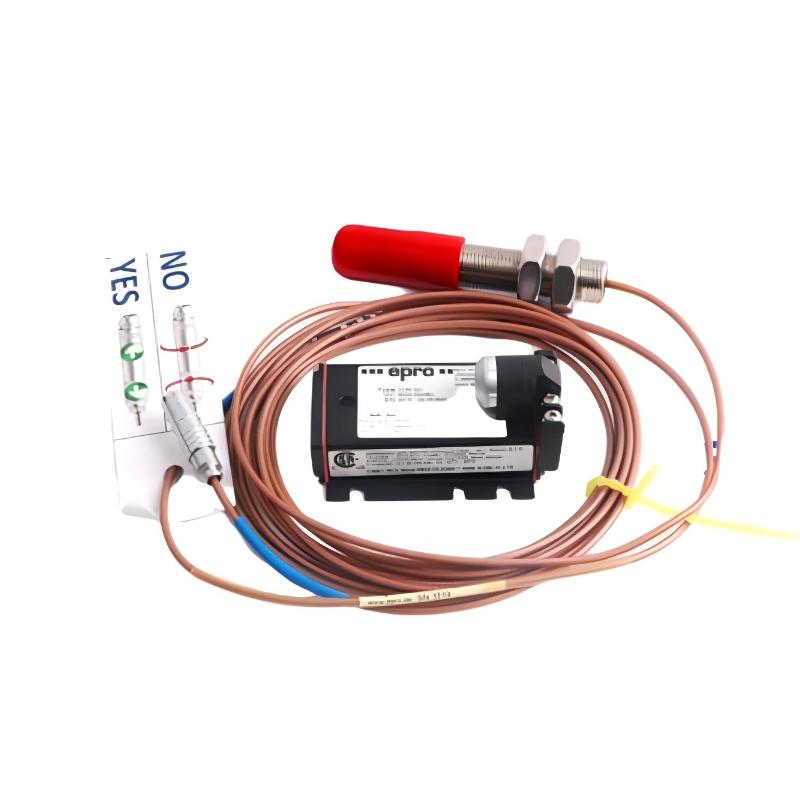
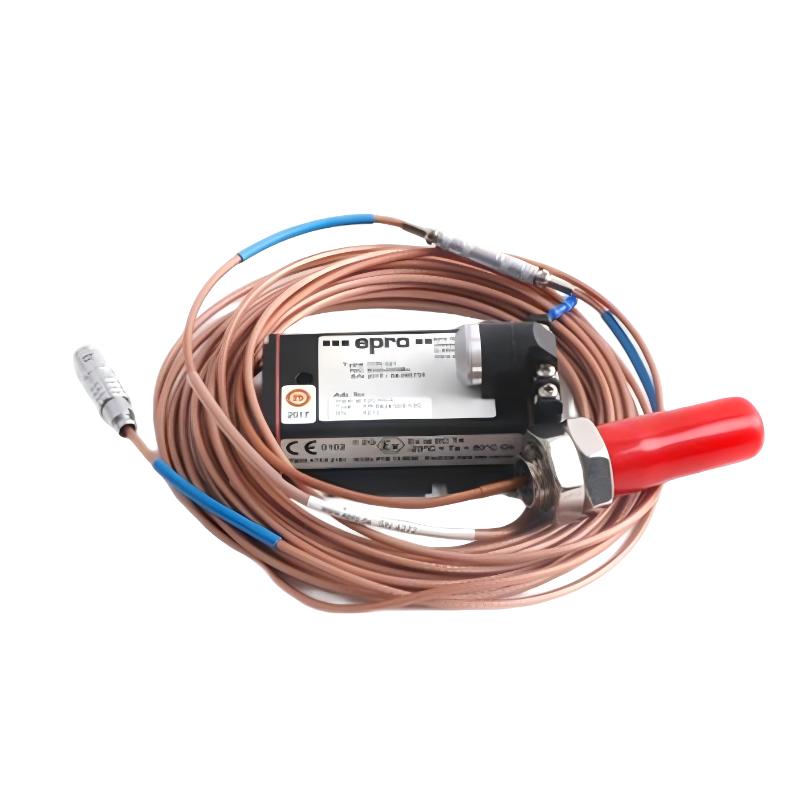
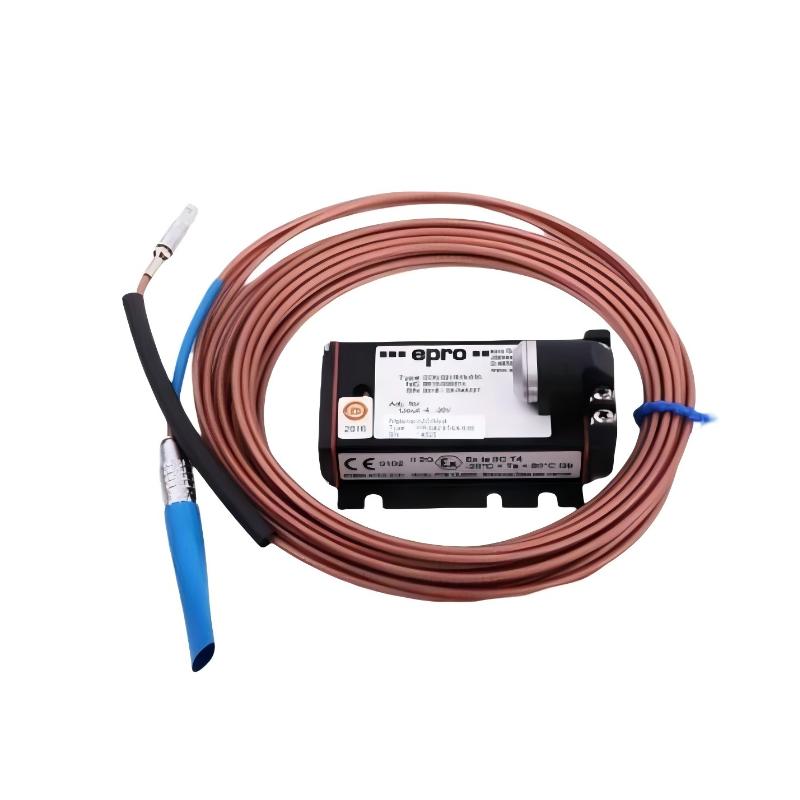
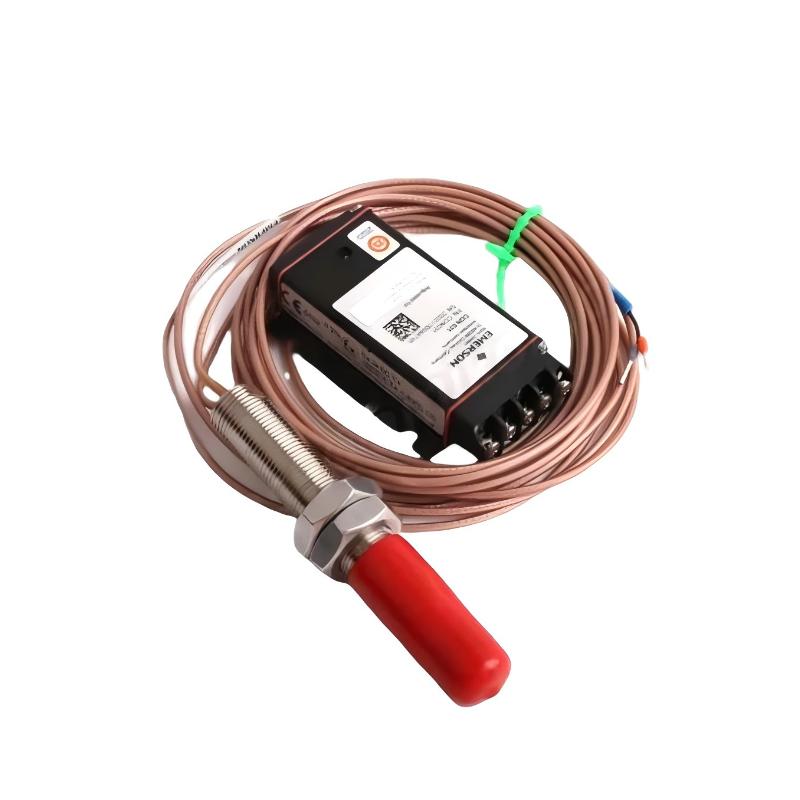
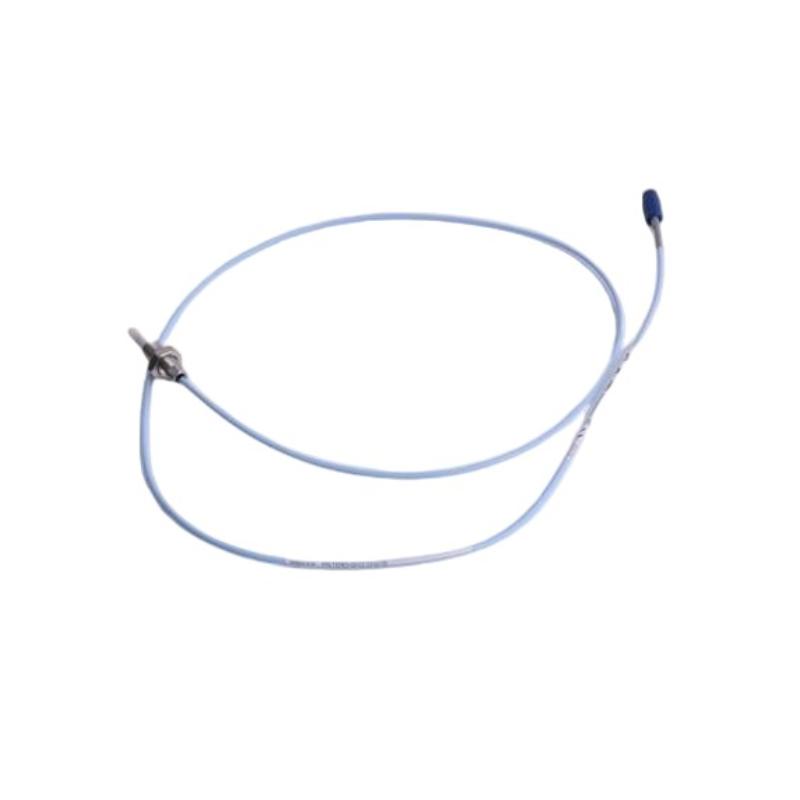
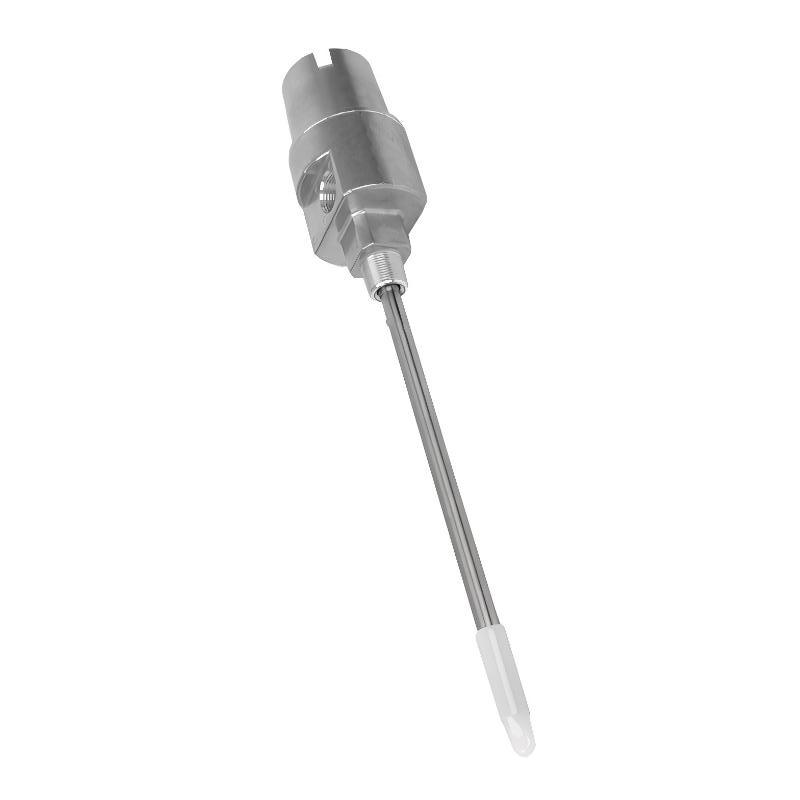
Brand:Epro PLC Item No.:PR6424/106-101 Product Origin:Germany Product Dimensions:Sensor Head Diameter: 16 mm Product Weight:0.2 kg Payment:T/T, Western Union, Credit Card Goods_stock:15 Shipping Port:Xiamen, China Lead Time:1-3 Days Condition:Brand New And Original Warranty:1 Year Certificate:COO
The EPRO PR6424/106-101 is a 16 mm eddy current proximity sensor used for high-resolution monitoring of rotating machinery dynamics.
It provides continuous non-contact measurement of shaft behavior, enabling early detection of mechanical issues such as imbalance, misalignment, bearing wear, and rotor instability. Its stable signal response and industrial-grade construction make it suitable for demanding predictive maintenance environments where reliability is critical.
Technical Specifications
Parameter
Specification
Product Model
PR6424/106-101
Sensor Type
16 mm Eddy Current Proximity Probe
Measurement Principle
Non-contact eddy current induction
Sensor Head Diameter
16 mm
Application
Shaft vibration & displacement monitoring
System Compatibility
EPRO CON011 / CON021 / CON031 / CON041
Operating Environment
Industrial turbomachinery systems
Installation Type
Fixed proximity probe mounting
Material
Stainless steel probe body
Shipping Weight
0.2 kg / 0.441 lb
Recommended Related Models
EPRO PR6424/106-100
EPRO PR6424/106-030
EPRO PR6424/106-021
EPRO PR6424/105 Series
EPRO CON021 Signal Converter
Popular Related Models
EPRO PR6424/106-101 (this model)
EPRO PR6424 16 mm Eddy Current Sensor Series
EPRO PR6423 Eddy Current Probe Series
EPRO CON011 / CON021 / CON041 Modules
EPRO Turbomachinery Monitoring Systems
Applications
The EPRO PR6424/106-101 16 mm Eddy Current Sensor is a high-precision non-contact probe designed for continuous monitoring of shaft movement in critical rotating machinery.
It is widely applied in:
Steam turbine shaft vibration and radial displacement monitoring
Gas turbine rotor eccentricity and axial position detection
Compressor dynamic vibration and shaft monitoring
Pump and fan condition monitoring systems
Industrial predictive maintenance and condition-based maintenance systems
API 670 compliant machinery protection systems
Advantages
High-accuracy non-contact eddy current measurement technology
Stable performance in harsh turbomachinery environments
Excellent long-term signal stability for continuous monitoring
Strong resistance to oil, dust, and industrial contamination
High linearity for precise displacement measurement
Robust 16 mm industrial probe head design
Compatible with EPRO CON series signal conditioning modules
Reliable operation under high vibration and temperature stress
Suitable for mission-critical rotating equipment
Designed for 24/7 industrial protection systems
Technical FAQs (10)
Q1: What is the measurement principle of this sensor?
It uses eddy current induction to measure the gap between the probe tip and a conductive metallic target surface.
Q2: What parameters can it measure?
It measures shaft vibration, radial displacement, eccentricity, and axial position.
Q3: Is this a contact or non-contact sensor?
It is a non-contact proximity probe.
Q4: What systems is it used with?
It is typically paired with EPRO CON011, CON021, CON031, or CON041 signal converters.
Q5: Can it measure both static and dynamic signals?
Yes, it supports both static position and dynamic vibration measurement.
Q6: Is it suitable for high-speed rotating machinery?
Yes, it is designed for turbines, compressors, and other high-speed rotating equipment.
Q7: Does it require field calibration?
No, the probe is factory calibrated and does not require field calibration.
Q8: What industries commonly use it?
Power generation, oil & gas, petrochemical, and heavy industrial sectors.
Q9: Can it operate in harsh environments?
Yes, it is engineered for high vibration, contamination, and temperature variation conditions.
Q10: What type of machinery is it best suited for?
Large rotating equipment such as turbines, compressors, pumps, and fans.