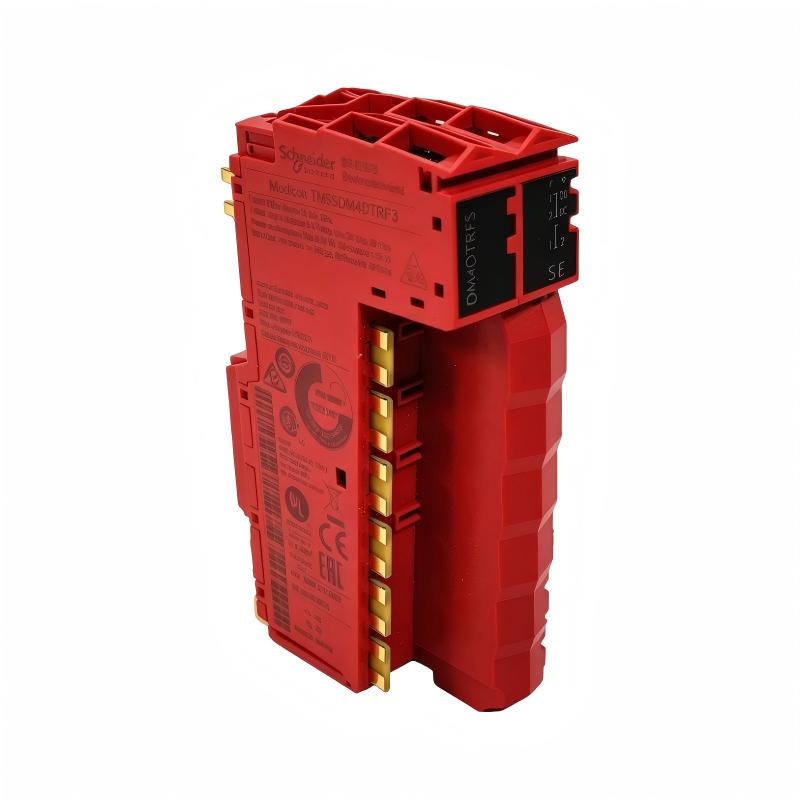
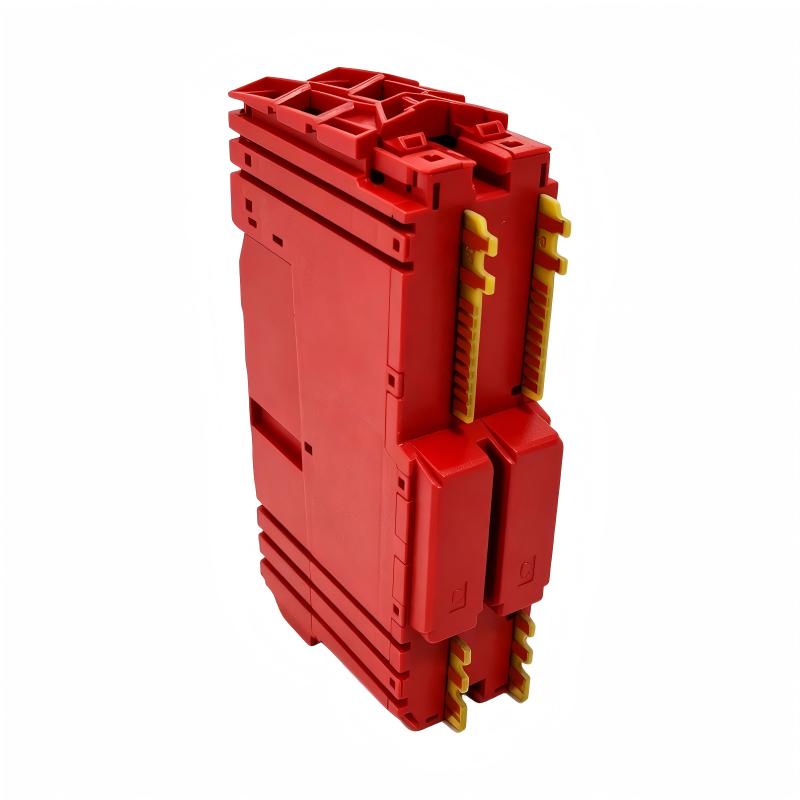
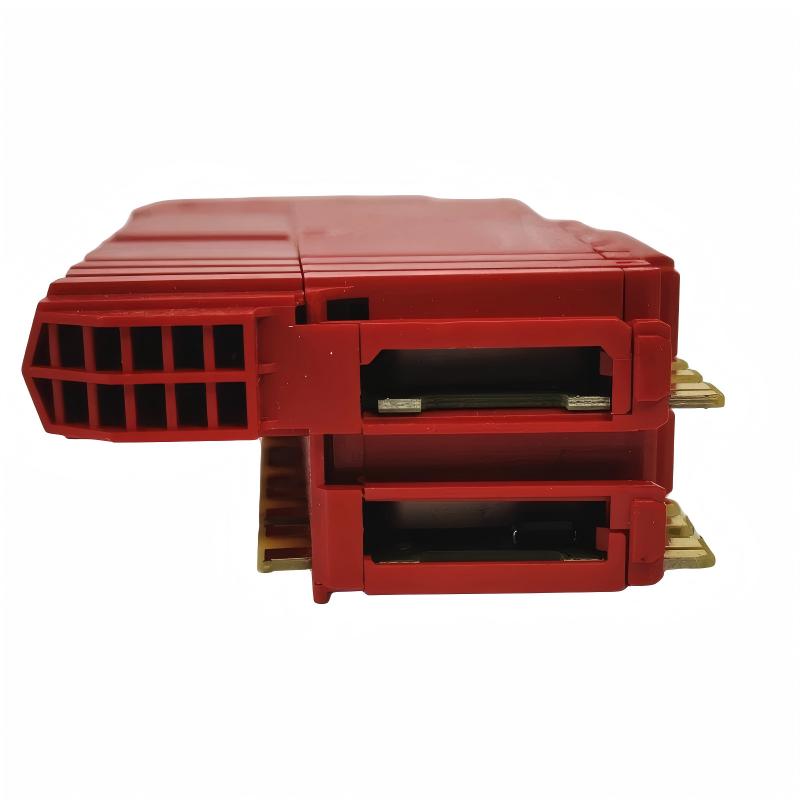
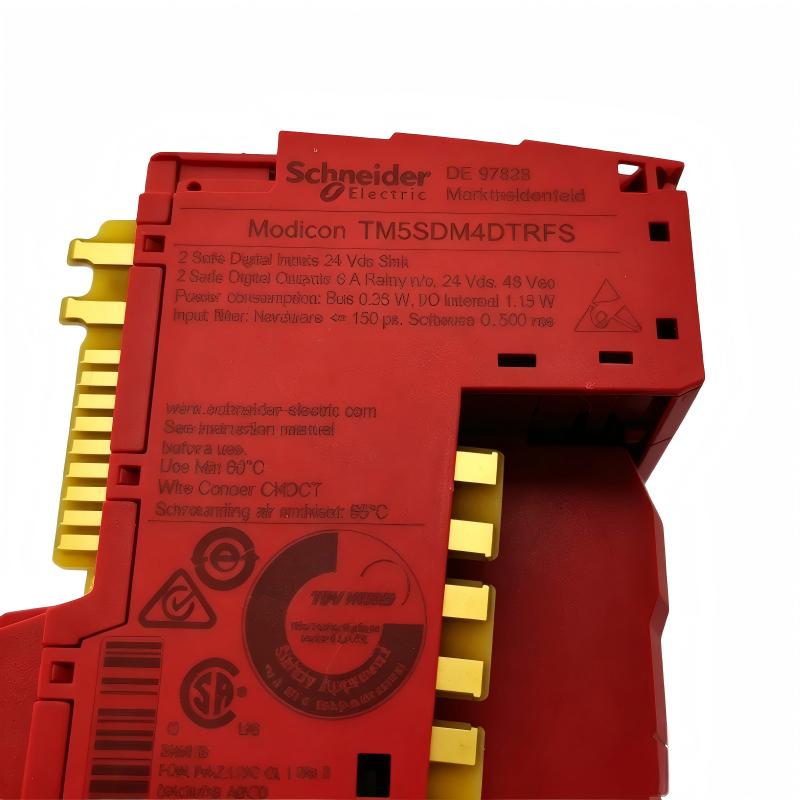
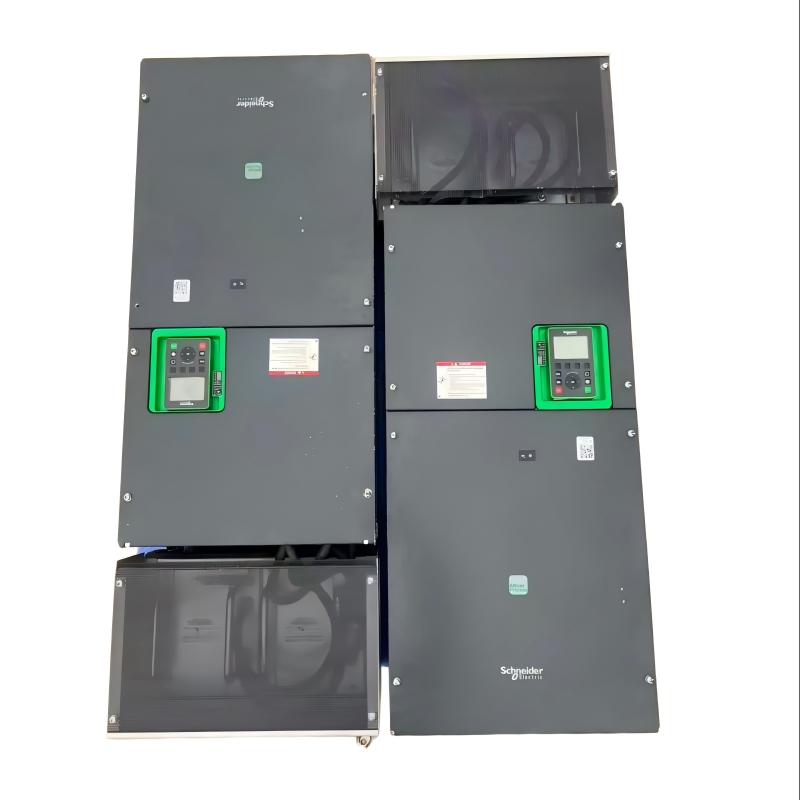
Brand:Schneider PLC Item No.:TM5SDM4DTRFS Product Origin:France Product Dimensions:99 × 25 × 75 mm Product Weight:0.025 kg Payment:T/T, Western Union, Credit Card Goods_stock:15 Shipping Port:Xiamen, China Lead Time:1-3 Days Condition:Brand New And Original Warranty:1 Year Certificate:COO
Product Overview and Industrial Safety Control Solution
The Schneider TM5SDM4DTRFS Safety-Oriented Discrete I/O Module provides an efficient solution for integrating safety functions into modern automation systems. Designed for Schneider Modicon TM5 platforms, it enables reliable communication between safety devices and industrial controllers.
In safety-critical manufacturing environments, accurate signal monitoring and rapid fault response are essential for protecting operators and equipment. The TM5SDM4DTRFS supports these requirements by providing dedicated safety-oriented I/O functionality within a modular automation architecture.
With its compact structure, dependable operation, and suitability for advanced machine safety applications, the TM5SDM4DTRFS helps engineers build safer, more efficient, and more reliable industrial control systems.
Technical Specifications
Parameter
Specification
Product Type
Safety-Oriented Discrete I/O Module
Model Number
TM5SDM4DTRFS
Brand
Schneider Electric
Product Family
Modicon TM5
Module Function
Safety Digital Input and Output Control
Application Area
Machine Safety Automation Systems
Dimensions
99 × 25 × 75 mm
Weight
0.03 kg (0.07 lb)
Installation Method
TM5 Modular System Mounting
System Compatibility
Schneider Modicon TM5 Platform
Recommended Related Models
Model
Description
Schneider TM5SDO4TFS
Safety-Oriented Digital Output Module
Schneider TM5SDI4DFS
Safety-Oriented Digital Input Module
Schneider TM5SAI4AFS
Safety Analog Input Module
Schneider TM5CSLC100FS
Safety Logic Controller Module
Schneider TM251MESC
Modicon TM251 Controller
Popular Related Schneider Automation Models
Model
Description
Schneider TM241CE40T
Modicon M241 Logic Controller
Schneider TM262L01MESE8T
Modicon M262 Motion Controller
Schneider TM3DI16
Modicon TM3 Digital Input Module
Schneider TM3DQ16T
Modicon TM3 Digital Output Module
Schneider BMXP342020
Modicon M340 Processor Module
Safety Automation Applications and Discrete Signal Control
The Schneider TM5SDM4DTRFS Safety-Oriented Discrete I/O Module is designed to provide reliable safety-related digital signal management for advanced industrial automation systems. As part of the Schneider Modicon TM5 safety I/O family, this module enables controllers to monitor and control safety-oriented field devices while supporting flexible machine safety architectures.
The TM5SDM4DTRFS is suitable for applications where dependable safety signal processing and fast response are required. Common application areas include:
Machine safety monitoring systems
Emergency stop circuits
Safety door and guard monitoring
Automated production equipment
Robotics and motion control systems
Industrial safety control applications
By integrating safety-focused digital I/O capability into automation systems, the TM5SDM4DTRFS helps engineers develop safer and more efficient machine control solutions.
Safety Performance Features and Engineering Advantages
The Schneider TM5SDM4DTRFS combines compact design with reliable safety I/O functionality, providing engineers with an effective solution for modern safety automation requirements.
Key advantages include:
Enhanced Safety Signal Management
Designed for monitoring safety-related input and output devices, helping improve machine protection and operational reliability.
Flexible Integration with Automation Systems
Supports connection within Schneider Modicon TM5 architectures for advanced control and safety applications.
Compact Modular Design
Provides safety functionality in a space-efficient format, helping optimize control cabinet layouts.
Reliable Diagnostic Capability
Supports efficient fault identification and maintenance through system monitoring features.
Improved Machine Safety Architecture
Helps engineers create automation solutions that combine productivity with enhanced operator protection.
The TM5SDM4DTRFS is a valuable component for machine builders and system integrators developing safety-focused industrial automation systems.
Technical FAQs About Schneider TM5SDM4DTRFS Safety-Oriented Discrete I/O Module
Q1: What is the primary function of the TM5SDM4DTRFS module?
The TM5SDM4DTRFS provides safety-oriented digital input and output signal management for compatible Schneider automation systems.
Q2: Which Schneider platforms support the TM5SDM4DTRFS?
The module is designed for integration with Schneider Modicon TM5-based automation architectures.
Q3: What safety devices can be connected to this module?
Typical applications include emergency stop devices, safety switches, protective door sensors, and other safety-related field equipment.
Q4: What should be checked if safety signals are not detected?
Engineers should verify wiring, safety device operation, configuration parameters, power conditions, and diagnostic information.
Q5: How can safety I/O communication faults be diagnosed?
Technicians should review controller diagnostics, module status indicators, application settings, and network communication conditions.
Q6: Does the TM5SDM4DTRFS require special configuration?
Yes, proper safety-related configuration must be completed within the supported Schneider engineering environment.
Q7: What causes safety outputs to remain inactive?
Possible causes include safety logic conditions, incorrect configuration, input faults, communication errors, or detected safety violations.
Q8: How can system safety reliability be improved?
Regular testing, correct wiring practices, validated safety logic, and scheduled maintenance help maintain reliable operation.
Q9: What maintenance procedures are recommended for safety I/O modules?
Periodic inspection of connections, diagnostic records, safety device operation, and system configuration is recommended.
Q10: What should be confirmed before replacing the TM5SDM4DTRFS module?
Engineers should verify the fault source, document the safety configuration, isolate the system safely, and confirm compatibility before replacement.