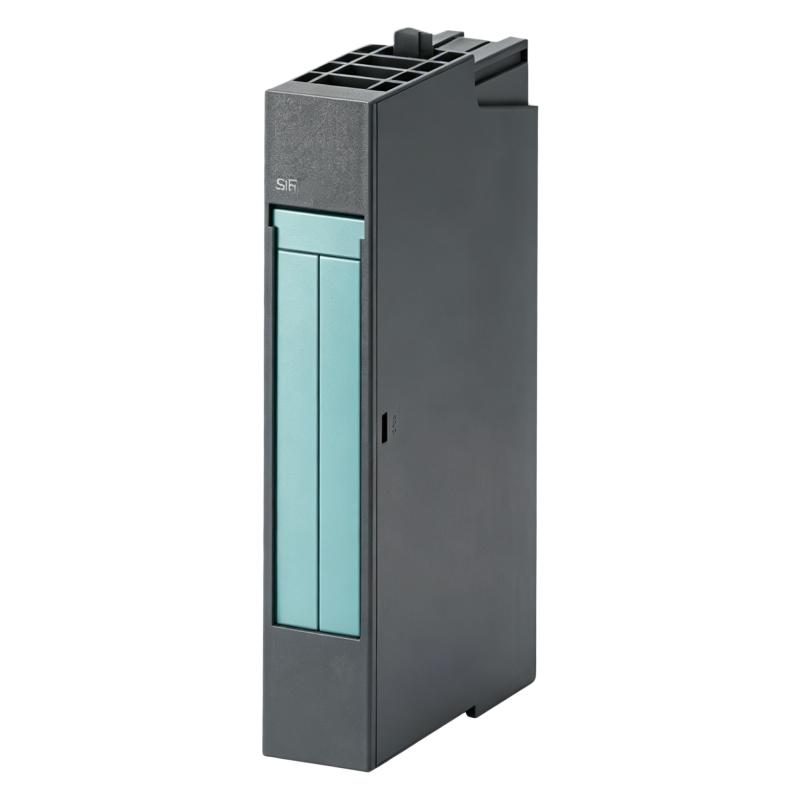
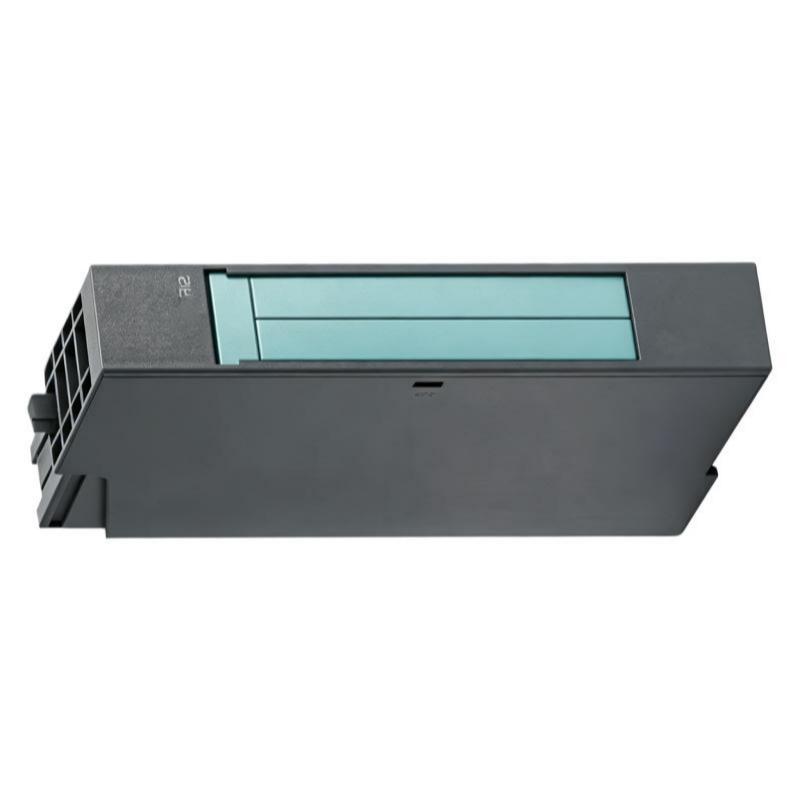
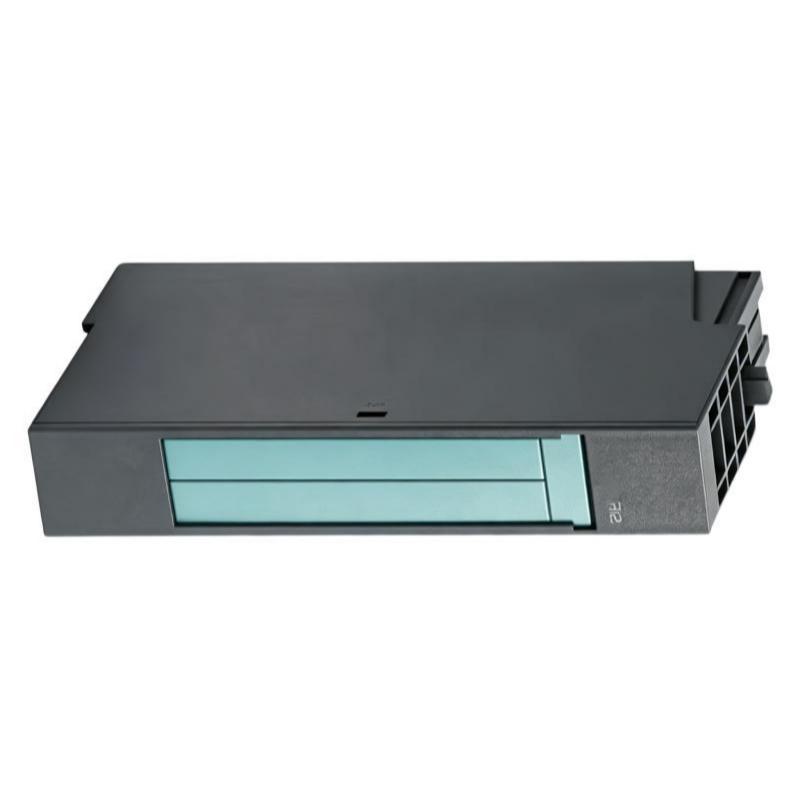
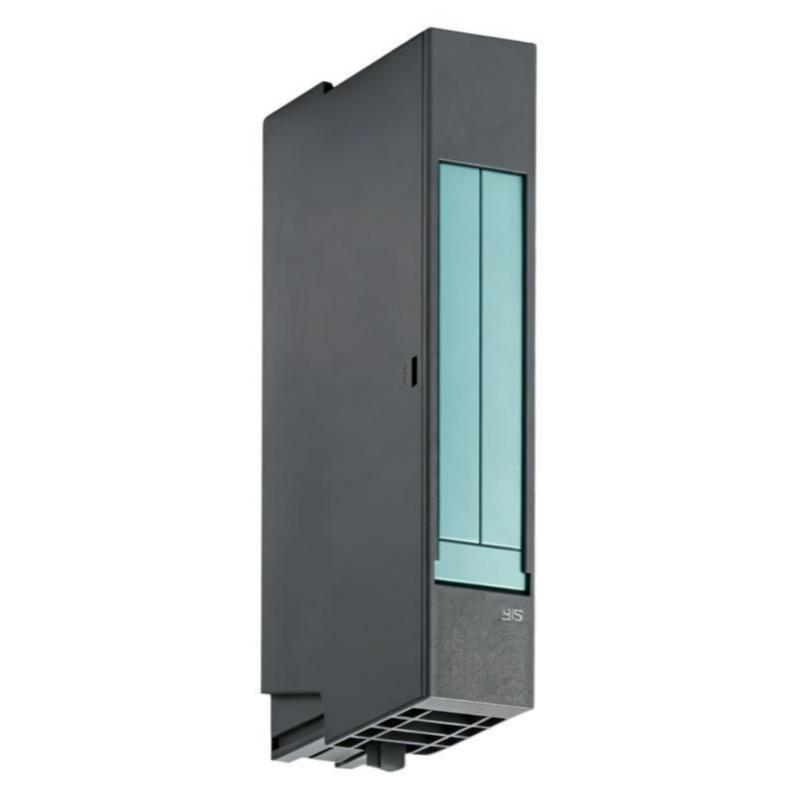
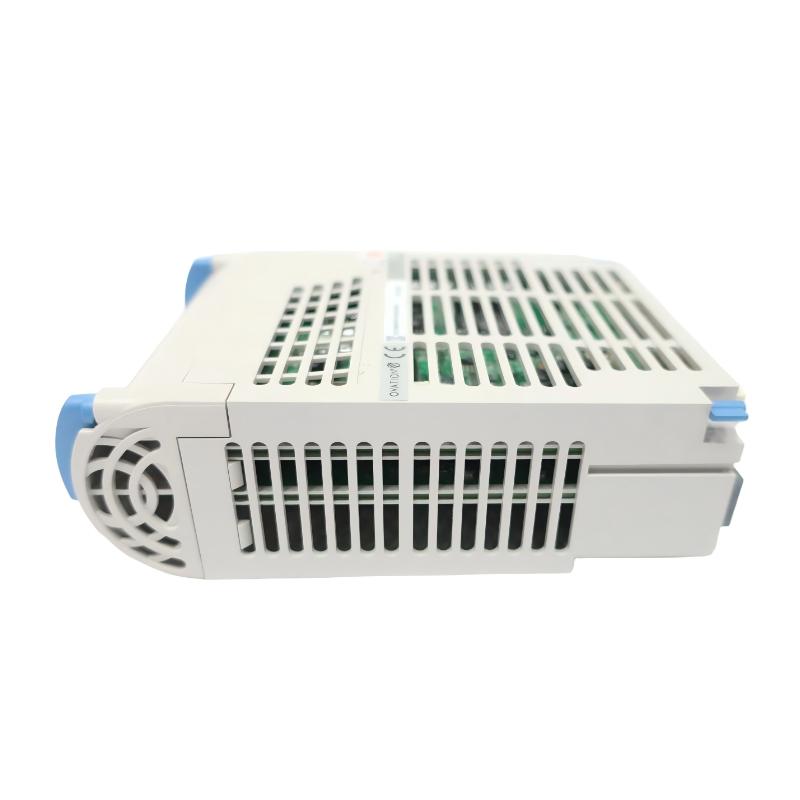
Brand:Siemens Item No.:6AG1134-4FB01-2AB0 Product Origin:Germany Product Dimensions:15 × 81 × 52 mm Product Weight:0.04 kg Payment:T/T, Western Union, Credit Card Goods_stock:15 Shipping Port:Xiamen, China Lead Time:1-3 Days Condition:Brand New And Original Warranty:1 Year Certificate:COO
Accurate process information is fundamental to modern automation. A PLC can only make appropriate control decisions when the signals representing temperature, pressure, flow, level, or other process conditions are acquired correctly. The Siemens 6AG1134-4FB01-2AB0 Analog Input Module provides an interface for bringing compatible analog field measurements into a Siemens automation system.
Analog input modules are especially important in process-oriented applications because many real-world variables do not exist as simple ON/OFF states. A temperature may gradually increase, a pressure transmitter may continuously change its output, and a flow signal can vary according to production demand. The controller needs these changing values to perform monitoring and closed-loop control functions.
The module's compact 15 × 81 × 52 mm dimensions make it suitable for installations where I/O density is important. At just 0.04 kg (0.09 lb), it can also be handled easily during planned replacement and panel maintenance.
For system integrators, proper analog signal engineering remains essential. The field instrument, wiring, signal range, module configuration, PLC scaling, and control logic should all be treated as one measurement chain. Correct configuration at each stage helps ensure that the value displayed by the automation system accurately represents the actual process condition.
Technical Specifications
Specification
Details
Brand
Siemens
Model
6AG1134-4FB01-2AB0
Product Type
Analog Input Module
I/O Function
Analog Signal Acquisition
Primary Function
Process Measurement Input
Application
Industrial PLC Automation
Typical Use
Temperature, Pressure, Flow, Level and Process Monitoring
Installation
Industrial Control / I/O System
Dimensions
15 × 81 × 52 mm
Weight
0.04 kg (0.09 lb)
Recommended Related Models
Model
Product Type
Application
Siemens 6AG1134-4FB01-2AB0
Analog Input Module
Analog process signal acquisition
Siemens 6AG1132-6HD01-7BB1
Digital Output Module
Discrete actuator control
Siemens 6AG1131 Series
Digital Input Module
Discrete field signal acquisition
Siemens 6AG1132 Series
Digital Output Module
PLC output control
Siemens ET 200 Series
Distributed I/O
Industrial distributed automation
These related Siemens modules can be useful when designing a mixed analog and digital I/O architecture. The exact combination should be selected according to controller compatibility, signal types, channel requirements, field wiring, and the overall automation topology.
Popular Related Models
Model
Product Type
Typical Application
Siemens 6AG1134-4FB01-2AB0
Analog Input Module
Industrial process measurement
Siemens 6AG1131 Series
Digital Input Module
Digital signal monitoring
Siemens 6AG1132 Series
Digital Output Module
Machine actuator control
Siemens 6AG1134 Series
I/O Module
Industrial signal processing
Siemens ET 200 Series
Distributed I/O Module
Process and machine automation
For procurement or replacement, verify the complete 6AG1134-4FB01-2AB0 part number and confirm compatibility with the installed Siemens automation system. Before commissioning, pay particular attention to field signal type, wiring, transmitter supply, channel configuration, scaling, grounding, and diagnostic status to ensure reliable analog measurement.
Applications
The Siemens 6AG1134-4FB01-2AB0 Analog Input Module is designed for industrial automation systems that need to bring continuous field measurements into a compatible Siemens control architecture. Unlike discrete I/O, analog inputs allow the controller to monitor changing process values and use those measurements for regulation, alarming, sequencing, and data collection.
Typical applications include process monitoring, machine automation, temperature measurement, pressure monitoring, flow control, level measurement, production equipment, and distributed instrumentation systems.
Its compact 15 × 81 × 52 mm form factor makes the module particularly attractive for high-density control cabinets and distributed I/O installations. For system integrators, it provides a practical way to expand analog measurement capability without consuming unnecessary panel space.
Advantages
Analog signal acquisition — Designed to bring continuously varying process signals into a compatible automation system.
Compact I/O design — Suitable for installations where cabinet space is limited.
High-density automation — Supports efficient panel and I/O station layouts.
Process monitoring capability — Useful for applications involving temperature, pressure, flow, level, and other analog variables.
PLC integration — Can be incorporated into compatible Siemens control architectures.
Flexible measurement applications — Suitable for both machine and process automation.
Maintenance-friendly modular concept — Simplifies planned I/O replacement when the surrounding system supports the module.
Space-efficient construction — The compact housing is well suited to modern automation cabinets.
Technical FAQs
1. What is the Siemens 6AG1134-4FB01-2AB0 used for?
The 6AG1134-4FB01-2AB0 is an Analog Input Module used to acquire compatible analog field signals for processing by a Siemens automation system.
2. What is the difference between analog and digital input modules?
A digital input generally detects discrete states such as ON/OFF, while an analog input measures a continuously changing electrical signal representing a process variable.
3. What types of process measurements can an analog input module support?
Depending on the module's electrical specifications, analog inputs may be used for measurements such as temperature, pressure, flow, level, or other continuously varying process parameters.
4. What should be checked before connecting a field transmitter?
Verify the transmitter's signal type, electrical range, wiring arrangement, channel configuration, supply requirements, and compatibility with the module's specified input characteristics.
5. Why is correct analog signal scaling important?
The PLC receives an electrical representation of the process value. Correct scaling converts that raw input into a meaningful engineering value, such as degrees Celsius, bar, liters per minute, or millimeters.
6. What can cause an analog input value to remain at zero?
Possible causes include missing transmitter power, incorrect wiring, an open circuit, incorrect channel configuration, an unsuitable signal type, or a problem with the field instrument.
7. Why can an analog signal fluctuate unexpectedly?
Electrical interference, poor grounding, damaged cabling, unstable field instrumentation, incorrect signal configuration, or unsuitable installation practices can contribute to unstable measurements.
8. How can an inaccurate analog reading be diagnosed?
Compare the PLC value with a calibrated external measurement, check wiring and signal levels, verify channel configuration and scaling, and inspect the field transmitter.
9. Is signal isolation important in analog measurement systems?
Isolation can be important when differences in ground potential or electrical interference exist between field instruments and control equipment. Whether isolation is required depends on the complete system design.
10. What maintenance is recommended for analog input modules?
Inspect terminals and signal wiring, verify field transmitter operation, review diagnostic information, check cabinet conditions, and periodically validate critical measurements against appropriate reference instruments.