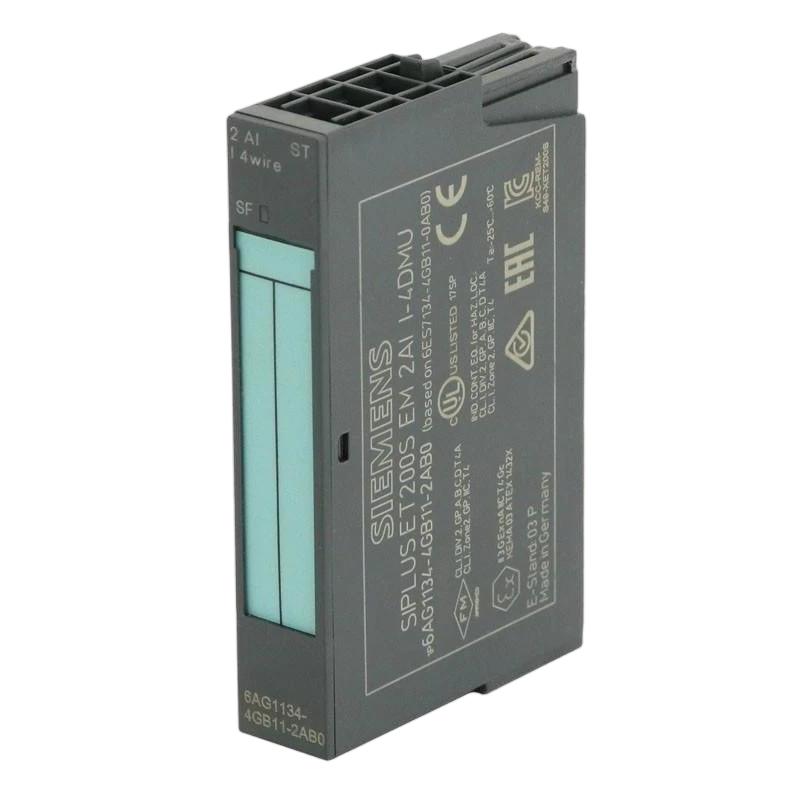
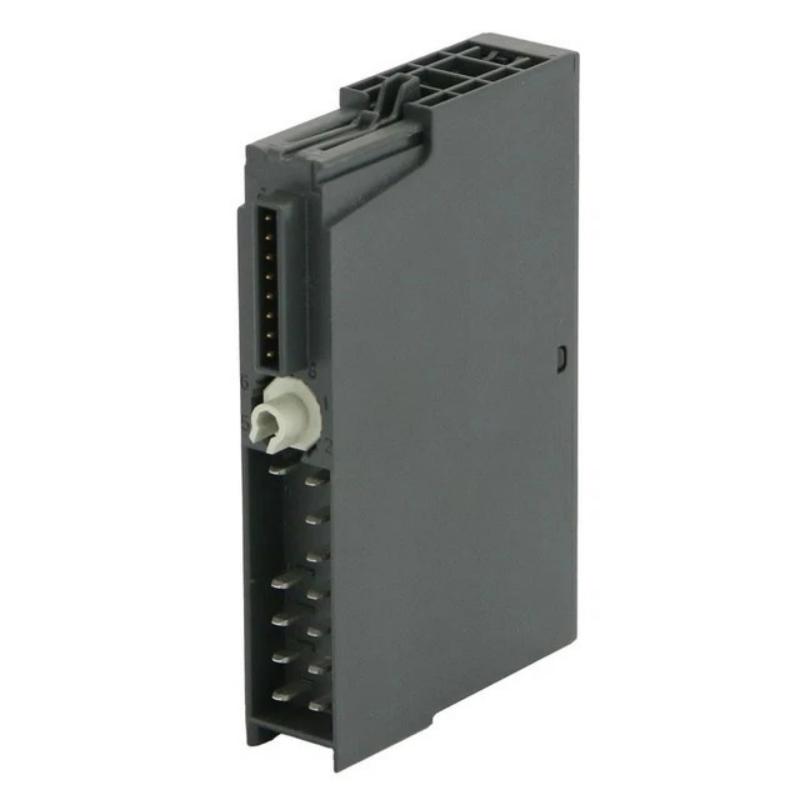
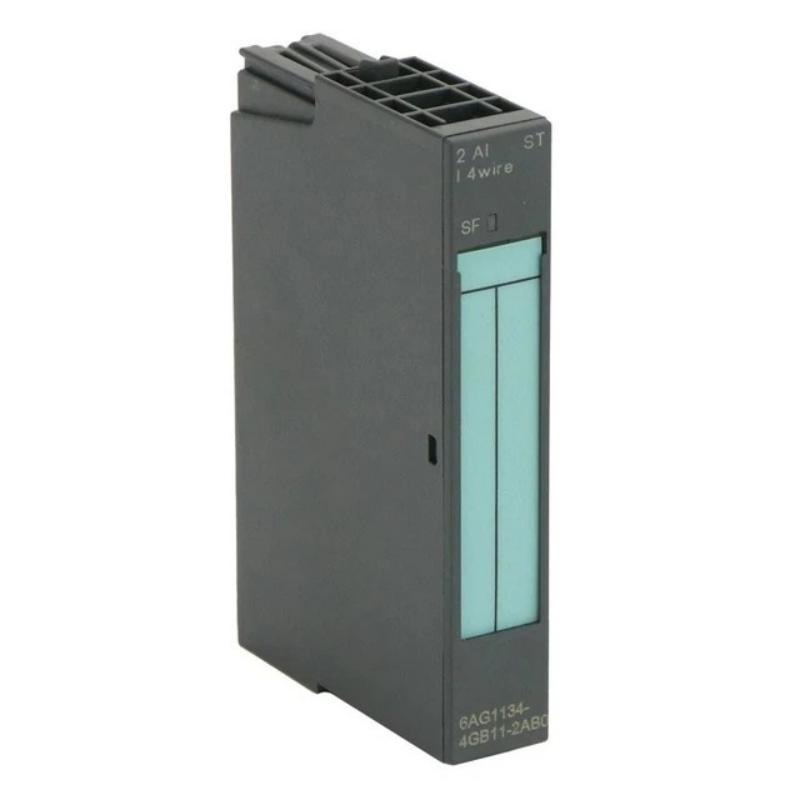
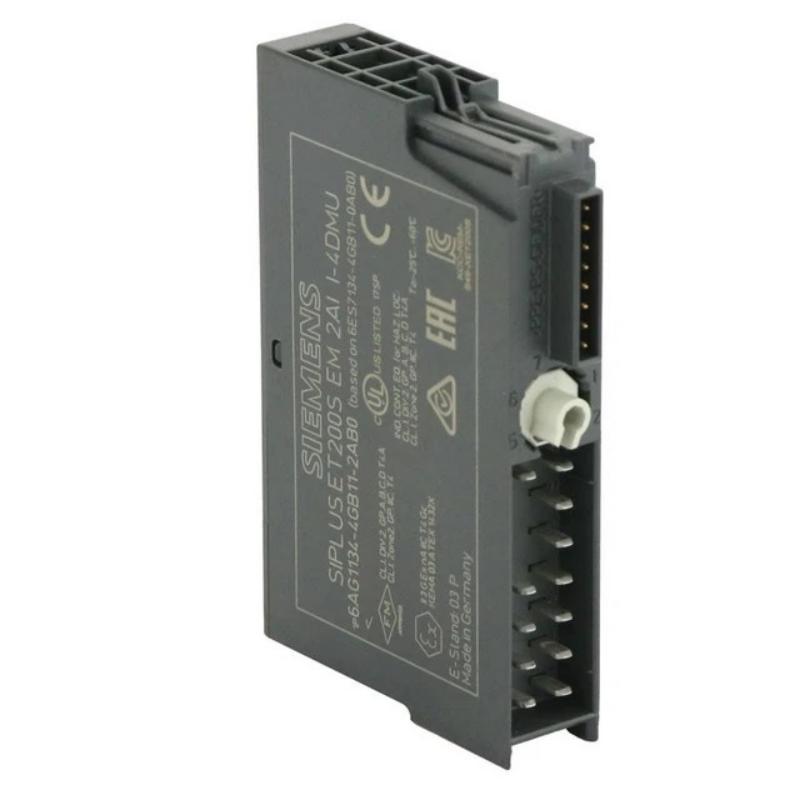
Brand:Siemens Item No.:6AG1134-4GB11-2AB0 Product Origin:Germany Product Dimensions:15 × 81 × 52 mm Product Weight:0.04 kg Payment:T/T, Western Union, Credit Card Goods_stock:15 Shipping Port:Xiamen, China Lead Time:1-3 Days Condition:Brand New And Original Warranty:1 Year Certificate:COO
Analog measurement is a fundamental part of industrial control. A PLC needs reliable process information to regulate equipment effectively, and many of the most important variables in a production system are continuously changing rather than simply ON or OFF.
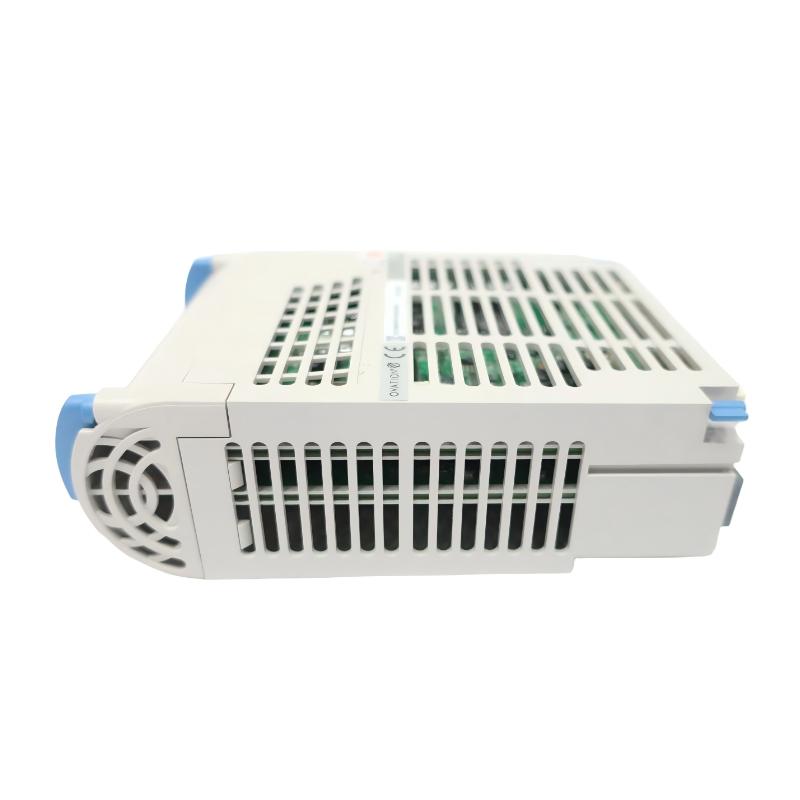
The Siemens 6AG1134-4GB11-2AB0 Analog Input Module provides an interface for compatible analog field signals within a Siemens automation environment. It can be used as part of a measurement chain connecting field instrumentation with PLC-based monitoring and control functions.
The module has a compact 15 × 81 × 52 mm footprint, making it particularly attractive for automation cabinets where every millimeter of installation space matters. At 0.04 kg (0.09 lb), it is also lightweight enough to make handling during maintenance straightforward.
For reliable operation, the module should be considered as part of the complete instrumentation system. Sensor characteristics, signal wiring, shielding, grounding, input configuration, PLC scaling, and control logic all influence the quality of the final process value.
For compatible Siemens installations, the 6AG1134-4GB11-2AB0 offers a space-efficient solution for analog signal acquisition and can be a useful component in machine automation, process monitoring, and distributed I/O applications.
Technical Specifications
Specification
Details
Brand
Siemens
Model
6AG1134-4GB11-2AB0
Product Type
Analog Input Module
I/O Function
Analog Signal Acquisition
Primary Function
Industrial Process Measurement
Application
PLC and Industrial Automation
Typical Use
Process Monitoring and Machine Automation
Installation
Industrial Control / I/O System
Dimensions
15 × 81 × 52 mm
Weight
0.04 kg (0.09 lb)
Recommended Related Models
Model
Product Type
Application
Siemens 6AG1134-4GB11-2AB0
Analog Input Module
Industrial analog signal acquisition
Siemens 6AG1134-4GB01-2AB0
Analog Input Module
Process measurement
Siemens 6AG1134-4FB01-2AB0
Analog Input Module
Analog field signal acquisition
Siemens 6AG1131 Series
Digital Input Module
Digital signal monitoring
Siemens 6AG1132 Series
Digital Output Module
Digital actuator control
These related Siemens modules can be evaluated when building a mixed-signal automation system. Final selection should be based on the required signal types, controller compatibility, I/O architecture, field instrumentation, and application requirements.
Popular Related Models
Model
Product Type
Typical Application
Siemens 6AG1134-4GB11-2AB0
Analog Input Module
Industrial process measurement
Siemens 6AG1134-4GB01-2AB0
Analog Input Module
Analog signal acquisition
Siemens 6AG1134-4FB01-2AB0
Analog Input Module
Process monitoring
Siemens 6AG1131 Series
Digital Input Module
Machine and process monitoring
Siemens 6AG1132 Series
Digital Output Module
Industrial actuator control
When sourcing the Siemens 6AG1134-4GB11-2AB0, verify the complete part number and confirm compatibility with the existing Siemens automation system. Before installation, check the field signal characteristics, wiring, transmitter requirements, grounding, channel configuration, PLC scaling, and diagnostic status to ensure dependable analog measurement.
Applications
The Siemens 6AG1134-4GB11-2AB0 Analog Input Module is intended for industrial automation systems that need to acquire changing electrical signals from field instrumentation and make those values available to the control system. It is a practical choice for applications where process measurements must be continuously monitored rather than treated as simple ON/OFF conditions.
Typical uses include process measurement, machine automation, temperature monitoring, pressure and flow supervision, level measurement, production equipment, and distributed I/O installations.
Its compact 15 × 81 × 52 mm construction makes it well suited to space-conscious control cabinets. For machine builders and system integrators, the module can help increase analog I/O density while maintaining an organized and serviceable panel layout.
Advantages
Analog measurement capability — Acquires compatible continuously varying field signals.
Compact footprint — Helps conserve space in densely populated automation cabinets.
Industrial I/O integration — Suitable for compatible Siemens automation architectures.
Process monitoring support — Useful for applications involving continuously changing process variables.
Flexible instrumentation interface — Can be used with compatible analog field devices.
Efficient cabinet utilization — Small dimensions support high-density I/O layouts.
Lightweight construction — At 0.04 kg, the module is easy to handle during installation and replacement.
Maintenance-friendly modular design — Supports practical service and I/O replacement strategies.
Technical FAQs
1. What is the Siemens 6AG1134-4GB11-2AB0 used for?
The 6AG1134-4GB11-2AB0 is an Analog Input Module designed to acquire compatible analog signals for use within a Siemens industrial automation system.
2. What is an analog input used to measure?
Analog inputs are used to monitor continuously changing process conditions. Depending on the connected instrumentation and module specifications, these can include temperature, pressure, flow, level, and other variables.
3. What should be verified before connecting a field transmitter?
Check the transmitter's signal characteristics, electrical range, wiring arrangement, power requirements, channel configuration, and compatibility with the module.
4. Why is signal scaling important in the PLC program?
The module receives an electrical representation of the process value. Scaling converts the acquired value into an engineering unit that the control program can use correctly.
5. What could cause an analog channel to show an incorrect value?
Possible causes include incorrect wiring, an unsuitable signal range, incorrect channel configuration, transmitter malfunction, grounding problems, damaged cabling, or incorrect PLC scaling.
6. Why might the analog measurement fluctuate?
Electrical interference, inadequate shielding, grounding problems, unstable instrumentation, damaged cables, or configuration errors can contribute to unstable readings.
7. How can an analog input fault be isolated?
Compare the PLC value with a suitable reference measurement, inspect the field transmitter and wiring, verify the electrical signal, and check module and PLC diagnostics.
8. Can a digital sensor be connected to an analog input?
Not normally. The sensor's output must match the input characteristics supported by the module. A discrete signal generally requires an appropriate digital input instead.
9. What role does grounding play in analog signal quality?
Proper grounding can reduce unwanted electrical interference and potential differences that may distort sensitive analog measurements. The grounding strategy should follow the complete system design.
10. What maintenance is recommended for analog input modules?
Inspect signal wiring, terminal connections, field instruments, cabinet conditions, and diagnostic information. Critical process measurements should also be periodically checked against suitable reference equipment.