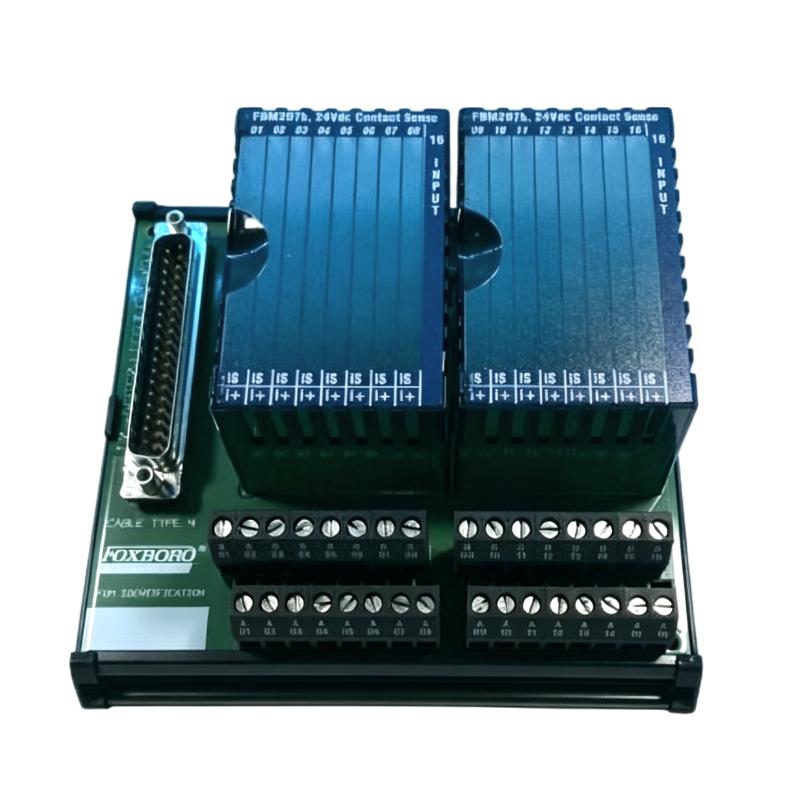
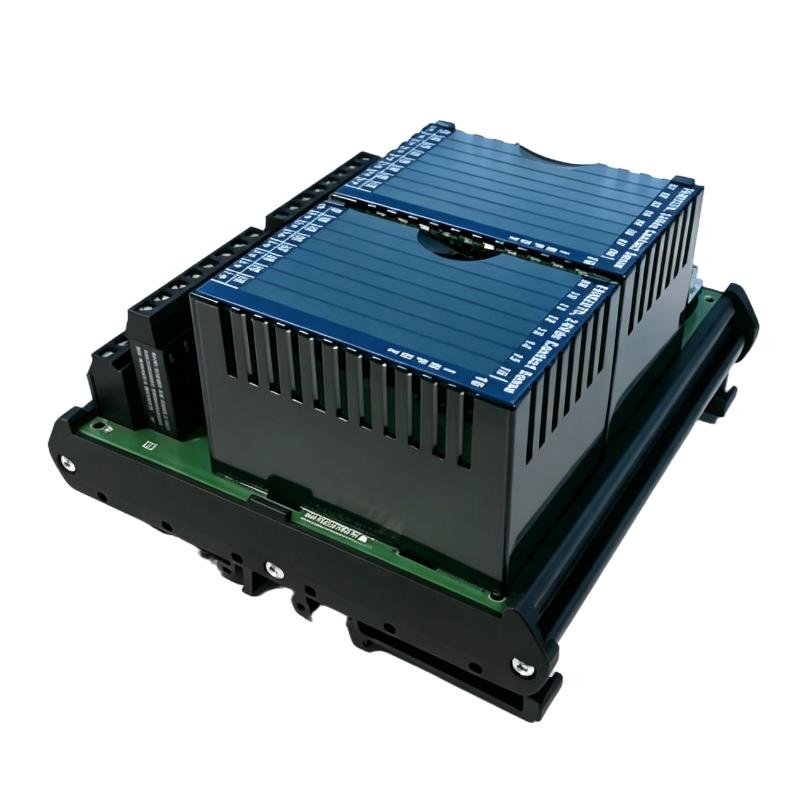
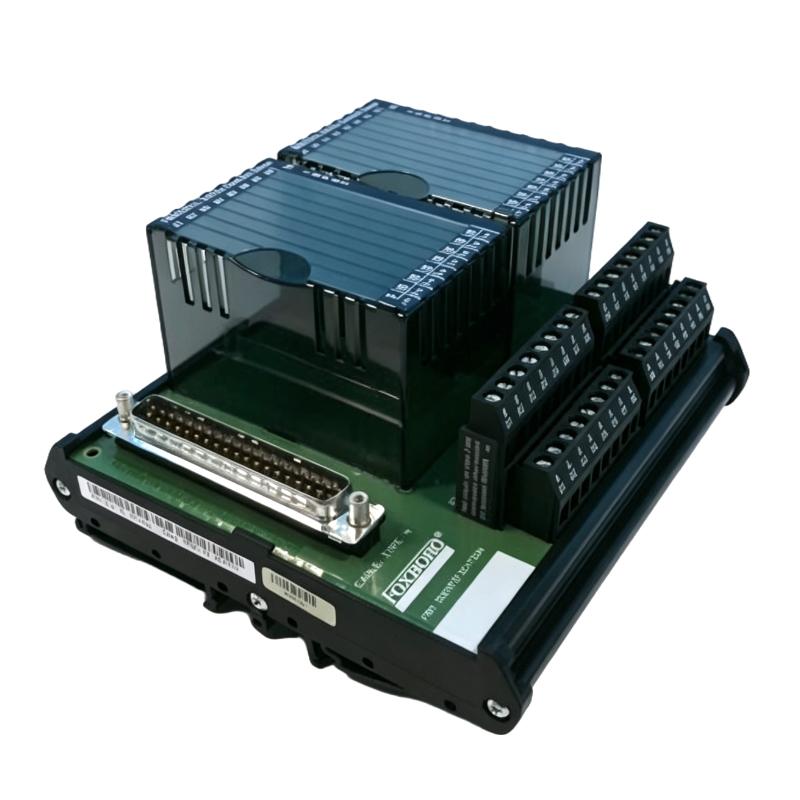
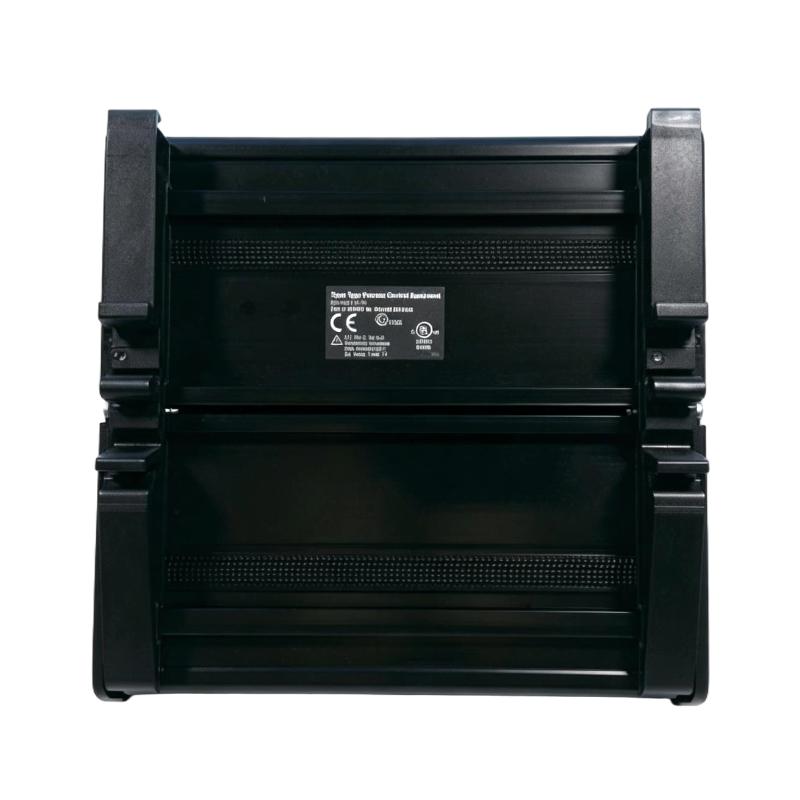
Brand:Foxboro Module Item No.:FBM207b Product Origin:USA Product Dimensions:127 x 80 x 125 mm Product Weight:0.272 kg Payment:T/T, Western Union, Credit Card Goods_stock:15 Shipping Port:Xiamen, China Lead Time:1-3 Days Condition:Brand New And Original Warranty:1 Year Certificate:COO
The Foxboro FBM207b P0916JS Contact Sensor Input Interface Module provides an interface between discrete field contacts and the control-system environment.
Industrial processes depend on countless simple signals: a valve may be open or closed, a motor may be running or stopped, a limit switch may be reached, or an alarm contact may indicate an abnormal condition. These discrete states need to reach the control system reliably so that operators and control logic can respond appropriately.
The FBM207b P0916JS is intended for this type of field signal acquisition. It can be integrated into distributed process-control installations where field signals need to be organized and incorporated into monitoring, sequencing, alarm, and equipment-status functions.
Its 127 × 80 × 125 mm form factor makes it suitable for structured control-system installations while providing a dedicated interface for contact-related signals.
From a maintenance perspective, accurate diagnosis is important. If a contact signal disappears, the fault may exist anywhere from the physical switch through the field wiring and input channel to the control-system configuration. Checking these elements in sequence can reduce unnecessary module replacement and shorten equipment downtime.
When purchasing a replacement, use the complete catalog designation FBM207b P0916JS and verify that the replacement configuration matches the installed system.
Technical Specifications
Parameter
Specification
Brand
Foxboro
Model
FBM207b P0916JS
Product Type
Contact Sensor Input Interface Module
Module Function
Discrete Contact Signal Input
Signal Category
Contact / Discrete Input
Application
Industrial Process Control
System Architecture
Distributed Control System
Field Interface
Contact Sensor Signals
Dimensions
127 × 80 × 125 mm
Weight
0.27 kg (0.60 lb)
Dimensions: 127 × 80 × 125 mm Weight: 0.27 kg (0.60 lb)
Before installation, verify the module's compatibility with the existing control-system architecture and field wiring. Ensure that all connections are correctly identified and securely terminated before applying or restoring system power.
Recommended Related Models
Model
Product Type
Application Relationship
FBM207b P0916JS
Contact Sensor Input Interface Module
Primary model
FBM207b RH914WH
Contact Sensor Input Interface Module
Closely related FBM207b configuration
FBM201
Discrete Input Interface Module
Related discrete input application
FBM202
Discrete Output Interface Module
Related discrete field interface
FBM203
Contact Input Interface Module
Related contact monitoring application
These modules serve different roles within industrial I/O architectures. Before selecting an alternative, verify signal type, channel requirements, system compatibility, and the exact hardware configuration.
For maintenance and replacement applications, always compare the complete module designation rather than relying only on the FBM family number. Correct signal characteristics and system compatibility are essential for reliable commissioning.
Field Signal Monitoring Applications
The Foxboro FBM207b P0916JS Contact Sensor Input Interface Module is designed to bring discrete contact information from field devices into an industrial control system. It is suited to process automation environments where reliable detection of equipment states, switch positions, alarms, and interlock conditions is required.
The module can form part of a distributed control architecture, providing a practical interface between field instrumentation and higher-level control logic.
Common applications include:
Process equipment status monitoring
Limit and position switch monitoring
Pump and motor status feedback
Valve position indication
Alarm contact acquisition
Interlock and permissive monitoring
Industrial sequencing systems
Field contact monitoring
Distributed process-control installations
Plant-wide equipment diagnostics
For large automation systems, dependable discrete input acquisition is important because a simple contact state can determine whether equipment starts, stops, alarms, or proceeds to the next sequence.
Why This Module Fits Industrial Control Systems
Purpose-built for contact signals
The FBM207b is intended for applications where contact-type field signals must be acquired and incorporated into control logic.
Practical distributed I/O integration
Its field interface design allows discrete signals to become part of a broader distributed control strategy without requiring every field device to be connected directly to a central controller.
Useful for equipment-state monitoring
Contact information can represent operating status, position, permissive conditions, alarm states, or other important machine and process conditions.
Compact installation footprint
The module measures 127 × 80 × 125 mm, providing a practical form factor for structured control-system installations.
Simplifies troubleshooting
When an expected contact state is missing, technicians can systematically examine the field device, wiring, terminals, input channel, and control-system configuration to identify the actual source of the problem.
Suitable for continuous process operation
Industrial processes often depend on reliable discrete-state information. A properly configured contact input interface helps maintain consistent communication between field equipment and control logic.
Professional replacement option
The complete FBM207b P0916JS designation gives maintenance teams a precise identification point when servicing or replacing installed equipment.
Technical FAQs
1. What is the main purpose of the FBM207b P0916JS?
It is a Foxboro contact sensor input interface module used to acquire discrete contact signals from field devices and make their status available to the associated control system.
2. What field devices are commonly associated with contact inputs?
Typical examples include limit switches, mechanical contacts, equipment-status contacts, alarm contacts, position switches, and other compatible discrete field devices.
3. What does an open or closed contact represent?
The control system interprets the electrical state of the contact circuit as a discrete condition. Depending on the application, the state can represent equipment running, stopped, open, closed, healthy, alarmed, or another defined process condition.
4. What should be investigated if an input channel stays continuously active?
Check the field contact for mechanical failure, inspect the wiring for an unintended short or permanent continuity, verify terminal connections, and then examine the input channel and control-system configuration.
5. Why might an activated field contact still appear inactive in the control system?
Possible causes include an open field circuit, loose terminal, damaged cable, defective contact device, incorrect channel configuration, or an input-channel problem.
6. How can intermittent contact signals be diagnosed?
Operate the field device repeatedly while monitoring the input status. Inspect the contact mechanism, terminal connections, cable condition, and electrical continuity. Mechanical contact bounce should also be considered where rapid state changes are observed.
7. What is the recommended approach to field wiring verification?
Check the wiring against the approved system documentation, verify terminal identification, inspect connections for looseness, and perform continuity or signal checks using appropriate maintenance procedures.
8. Can standard contact inputs be used for safety functions?
Standard contact inputs may provide information used by normal control logic, but safety-critical functions should use the appropriate certified safety architecture and safety-rated components specified for that application.
9. What should be checked before replacing the FBM207b?
Verify module power and communication status, field wiring, terminal connections, field-device operation, channel configuration, and system diagnostics. Replacing the module should generally follow a systematic fault-isolation process.
10. How should the module be commissioned after replacement?
Confirm the exact module configuration, inspect field connections, verify the control-system configuration, test individual input channels using known field states, and confirm that the displayed status matches the actual field condition.