Brand:Allen Bradley PLC Item No.:MPL-A320P-HJ72AA Product Origin:USA Product Dimensions:Frame Size: 100 mm Product Weight:3.7 kg Payment:T/T, Western Union, Credit Card Goods_stock:15 Shipping Port:Xiamen, China Lead Time:1-3 Days Condition:Brand New And Original Warranty:1 Year Certificate:COO
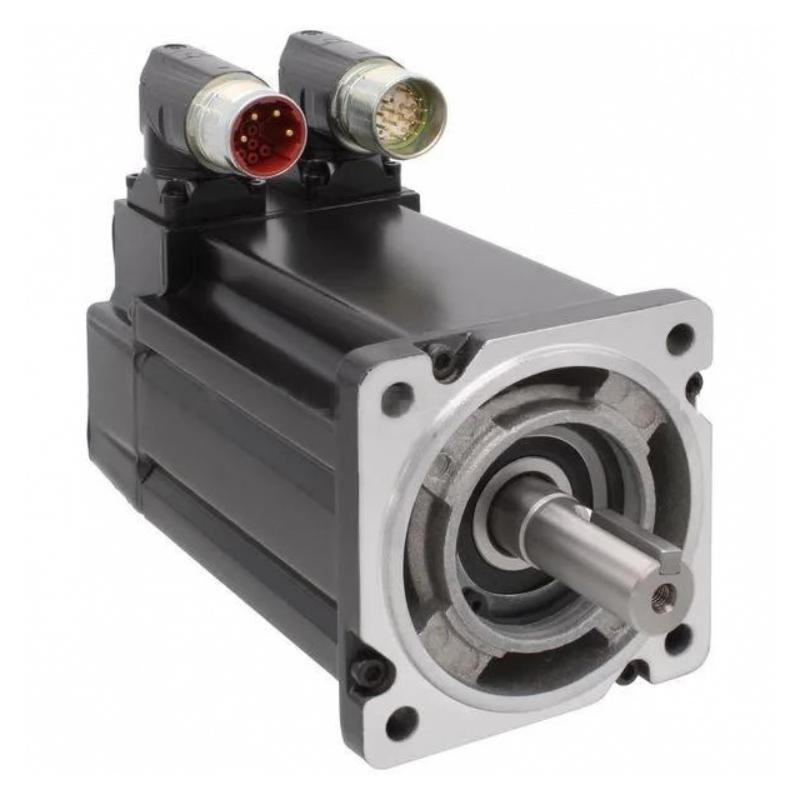
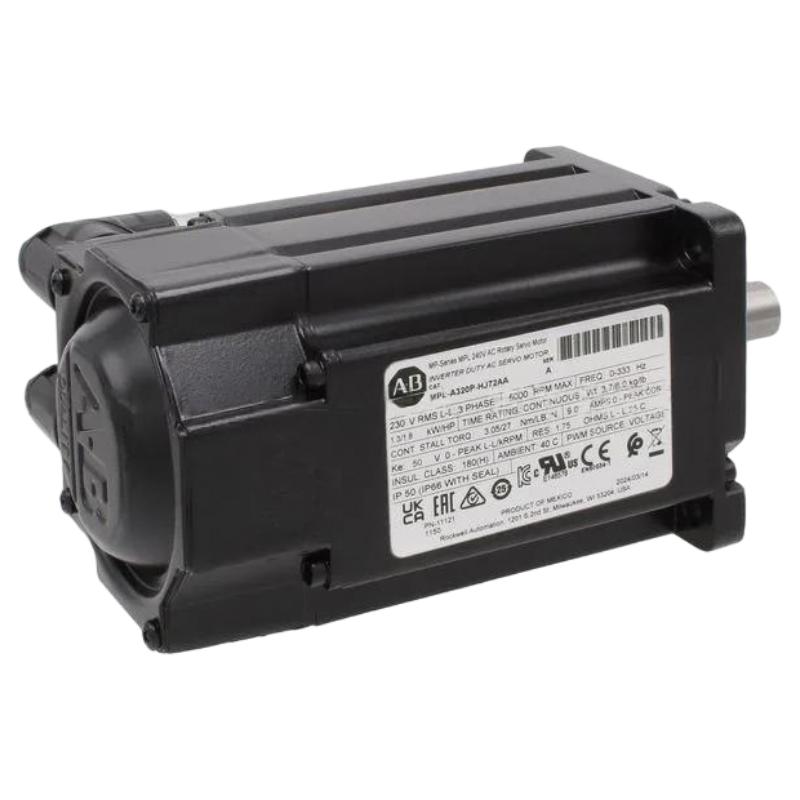
The Allen-Bradley MPL-A320P-HJ72AA is part of the MP-Series MPL low-inertia servo motor family and is intended for high-response machine motion. Its 100 mm frame allows it to fit into relatively compact machine designs while still providing the speed and feedback characteristics required by modern servo systems.
The motor's high-speed capability makes it especially useful for applications where rapid rotary movement is required. With a maximum speed of 5000 rpm and approximately 2.24 N·m rated torque, the motor is optimized toward responsive motion rather than high continuous torque at low speed.
The single-turn high-resolution encoder is an essential component of the closed-loop architecture. It provides the servo drive with real-time information about motor position and rotation, allowing the controller to regulate the axis accurately.
The low-inertia construction is valuable in machinery that repeatedly changes speed. A motor with lower rotor inertia can respond more quickly to acceleration and deceleration commands, which can contribute to shorter positioning cycles when the rest of the motion system is correctly engineered.
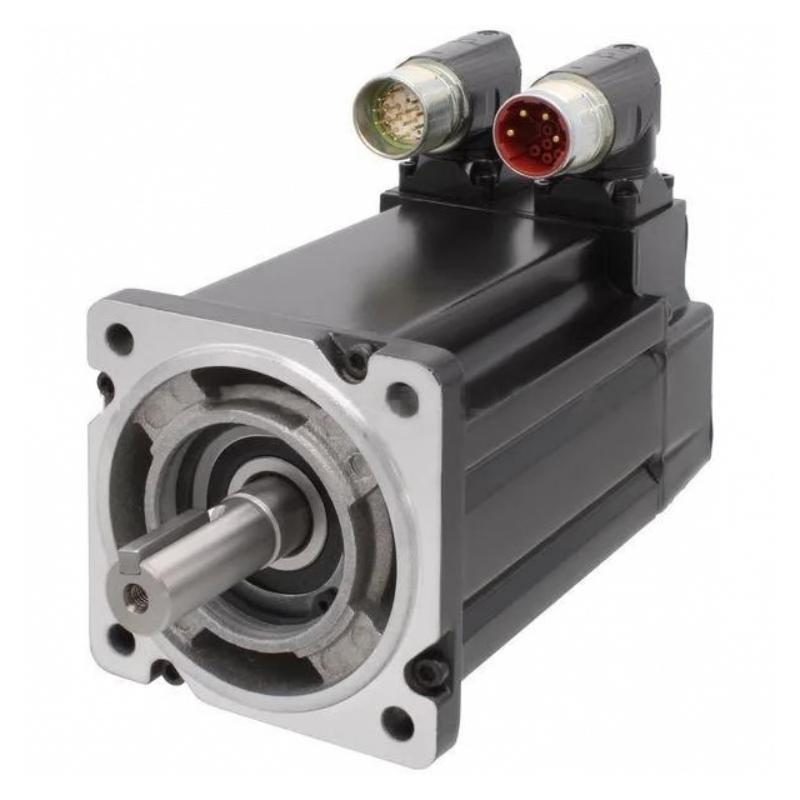
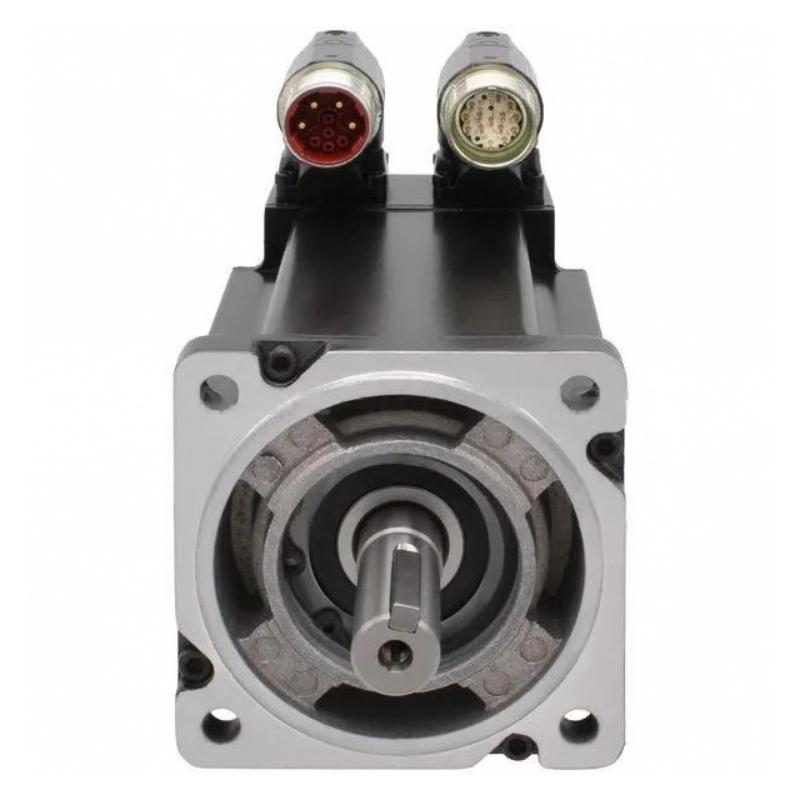
Mechanical integration is supported by an IEC metric mounting arrangement, a 100 mm mounting flange, and a keyless shaft extension. The right-angle SpeedTEC DIN connector can rotate through 180 degrees, offering additional flexibility for cable routing.
Since this version does not include a holding brake, the application should be assessed according to the behavior of the driven load when power is removed. For suitable non-gravity-loaded axes, the no-brake configuration provides a clean and efficient servo motor package.
Technical Specifications
Parameter
Specification
Brand
Allen-Bradley
Manufacturer
Rockwell Automation
Model
MPL-A320P-HJ72AA
Product Family
MP-Series MPL
Product Type
AC Rotary Servo Motor
Motor Design
Low-Inertia Brushless Servo Motor
Voltage Class
240 V AC
Armature Voltage
230 V
Frame Size
100 mm
Magnet Stack Length
50.8 mm
Maximum Speed
5000 rpm
Rated Torque
Approximately 2.24 N·m
Feedback
Single-Turn High-Resolution Encoder
Encoder Type
1024 Sin/Cos
Shaft Configuration
Keyless Shaft Extension
Brake
No Brake
Connector
SpeedTEC DIN Connector
Connector Position
Right Angle, 180° Rotatable
Mounting
IEC Metric, Free Mounting Holes
Mounting Flange
100 mm Bolt Circle
Frame Dimension
100 mm
Weight
3.70 kg (8.16 lb)
When installing a high-speed servo motor, correct shaft alignment and coupling installation are particularly important. Encoder wiring should also be properly secured and separated from potential sources of electrical interference. The servo drive should be configured with the correct motor data before the axis is placed into normal production service.
Recommended Related Models
Model
Product Type
Relationship
Allen-Bradley MPL-A320P-HH72AA
MP-Series Servo Motor
Closely related high-speed configuration
Allen-Bradley MPL-A320H-SK72AA
MP-Series Servo Motor
Related 100 mm low-inertia motor
Allen-Bradley MPL-A320H-SK74AA
MP-Series Servo Motor
Similar frame with holding-brake configuration
Allen-Bradley MPL-A430P-SK72AA
MP-Series Servo Motor
Higher-capacity MPL servo motor
Allen-Bradley MPL-A310P-MK74AA
MP-Series Servo Motor
Compact related high-speed configuration
When choosing a replacement, the complete catalog number should be compared rather than matching only the 100 mm frame. Speed rating, torque, encoder configuration, shaft design, connector arrangement, brake status, and drive compatibility are all important selection factors.
Popular Related MP-Series Servo Motors
Model
Product Family
Typical Application
Allen-Bradley MPL-A310P-MK74AA
MP-Series MPL
Compact high-speed machine axes
Allen-Bradley MPL-A320H-SK72AA
MP-Series MPL
Low-inertia positioning systems
Allen-Bradley MPL-A320H-SK74AA
MP-Series MPL
Servo axes requiring holding capability
Allen-Bradley MPL-A320P-HH72AA
MP-Series MPL
High-speed automated machinery
Allen-Bradley MPL-A320P-HJ72AA
MP-Series MPL
High-speed positioning and indexing
Allen-Bradley MPL-A430P-SK72AA
MP-Series MPL
Higher-capacity industrial motion systems
The Allen-Bradley MPL-A320P-HJ72AA MP-Series Servo Motor is a compact, high-speed motion-control solution for automated equipment that demands fast response and dependable closed-loop positioning. Its 100 mm frame, low-inertia construction, 5000 rpm maximum speed, high-resolution encoder feedback, and keyless shaft design make it particularly well suited to high-cycle packaging, indexing, assembly, and precision machine applications.
Industrial Applications
The Allen-Bradley MPL-A320P-HJ72AA is a compact low-inertia AC servo motor from the MP-Series MPL family, developed for machine axes that require fast response, accurate feedback, and repeatable rotary motion. Its 100 mm frame provides a practical balance between installation space and servo performance, making it suitable for a broad range of automated equipment.
This motor can be used in packaging and filling machinery, assembly equipment, indexing systems, printing and converting machines, automated material handling, machine tools, and other production equipment where the motor repeatedly accelerates, decelerates, and changes position.
The high-speed design is especially useful for applications where short machine cycles are important. Instead of relying on a conventional induction motor and separate speed-control arrangement, the servo system can use encoder feedback to regulate the motor's actual movement and respond to changes in the commanded position or speed.
The MPL-A320P-HJ72AA is also designed with practical mechanical integration in mind. Its keyless shaft arrangement can accommodate compatible coupling systems, while the right-angle SpeedTEC DIN connector provides greater freedom when routing cables within a machine enclosure.
For OEMs and industrial maintenance teams, this motor offers a compact motion-control solution for applications where speed, repeatability, and precise closed-loop operation are key performance requirements.
Engineering Advantages at a Glance
A major strength of the MPL-A320P-HJ72AA is its low-inertia rotor design. Lower rotational inertia allows the motor to respond quickly to command changes, which is particularly valuable in applications involving frequent indexing, rapid positioning, and repetitive production cycles.
The motor is designed for high-speed operation up to 5000 rpm, providing additional operating headroom for machinery where rotational speed directly influences throughput. Its approximately 2.24 N·m rated torque complements the high-speed characteristics of the motor.
Another important feature is the integrated single-turn high-resolution encoder. Servo control depends on accurate feedback, and the encoder provides the drive with information about actual shaft position and speed. This allows the controller to make continuous adjustments during operation.
The motor uses a keyless shaft extension, eliminating the need for a conventional shaft key when the mechanical coupling is designed for a keyless interface. This can simplify certain machine layouts and coupling arrangements.
The right-angle SpeedTEC DIN connector can be rotated through 180 degrees. For equipment with restricted installation space, this feature can make cable routing considerably easier and help keep motor wiring away from moving mechanical components.
The MPL-A320P-HJ72AA is configured without a holding brake. It is therefore particularly appropriate for horizontal rotary axes and applications where a mechanical holding brake is not required. Vertical axes should be evaluated carefully to determine whether a brake-equipped configuration is more appropriate.
Technical FAQs
1. What is the MPL-A320P-HJ72AA designed to control?
It is designed for closed-loop rotary motion applications where the servo drive needs precise control of motor speed, torque, and position. Typical applications include indexing, packaging, assembly, and automated machine axes.
2. What is the maximum speed of the MPL-A320P-HJ72AA?
The motor is designed for operation up to 5000 rpm. Actual machine speed should be determined by the compatible servo drive, load, mechanical transmission, and application duty cycle.
3. What feedback technology does this servo motor use?
The MPL-A320P-HJ72AA uses a single-turn high-resolution encoder. The encoder provides position and speed feedback to the servo control system for closed-loop operation.
4. Does this model have a built-in holding brake?
No. This is a no-brake configuration. If the motor is used on a vertical axis or another mechanism where the load must remain stationary after servo power is removed, a suitable braking solution should be considered.
5. What is the rated torque of this motor?
The MPL-A320P-HJ72AA has an approximate rated torque of 2.24 N·m. Motor sizing should also account for peak torque, acceleration requirements, load inertia, friction, and the machine's duty cycle.
6. Why is a low-inertia servo motor useful in packaging equipment?
Packaging machines often perform rapid and repeated movements. Low rotor inertia helps the motor accelerate and decelerate quickly, potentially reducing cycle time while maintaining controlled motion.
7. What type of shaft is used?
The motor uses a keyless shaft extension. A compatible coupling should be selected based on the shaft interface, transmitted torque, alignment requirements, and machine operating conditions.
8. How should the encoder be connected during installation?
The encoder connection should use the appropriate compatible feedback cable and connector arrangement. Wiring should be kept secure and routed away from sources of excessive electrical noise and mechanical interference.
9. What should be checked when commissioning this servo motor?
Verify motor and drive compatibility, motor parameters, encoder feedback, power connections, grounding, mechanical coupling, shaft alignment, and speed/torque limits. Servo tuning should be performed after the mechanical installation has been verified.
10. What could cause the motor to vibrate during operation?
Potential causes include incorrect servo tuning, mechanical misalignment, coupling problems, excessive load inertia, bearing or mechanical issues, unstable feedback, or inappropriate motion parameters. Both the electrical control loop and mechanical assembly should be checked.