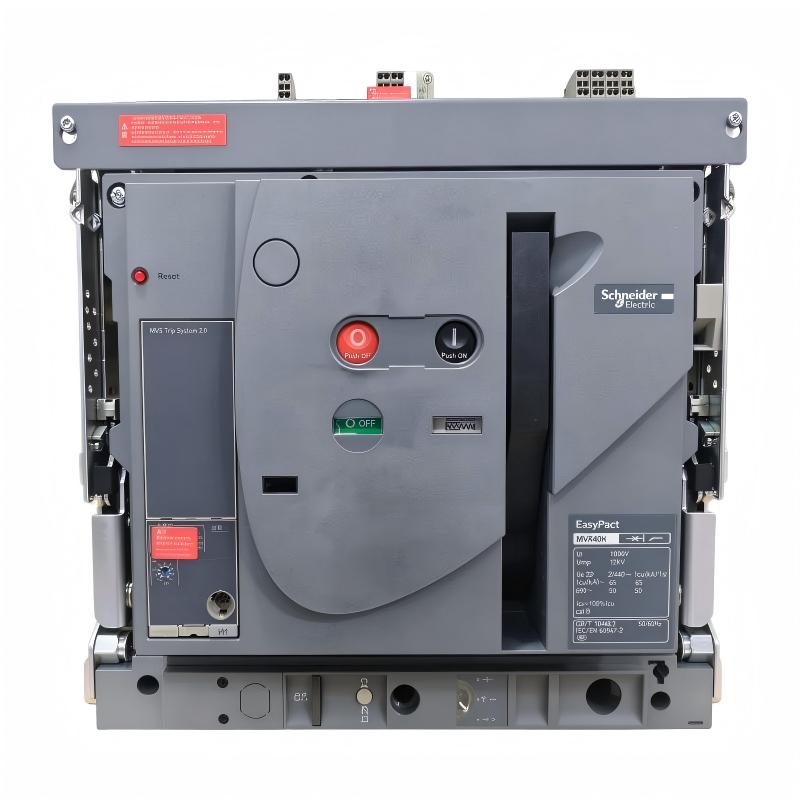
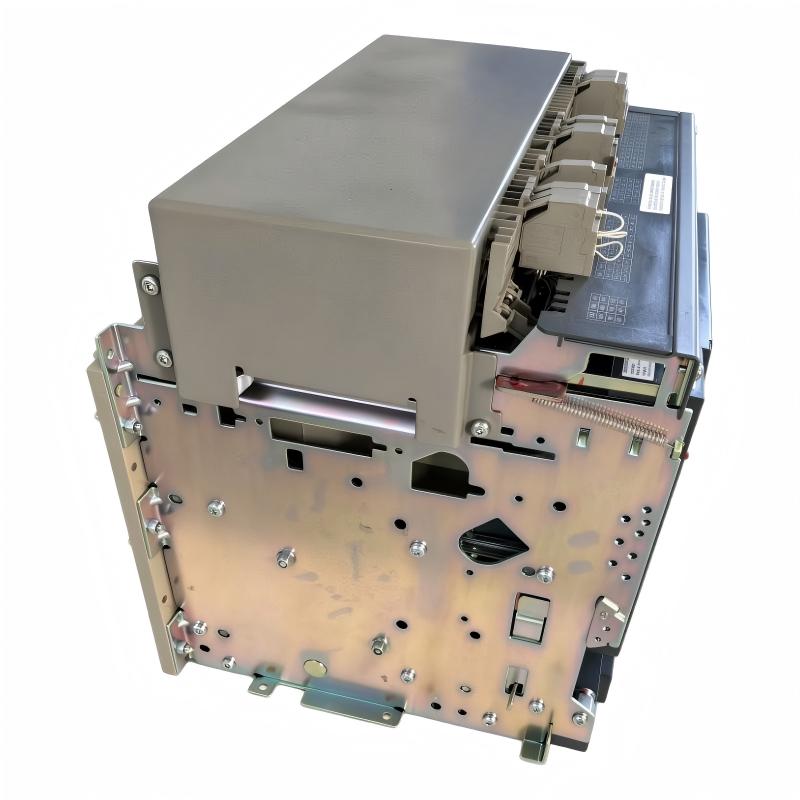
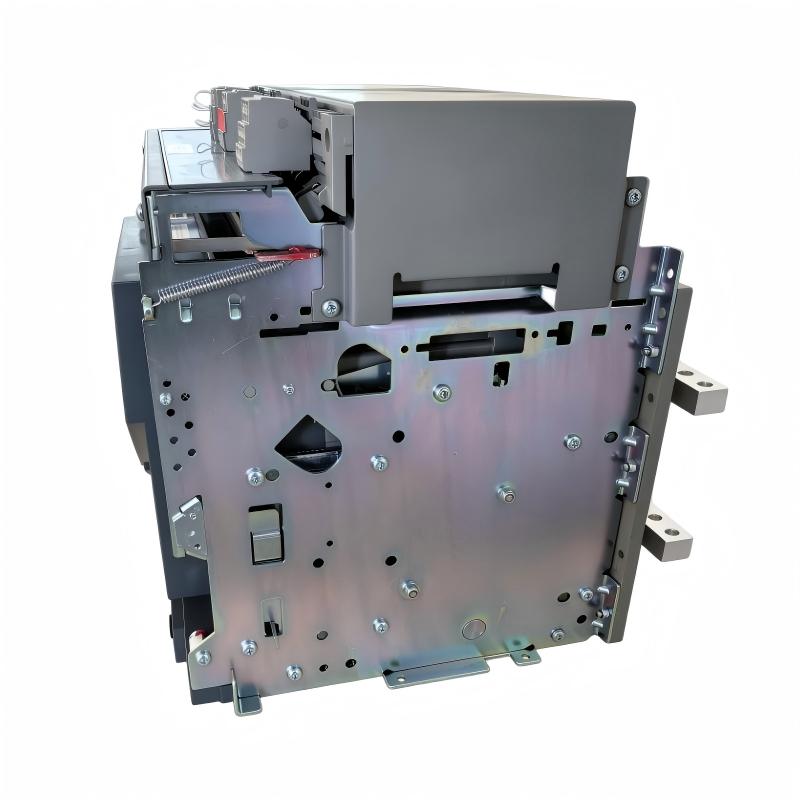
Brand:Schneider PLC Item No.:MVS40H Product Origin:France Product Dimensions:439 x 441 x 395 mm Product Weight:90 kg Payment:T/T, Western Union, Credit Card Goods_stock:15 Shipping Port:Xiamen, China Lead Time:1-3 Days Condition:Brand New And Original Warranty:1 Year Certificate:COO
The Schneider MVS40H Circuit Breaker is a model-specific component for consideration in industrial electrical distribution and equipment maintenance projects. Choosing the appropriate breaker requires careful attention to the system's electrical requirements, fault-interruption needs, protection coordination, and mechanical installation constraints.
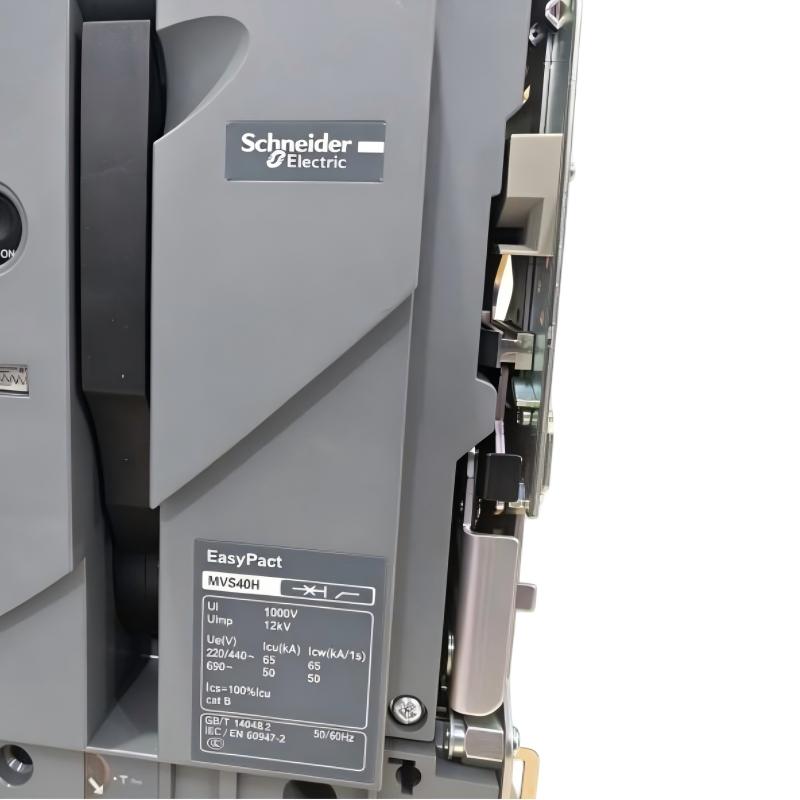
For maintenance engineers, electrical contractors, panel builders, and industrial procurement teams, accurate model identification is the first step toward sourcing the correct component. The complete model number should be checked alongside the nameplate details and technical documentation to confirm that the supplied device meets the requirements of the intended application.
When purchasing the MVS40H, verify its electrical ratings, trip-unit configuration, connection arrangement, and compatibility with the existing assembly. This helps reduce procurement errors and supports dependable electrical system maintenance.
Technical Specifications
Parameter
Specification
Brand
Schneider Electric
Model
MVS40H
Product Type
Circuit Breaker
Dimensions (L × W × H)
439 × 441 × 395 mm
Weight
90 kg
Weight in Pounds
198.42 lb
Rated Current
Verify against the product nameplate
Rated Voltage
Verify against exact model documentation
Breaking Capacity
Confirm from manufacturer specifications
Pole Configuration
Verify for the supplied version
Trip-Unit Configuration
Confirm for the supplied version
Mounting and Connections
Verify before installation
Note: Dimensions and weight are based on the supplied product information. Confirm all electrical ratings, protection characteristics, and installation requirements against the documentation for the exact device before purchasing or commissioning.
Recommended Related Models
The following Schneider model designations may be useful starting points for researching related circuit-breaker requirements. Their exact specifications and compatibility with the MVS40H must be verified before procurement.
Model
Product Type
Schneider MVS12H
Circuit Breaker
Schneider MVS16H
Circuit Breaker
Schneider MVS20H
Circuit Breaker
Schneider MVS25H
Circuit Breaker
Schneider MVS32H
Circuit Breaker
Popular Related Models
For electrical maintenance, replacement planning, and industrial spare-parts sourcing, buyers may also review the following model designations when comparing their requirements.
Model
Selection Consideration
Schneider MVS16H
Verify ratings and configuration
Schneider MVS20H
Verify ratings and configuration
Schneider MVS25H
Verify ratings and configuration
Schneider MVS32H
Verify ratings and configuration
Schneider MVS40H
Specified model; confirm nameplate details
Procurement recommendation:Related model numbers are reference points for product identification, not confirmation of direct interchangeability. Before ordering, verify the exact model, rated current, operating voltage, breaking capacity, trip-unit configuration, mounting arrangement, and terminal requirements.
Applications
The Schneider MVS40H Circuit Breaker is a model-specific electrical component for power distribution systems that require appropriate circuit protection and dependable switching. In industrial facilities, commercial buildings, and electrical infrastructure projects, selecting a breaker that matches the system's operating conditions is essential for protecting equipment and maintaining reliable power distribution.
Potential application areas include:
Industrial power distribution: Integration into compatible electrical distribution assemblies.
Manufacturing facilities: Supporting circuit protection for factory power systems and production infrastructure.
Switchboards and distribution panels: Installation in assemblies designed for the breaker's verified electrical and mechanical requirements.
Commercial infrastructure: Use in suitably engineered power distribution installations.
Maintenance and replacement projects: Sourcing a specific breaker for existing equipment after confirming compatibility.
Before selecting the MVS40H, verify its rated current, operating voltage, breaking capacity, trip-unit configuration, and connection requirements against the exact product nameplate and applicable technical documentation.
Advantages
1. Supports Electrical Circuit Protection
A correctly selected circuit breaker helps interrupt fault currents within its specified operating limits, contributing to the protection of circuits and connected equipment.
2. Supports Organized Power Distribution
When matched to the system design, the breaker can form part of an electrical distribution arrangement with clearly defined protection functions.
3. Facilitates Maintenance Activities
The complete model designation helps technicians identify the required component when planning maintenance or sourcing a replacement.
4. Enables Protection Coordination
Appropriate coordination with upstream and downstream protective devices can help isolate faults and minimize unnecessary interruptions to unaffected circuits.
5. Improves Procurement Accuracy
Providing the exact MVS40H designation and nameplate information helps purchasing teams communicate their requirements and reduce model-selection errors.
6. Encourages Reliable Replacement Planning
Verifying the electrical ratings, connection arrangement, and mounting requirements before installation helps reduce compatibility issues during equipment replacement.
Technical FAQs
Q1: What is the main function of the Schneider MVS40H Circuit Breaker?
Its product category is a circuit breaker used for electrical switching and protection. The exact protection functions and operating characteristics must be confirmed from the documentation for the supplied device.
Q2: How can I confirm the rated current of the MVS40H?
Check the product nameplate and applicable technical documentation. The model designation alone does not establish the rated current.
Q3: What does breaking capacity mean?
Breaking capacity specifies the fault current a circuit breaker can interrupt under defined conditions. The selected device must be appropriate for the prospective short-circuit current at its installation point.
Q4: Can the MVS40H be used in an industrial switchboard?
Its suitability depends on the switchboard design and the breaker's verified electrical ratings, mounting arrangement, connection requirements, and protection characteristics.
Q5: Why is protection coordination important?
Protection coordination helps ensure that the appropriate device responds to a fault, reducing unnecessary interruptions to other parts of the electrical system.
Q6: Can the MVS40H replace another circuit breaker of similar size?
Not based on dimensions alone. Verify the rated voltage and current, breaking capacity, pole configuration, trip characteristics, mounting arrangement, and terminal connections before approving a replacement.
Q7: What should be checked before commissioning?
Qualified personnel should verify the mounting, connections, electrical ratings, protection settings where applicable, and compliance with manufacturer instructions and local electrical requirements.
Q8: What are common causes of repeated tripping?
Potential causes include overload, short circuit, ground fault where applicable, incorrect protection settings, or a fault in connected equipment. The cause should be investigated before the circuit is re-energized.
Q9: Does the MVS40H require additional protective devices?
This depends on the protection functions of the exact configuration and the overall system design. A qualified electrical professional should determine whether supplementary protection is required.
Q10: What information should be provided when sourcing a replacement?
Provide the full model designation, nameplate photographs, electrical ratings, trip-unit details if applicable, required quantity, and information about the existing installation. This helps establish whether the proposed device is compatible.