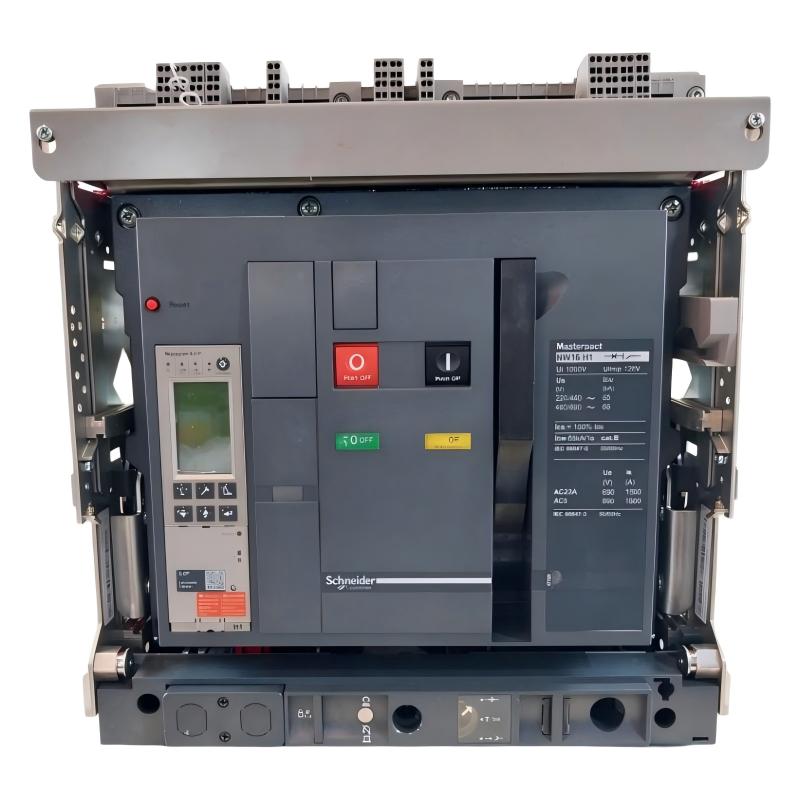
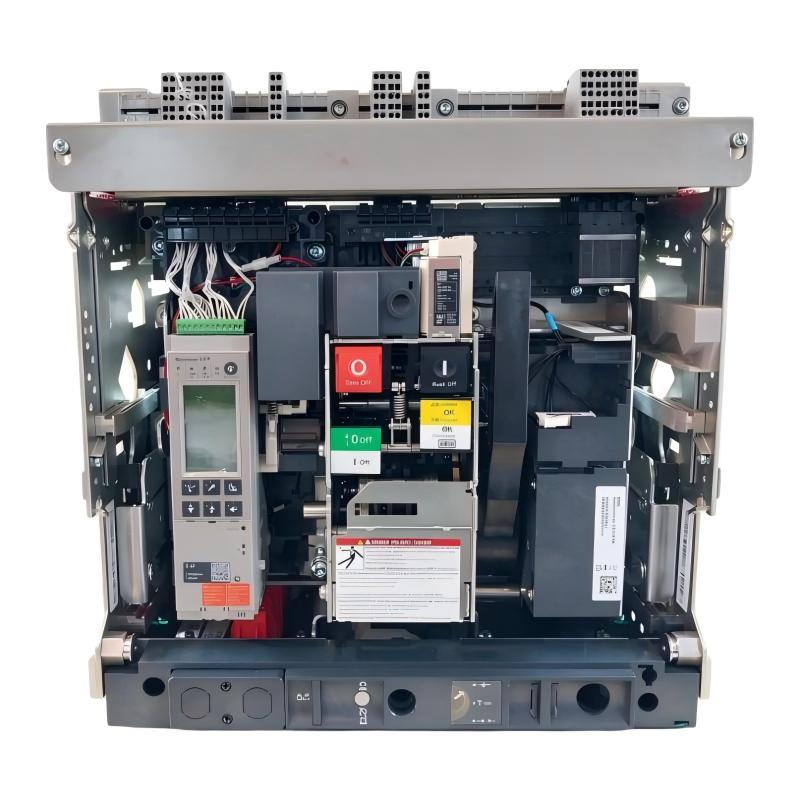
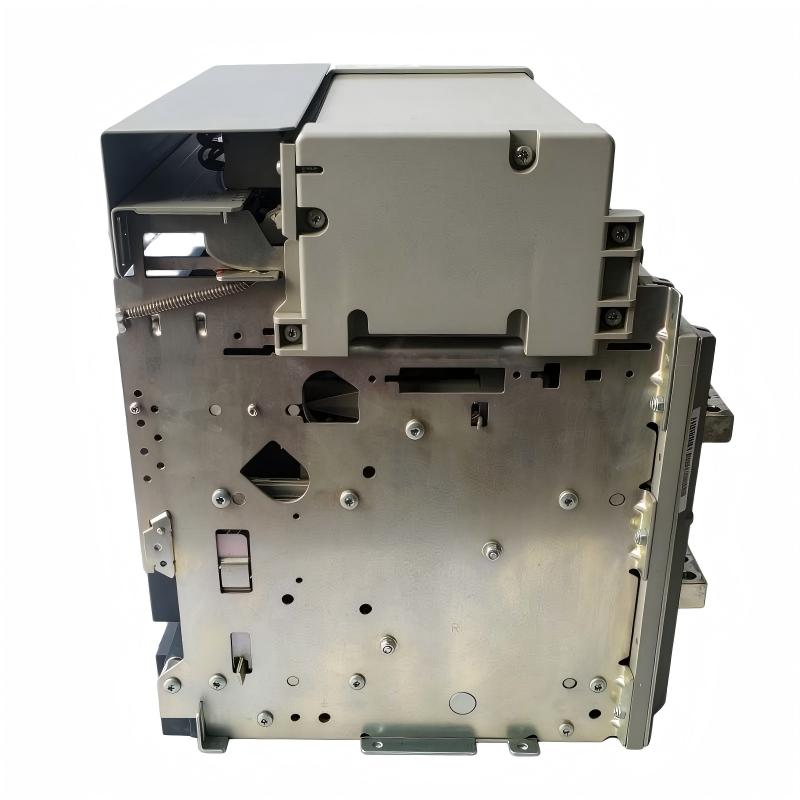
Brand:Schneider PLC Item No.:NW16H1 Product Origin:France Product Dimensions:439 x 441 x 395 mm Product Weight:90 kg Payment:T/T, Western Union, Credit Card Goods_stock:15 Shipping Port:Xiamen, China Lead Time:1-3 Days Condition:Brand New And Original Warranty:1 Year Certificate:COO
The Schneider NW16H1 Breaker belongs to the Schneider Electric NW Series low-voltage circuit breaker range. It is intended for electrical distribution applications where circuit switching and protection form part of the overall power system design.
In industrial facilities, circuit breakers help manage electrical distribution and interrupt current when specified fault or overload conditions occur. Appropriate selection requires consideration of system voltage, rated current, prospective short-circuit current, trip unit characteristics, and coordination with other protective devices.
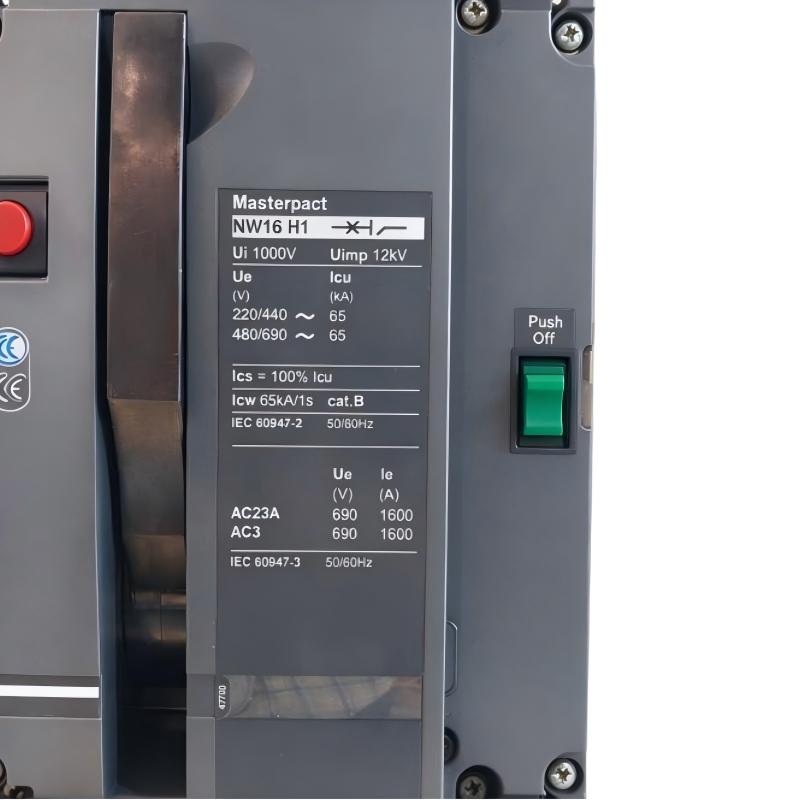
For electrical contractors, panel builders, and maintenance departments, the complete model designation is an important reference when sourcing replacement equipment. Before purchasing the NW16H1, compare its nameplate information and physical configuration with the original equipment documentation to help ensure suitable integration.
Technical Specifications
Parameter
Specification
Brand
Schneider Electric
Model
NW16H1
Product Type
Circuit Breaker
Product Series
NW Series
Product Category
Low-Voltage Circuit Protection
Dimensions
439 × 441 × 395 mm
Weight
90 kg / 198.42 lb
Application
Low-Voltage Power Distribution
Installation
Compatible Switchboard or Distribution Assembly
Note: Rated current, operating voltage, breaking capacity, trip unit type, pole configuration, and accessory options should be confirmed against the specific product nameplate and manufacturer documentation.
Recommended Related Models
The following Schneider Electric NW Series models may be useful for comparison when evaluating circuit breakers within the same broader product family.
Model
Product Description
Schneider NW08N1
NW Series Circuit Breaker
Schneider NW10N1
NW Series Circuit Breaker
Schneider NW12N1
NW Series Circuit Breaker
Schneider NW20N1
NW Series Circuit Breaker
Schneider NW25N1
NW Series Circuit Breaker
These models are related product references, not confirmed direct replacements for the NW16H1. Electrical ratings, frame configuration, trip unit, and installation compatibility must be verified before selecting an alternative.
Popular Related Models
Other Schneider Electric circuit breaker models that may be relevant to industrial power distribution equipment sourcing include:
Model
Product Description
Schneider NW40HA
NW Series Circuit Breaker
Schneider MT12H1
MT Series Circuit Breaker
Schneider MT16H1
MT Series Circuit Breaker
Schneider MT20H1
MT Series Circuit Breaker
Schneider MT32H1
MT Series Circuit Breaker
For replacement or upgrade projects, compare the complete model number, rated current, breaking capacity, trip unit, mounting arrangement, and terminal configuration before ordering.
Applications
The Schneider NW16H1 Breaker is intended for low-voltage electrical distribution systems where dependable circuit switching and protection are required. It can be considered for industrial and commercial installations involving distribution feeders, switchboard assemblies, and electrical infrastructure.
Typical application areas include:
Industrial Power Distribution: Used in electrical distribution systems supplying manufacturing equipment, production lines, and industrial facilities.
Main Distribution Panels: Integrated into compatible low-voltage switchboards and power distribution assemblies.
Feeder Circuit Protection: Supports protection arrangements for electrical feeders supplying downstream equipment and distribution circuits.
Commercial Infrastructure: Suitable for evaluation in large buildings and commercial electrical installations.
Maintenance and Replacement: Relevant to equipment sourcing and maintenance projects involving compatible Schneider Electric NW Series circuit breakers.
Key Features and Integration Advantages
The NW16H1 is designed for consideration in electrical distribution applications where protection coordination, equipment compatibility, and long-term maintenance planning are important.
Low-Voltage Circuit Protection: Provides circuit switching and protection within an appropriately engineered electrical distribution system.
Industrial Distribution Integration: Can be evaluated for use in compatible switchboard and distribution panel configurations.
Protection Coordination: Supports coordinated protection arrangements when matched with suitable upstream and downstream protective devices.
Equipment Identification: Its complete model reference helps maintenance personnel identify the required breaker during procurement and replacement.
System Compatibility Assessment: Allows selection to be evaluated against existing mounting, connection, and electrical requirements.
Maintenance Planning: Supports inspection and servicing according to applicable manufacturer procedures.
Technical FAQs
Q1: What is the primary function of the Schneider NW16H1 Breaker?
It is intended for circuit switching and protection in low-voltage electrical distribution systems. Its specific protective functions depend on the installed trip unit and product configuration.
Q2: Which electrical parameters should be confirmed before purchasing?
Check rated current, rated operational voltage, frequency, short-circuit breaking capacity, pole configuration, and trip unit characteristics.
Q3: Can the NW16H1 be installed in an existing switchboard?
Installation compatibility depends on the switchboard design, mounting arrangement, busbar connections, terminal configuration, and required electrical clearances. Confirm these details before installation.
Q4: Why is breaking capacity important when selecting a circuit breaker?
Breaking capacity indicates the maximum prospective short-circuit current the breaker can interrupt under specified conditions. The selected rating must be suitable for the available fault current at the installation point.
Q5: How does the trip unit contribute to electrical protection?
The trip unit monitors circuit conditions and initiates breaker operation when configured protection thresholds are exceeded. Available protection functions depend on the installed version.
Q6: Can the NW16H1 be used in motor feeder applications?
It may be considered as part of a suitable motor feeder protection arrangement. Motor starting current, overload protection, short-circuit protection, and coordination with other devices must be evaluated.
Q7: What are common reasons for unexpected breaker tripping?
Potential causes include circuit overload, short circuits, insulation deterioration, incorrect protection settings, loose connections, or faults in downstream equipment. The underlying cause should be identified before resetting the breaker.
Q8: What is the purpose of protection selectivity?
Protection selectivity helps ensure that the protective device closest to a fault operates first, reducing unnecessary interruptions to unaffected sections of the electrical distribution system.
Q9: Are accessories from other Schneider NW Series breakers interchangeable with the NW16H1?
Not automatically. Compatibility depends on the exact breaker frame, configuration, and accessory reference. Manufacturer documentation should be checked before selecting replacement accessories.
Q10: What safety procedures should be followed during maintenance?
Isolate all relevant power sources, apply lockout/tagout procedures, verify the absence of voltage, and follow the manufacturer's service instructions. Maintenance should be performed by qualified electrical personnel.