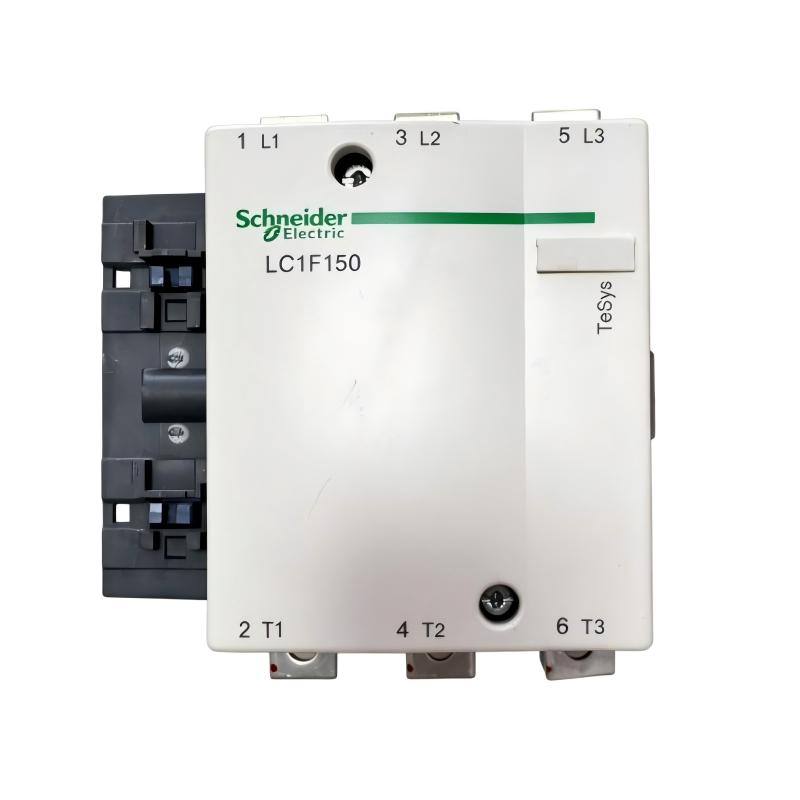
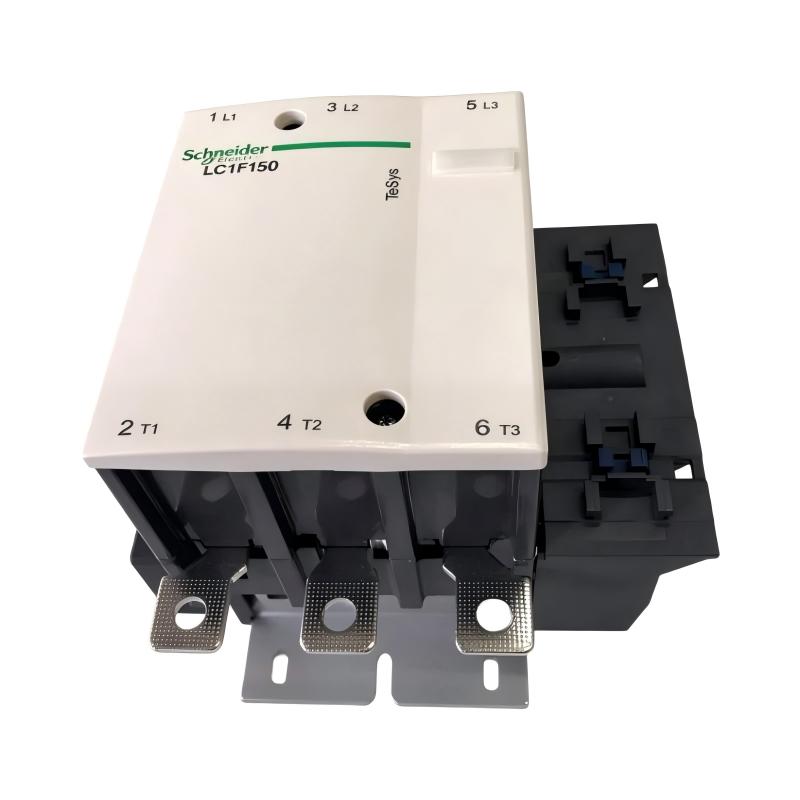
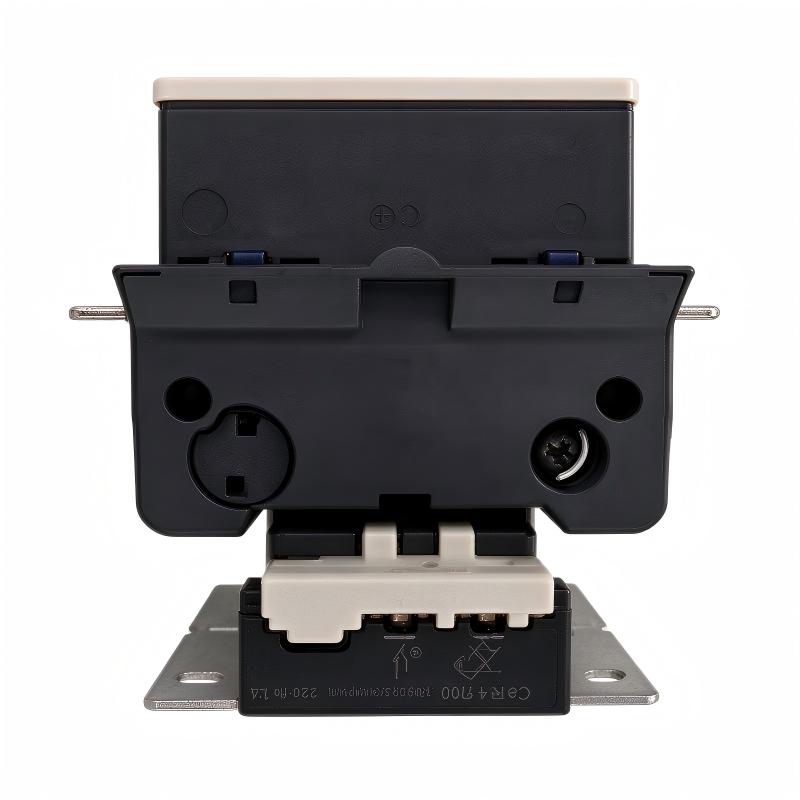
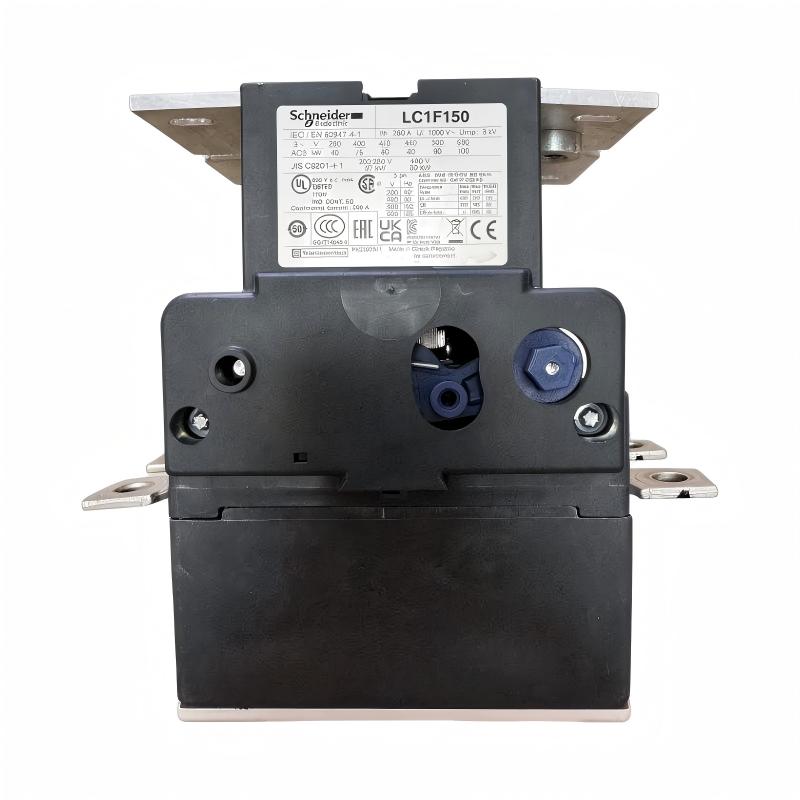
Brand:Schneider PLC Item No.:LC1F150R7 Product Origin:France Product Dimensions:170 x 163.5 x 171 mm Product Weight:3.43 kg Payment:T/T, Western Union, Credit Card Goods_stock:15 Shipping Port:Xiamen, China Lead Time:1-3 Days Condition:Brand New And Original Warranty:1 Year Certificate:COO
Introduction – Schneider Electric LC1F150R7 Industrial Contactor
The Schneider Electric LC1F150R7 Contactor is an industrial electrical switching component intended for applications requiring controlled operation of power circuits. As part of an industrial control installation, a contactor provides an interface between the control circuit and the electrical load.
In modern manufacturing facilities, switching components must work reliably with motor protection devices, programmable controllers, control relays, and other electrical equipment. Correct contactor selection is therefore an important part of maintaining the overall stability of an industrial electrical system.
The LC1F150R7 is relevant to procurement projects where this exact model designation is specified. When sourcing a replacement, engineers should verify the coil characteristics, operational ratings, terminal arrangement, and compatibility with the existing electrical installation.
For industrial distributors, maintenance contractors, and automation system integrators, accurate model identification helps simplify spare-parts management and supports efficient equipment maintenance.
Whether required for an existing control cabinet or an industrial refurbishment project, the LC1F150R7 should be selected according to verified application requirements rather than model appearance alone.
Technical Specifications – LC1F150R7 Product Data
Parameter
Specification
Brand
Schneider Electric
Model
LC1F150R7
Product Type
Contactor
Product Category
Industrial Switching Equipment
Operating Principle
Electromagnetic
Dimensions (H × W × D)
170 × 163.5 × 171 mm
Weight
3.43 kg / 7.56 lb
Main Function
Electrical Circuit Switching
Application
Industrial Motor and Power Control
Installation
Electrical Control Panels
Manufacturer
Schneider Electric
Technical Note: Before purchasing or commissioning, verify the coil voltage, rated operational current, utilization category, terminal configuration, and applicable manufacturer specifications. These details are essential for ensuring correct electrical integration.
Recommended Related Models – Schneider Electric LC1F Contactor Series
The following Schneider Electric contactor models may be useful when comparing products for industrial maintenance, electrical panel construction, and spare-parts procurement.
Model
Product Description
LC1F115
Schneider Electric Contactor
LC1F150
Schneider Electric Contactor
LC1F185
Schneider Electric Contactor
LC1F225
Schneider Electric Contactor
LC1F265
Schneider Electric Contactor
LC1F330
Schneider Electric Contactor
LC1F400
Schneider Electric Contactor
LC1F500
Schneider Electric Contactor
LC1F630
Schneider Electric Contactor
LC1F800
Schneider Electric Contactor
Popular Related Models – Schneider Electric Industrial Switching Equipment
For customers maintaining Schneider Electric electrical installations, the following additional models may also be relevant to contactor replacement and industrial control applications.
Model
Product Description
LC1D09
TeSys D Contactor
LC1D12
TeSys D Contactor
LC1D18
TeSys D Contactor
LC1D25
TeSys D Contactor
LC1D32
TeSys D Contactor
LC1D40
TeSys D Contactor
LC1D50
TeSys D Contactor
LC1D65
TeSys D Contactor
LC1D80
TeSys D Contactor
LC1D95
TeSys D Contactor
Schneider Electric Industrial Automation Sourcing
We support industrial buyers, equipment distributors, and maintenance teams with sourcing assistance for Schneider Electric contactors, PLC modules, circuit breakers, motor control products, and other industrial automation components. Provide your complete model number to help identify the required product and check availability.
Applications – Power Switching for Industrial Operations
The Schneider Electric LC1F150R7 Contactor is an industrial switching component designed for integration into electrical control and power management systems. Contactors are essential in industrial installations where electrical loads must be switched through controlled electromagnetic operation.
The LC1F150R7 can be considered for suitable applications involving industrial machinery, motor control assemblies, and electrical distribution systems, subject to verification of its rated operating conditions.
Typical application areas include:
Industrial Motor Control: Used in appropriately rated motor switching circuits for manufacturing machinery, production equipment, and mechanical drive systems.
Factory Automation: Integrated into electrical control cabinets to support automated machinery and coordinated production processes.
Pump and Compressor Installations: Applied in suitable switching arrangements for industrial fluid handling and compressed-air equipment.
HVAC Systems: Used in electrical control assemblies for commercial and industrial heating, ventilation, and cooling equipment.
Conveyor and Material Handling: Supports switching functions in automated transportation systems and industrial handling machinery.
Power Control Assemblies: Incorporated into electrical panels where controlled switching and coordination with protective devices are required.
For replacement projects, the complete model number and electrical characteristics should be checked to ensure compatibility with the original installation.
Advantages – Operational Benefits of the LC1F150R7
Reliable Electromagnetic Switching
The electromagnetic operating mechanism enables the contactor to respond to external control signals. This arrangement supports the controlled operation of electrical circuits in industrial environments.
Integration into Industrial Control Architectures
The LC1F150R7 can be evaluated for compatible control panel applications. Proper selection allows it to operate alongside circuit breakers, overload relays, motor protection devices, and automation controllers.
Convenient Equipment Replacement
Accurate model identification is important when maintaining existing machinery. Using the specified product number helps purchasing and maintenance teams avoid unnecessary substitutions.
Support for Industrial Motor Applications
Contactors are commonly incorporated into motor starter arrangements and automated equipment control systems. Selecting a model with appropriate electrical ratings helps maintain reliable switching performance.
Practical Electrical Panel Integration
Industrial control panels require components that work together as a coordinated system. Correct contactor selection contributes to organized wiring, dependable switching, and easier maintenance.
Established Schneider Electric Product Portfolio
Schneider Electric provides a broad range of industrial switching and automation equipment. This established product ecosystem gives system integrators and maintenance professionals additional flexibility when sourcing compatible components.
Technical FAQs – Engineering and Maintenance Guide
Q1: What is the main function of the Schneider LC1F150R7 Contactor?
A: The LC1F150R7 is identified as an industrial contactor. Its primary function is to control electrical circuit switching through an electromagnetic operating mechanism.
Q2: How does an electromagnetic contactor operate?
A: When the coil receives its specified voltage, it creates a magnetic field that moves the internal contact mechanism. This changes the state of the main contacts and controls the connected power circuit.
Q3: What should be checked before energizing the LC1F150R7?
A: Verify the coil voltage, control circuit wiring, terminal connections, grounding arrangements where applicable, and the electrical compatibility of the connected load.
Q4: Can the LC1F150R7 be incorporated into a motor starter?
A: A contactor can form part of a motor starter when its operational ratings and utilization category are suitable for the motor. Appropriate overload and short-circuit protection must also be included.
Q5: Why might a contactor produce excessive humming?
A: Possible causes include unstable coil voltage, contamination of magnetic surfaces, loose mechanical components, or deterioration of the magnetic operating mechanism. Inspection should be carried out with appropriate electrical isolation.
Q6: What causes the main contacts to overheat?
A: Excessive loading, loose terminals, contact deterioration, unsuitable operating conditions, or incorrect component selection can contribute to overheating. The actual cause should be identified before returning the equipment to service.
Q7: How can engineers distinguish coil failure from a control circuit problem?
A: Check the control supply voltage at the coil terminals and inspect the associated wiring and switching devices. If the correct voltage is present but the coil does not operate, further testing of the coil and mechanism may be necessary.
Q8: What is the role of an auxiliary contact in a contactor circuit?
A: Auxiliary contacts provide additional switching signals for status indication, electrical interlocking, and control logic. Their configuration and electrical ratings must match the intended circuit.
Q9: Does a contactor provide short-circuit protection?
A: No. A contactor is primarily a switching device. Short-circuit protection must be provided by an appropriately selected protective device, coordinated with the contactor according to the installation requirements.
Q10: What information is necessary when ordering an LC1F150R7 replacement?
A: Confirm the complete model number, coil voltage, rated operational current, utilization category, contact configuration, mounting requirements, and accessory compatibility. These checks help prevent incorrect replacement selection.