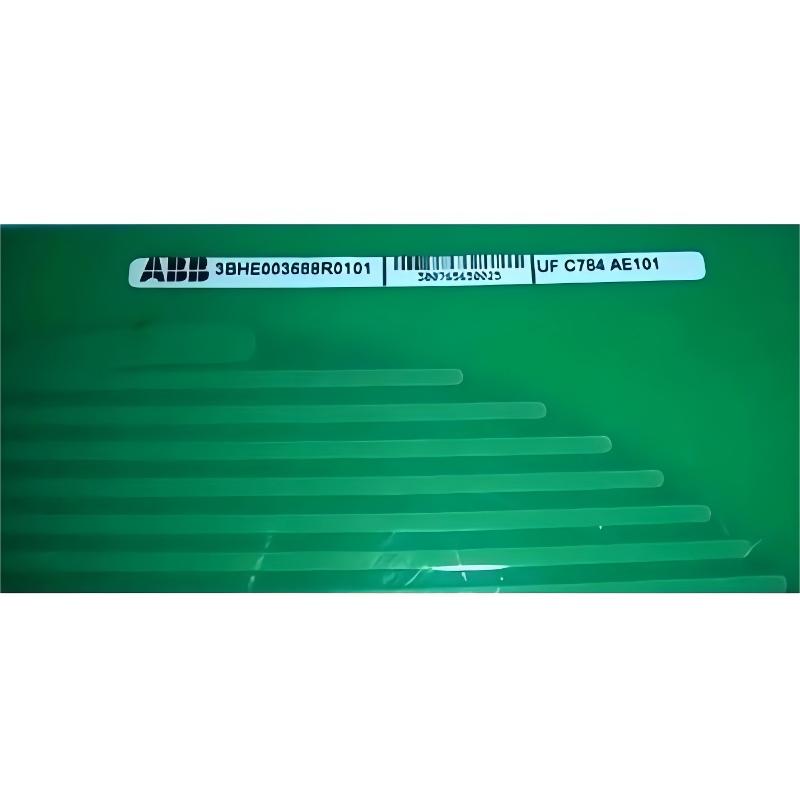
Brand:ABB PLC Item No.:UF C784 AE101 Product Origin:Sweden (SE) Product Dimensions:120 × 160 × 35 mm Product Weight:0.7 kg Payment:T/T, Western Union, Credit Card Goods_stock:15 Shipping Port:Xiamen, China Lead Time:1-3 Days Condition:Brand New And Original Warranty:1 Year Certificate:COO
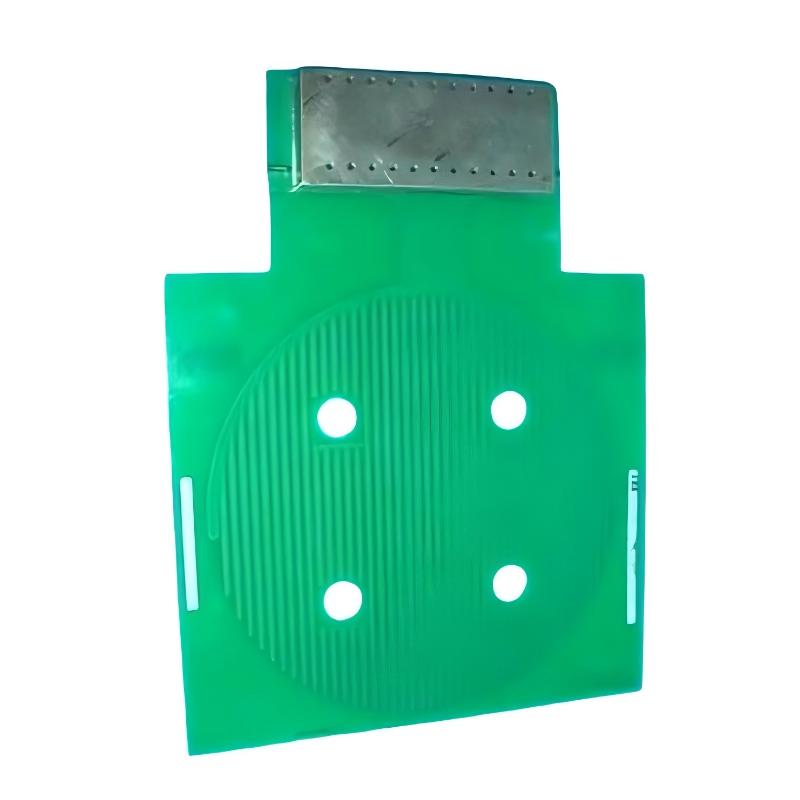
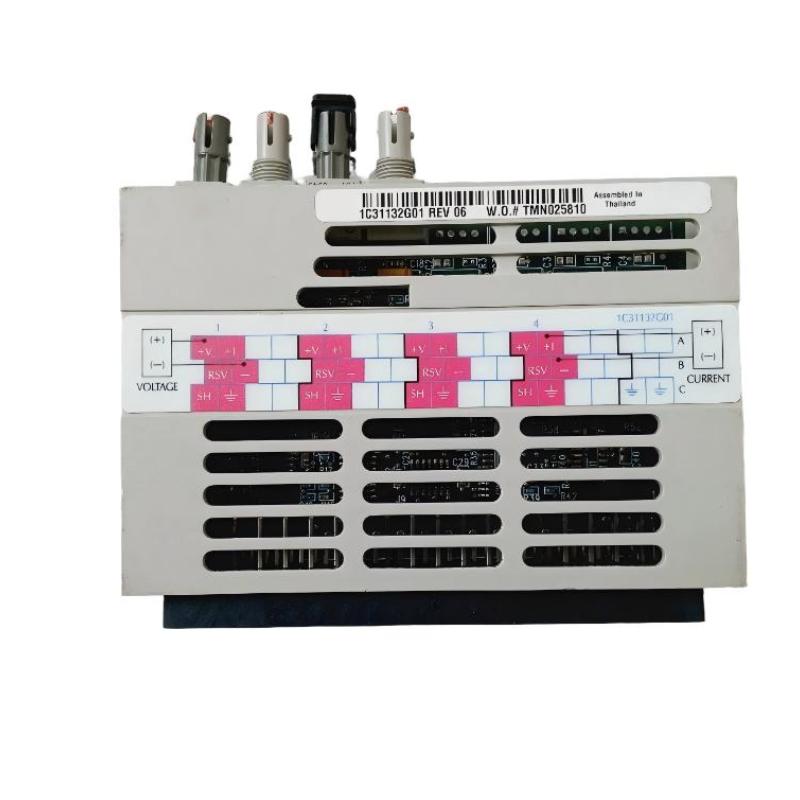
The ABB UF C784 AE101 3BHE003688R0101 FSCD Board is a high-precision industrial module engineered to support fast-scan conditioning and robust diagnostic delivery in ABB’s high-performance control environments. With its optimized circuitry and dependable communication pathways, the board enables rapid, reliable signal processing essential for modern automation systems.
Built to thrive in high-interference industrial facilities, the UF C784 AE101 is an excellent choice for system upgrades, preventive maintenance strategies, or long-term operation in mission-critical automation infrastructures. Its reliability, clean signal handling, and exceptional build integrity make it a trusted component for engineers focused on stability and continuity.
Technical Specifications
Parameter
Value
Product Name
UF C784 AE101 FSCD Board
Part Number
3BHE003688R0101
Module Type
FSCD (Fast Scan & Condition Diagnostics) Board
Primary Function
High-speed signal conditioning & diagnostic distribution
Dimensions
120 × 160 × 35 mm
Weight
0.7 kg
PCB Structure
Multilayer, high-density routing with controlled impedance
Noise Protection
Shielded layers, filtered I/O stages
Operating Environment
Industrial, high-noise, high-vibration areas
Build Quality
ABB-grade industrial components, long-life design
Recommended Related Models
Model
Description
ABB UF C784 AE102
Complementary FSCD variant with extended signal capability
ABB UF C760 BE1142
Main controller for distributed automation systems
ABB UF C765 AE102
Interface and routing PCB for subsystem coordination
ABB UF C762 AE101
CVMI board for precision signal conditioning
ABB DI820
Digital input module for core control systems
ABB AI830A
High-accuracy analog input module
ABB DO820
Digital output module for industrial actuation
ABB CI854A
Protocol communication interface module
ABB AO810
Precision analog output module
ABB PM861A
High-performance processor module
Popular Related Models
Model
Description
ABB PM864
Widely deployed CPU for advanced automation frameworks
ABB CI853
High-reliability communication module
ABB DI830
High-speed digital input unit
ABB DO840
Industrial-grade digital output module
ABB AI845
High-resolution analog process input module
ABB AO820
Precision analog output card
ABB PM865
High-capacity controller for demanding systems
ABB TU830V1
Terminal base unit for modular connections
ABB 07AC91
Classic analog interface module
ABB 5STP1752H000 Power Module
High-power ABB semiconductor module
Applications
The ABB UF C784 AE101 FSCD Board is purpose-built for fast-signal conditioning, diagnostic management, and communication distribution inside ABB’s advanced control platforms. It is widely implemented in high-reliability plants such as gas/steam turbine control systems, petrochemical unit operations, energy distribution infrastructure, and precision manufacturing lines. Wherever rapid signal response and consistent diagnostic integrity are required, this FSCD board plays a key role in maintaining operational stability.
Advantages
The UF C784 AE101 offers a combination of speed, durability, and dependable processing that makes it a strong performer in demanding environments. Its architecture focuses on low-latency signal handling, robust isolation, and clean digital transitions, ensuring that critical control loops remain unaffected by noise or heavy load conditions. With ABB’s stringent manufacturing standards, the module provides long-duty operation, strong vibration endurance, and excellent thermal stability—qualities highly valued in industrial automation systems seeking predictable uptime.
FAQs
1. What functional role does the FSCD architecture serve in ABB control systems?
It handles fast-scan signal conditioning and distributes processed diagnostics to the central controller for real-time decision-making.
2. How does the board maintain timing accuracy during rapid signal transitions?
Critical signal routes are impedance-controlled and clock-synchronized to eliminate jitter and maintain deterministic timing.
3. What type of isolation is implemented between high-speed channels?
High-speed galvanic isolation prevents channel cross-talk and protects sensitive logic paths.
4. How does the FSCD board monitor its own health status?
It features internal diagnostic flags for supply integrity, active channel performance, and communication stability.
5. What techniques are used to reduce digital noise on the board?
Shielded ground layers, filtered inputs, and balanced trace routing minimize noise during high-speed switching.
6. Can this board operate within redundant control architectures?
Yes, it synchronizes cleanly with redundant processors and supports mirrored data paths for failover.
7. What happens if a channel experiences abnormal loading?
Current-limited drivers isolate the affected channel and prevent disturbances from spreading across the backplane.
8. How does the board handle thermal fluctuations during extended operation?
Temperature-stable components and copper-based heat dissipation zones ensure consistent performance.
9. What data integrity protections are included for high-speed communication lines?
Error-checking logic continuously validates timing and ensures that corrupted packets are rejected.
10. How is internal firmware structured to support rapid-scan diagnostics?
Firmware is segmented into low-level signal routines and high-level diagnostic tasks, enabling parallel operation without latency penalties.