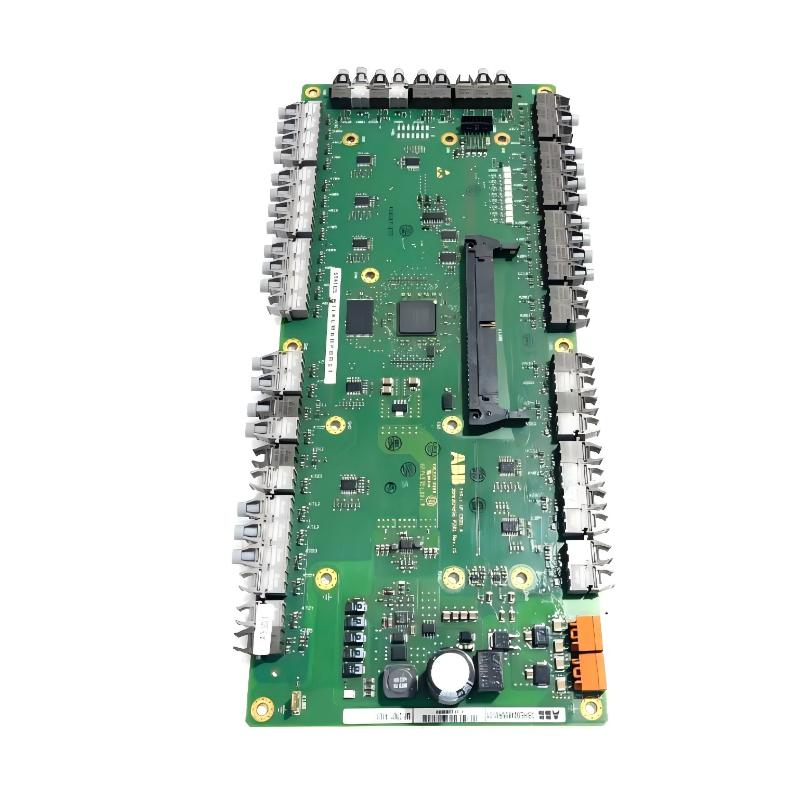
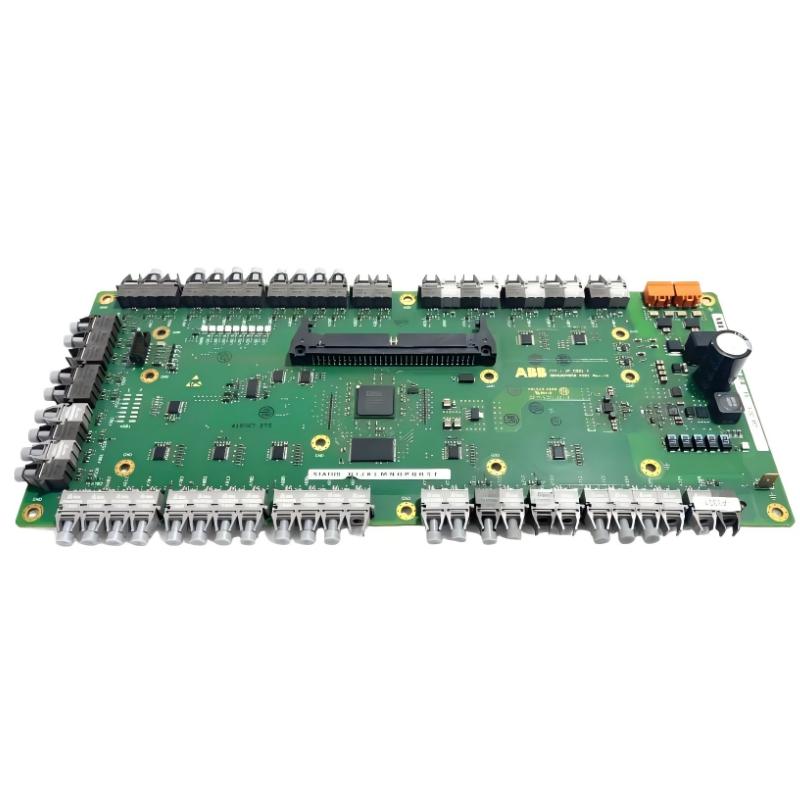
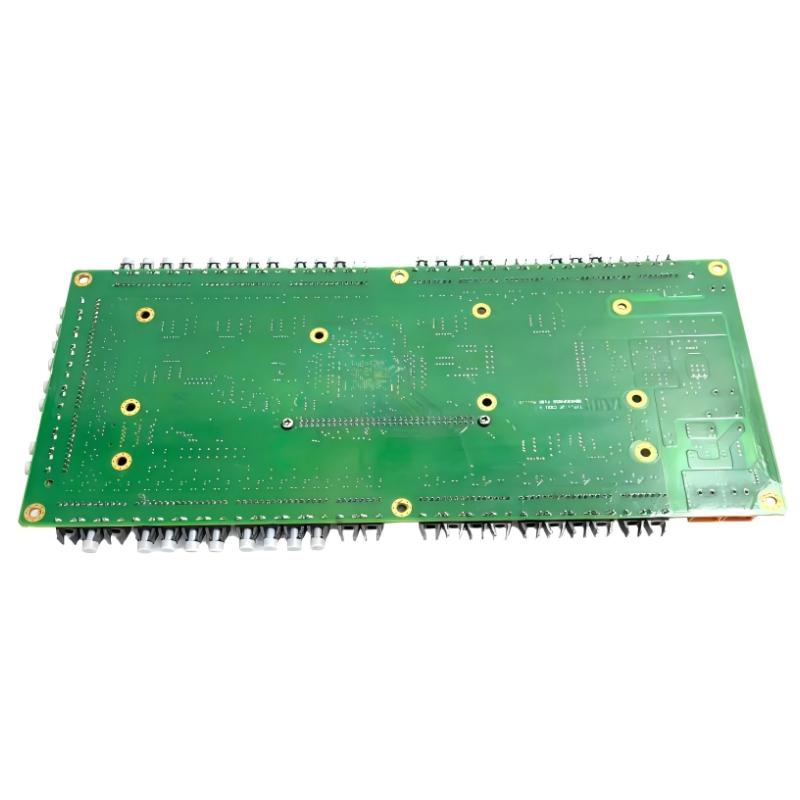
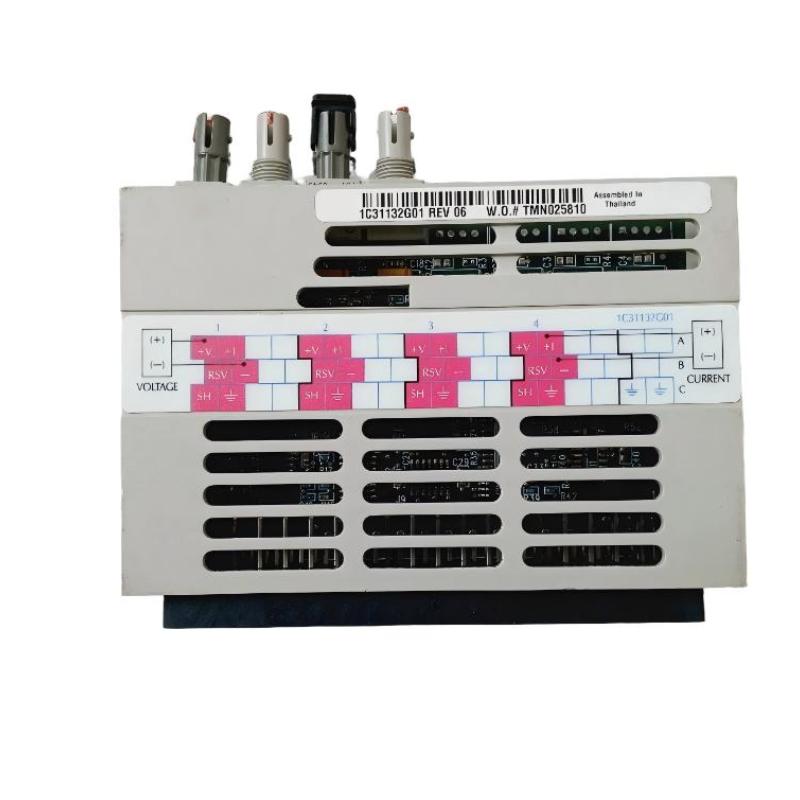
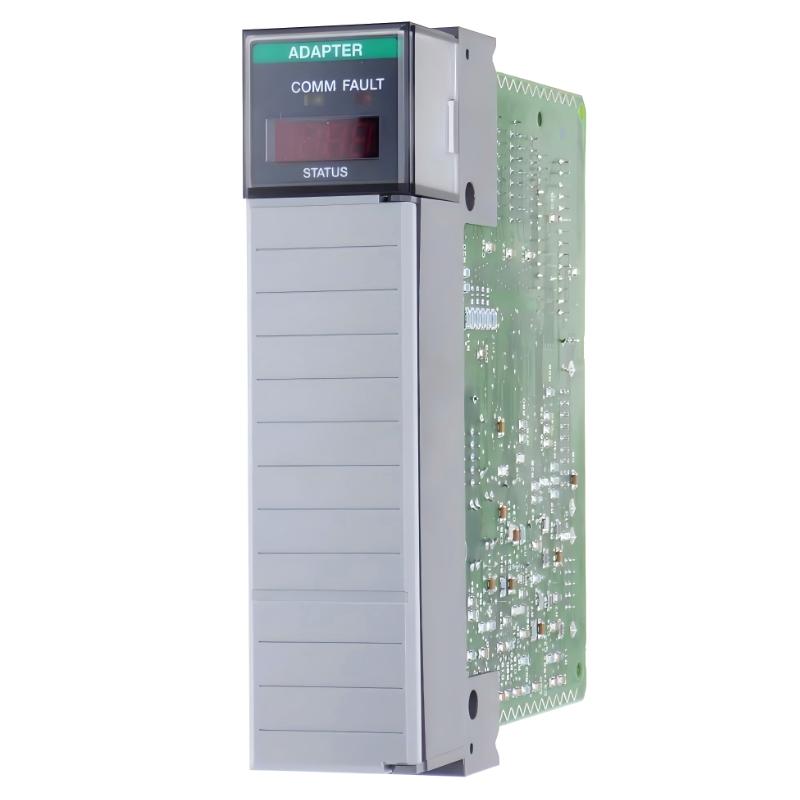
Brand:ABB PLC Item No.:UF C921 A101 Product Origin:Sweden (SE) Product Dimensions:220 × 220 × 35 mm Product Weight:0.3 kg Payment:T/T, Western Union, Credit Card Goods_stock:15 Shipping Port:Xiamen, China Lead Time:1-3 Days Condition:Brand New And Original Warranty:1 Year Certificate:COO
The ABB UF C921 A101 3BHE024855R0101 Interface Board is a high-reliability communication backbone designed to unify signals within ABB’s automation architectures. Its robust construction, precise routing, and intelligent signal conditioning make it a foundational element in systems that demand uninterrupted, accurate communication.
From power plants and refineries to complex production lines, the UF C921 A101 ensures that control commands, diagnostic data, and sensor feedback travel consistently and securely across the automation network. Its design emphasizes long-term dependability, supporting mission-critical operations where stability cannot be compromised.
Technical Specifications
Parameter
Value
Product Name
UF C921 A101 Interface Board
Part Number
3BHE024855R0101
Module Type
Interface Board
Function
Communication bridging, signal conditioning, subsystem interfacing
Dimensions
220 × 220 × 35 mm
Weight
0.3 kg
PCB Structure
Multilayer industrial-grade interface routing
Communication Features
Buffered drivers, isolation domains, deterministic data paths
Operating Environment
Industrial, high-noise, high-uptime installations
Build Quality
Reinforced PCB, robust thermal and electrical stability
Recommended Related Models
Model
Description
ABB UF C921 A102
Alternate interface variant with extended connectivity
ABB UF C760 BE1142
Main controller module for ABB automation systems
ABB UF C784 AE101
High-speed FSCD diagnostic and conditioning board
ABB UF C765 AE102
Subsystem routing and coordination PCB
ABB UF C762 AE101
CVMI board for precise analog/digital conditioning
ABB DI820
Digital input module for system integration
ABB AI830A
High-stability analog input unit
ABB CI854A
Communication interface for external industrial protocols
ABB AO810
Precision analog output module
ABB PM861A
High-performance processor unit
Popular Related Models
Model
Description
ABB PM864
Widely deployed CPU module in ABB control platforms
ABB CI853
Reliable communication interface module
ABB DI830
High-speed digital input board
ABB DO840
Robust industrial digital output module
ABB AI845
High-resolution analog acquisition module
ABB AO820
Precision analog output module
ABB PM865
High-capacity processor for complex applications
ABB TU830V1
Terminal base for modular system expansion
ABB 07AC91
Legacy analog module with wide installed base
ABB 5STP1752H000 Power Module
ABB high-power semiconductor module for drive systems
Applications
The ABB UF C921 A101 Interface Board is designed for high-integrity communication and subsystem integration within ABB’s advanced control environments. It is commonly used in coordinated drive systems, turbine automation platforms, distributed control architectures, and industrial plants requiring clean signal interfacing between CPUs, I/O modules, and external intelligent devices. Its wide compatibility and resilient design make it a reliable choice for system modernization, expansion, and long-term replacement programs.
Advantages
Engineered for stability and precision, the UF C921 A101 offers exceptional signal clarity and communication consistency. Its balanced layout, optimized impedance pathways, and noise-controlled design ensure that complex automation systems remain synchronized even under heavy load or challenging environmental conditions. Engineers appreciate its durability, predictable performance, and ease of integration—qualities that help minimize downtime and simplify maintenance across ABB-controlled installations.
FAQs
1. What communication role does the UF C921 A101 serve within an ABB rack?
It functions as a central interface node, mediating signal exchange between processing modules, I/O units, and external communication lines.
2. How does the board maintain high communication integrity during bus congestion?
Buffered drivers and priority-managed channels ensure deterministic throughput even under maximum communication load.
3. What isolation methods are employed to protect critical circuits?
The board uses galvanic isolation and segmented grounding to separate logic, I/O, and power domains.
4. How does the board manage timing alignment across multiple connected modules?
Clock-synchronized routing ensures that timing-critical signals remain phase-consistent across the control system.
5. What protection measures prevent faulty devices from affecting the rack?
Current-limited line drivers and fault-containment gating isolate abnormal connections instantly.
6. Does the board support diagnostic feedback to the main controller?
Yes. It reports bus status, signal quality metrics, and interface health indicators.
7. How is EMI mitigated on this interface board?
Shielded routing layers, line filtering, and reinforced ground planes minimize EMI susceptibility.
8. How does the board ensure integrity during long cable or external device connections?
Impedance-matched ports and filtering components stabilize signal transmission over extended distances.
9. What internal features help maintain communication stability during temperature fluctuations?
Thermally stable drivers and compensation algorithms sustain consistent electrical characteristics.
10. How does the board handle failover in redundant control systems?
It supports synchronized dual-channel communication, enabling seamless switchover without disrupting data flow.