GE Fanuc PLC

  1. Home
  2. Products
  3. GE Fanuc PLC
  4. GE IC660BSM021 Genius I/O Bus Switching Module for Redundant Serial Communications
GE IC660BSM021 Genius I/O Bus Switching Module for Redundant Serial Communications

GE IC660BSM021 Genius I/O Bus Switching Module for Redundant Serial Communications

0.0
Points

Brand:GE Fanuc PLC
Item No.:GE IC660BSM021
Product Origin:USA
Product Dimensions:90 × 57 × 64 mm
Product Weight:0.36 kg
Payment:T/T, Western Union, Credit Card
Goods_stock:15
Shipping Port:Xiamen, China
Lead Time:1-3 Days
Condition:Brand New And Original
Warranty:1 Year
Certificate:COO

Add to cart

IC660BSM021-3IC660BSM021IC660BSM021-2IC660BSM021-1

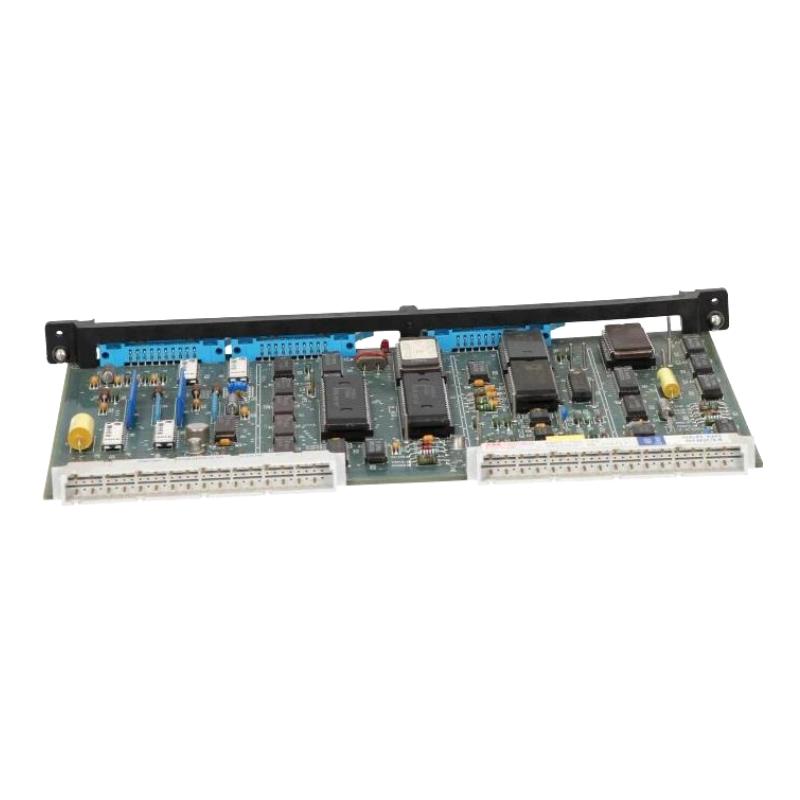
The GE IC660BSM021 is a Genius I/O Bus Switching Module engineered to enhance communication resilience in GE Fanuc distributed I/O systems by enabling connections to dual serial buses. This module provides a redundant communications path between I/O blocks and bus controllers, ensuring continuity of data flow even when one bus experiences a fault. It’s ideal for industrial automation applications that demand high availability and fault-tolerant network design.


Technical Specifications

SpecificationDetails
ModelGE IC660BSM021
Module TypeBus Switching Module
Primary FunctionSerial bus redundancy and switching
Operating Voltage18–56 VDC (typical 24/48 VDC)
Maximum Current Draw~60 mA @ 48 VDC
I/O CapacitySupports up to 8 discrete/analog blocks per bus; expandable with additional BSMs
Switching Time< 20 ms
Redundancy SupportDual bus configuration for failover
Control MethodControlled via CPU or handheld monitor
IndicatorsLED indication for active bus selection
Reliability Rating≥ 500,000 operations
Dimensions (approx.)~3.50 × 2.25 × 2.50 in (90 × 57 × 64 mm)
Weight (approx.)~0.36 kg
MountingPanel or rack mount

Recommended Related Models

To build a fully redundant and robust IC660 distributed I/O architecture, the following modules pair naturally with the IC660BSM021:

  • GE IC660BCM501 – Bus controller module for coordinating serial traffic

  • GE IC660BBS100 / BBS101 / BBS102 / BBS103 – Various power supply modules

  • GE IC660BBR101 – Communication interface module

  • GE IC660CHS002 – System base and I/O carrier module

Together, these strengthen power, communication, and overall system resilience.


Popular Allen-Bradley Models

In cross-vendor environments or when comparing architecture approaches, engineers often reference Allen-Bradley modules with similar data-path or redundancy goals:

  • Allen-Bradley 1756-EN2T – Ethernet/IP communication module

  • Allen-Bradley 1756-CNB – ControlNet network communication

  • Allen-Bradley 1734-AENT – POINT I/O Ethernet adapter

  • Allen-Bradley 1788-ENBT – Industrial network interface module

These serve as alternatives for distributed control and segmented network duties in Allen-Bradley systems.
Applications

The IC660BSM021 Bus Switching Module is suitable for:

  • Industrial automation lines demanding fault tolerance

  • Process control networks requiring continuous data flow

  • Distributed I/O installations with extended serial communication paths

  • Critical systems where bus failure must not interrupt operation

  • Redundant or high-availability architectures deploying dual buses

Its redundancy capability adds a layer of network defense in environments where uptime is vital.


Advantages

  • Dual bus redundancy enables automatic failover in the event of communication loss

  • Fast switching response minimizes data disruption

  • Compact footprint integrates easily into crowded racks

  • Clear visual status feedback via LED indicators

  • Expandable I/O support with multiple BSMs on the same network

  • Supports CPU or handheld control of bus switching

These strengths make the IC660BSM021 an effective choice for maintaining uninterrupted network communications in automated systems.


Technical FAQs

  1. What is the GE IC660BSM021 used for?
    It provides bus-level redundancy by switching I/O devices between two serial buses in a GE Fanuc distributed I/O system.

  2. Does it work with both discrete and analog blocks?
    Yes, it supports up to 8 discrete or analog I/O blocks per bus and can scale to more with additional BSM units.

  3. How fast does the module switch buses?
    Switching occurs in under approximately 20 milliseconds.

  4. Can the switching be controlled manually?
    Yes, the CPU or a handheld monitor can command the switch between buses.

  5. What happens if neither bus is operational?
    The module remains on the last active bus until communication is restored or power is cycled.

  6. Do the LEDs show which bus is active?
    Yes, an LED indicator lights when the secondary bus (Bus B) is active.

  7. Is this module suitable for mission-critical systems?
    Yes, it enhances reliability by adding a redundant communications path.

  8. What input voltage does it require?
    It is typically powered from 18–56 VDC (24/48 VDC common).

  9. Can it be used with CPU redundancy?
    Yes, if each bus interface module resides in separate CPUs, CPU redundancy is supported.

  10. How many I/O blocks can one BSM support?
    One module can support up to 8 blocks; multiple BSMs can be added to expand up to approximately 30 blocks. 


Look forward to your comments!Comment
Latest comments
Tags:
Need Assistance? Chat with Us on WhatsApp!
Need Assistance? Click to Inquire
Back to top