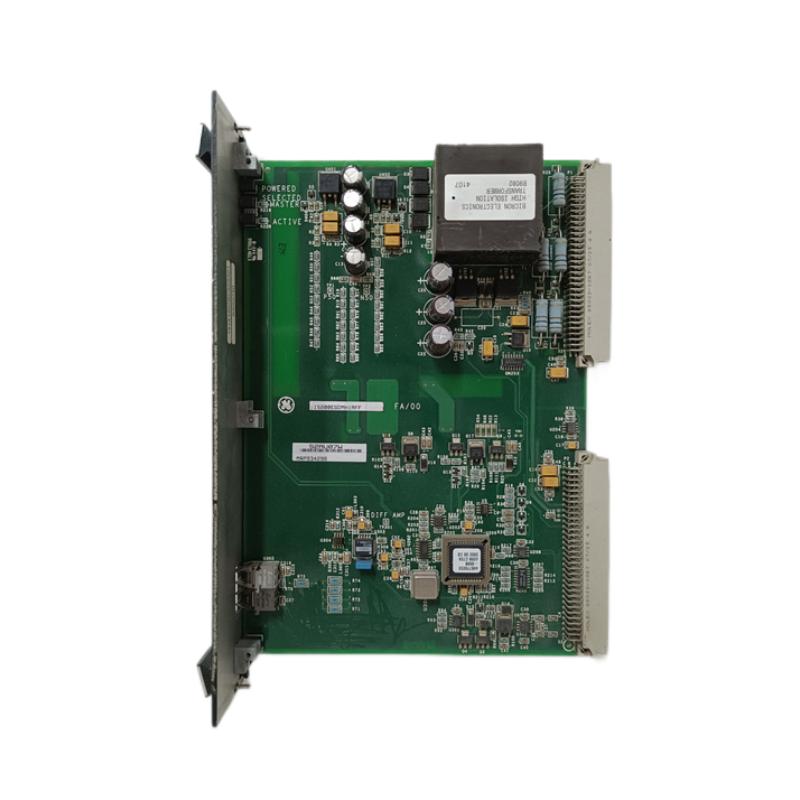
GE IS200EDEXG1B EX2100 / Mark VI Exciter De-Excitation Board (High-Reliability Field De-Excitation Controller)
GE IS200EDEXG1B EX2100 / Mark VI Exciter De-Excitation Board (High-Reliability Field De-Excitation Controller)
0.0
Points
Brand:GE Fanuc PLC Item No.:GE IS200EDEXG1B Product Origin:USA Product Dimensions:263 mm × 58 mm × 28 mm Product Weight:1.50 kg Payment:T/T, Western Union, Credit Card Goods_stock:15 Shipping Port:Xiamen, China Lead Time:1-3 Days Condition:Brand New And Original Warranty:1 Year Certificate:COO
The GE IS200EDEXG1B is an Exciter De-Excitation Board engineered for use in GE EX2100 Excitation Control Systems and Mark VI Speedtronic turbine automation platforms. It is designed to manage the controlled decay of generator excitation field energy upon trip, shutdown, or fault conditions by controlling SCR firing and conduction logic during de-excitation. The “1B” revision enhances robustness, fault indication, and integration with fiber-optic excitation interfaces — making it ideal for high-availability turbine and power generation systems.
Technical Specifications
Specification
Details
Model
IS200EDEXG1B
Module Type
Exciter De-Excitation Board
System Series
GE EX2100 / Mark VI Speedtronic
Primary Function
Safe field de-excitation via SCR control
Control Inputs
SCR gating commands and de-excitation logic
Firing Devices
SCR bridge gating circuits
Feedback Inputs
Conduction feedback, voltage/current sensing
Power Supply
24 V DC typical for logic; internal conversion to higher analog rails
Communication Interface
Dual fiber-optic links for isolated feedback (optional)
Diagnostic Features
Enhanced fault indication (LEDs / bus signals)
Operating Temperature
–30 °C to +65 °C (typical industrial environment)
Mounting
Rack/panel mount in exciter cabinet
Dimensions (H × W × D)
~263 mm × 58 mm × 28 mm (approx.)
Weight
~1.50 kg (approx.)
Typical Use
SCR bridge de-excitation for generator field protection
Note: Physical dimensions and weight are approximate and may vary slightly depending on assembly and revision.
Recommended Related Modules
To create a robust and fully featured excitation control rack, the IS200EDEXG1B is typically used with:
IS200EDCFG1B – DC Field Feedback Board
IS200EACFG3A – AC Voltage Feedback Board
IS200EISBH1A – ISBus Interface Board
IS200DSPXH1D – Digital Signal Processor Board
IS200ACLEH1A/H1B – Application Control Logic Modules
These modules work together to handle feedback, control logic, and output gating for precise excitation regulation.
These are commonly integrated throughout turbine and generator control cabinets alongside de-excitation logic boards.
Applications
The IS200EDEXG1B board is commonly deployed for:
Controlled field de-excitation in turbine generators
Emergency shutdown handling with controlled SCR firing
Protection logic for generator excitation systems
Power plant automation and safety sequencing
Integration with SCADA and distributed control networks
By providing accurate de-excitation control and fault signalling, this module helps safeguard both equipment and personnel during high-energy events.
Advantages
Safe Controlled Field Decay
Precisely manages SCR firing to dissipate field energy in a controlled manner during shutdown or fault scenarios.
Enhanced Diagnostics
LED indicators and logic feedback improve fault detection and troubleshooting.
Isolated Communication paths
Fiber-optic links (when used) provide isolated signal paths between the de-excitation board and controller interface boards.
Industrial-Grade Design
Built for continuous operation in typical cabinet environments with wide temperature tolerance.
Modular Integration
Fits existing EX2100/Mark VI backplane racks for plug-and-play replacement and field serviceability.
Technical FAQs
1. What is the main role of the IS200EDEXG1B?
It manages the controlled decay of generator field energy by gating SCR de-excitation during shutdown or fault conditions.
2. Where is it installed?
Inside the exciter or turbine control cabinet in an EX2100/Mark VI rack.
3. What power supply does it require?
Typically 24 V DC for logic power and internal analog rails generated on-board.
4. How is it connected to other modules?
Connections typically include SCR gating harnesses and isolated fiber-optic links to interface boards.
5. What kind of protection logic does it support?
Conduction monitoring, fault indication, and de-excitation control for safe field energy dissipation.
6. Can it operate in harsh industrial environments?
Yes — designed for –30 °C to +65 °C operation typical of turbine control cabinets.
7. Why is de-excitation important?
Controlled field collapse protects the generator and excitation hardware from voltage spikes and thermal stress.
8. Does it support fiber-optic isolation?
Yes — dual fiber options improve noise immunity and electrical isolation (depending on system configuration).
9. What interfaces are supported for diagnostics?
LED status indicators and control logic feedback for system monitoring.
10. Which controllers is it compatible with?
GE EX2100 Excitation Control and Mark VI Speedtronic automation controllers.