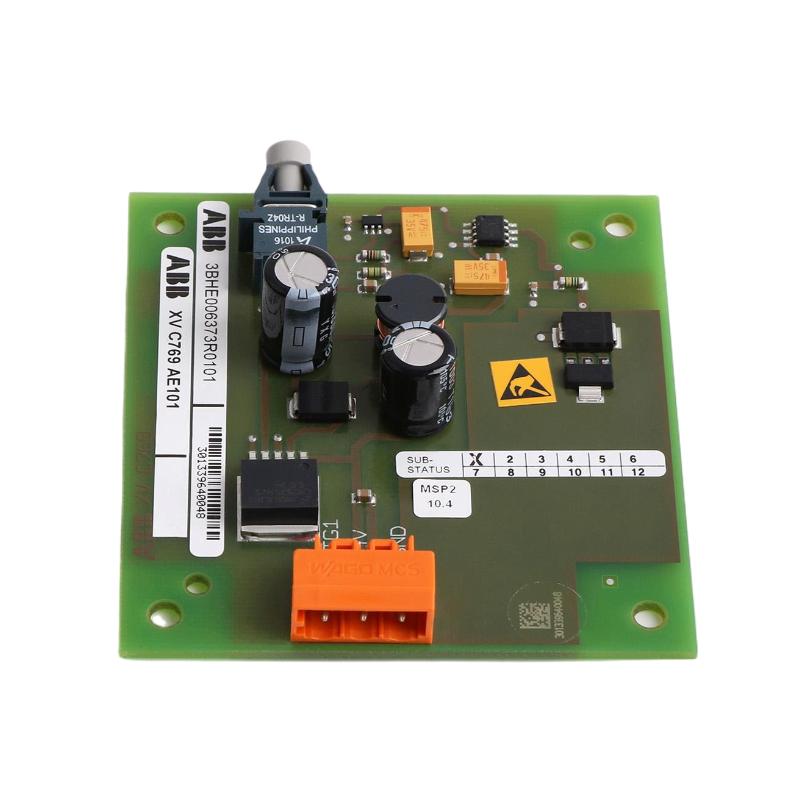
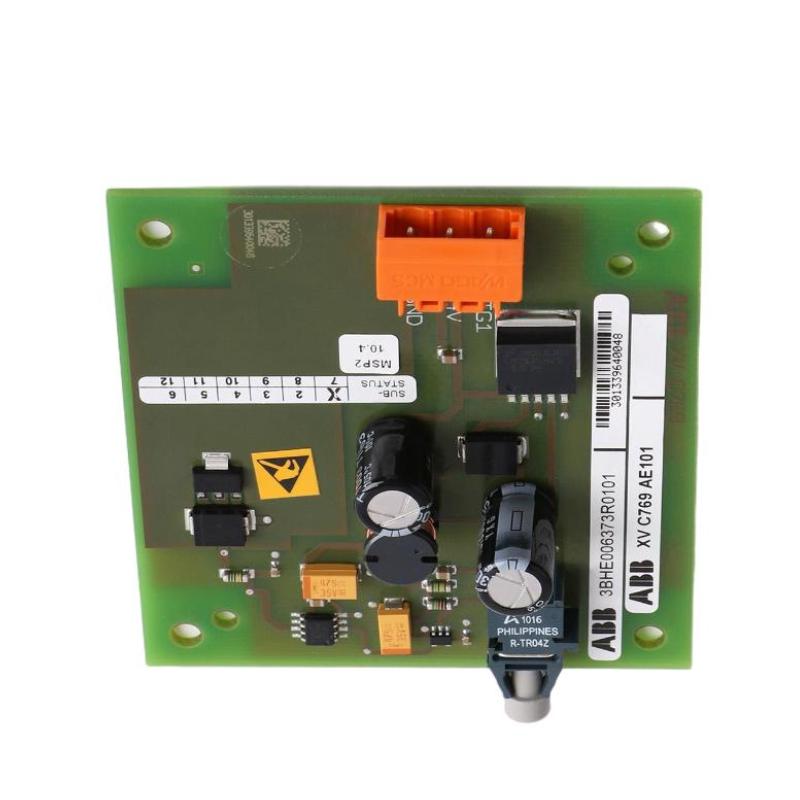
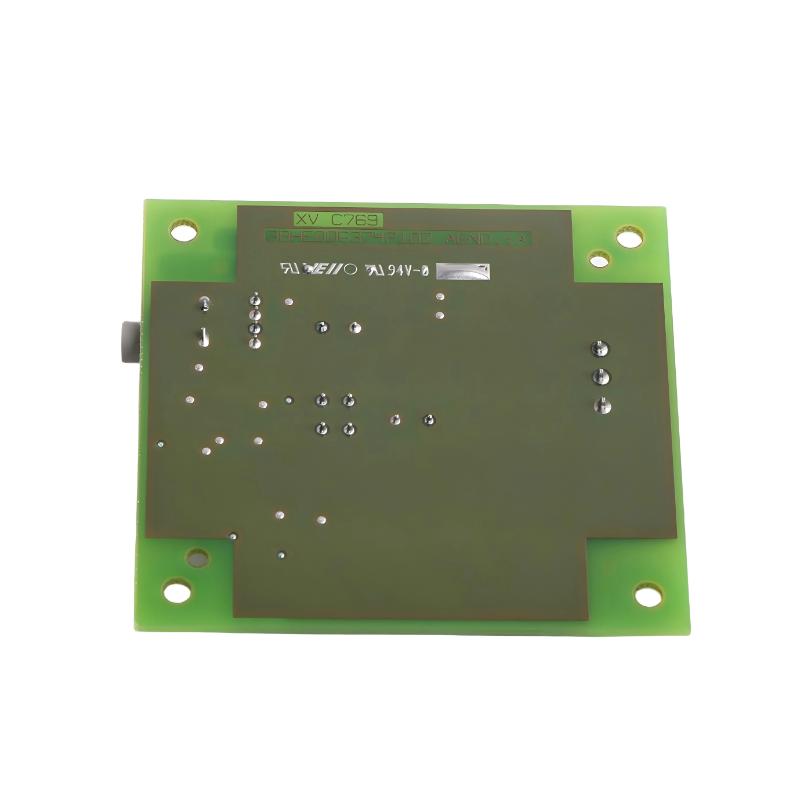
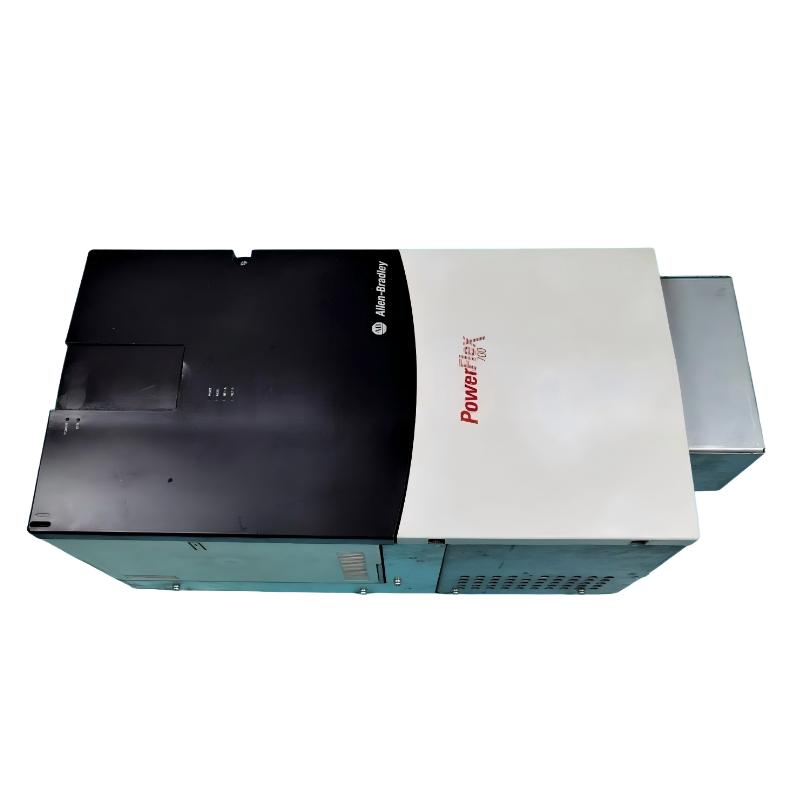
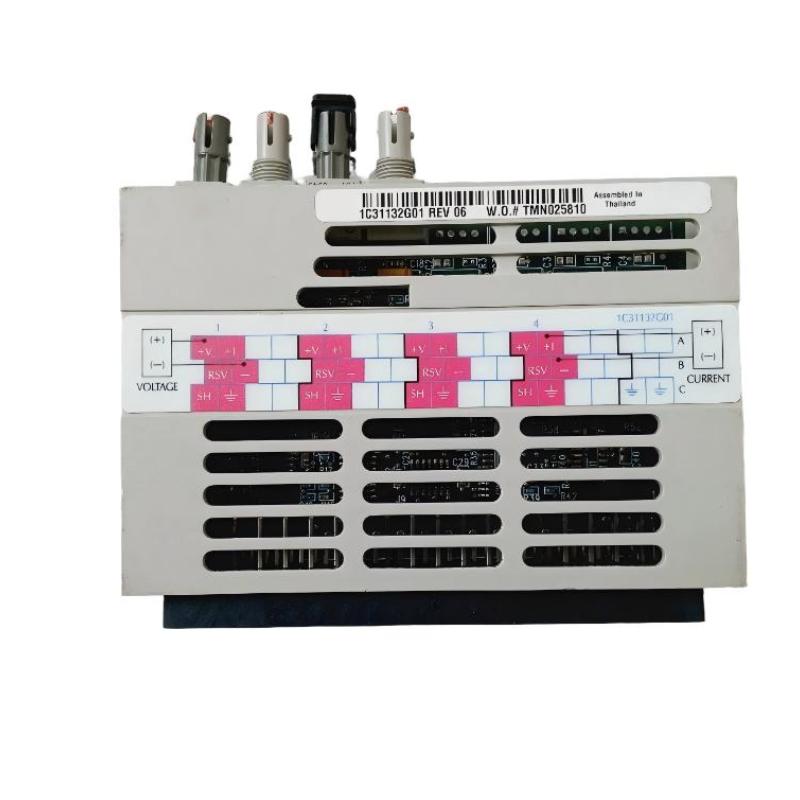
Brand:ABB PLC Item No.:XV C769 AE101 Product Origin:Sweden (SE) Product Dimensions:200 × 150 × 25 mm Product Weight:0.1 kg Payment:T/T, Western Union, Credit Card Goods_stock:15 Shipping Port:Xiamen, China Lead Time:1-3 Days Condition:Brand New And Original Warranty:1 Year Certificate:COO
The ABB XV C769 AE101 OEI Board is a reliable internal interface solution for industrial control and power electronics systems. By enabling stable operational signal exchange, it supports coordinated system behavior, improves reliability, and contributes to the safe and efficient operation of complex industrial installations.
Technical Specifications
Item
Description
Product Type
OEI Board
Primary Function
Internal operational and signal exchange
System Compatibility
ABB power electronics and control systems
Installation Method
Internal mounting
Dimensions (H × W × D)
200 × 150 × 25 mm
Weight
0.1 kg
Recommended Related Models
Model
Module Type
Primary Function
ABB XV C724 BE101
Printed Circuit Board
Internal signal processing
ABB XV C724 BE102
Detection Board
Short-circuit detection
ABB UNS0119A-P
Control Board
System control coordination
ABB UNS0118A
Control Board
Signal management
ABB UA D215 A106
Signal Input Board
Converter signal acquisition
ABB UA D215 A105
Signal Output Board
Output signal handling
ABB UNS0868B-P
Power Supply Module
System power distribution
ABB CP451
CPU Module
Core control processing
ABB A143
Analog Input Module
Analog signal acquisition
ABB A151
Digital Input Module
Discrete signal monitoring
Popular Related Models
Model
Module Type
Typical Application
ABB XV C769 AE101
OEI Board
Internal signal exchange
ABB XV C724 BE101
Printed Circuit Board
Internal system interfacing
ABB XV C724 BE102
Detection Board
Electrical protection
ABB UNS0119A-P
Control Board
Converter and drive control
ABB UNS0118A
Control Board
Control signal coordination
ABB UA D215 A106
Signal Input Board
Signal monitoring
ABB UA D215 A105
Signal Output Board
Actuation and output control
ABB UNS0868B-P
Power Supply Module
Control system power supply
ABB CP451
CPU Module
Central control processing
ABB A143
Analog Input Module
Process signal acquisition
Applications
The ABB XV C769 AE101 OEI Board is designed for internal signal interfacing and operational exchange within industrial power electronics and control systems. It is typically applied in converter assemblies, excitation systems, and advanced drive platforms where reliable internal communication between control and monitoring circuits is essential. The board supports stable data exchange and coordination, making it suitable for power generation, heavy industry, and automated process environments that demand high operational integrity.
Advantages
This OEI board delivers consistent and interference-resistant signal transmission in compact industrial assemblies. Its robust design ensures long-term stability even under continuous operation and electrical stress. Easy integration with ABB system architectures simplifies maintenance and reduces commissioning time, while its proven reliability enhances overall system availability and protects critical power electronics investments.
FAQs
1. What is the primary function of the XV C769 AE101 OEI Board?
It facilitates internal operational and signal exchange between control and monitoring components.
2. Is the OEI board used for external field connections?
No, it is intended for internal system-level interfacing rather than direct field wiring.
3. Can it operate continuously in industrial environments?
Yes, it is designed for continuous duty within industrial control and power electronics systems.
4. How does the board handle electrical interference?
Its circuit design incorporates noise-resistant layouts to ensure stable signal exchange.
5. Is this board compatible with multiple ABB system platforms?
It is designed for specific ABB architectures and integrates seamlessly where specified.
6. Does it perform any control logic processing?
No, its role is focused on signal exchange and interfacing rather than logic control.
7. Is software configuration required after installation?
No software configuration is typically required, as functionality is hardware-based.
8. Can it be used in systems with redundant designs?
Yes, it can be part of redundant system architectures depending on system design.
9. How is fault information handled by the board?
Fault-related signals are passed through to the appropriate control or monitoring modules.
10. Is replacement straightforward during maintenance?
Yes, when system power is safely isolated, replacement is simple and minimizes downtime.