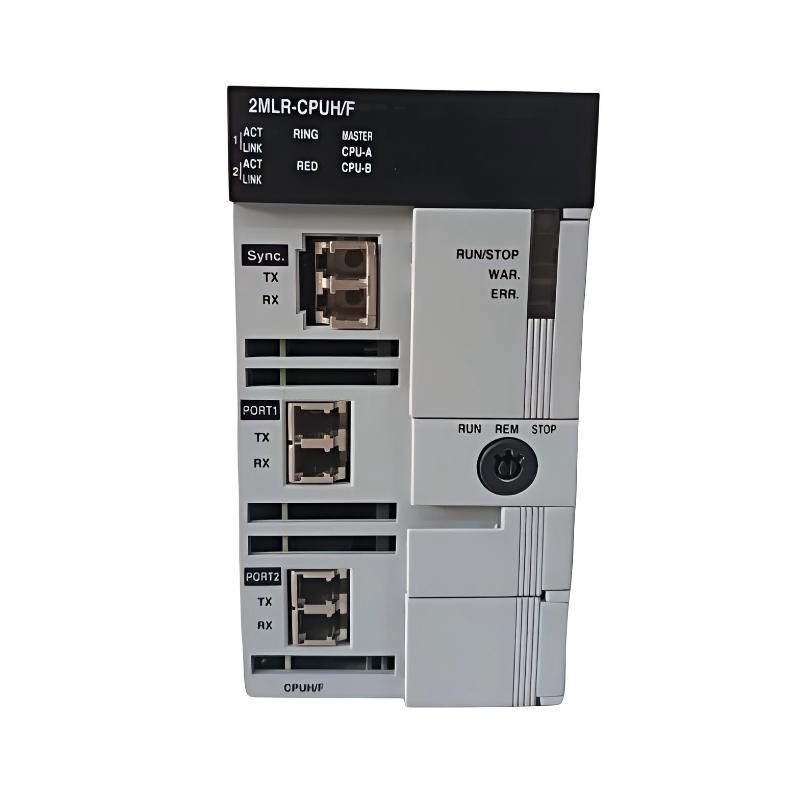
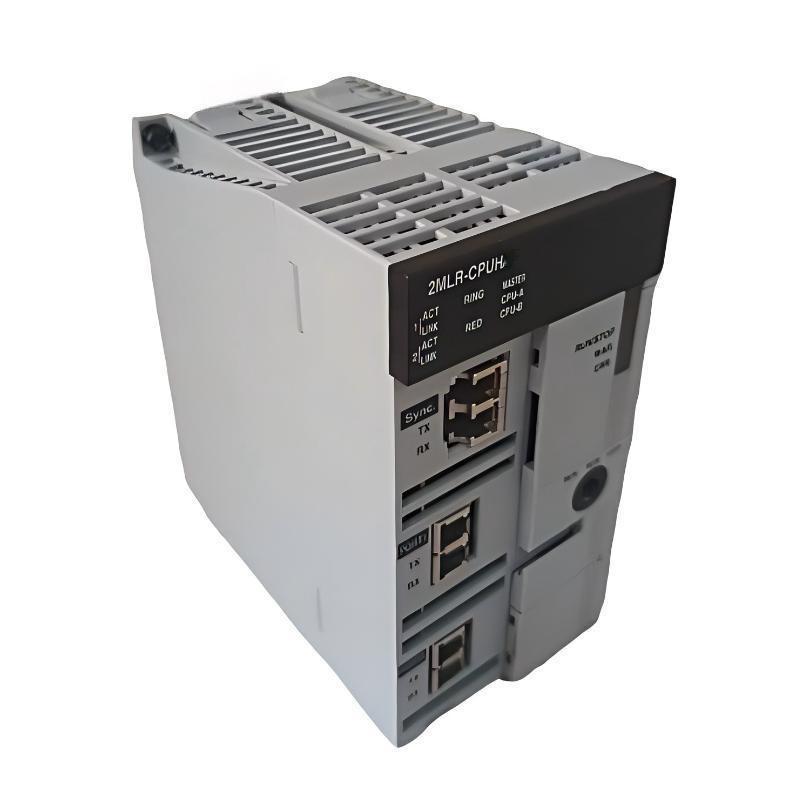
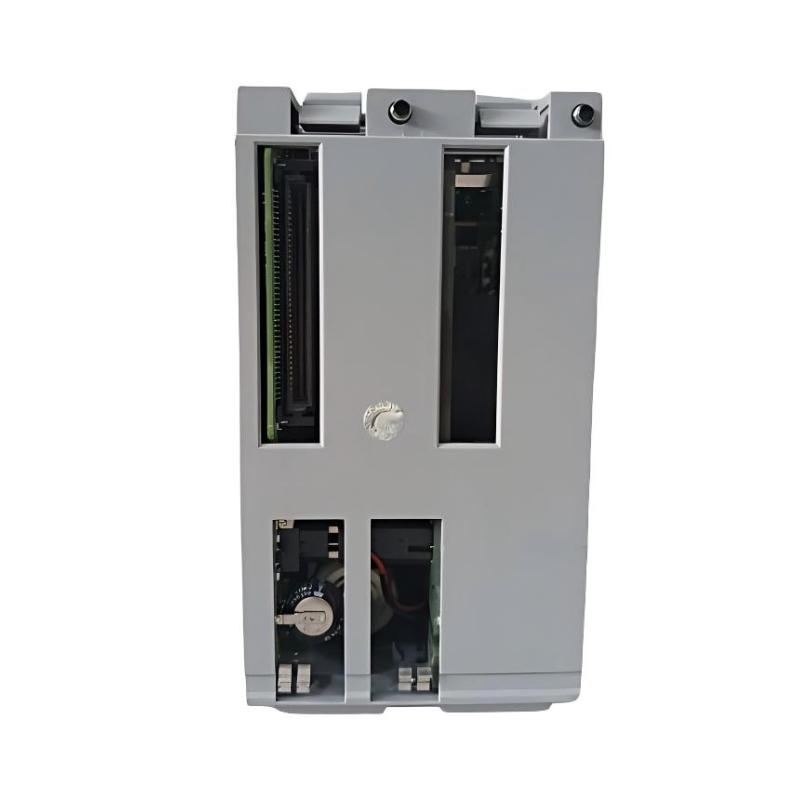
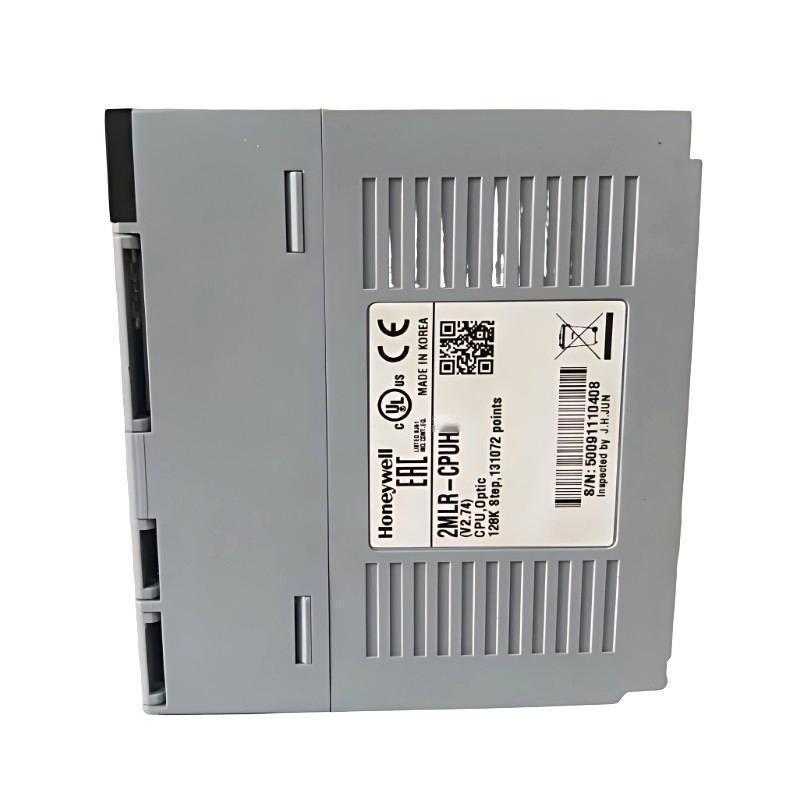
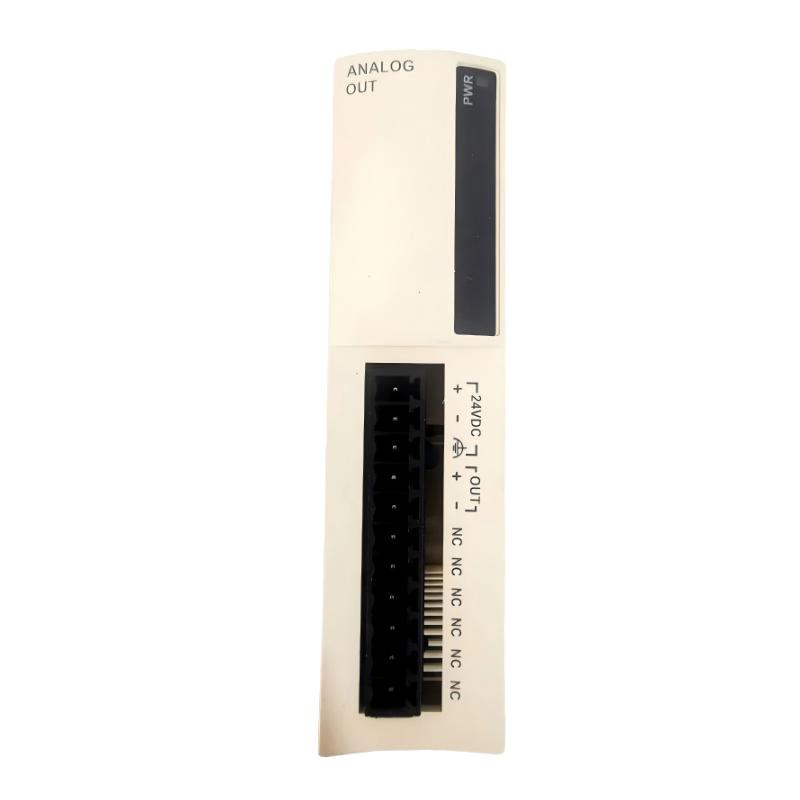
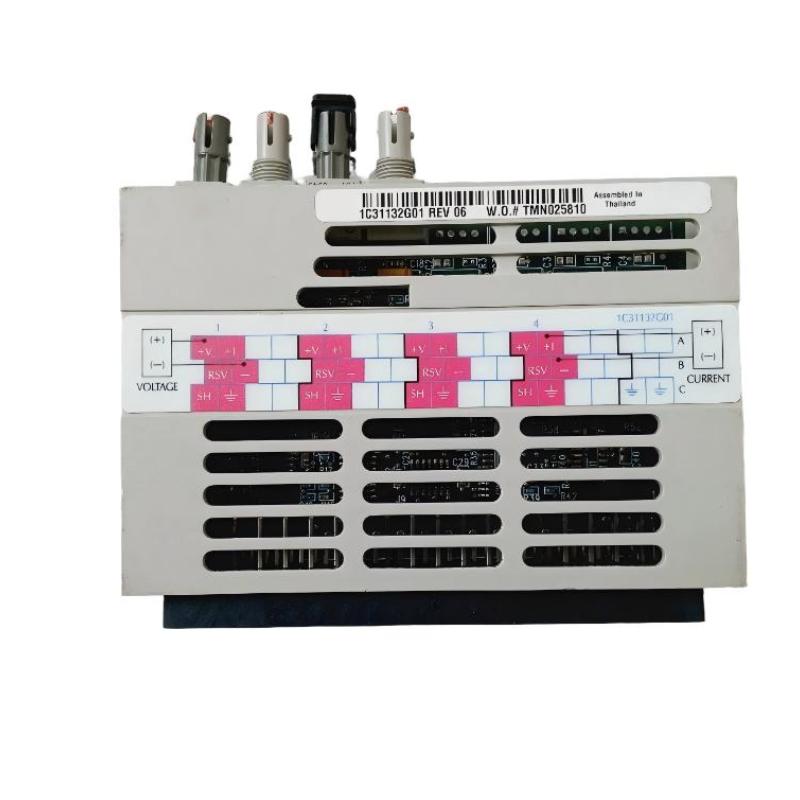
Brand:Honeywell DCS Item No.:2MLR-CPUH/S-CC Product Origin:USA Product Dimensions:150 x 100 x 50 mm Product Weight:0.12 kg Payment:T/T, Western Union, Credit Card Goods_stock:15 Shipping Port:Xiamen, China Lead Time:1-3 Days Condition:Brand New And Original Warranty:1 Year Certificate:COO
The 2MLR-CPUH/S-CC is part of Honeywell’s MasterLogic-200R series, designed to deliver robust and fault-tolerant control for complex industrial automation environments. It acts as the core processing unit that manages system logic, communication, and coordination across distributed I/O networks.
With built-in redundancy and high-speed synchronization, the module ensures continuous operation even in the event of hardware failure. Its architecture is optimized for industries where downtime is not acceptable, making it a reliable choice for large-scale, safety-critical automation systems.
Technical Specifications
Parameter
Specification
Product Type
Redundant CPU Module
Model
2MLR-CPUH/S-CC
System
Honeywell MasterLogic-200R
I/O Capacity
Up to 23,808 points
Memory
Program & system memory (multi-MB class)
Communication
Fiber-optic synchronization
Redundancy
CPU, power, and I/O redundancy supported
Operating Environment
Industrial automation systems
Dimensions
150 x 100 x 50 mm
Weight
0.12 kg
Recommended Related Models
Model
Product Name
2MLR-CPUH/F-CC
Honeywell Fiber-Optic Redundant CPU Module
2MLR-CPUH/T-CC
Honeywell Redundant CPU Module (Twisted Pair Version)
2MLI-CPUU
Honeywell Non-Redundant CPU Module
2MLR-DBSF
Honeywell System Base Interface Module
Popular Related Models
Model
Product Name
2MLR-CPUH/S
Honeywell Redundant CPU Module Standard Version
2MLR-CPUH/F
Honeywell Fiber Optic CPU Module
CC-TAIX51
Honeywell Analog Input Interface Module
CC-TAON11
Honeywell Analog Output Interface Module
Typical Industrial Applications
• Process control systems in oil and gas plants for continuous operation and high-integrity automation
• Petrochemical production facilities requiring redundant control for safety-critical processes
• Power generation systems for turbine control, load balancing, and plant-wide automation
• Water and wastewater treatment plants for uninterrupted monitoring and control operations
• Large-scale industrial automation systems requiring high I/O capacity and fault-tolerant architecture
Key Engineering Advantages
• Fully redundant CPU architecture ensures uninterrupted system operation during fault conditions
• High-speed processing capability supports complex industrial control logic execution
• Fiber-optic synchronization provides fast and stable redundancy switching
• High I/O scalability supports large distributed automation systems
• Designed for high availability environments with minimal downtime risk
• Strong industrial-grade construction ensures reliability in harsh operating conditions
Technical FAQs
1. What is the main function of the 2MLR-CPUH/S-CC module?
It serves as the central processing unit in a redundant PLC system, managing logic execution and system coordination.
2. Does the module support full redundancy?
Yes, it supports CPU, power, and I/O redundancy for high-availability applications.
3. What communication method is used for synchronization?
It uses fiber-optic communication for fast and reliable synchronization between redundant CPUs.
4. What is the maximum I/O capacity?
It supports large-scale systems with up to 23,808 I/O points depending on configuration.
5. Is it suitable for continuous operation?
Yes, it is designed for 24/7 mission-critical industrial environments.
6. What happens if the main CPU fails?
The standby CPU takes over automatically to maintain uninterrupted operation.
7. Is it compatible with MasterLogic-200 systems?
Yes, it is fully integrated into Honeywell’s MasterLogic-200R architecture.
8. What type of applications is it best suited for?
It is ideal for safety-critical and high-availability industrial automation systems.
9. Does it support high-speed control tasks?
Yes, it is designed for fast scan cycles and deterministic control performance.
10. How is system stability ensured?
Through redundancy architecture, fiber-optic sync, and industrial-grade hardware design.