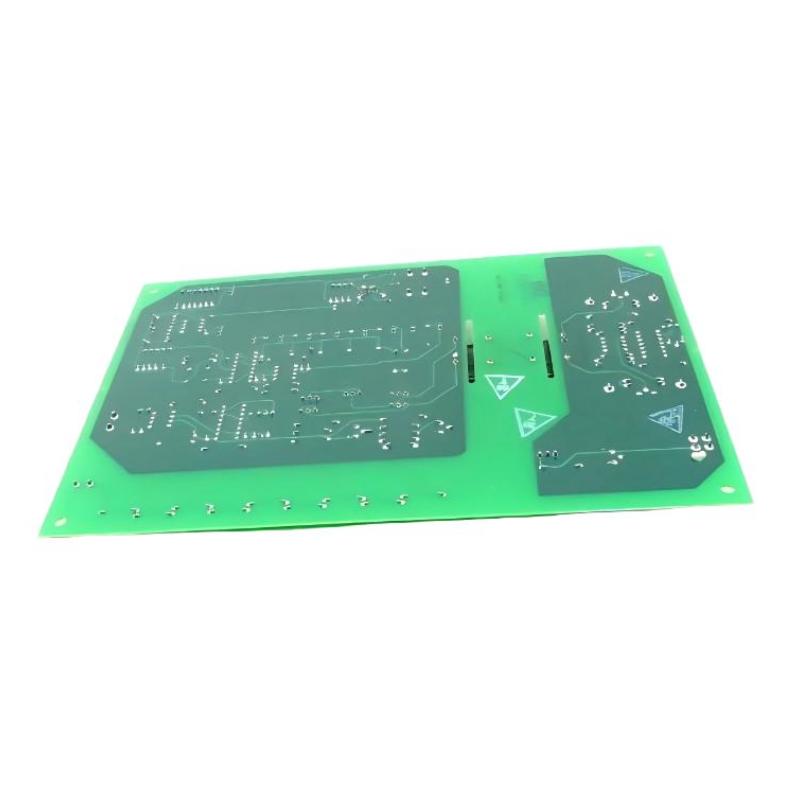
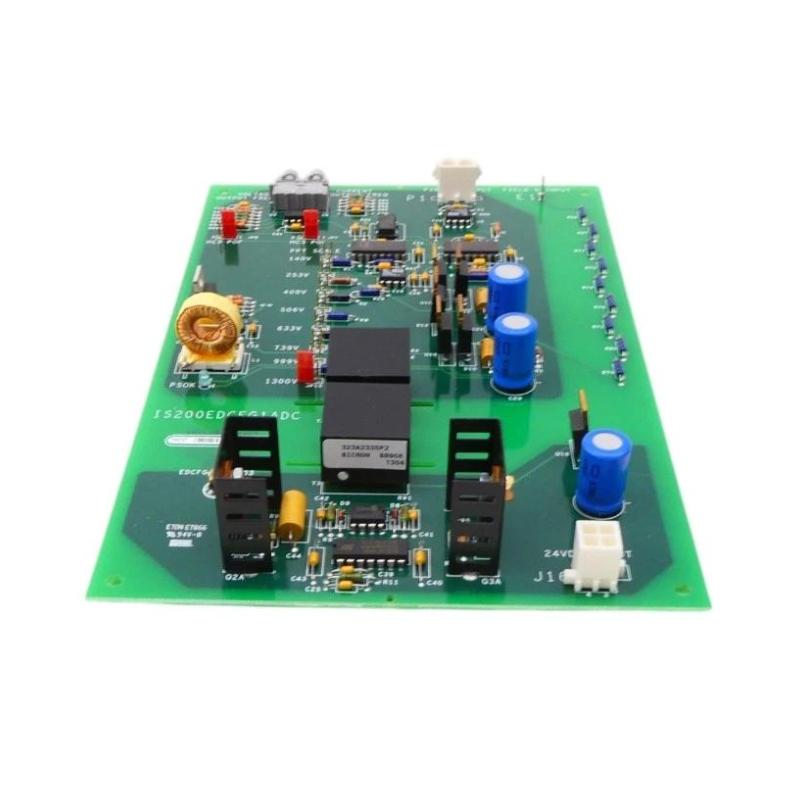
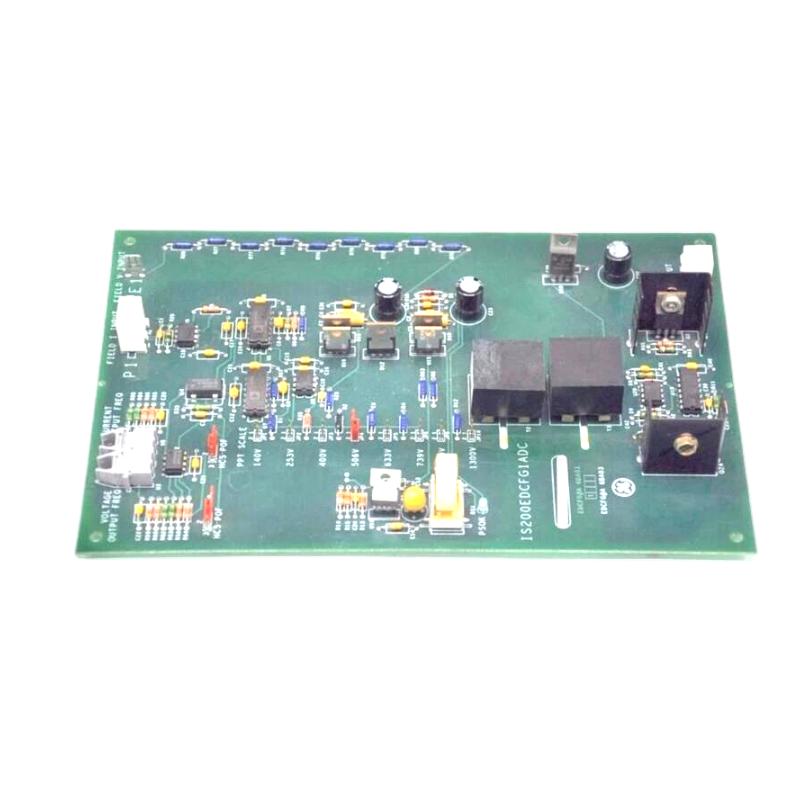
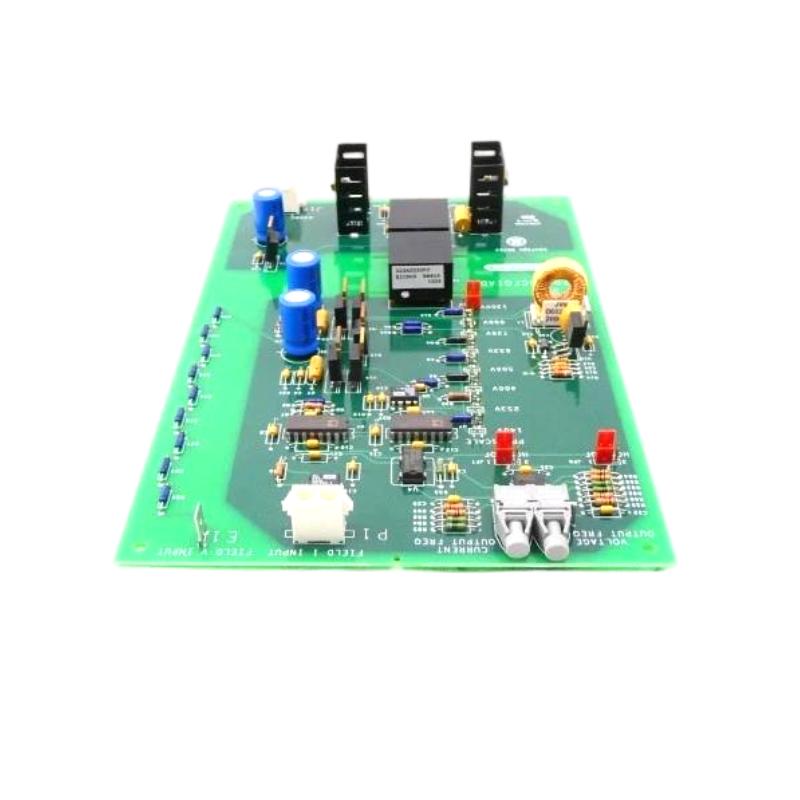
The GE IS200EDCFG1ADC is an Exciter DC Feedback (EDCF) board used in the GE EX2100 excitation system, commonly integrated with Mark VI turbine control platforms.
Its primary role is to measure and process generator field voltage and field current feedback signals from the SCR bridge, and then send precise real-time data back to the excitation controller. This feedback is essential for closed-loop voltage regulation of the generator.
In simple terms, it is a measurement and feedback module that helps the exciter “know what the generator is doing” and adjust output accordingly.
Technical Specifications
| Parameter | Specification |
|---|---|
| Module Type | Exciter DC Feedback Board |
| Series | GE EX2100 / EX2100e |
| Function | Field voltage & current measurement feedback |
| Application | Generator excitation control |
| Measured Signals | DC field voltage, DC field current |
| Input Interface | SCR bridge sensing points |
| Output Interface | Fiber-optic digital communication link |
| Signal Processing | Analog conditioning + conversion (A/D) |
| Communication | High-speed fiber optic link to controller |
| Power Consumption | Low power (<5W typical) |
| Operating Temperature | -20°C to +60°C |
| Installation | Excitation control cabinet (EX2100 rack system) |
Physical Characteristics
| Item | Value |
|---|---|
| Dimensions | ~170 × 120 × 30 mm |
| Weight | ~0.5 kg |
| Form Factor | Industrial PCB module |
System Role
The IS200EDCFG1ADC is a critical feedback interface module, not a control processor.
It performs:
- Measurement of generator field voltage at SCR bridge
- Measurement of field current via DC shunt
- Signal scaling and conditioning
- Transmission of feedback data to EX2100 controller
- Supporting real-time excitation regulation loops
It acts as the eyes of the excitation system, ensuring accurate control of generator output voltage.
How It Works (Simplified)
- It senses field voltage and current at the rectifier (SCR bridge)
- Signals are conditioned using internal analog circuitry
- Data is converted into digital form
- A fiber-optic link sends the feedback to the controller (EXAM/DSPX)
- The controller adjusts excitation output based on this feedback