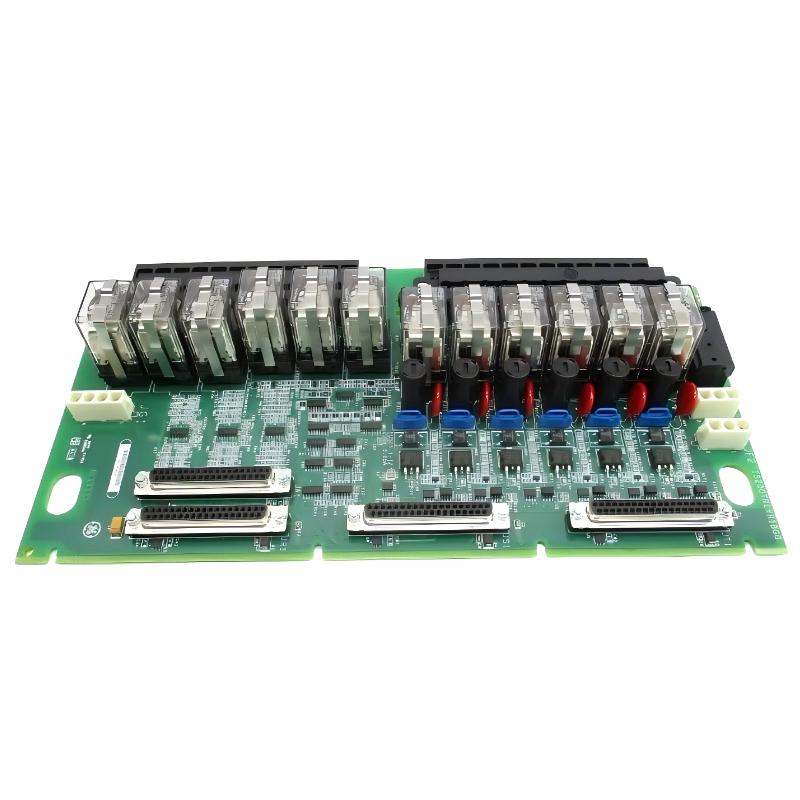
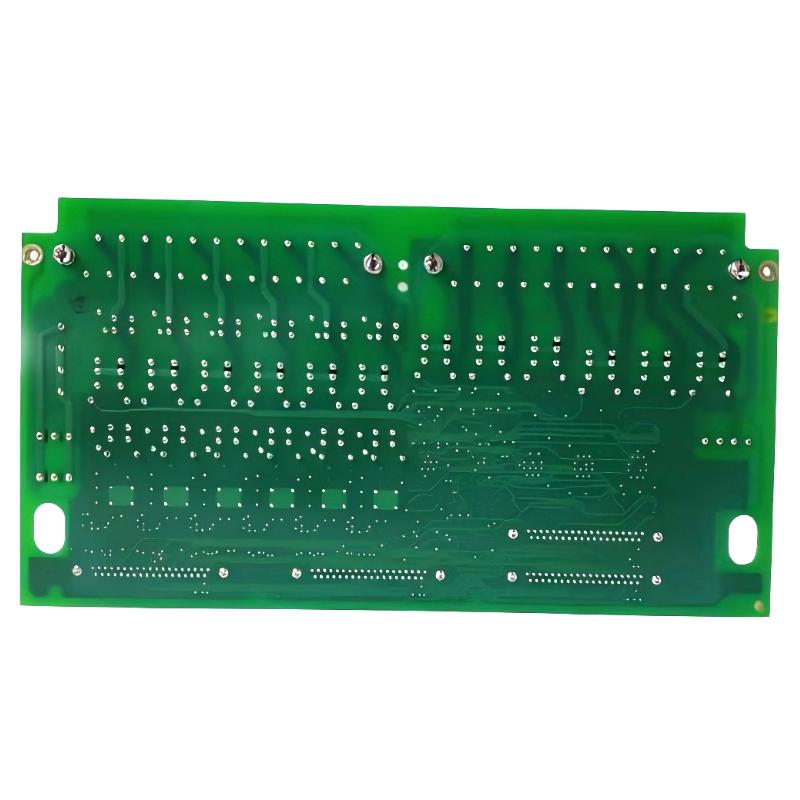
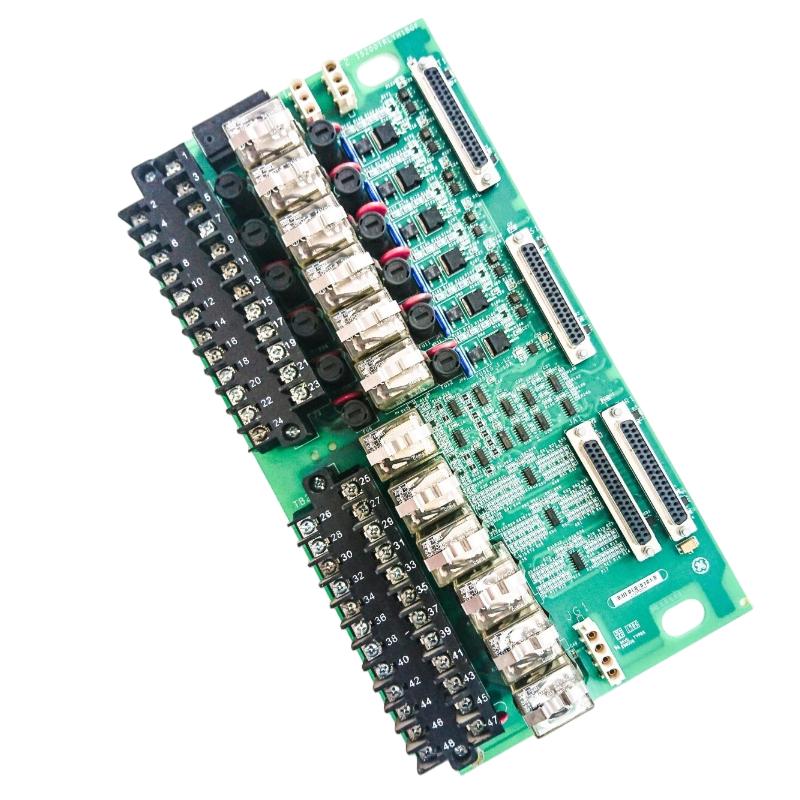
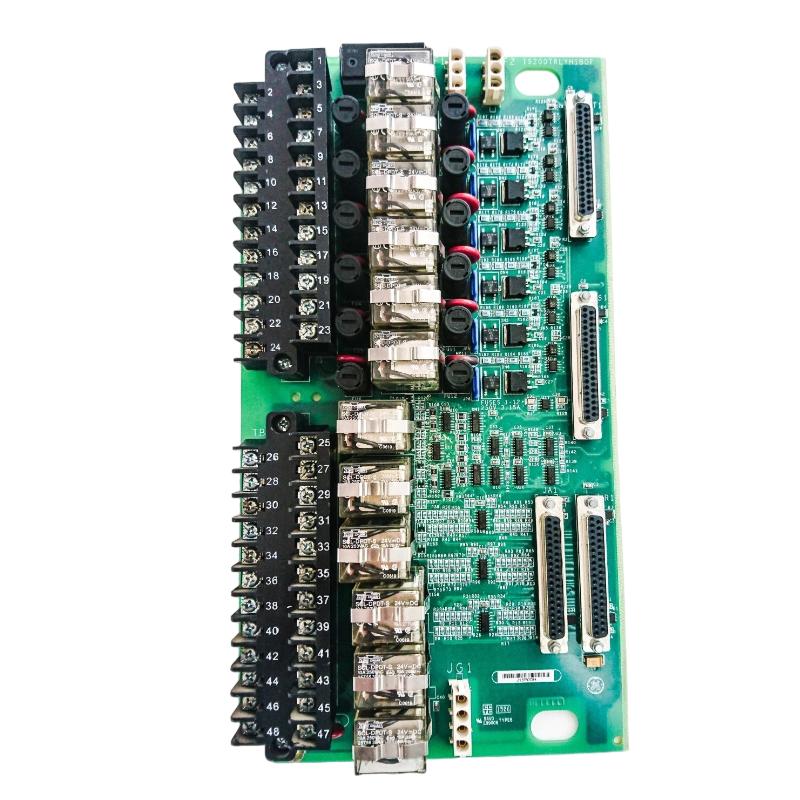
Brand:GE Fanuc PLC Item No.:GE IS200TRLYH1BGF Product Origin:USA Product Dimensions:160 × 160 × 120 mm Product Weight:0.8 kg Payment:T/T, Western Union, Credit Card Goods_stock:15 Shipping Port:Xiamen, China Lead Time:1-3 Days Condition:Brand New And Original Warranty:1 Year Certificate:COO
The GE IS200TRLYH1BGF is a Mark VI Speedtronic relay terminal board designed to execute and distribute critical relay output signals in gas and steam turbine control systems. It serves as the final actuation layer between control logic and field devices, enabling reliable switching for trip circuits, interlocks, and auxiliary control functions.
Built for harsh industrial environments, this module emphasizes electrical isolation, fast response, and high reliability, ensuring that safety-critical commands are delivered without delay or signal degradation.
Technical Specifications
Parameter
Details
Manufacturer
General Electric (GE)
Model
IS200TRLYH1BGF
Series
Mark VI Speedtronic
Module Type
Relay Terminal Board
Function
Relay output / termination interface
Relay Channels
Typically multi-channel (up to 12 depending on configuration)
Output Type
Form C / dry contact relay outputs
Control Interface
Mark VI backplane / VME architecture
Operating Temperature
-40°C to +70°C (industrial grade range)
Isolation Voltage
Up to 1500V RMS (typical variant)
Contact Rating
Up to 5A @ 250VAC / 30VDC (variant dependent)
Response Time
< 10 ms
Dimensions
~160 × 160 × 120 mm (variant dependent)
Weight
~0.5 – 0.8 kg
Mounting
Control cabinet / rack installation
Recommended Related Modules
To build a stable Mark VI control architecture, the IS200TRLYH1BGF is commonly paired with:
IS200TREGH1B Trip Emergency Module
IS200TBCIH1C Discrete Input Terminal Board
IS200VAICH1C Analog Input Board
IS215UCVEM06A Control Processor Module
These modules work together to ensure a full loop of sensing, logic decision-making, and output actuation.
Popular GE Mark VI System Modules
In similar turbine control ecosystems, engineers often use:
IS200TRLYH1B Relay Output Board
IS200TSVOH1B Servo Terminal Board
IS200TTURH1B Turbine Protection Board
IS200VAICH1D Analog Input Module
IS220PDIOH1A Distributed I/O Pack
Each module plays a specific role in maintaining precise and safe turbine operation.
Industrial Applications
The IS200TRLYH1BGF is widely deployed in mission-critical environments such as:
Gas turbine control systems
Steam turbine power plants
Electrical generator protection systems
Oil & gas processing facilities
Industrial safety interlock systems
It is especially important in applications where relay-based physical actuation is required for shutdown or safety logic execution.
Key Advantages
High-reliability relay switching for safety-critical operations
Designed specifically for turbine control environments
Strong electrical isolation reduces signal interference risk
Fast response ensures immediate execution of protection logic
Modular integration with Mark VI architecture
Supports industrial-grade temperature and vibration conditions
This combination makes it a dependable output interface for high-stakes industrial automation.
Technical FAQs
1. What is the main function of IS200TRLYH1BGF?
It converts control system logic into physical relay outputs for turbine and industrial systems.
2. Is it used in gas turbines?
Yes, it is commonly used in GE gas and steam turbine control systems.
3. How many relay channels does it support?
Typically up to 12 channels depending on configuration.
4. What type of outputs does it provide?
Dry contact / Form C relay outputs.
5. What is its response time?
Less than 10 milliseconds in standard configurations.
6. What voltage levels can it handle?
Up to 250VAC or 30VDC depending on relay specification.
7. Is it suitable for harsh environments?
Yes, it is designed for industrial-grade temperature and vibration conditions.
8. What system does it integrate with?
It is part of the GE Mark VI Speedtronic turbine control system.
9. Does it provide electrical isolation?
Yes, with high-voltage isolation protection (up to ~1500V RMS in variants).
10. Why is it important in turbine systems?
Because it executes safety-critical relay commands such as trips, alarms, and interlocks that directly affect turbine operation.