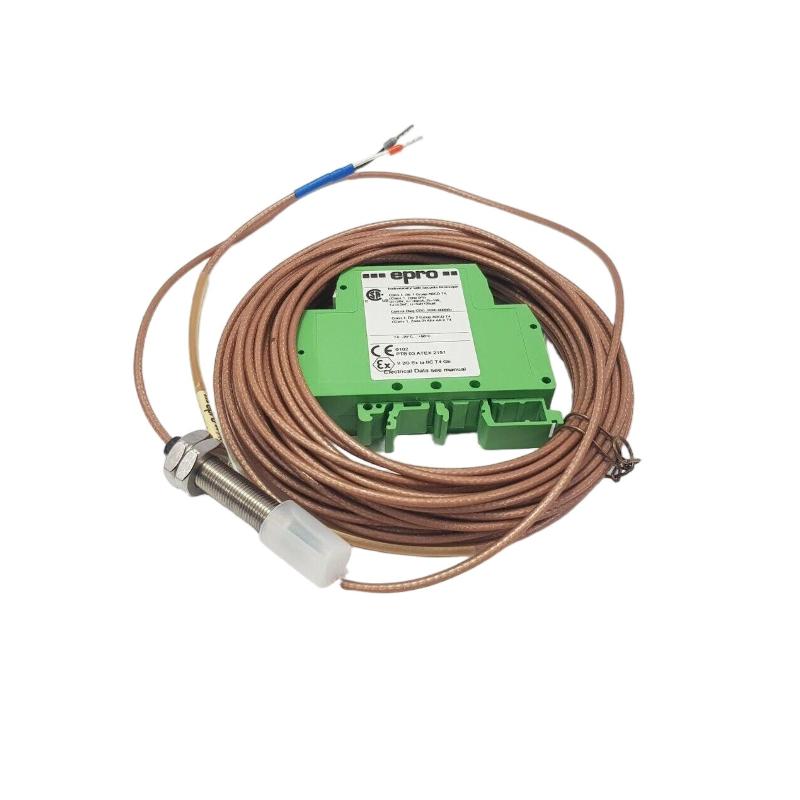
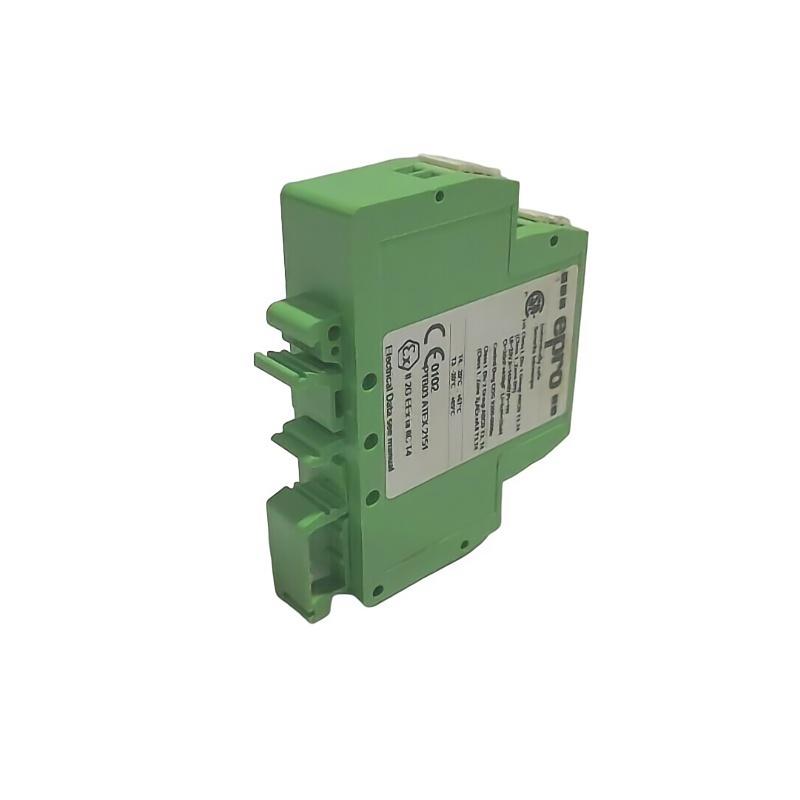
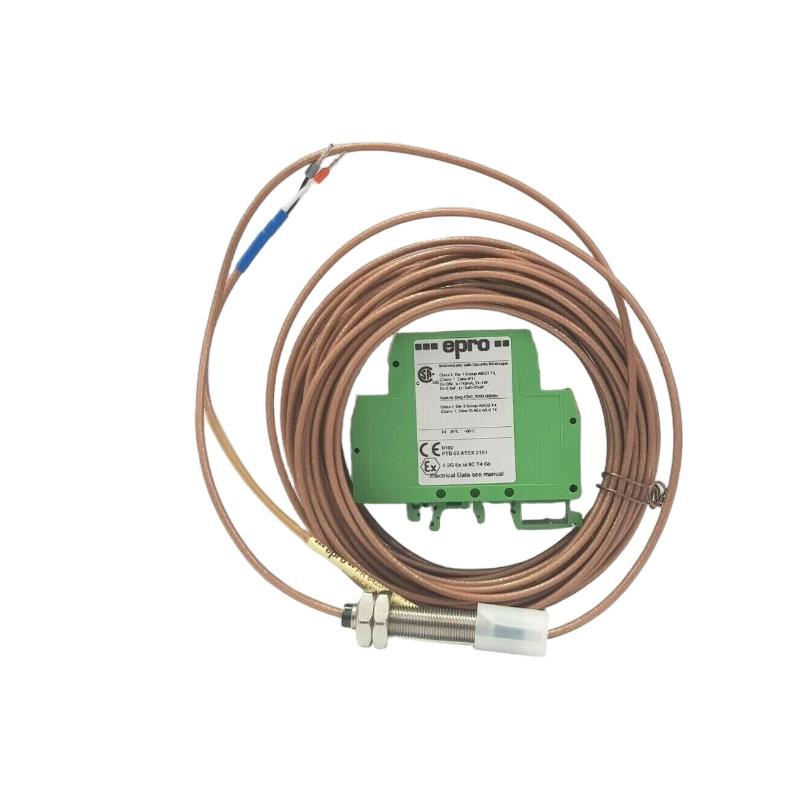
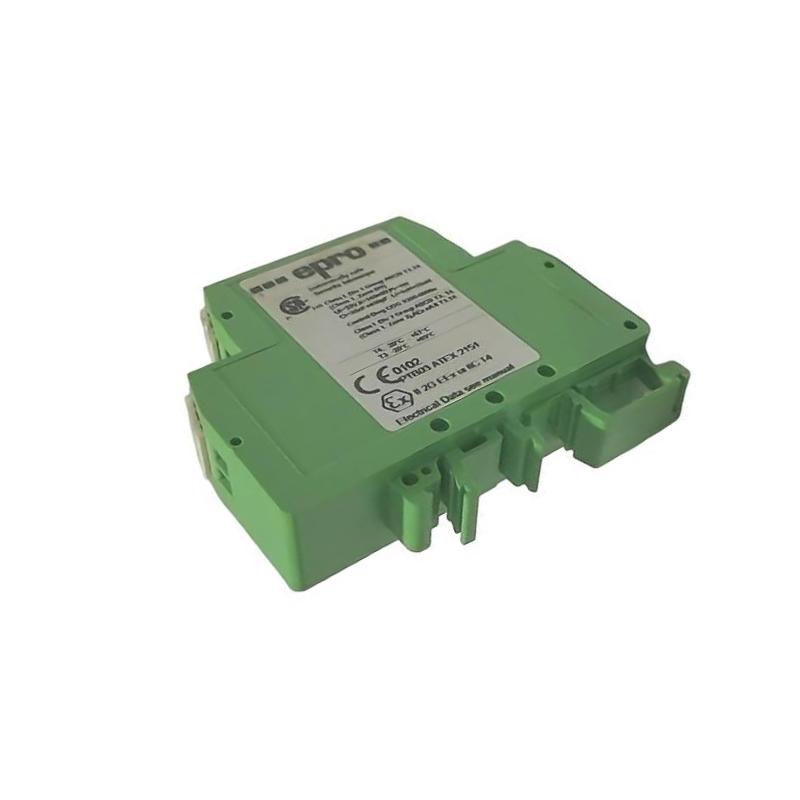
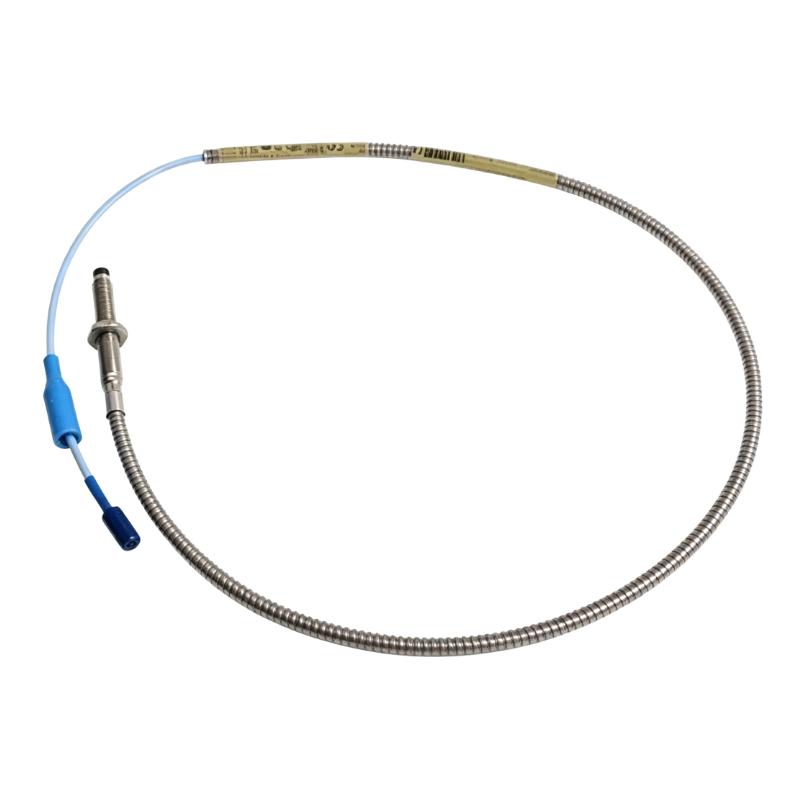
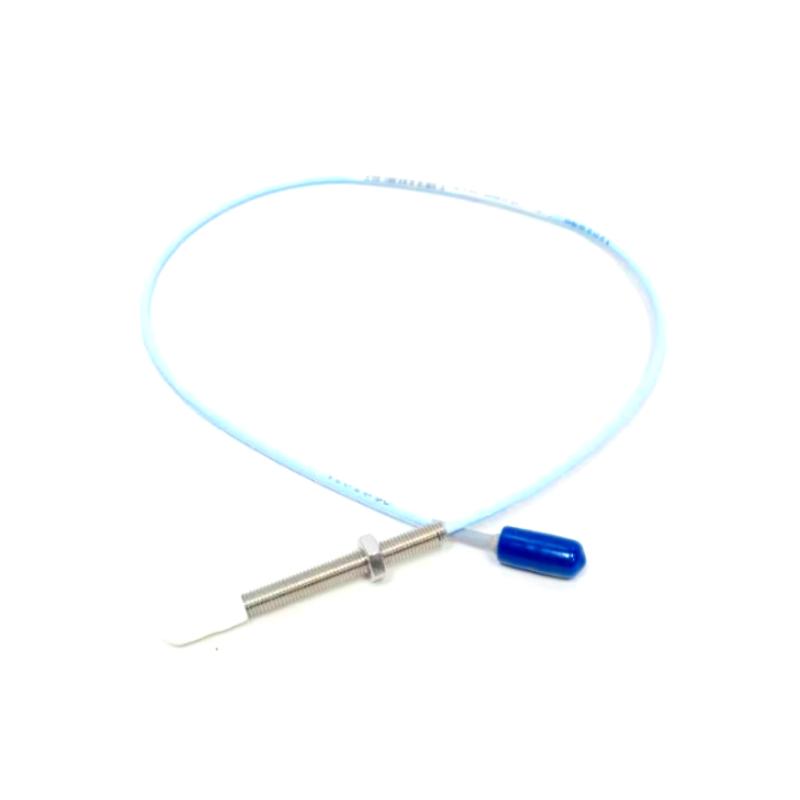
Brand:Epro PLC Item No.:PR6480/0A1-100 Product Origin:Germany Product Dimensions:Sensor Head Diameter: Optional Product Weight:Shipping Weight: 3 kg Payment:T/T, Western Union, Credit Card Goods_stock:15 Shipping Port:Xiamen, China Lead Time:1-3 Days Condition:Brand New And Original Warranty:1 Year Certificate:COO
The PR6480/0A1-100 is part of the PR6480 eddy current sensor family used in rotating machinery protection systems. It operates by generating a high-frequency electromagnetic field and measuring induced eddy current changes on conductive target surfaces, enabling precise non-contact measurement of shaft movement and vibration.
According to PR6480 platform specifications, these sensors are designed for turbine, compressor, pump, and generator monitoring applications with high resistance to harsh industrial environments and strong mechanical stability requirements.
This makes them suitable for predictive maintenance systems that detect early-stage faults such as imbalance, misalignment, bearing wear, and rotor instability before failure occurs.
Industrial eddy current signal conditioning systems
Installation Type
Fixed industrial mounting
Operating Environment
Turbine and rotating machinery systems
Weight
3 kg / 6.61 lb
Dimensions (W × H × D)
N/A (configuration dependent)
Recommended Related Models
PR6480/0A1-000 Eddy Current Sensor
PR6480/081-100 Eddy Current Sensor
PR6480/071-100 Eddy Current Sensor
PR6480/091-000 Eddy Current Sensor
PR6426 Series Eddy Current Sensors
Popular Related Models
PR6480/081-000 Eddy Current Sensor
PR6480/071-000 Eddy Current Sensor
PR6426/010-110 Eddy Current Sensor
PR6426/010-120 Eddy Current Sensor
PR6425 Series Eddy Current Sensors
Applications
The PR6480/0A1-100 is used in high-criticality rotating machinery monitoring systems where continuous displacement measurement is required for safe operation and predictive maintenance.
Typical applications include:
Steam turbine shaft vibration and axial displacement monitoring
Gas turbine rotor dynamic behavior and eccentricity detection
Hydro turbine shaft position monitoring systems
Large compressor thrust position measurement
Industrial gearbox condition and alignment diagnostics
Power generation rotating machinery protection systems
Oil & gas turbomachinery condition monitoring
It is suitable for continuous operation in harsh industrial environments with long service life requirements.
Advantages
Non-contact eddy current measurement eliminates mechanical wear
High precision vibration and displacement tracking capability
Stable performance under temperature variation and vibration stress
Strong resistance to oil mist, dust, and industrial contamination
Designed for continuous 24/7 monitoring duty cycles
Compatible with industrial signal conditioning systems
Robust mechanical construction for heavy-duty environments
Reliable performance in mission-critical turbomachinery systems
Technical FAQs
Q1: What does the PR6480/0A1-100 measure?
It measures shaft vibration, radial displacement, axial position, and eccentricity.
Q2: Is this a contact sensor?
No, it is a non-contact eddy current displacement sensor.
Q3: What machinery is it used for?
It is commonly used in turbines, compressors, pumps, and other large rotating industrial equipment.
Q4: Does it require a signal conditioner?
Yes, it is typically used with compatible EPRO signal conditioning systems.
Q5: What is the working principle?
It uses eddy current induction to measure distance changes between the probe and conductive metal surface.
Q6: Can it operate in harsh environments?
Yes, it is designed for high temperature, vibration, oil mist, and industrial contamination conditions.
Q7: Does it require calibration after installation?
Calibration is handled at system level via the signal conditioner, not at the sensor itself.
Q8: What materials can it measure?
Conductive ferromagnetic materials such as steel shafts.
Q9: Is it suitable for continuous operation?
Yes, it supports 24/7 industrial monitoring applications.
Q10: What is the difference between PR6480 variants like 0A1-000 and 0A1-100?
They typically differ in factory configuration or calibration tuning within the same PR6480 platform.