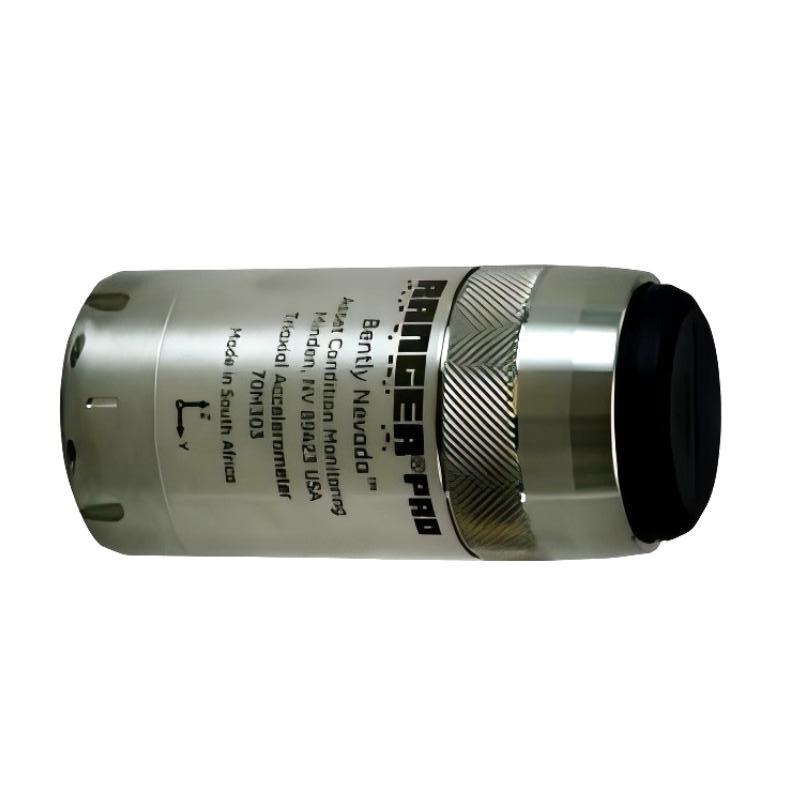
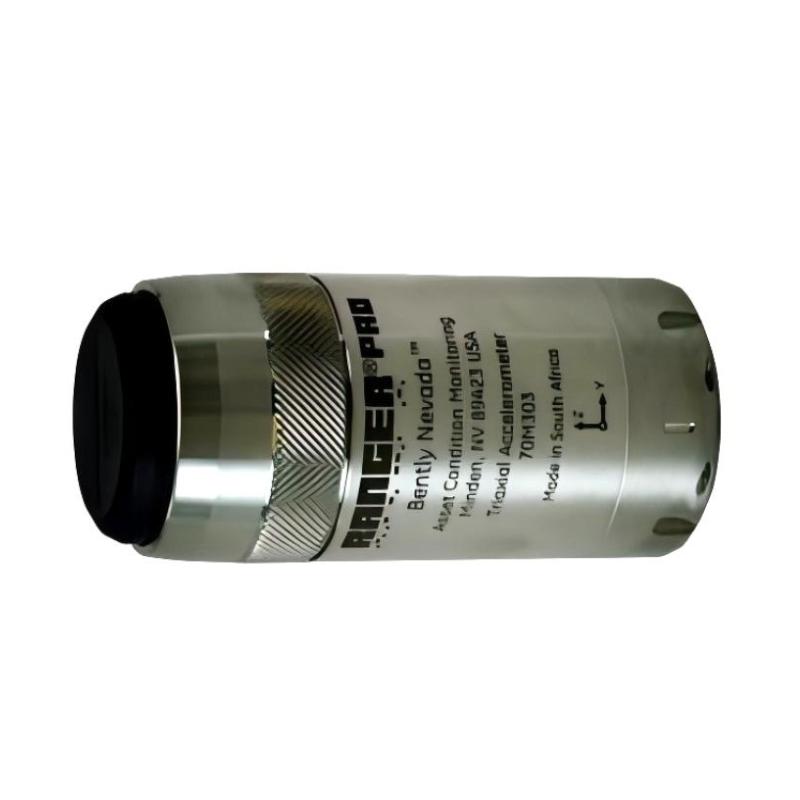
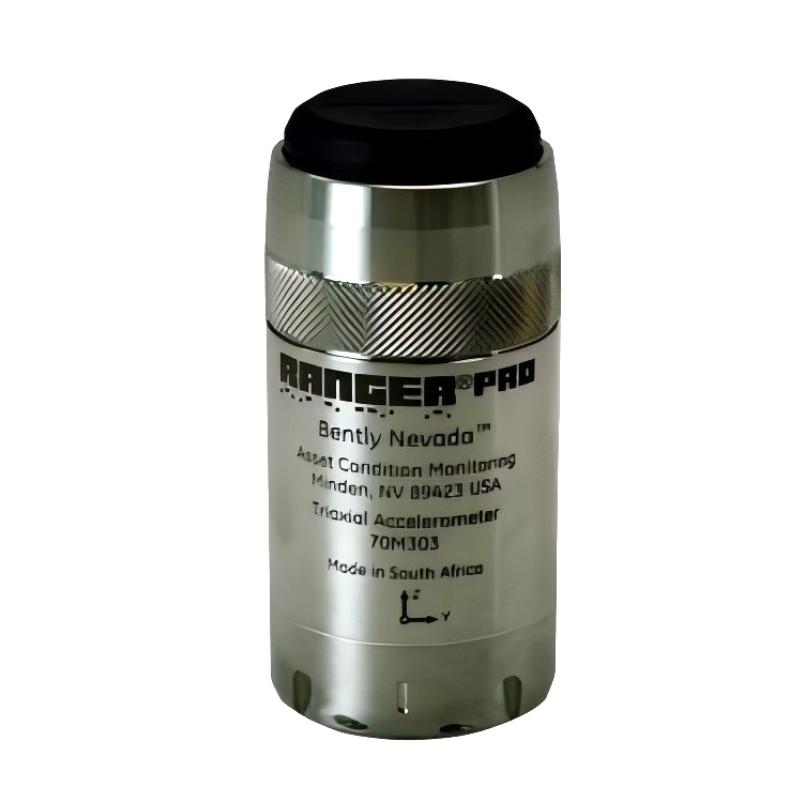
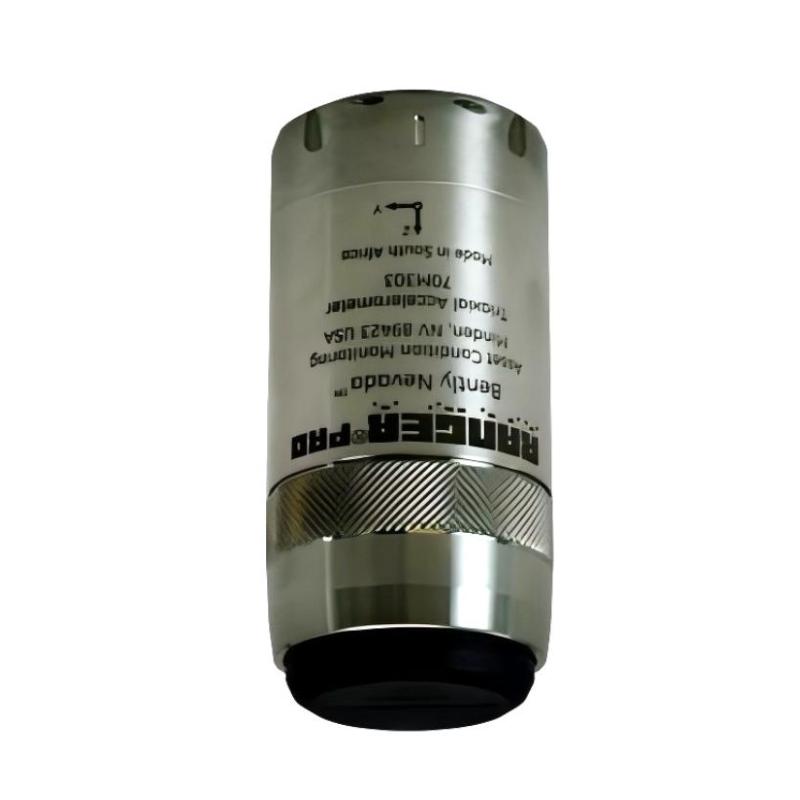
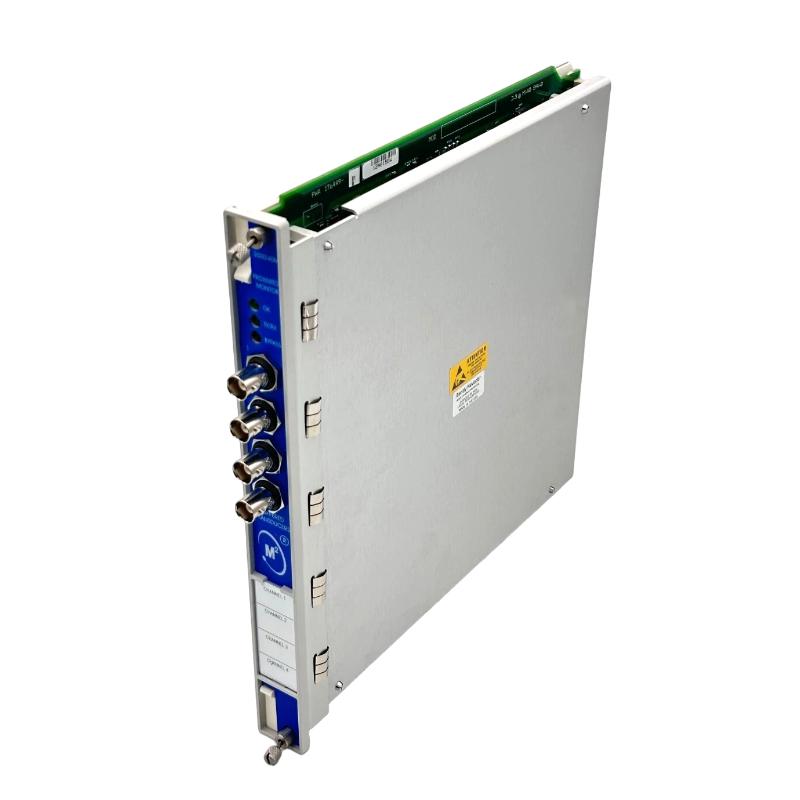
Bently Nevada 70M303-10-01-01-CN Ranr Pro Wireless Condition Monitoring Vibration Sensor
Bently Nevada 70M303-10-01-01-CN Ranr Pro Wireless Condition Monitoring Vibration Sensor
0.0
Points
Brand:Bently Nevada PLC Item No.:70M303-10-01-01-CN Product Origin:USA Product Dimensions:88 × 40 mm Product Weight:0.23 kg Payment:T/T, Western Union, Credit Card Goods_stock:15 Shipping Port:Xiamen, China Lead Time:1-3 Days Condition:Brand New And Original Warranty:1 Year Certificate:COO
The Bently Nevada 70M303-10-01-01-CN RANR Pro Wireless Condition Monitoring Vibration Sensor provides a wireless approach to industrial machinery-health monitoring. Instead of relying entirely on traditional wired instrumentation, wireless sensing allows vibration information to be collected from machines through a distributed monitoring architecture.
This approach can be particularly attractive in large industrial facilities. A plant may contain hundreds or thousands of motors, pumps, fans, gearboxes, and other rotating assets, yet only a portion of these machines may justify permanent wired monitoring infrastructure. Wireless sensors provide maintenance teams with another way to expand coverage according to equipment criticality and maintenance priorities.
Vibration is one of the most useful indicators for assessing rotating machinery. Changes in vibration behavior can be associated with mechanical imbalance, misalignment, bearing deterioration, looseness, or other developing problems. Monitoring trends over time gives maintenance personnel a stronger basis for deciding when further inspection is necessary.
The 70M303-10-01-01-CN is therefore suited to condition-monitoring strategies that emphasize early detection and data-driven maintenance. Its compact 88 × 40 mm form factor also helps simplify deployment on machines where installation space is limited.
For reliable results, sensor mounting should receive as much attention as wireless configuration. The sensor must maintain a mechanically stable connection with the monitored equipment, while the wireless communication path must provide dependable connectivity to the monitoring infrastructure.
Technical Specifications
Parameter
Specification
Brand
Bently Nevada
Model
70M303-10-01-01-CN
Product Family
RANR Pro
Product Type
Wireless Condition Monitoring Vibration Sensor
Measurement Type
Vibration Monitoring
Communication Type
Wireless
Primary Application
Industrial Condition Monitoring
Typical Equipment
Motors, Pumps, Fans, Gearboxes and Compressors
Dimensions
88 × 40 mm
Weight
0.23 kg (0.51 lb)
The sensor has specified dimensions of 88 × 40 mm and a weight of 0.23 kg (0.51 lb). Its compact construction makes it suitable for distributed monitoring installations where sensor size and installation access are important considerations.
When deploying the sensor, the mechanical attachment point should be selected carefully. A structurally representative location can provide more useful vibration information than a flexible or poorly supported mounting surface.
Recommended Related Models
Model
Product Type
Typical Application
Bently Nevada RANR Pro Wireless Vibration Sensor
Wireless Vibration Sensor
Industrial condition monitoring
Bently Nevada Ranger Pro Wireless Sensor
Wireless Condition Monitoring Sensor
Rotating equipment monitoring
Bently Nevada 2300 Series
Machinery Protection System
Machinery vibration monitoring
Bently Nevada 3500 Series
Machinery Protection System
Critical machinery protection
Bently Nevada 1900 Series
Machinery Monitoring System
Industrial condition monitoring
These products cover different approaches to machinery condition monitoring and protection. The appropriate system depends on machine criticality, monitoring objectives, communication architecture, response requirements, and existing plant infrastructure.
Popular Related Models
Model
Product Type
Typical Use
Bently Nevada RANR Pro Wireless Vibration Sensor
Wireless Vibration Sensor
Distributed condition monitoring
Bently Nevada Ranger Pro Wireless Sensor
Wireless Monitoring Sensor
Plant-wide asset monitoring
Bently Nevada 2300 Series
Machinery Protection System
Rotating machinery monitoring
Bently Nevada 3500 Series
Machinery Protection System
Critical machinery protection
Bently Nevada 1900 Series
Machinery Monitoring System
Industrial vibration monitoring
For a wireless monitoring deployment, sensor selection should not be based only on physical dimensions. Machine type, measurement location, vibration characteristics, communication coverage, monitoring objectives, and maintenance strategy should all be evaluated to ensure the sensor provides useful and dependable condition data.
Applications
The Bently Nevada 70M303-10-01-01-CN RANR Pro Wireless Condition Monitoring Vibration Sensor is designed for wireless monitoring of rotating equipment and other industrial assets where vibration information can help identify developing mechanical problems.
Its compact form factor makes it suitable for condition-monitoring deployments where installing traditional wired instrumentation may require significant cabling, engineering work, or panel modifications.
Typical applications include:
Electric motors
Pumps
Fans and blowers
Gearboxes
Compressors
Conveyors
Rotating production equipment
Auxiliary machinery
Industrial utility systems
Predictive maintenance programs
Wireless vibration monitoring can be particularly valuable for plants with a large number of rotating assets. Instead of installing a dedicated wired monitoring channel for every machine, wireless sensors can provide a scalable way to collect condition information from selected equipment.
Advantages
The 70M303-10-01-01-CN provides a compact approach to vibration-based condition monitoring. It is particularly useful for maintenance teams looking to expand machine-health coverage without significantly increasing hardwired instrumentation.
Wireless Condition Monitoring
Wireless transmission can reduce the amount of signal cabling required between individual machine sensors and the monitoring infrastructure.
Compact Installation
The 88 × 40 mm form factor allows the sensor to be installed on equipment where available mounting space is limited.
Supports Predictive Maintenance
Vibration information can help maintenance teams identify changes in machine behavior before a developing mechanical issue becomes a major production failure.
Suitable for Rotating Equipment
Motors, pumps, fans, gearboxes, and other rotating assets can benefit from regular vibration monitoring.
Scalable Monitoring Strategy
Wireless sensors can be deployed selectively across a plant, making it practical to monitor a larger number of assets according to their criticality.
Reduced Wiring Requirements
For machines located far from control cabinets or where cable installation is difficult, a wireless sensor can simplify the physical deployment of condition-monitoring equipment.
Lightweight Construction
The sensor has a specified weight of 0.23 kg (0.51 lb), making it convenient for handling and installation during condition-monitoring system expansion.
Technical FAQs
1. What is the Bently Nevada 70M303-10-01-01-CN used for?
It is a wireless vibration sensor designed for industrial condition monitoring. It can be used to collect vibration information from rotating machinery and support predictive maintenance activities.
2. What types of equipment can be monitored with a wireless vibration sensor?
Common applications include motors, pumps, fans, compressors, gearboxes, conveyors, and other rotating assets where vibration trends provide useful information about mechanical condition.
3. What is the main advantage of wireless vibration monitoring?
The primary advantage is reduced dependence on hardwired signal connections. This can make it easier and more economical to monitor equipment in locations where installing conventional instrumentation cables is difficult.
4. Can wireless monitoring replace every wired machinery-protection system?
Not necessarily. Wireless condition monitoring and dedicated machinery-protection systems serve different purposes. Critical protection functions may require continuously connected, high-speed protection instrumentation.
5. What can cause inconsistent wireless vibration data?
Potential causes include poor sensor mounting, excessive structural interference, communication limitations, environmental conditions, configuration issues, or insufficient power. Both the mechanical installation and wireless communication path should be evaluated.
6. Why is sensor mounting important for vibration monitoring?
A poorly mounted sensor can introduce measurement errors or attenuate the vibration signal. The sensor should be installed securely on an appropriate measurement location with a mechanically stable connection.
7. Where should a vibration sensor normally be installed on a motor or pump?
The preferred location depends on the machine design and monitoring objective. Bearing housings and structurally representative points are commonly evaluated because they can provide useful information about bearing and rotating-assembly behavior.
8. What should be checked if the sensor stops communicating?
Check the sensor's operating status, power condition, mounting, wireless communication path, network configuration, and receiving infrastructure. Environmental changes or physical obstructions should also be considered.
9. How can wireless vibration data support predictive maintenance?
Trend analysis can reveal gradual changes in vibration behavior. Maintenance engineers can compare current measurements with established baselines and investigate abnormal trends before they develop into serious equipment failures.
10. What should be verified when installing a replacement sensor?
Confirm the exact part number, installation position, mechanical mounting, communication configuration, sensor orientation where applicable, and monitoring-system association. Baseline measurements should be established after commissioning.