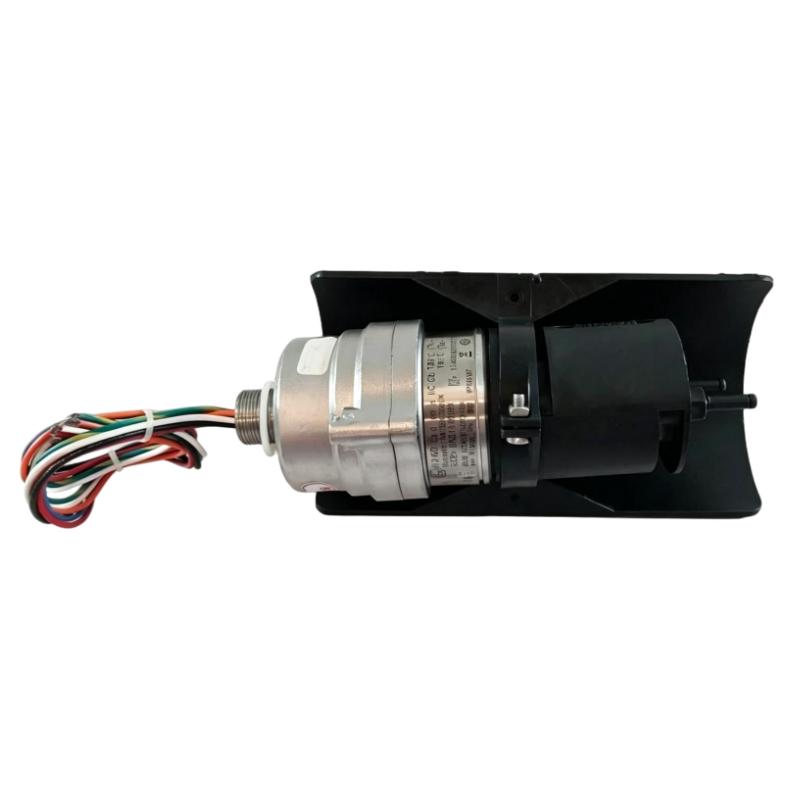
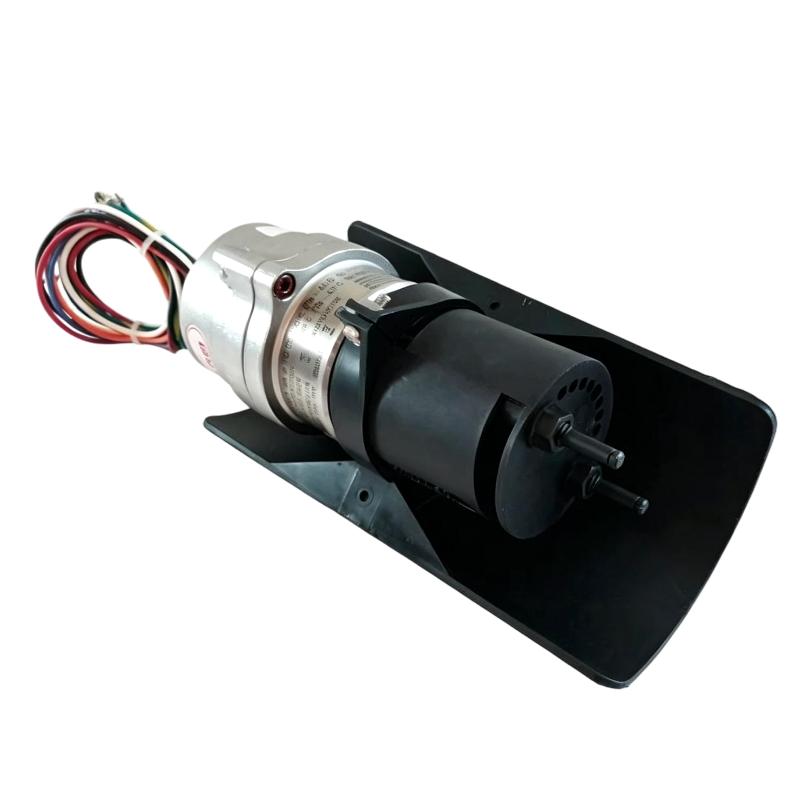
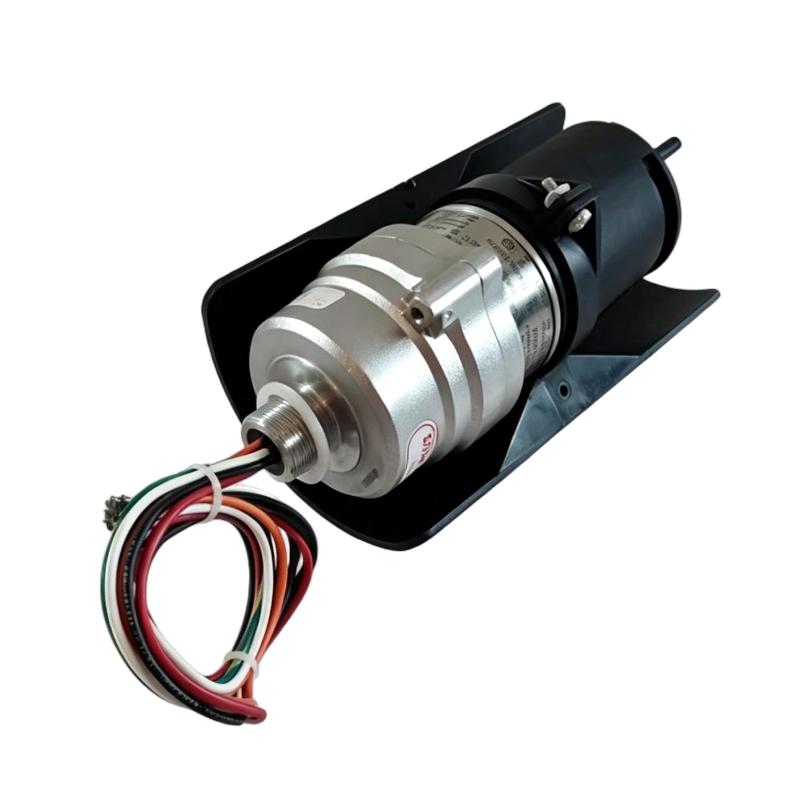
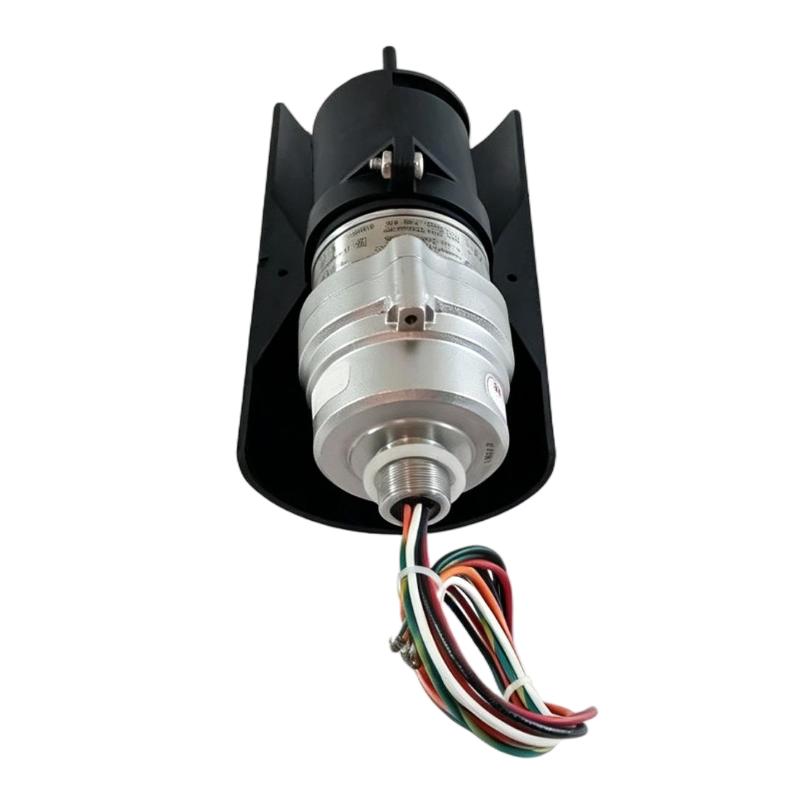
Brand:Honeywell DCS Item No.:2108B2001H Product Origin:USA Product Dimensions:380 × 85 × 250 mm Product Weight:1.6 kg Payment:T/T, Western Union, Credit Card Goods_stock:15 Shipping Port:Xiamen, China Lead Time:1-3 Days Condition:Brand New And Original Warranty:1 Year Certificate:COO
The Honeywell 2108B2001H Infrared Gas Detector is a fixed industrial gas-monitoring device designed to provide continuous detection of suitable gas hazards. In process industries, gas detection is an important protective layer because leaks can occur around valves, flanges, piping, compressors, pumps, storage equipment, and other process components.
Infrared detection provides a non-contact optical sensing method. The detector analyzes the interaction between infrared radiation and the target gas, allowing changes in gas concentration to be identified without depending on the same sensing mechanism used by catalytic detectors.
The effectiveness of a fixed gas detector depends heavily on its installation location. Even a high-quality detector may provide limited protection if it is installed where airflow prevents the target gas from reaching the sensing point. Engineers therefore need to consider potential leak sources, gas density, ventilation patterns, prevailing airflow, and the physical arrangement of process equipment.
The 2108B2001H can be used as part of a broader gas detection architecture in industrial environments. Depending on the installation design, the detector's output may be connected to a dedicated gas controller, alarm system, process-control system, or safety-related system.
For maintenance teams, detector replacement should be treated as a safety-critical task. Before removing the existing detector, its wiring, configuration, installation position, and associated system functions should be documented. After installation, functional testing is essential to verify that the detector and receiving system work together correctly.
Technical Specifications
Parameter
Specification
Brand
Honeywell
Model
2108B2001H
Product Type
Infrared Gas Detector
Detection Technology
Infrared
Application
Fixed Industrial Gas Detection
Primary Function
Continuous Gas Monitoring
Typical Environment
Process and Industrial Facilities
Typical System Integration
Gas Detection and Alarm Systems
Dimensions
380 × 85 × 250 mm
Weight
1.60 kg (3.53 lb)
The Honeywell 2108B2001H measures 380 × 85 × 250 mm and weighs 1.60 kg (3.53 lb). Adequate clearance should be provided around the detector to allow inspection, testing, cleaning, and future maintenance.
The detector should be selected and configured according to the actual target gas and site requirements. Gas detection equipment is highly application-specific, so electrical compatibility and physical fit alone are not sufficient criteria for replacement.
Recommended Related Models
Model
Product Type
Typical Application
Honeywell Searchpoint Optima Plus
Infrared Gas Detector
Fixed combustible gas monitoring
Honeywell Searchline Excel
Open-Path Gas Detector
Area gas monitoring
Honeywell Sensepoint XCD
Gas Detector
Industrial fixed gas detection
Honeywell Sensepoint Plus
Gas Detector
Point gas detection
Honeywell Touchpoint Plus
Gas Detection Controller
Centralized gas monitoring
These products cover different gas-detection requirements, including fixed-point sensing, open-path monitoring, and centralized control. Selection should be based on the target gas, detection method, installation environment, hazardous-area requirements, and system architecture.
Popular Related Models
Model
Product Type
Typical Use
Honeywell Searchpoint Optima Plus
Infrared Gas Detector
Fixed industrial gas monitoring
Honeywell Searchline Excel
Open-Path Gas Detector
Long-distance gas detection
Honeywell Sensepoint XCD
Gas Detector
Process-area gas monitoring
Honeywell Sensepoint Plus
Gas Detector
Fixed-point gas detection
Honeywell Touchpoint Plus
Gas Detection Controller
Gas alarm and monitoring systems
When selecting a replacement for an existing Honeywell gas detector, the complete model number should be checked together with the target gas, sensing technology, output configuration, installation location, and receiving control system. Proper verification before commissioning helps preserve both detection performance and the integrity of the wider plant safety strategy.
Applications
The Honeywell 2108B2001H Infrared Gas Detector is intended for fixed industrial gas-monitoring applications where continuous detection of potentially hazardous gas conditions is required. Its infrared sensing approach is suitable for environments in which dependable, ongoing gas monitoring forms part of the site's overall process and personnel protection strategy.
The detector can be considered for applications such as:
Oil and gas processing facilities
Refineries
Petrochemical plants
Chemical production facilities
Gas compression stations
Storage and transfer areas
Power-generation plants
Industrial process areas
Compressor and pump installations
Hazardous-area gas monitoring systems
A fixed infrared detector can continuously observe the atmosphere around a selected process area and provide an output to an appropriate gas detection, alarm, control, or safety system.
Advantages
The 2108B2001H is built around infrared gas detection, offering a sensing approach that is well suited to continuous industrial monitoring when the target gas and environmental conditions are compatible with the detector.
Continuous Fixed-Point Monitoring
The detector can remain installed at a designated monitoring location and continuously assess the surrounding atmosphere, supporting faster identification of developing gas hazards.
Infrared Sensing Principle
Infrared detection uses the optical absorption characteristics of gases rather than relying on a catalytic reaction. This makes it an attractive technology for selected industrial gas-monitoring applications.
Suitable for Process Facilities
The detector can be incorporated into gas-monitoring arrangements used around process equipment, piping, compressors, storage areas, and other potential release points.
Supports Alarm-Based Safety Strategies
When integrated with suitable control equipment, gas detection signals can be used to initiate alarms, operator notifications, ventilation actions, or other engineered safety responses.
Industrial Installation Format
The 380 × 85 × 250 mm enclosure provides a substantial fixed-installation format suitable for industrial instrumentation environments.
Practical Maintenance Handling
With a specified weight of 1.60 kg (3.53 lb), the detector can be handled conveniently during inspection, replacement, and planned maintenance.
Technical FAQs
1. What is the Honeywell 2108B2001H used for?
It is an infrared gas detector intended for fixed industrial monitoring applications. It detects suitable target gas conditions and provides information to the associated gas detection system.
2. What is the operating principle of infrared gas detection?
The detector uses infrared radiation and analyzes gas-specific absorption characteristics. The presence of the target gas changes the amount of infrared energy received by the sensing system.
3. Why would an industrial plant choose infrared gas detection?
Infrared technology can provide advantages in appropriate applications where continuous monitoring is required and where factors affecting other sensing technologies need to be minimized.
4. Where should the detector be installed?
The correct location depends on the target gas, its density, potential release sources, ventilation, airflow, equipment arrangement, and the site's gas-detection design. Detector placement should be established through appropriate engineering assessment.
5. What can cause an incorrect gas reading?
Potential causes include contaminated optical surfaces, unsuitable installation conditions, calibration problems, electrical faults, environmental influences, or operation outside the detector's specified limits.
6. What should be checked if the detector reports a fault?
Review the detector's diagnostic information and then inspect the power supply, wiring, connections, optical condition, environmental conditions, and calibration status. The receiving control system should also be checked.
7. How often should an infrared gas detector be tested?
Testing intervals should be established according to the site's safety procedures, applicable regulations, risk assessment, and the detector's maintenance requirements. Functional response testing and calibration verification should not be neglected.
8. Can the detector operate as an independent safety system?
A gas detector normally forms one part of a complete gas detection and safety architecture. Alarm processing, shutdown logic, ventilation control, and emergency response typically require additional system equipment and engineering.
9. What should be considered when replacing a 2108B2001H?
Verify the exact model, target gas configuration, electrical interface, installation arrangement, alarm settings, calibration requirements, and compatibility with the existing gas detection system.
10. What commissioning checks should be performed after replacement?
Verify mechanical installation and wiring, confirm detector status, perform the required functional response test, check alarm outputs, and verify that the receiving control or safety system correctly recognizes the detector.