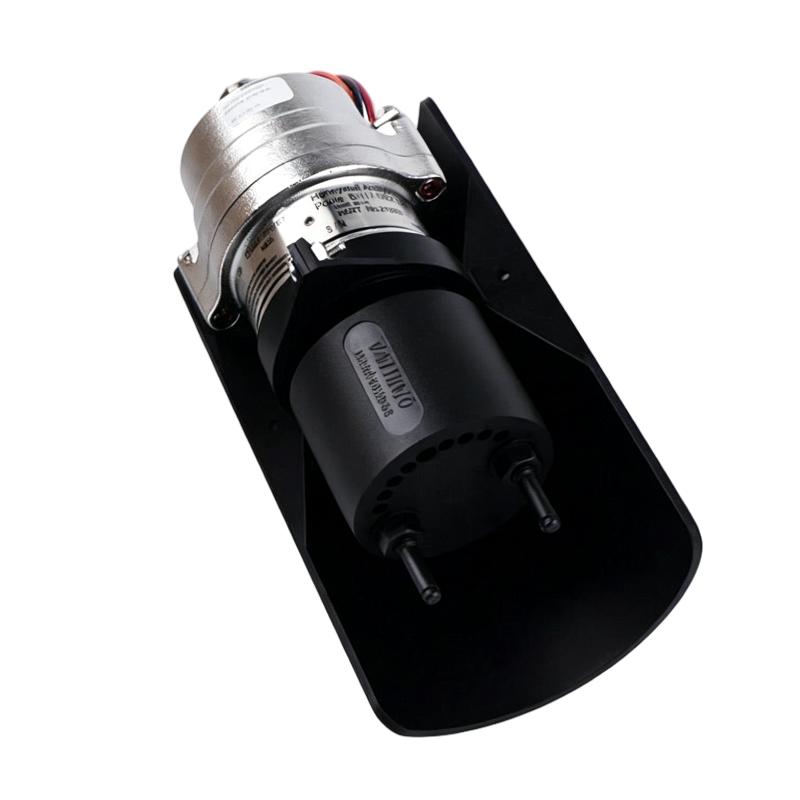
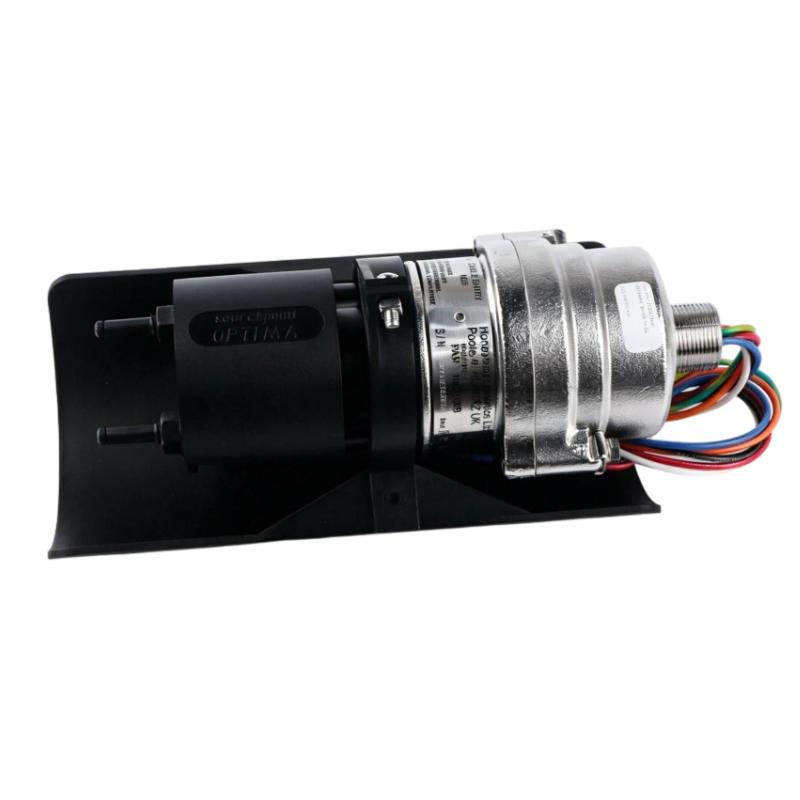
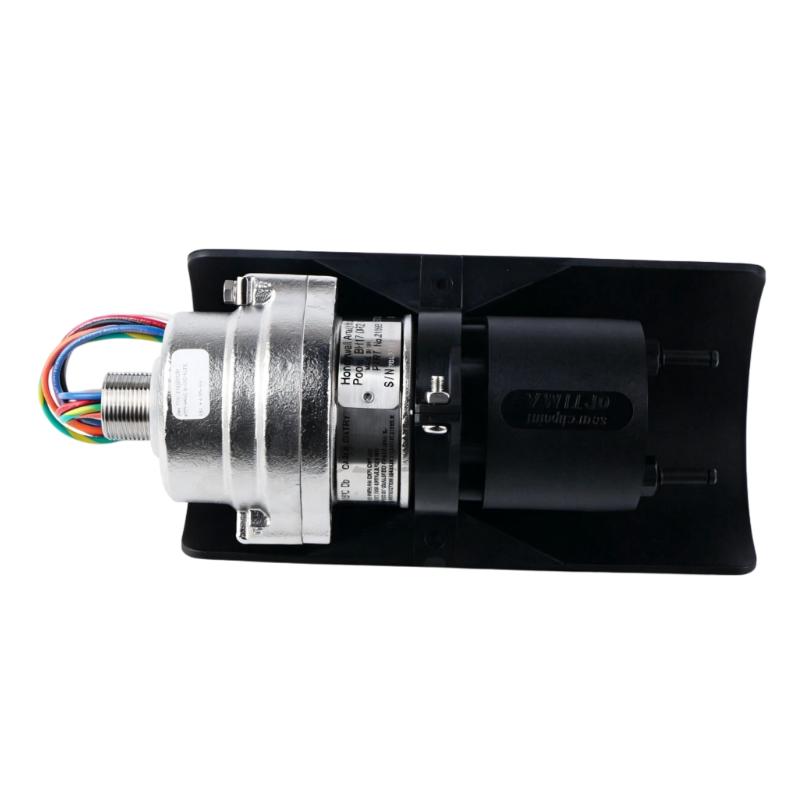
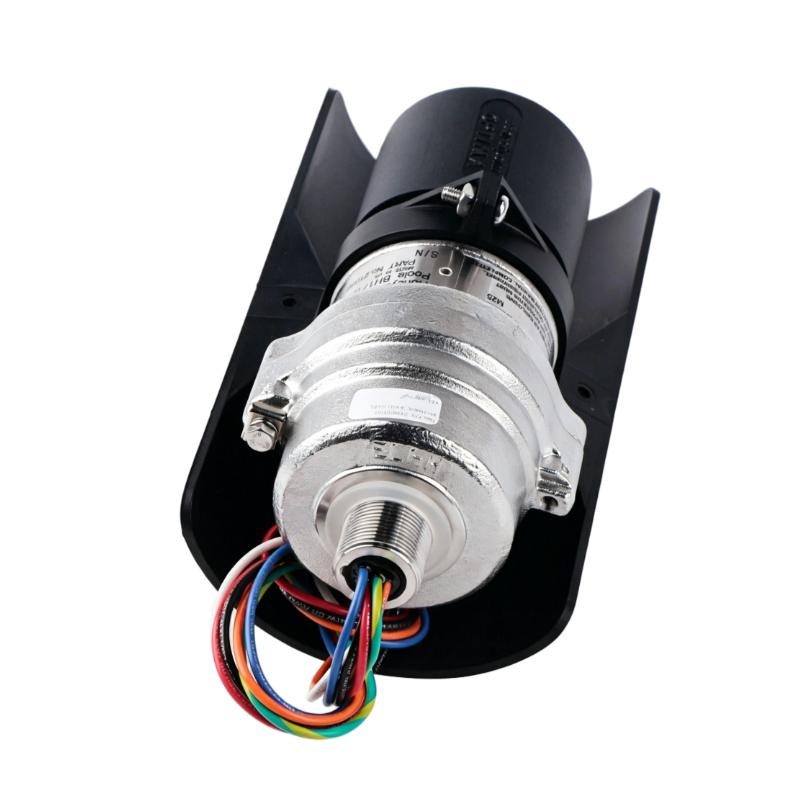
Brand:Honeywell DCS Item No.:2108N4100N Product Origin:USA Product Dimensions:380 × 85 × 250 mm Product Weight:1.6 kg Payment:T/T, Western Union, Credit Card Goods_stock:15 Shipping Port:Xiamen, China Lead Time:1-3 Days Condition:Brand New And Original Warranty:1 Year Certificate:COO
The Honeywell 2108N4100N Infrared Gas Detector is designed for fixed gas detection in industrial facilities where continuous monitoring of the surrounding atmosphere is required. In oil and gas, petrochemical, chemical, and other process industries, detecting a gas release quickly can be an important part of reducing operational and safety risks.
Infrared gas detection uses the optical properties of gases to identify changes in the monitored atmosphere. Unlike catalytic sensing, which depends on a combustion-based reaction, infrared detection analyzes gas-specific absorption of infrared energy.
The detector is therefore part of a larger safety chain rather than an isolated instrument. A typical installation may include field detectors, signal wiring, a gas detection controller, alarm devices, plant control equipment, and emergency-response systems. Every component must work correctly for the overall detection strategy to perform as intended.
Detector positioning is one of the most important installation considerations. The unit should be located where the target gas is reasonably likely to reach the sensing point if a leak occurs. Ventilation, process airflow, gas density, potential release locations, and nearby structures should all be considered.
For maintenance teams, replacing a 2108N4100N requires careful verification before the existing detector is removed. Recording the wiring, configuration, mounting position, and system response can simplify recommissioning. After installation, functional testing should confirm that the detector communicates correctly with the receiving system and responds appropriately to the required test condition.
Technical Specifications
Parameter
Specification
Brand
Honeywell
Model
2108N4100N
Product Type
Infrared Gas Detector
Detection Technology
Infrared
Application
Fixed Industrial Gas Detection
Primary Function
Continuous Gas Monitoring
Installation Type
Fixed-Point Industrial Installation
Typical Environment
Process Plants and Hazardous Industrial Areas
System Role
Gas Detection and Alarm Monitoring
Dimensions
380 × 85 × 250 mm
Weight
1.60 kg (3.53 lb)
The Honeywell 2108N4100N measures 380 × 85 × 250 mm and weighs 1.60 kg (3.53 lb).
The installation should provide enough access for inspection and maintenance while keeping the detector positioned appropriately for the intended gas-monitoring zone. The detector's exact configuration and target-gas suitability should be confirmed before commissioning.
Recommended Related Models
Model
Product Type
Typical Application
Honeywell Searchpoint Optima Plus
Infrared Gas Detector
Fixed combustible gas monitoring
Honeywell Searchline Excel
Open-Path Gas Detector
Long-distance gas detection
Honeywell Sensepoint XCD
Fixed Gas Detector
Industrial process monitoring
Honeywell Sensepoint Plus
Fixed Gas Detector
Point gas detection
Honeywell Touchpoint Plus
Gas Detection Controller
Centralized gas monitoring
These Honeywell products address different requirements within an industrial gas detection architecture. Selection should consider the target gas, detection method, environmental conditions, hazardous-area requirements, and required system interfaces.
Popular Related Models
Model
Product Type
Typical Use
Honeywell Searchpoint Optima Plus
Infrared Gas Detector
Fixed gas monitoring
Honeywell Searchline Excel
Open-Path Gas Detector
Area gas detection
Honeywell Sensepoint XCD
Fixed Gas Detector
Industrial gas monitoring
Honeywell Sensepoint Plus
Point Gas Detector
Process-area detection
Honeywell Touchpoint Plus
Gas Detection Controller
Gas alarm and monitoring
When replacing an industrial gas detector, the correct model should be selected based on more than enclosure dimensions. Target gas, infrared configuration, electrical interface, installation location, alarm requirements, environmental conditions, and compatibility with the existing gas detection system should all be verified before the unit is commissioned.
Applications
The Honeywell 2108N4100N Infrared Gas Detector is a fixed industrial gas-monitoring device intended for continuous detection of suitable gas hazards. It is designed for installations where gas detection must remain active during normal plant operation and where abnormal atmospheric conditions need to be identified promptly.
Typical applications include:
Oil and gas production facilities
Refineries
Petrochemical plants
Chemical processing units
Gas compression and treatment stations
Storage and loading areas
Power-generation facilities
Industrial process equipment
Compressor and pump stations
Fixed hazardous-gas monitoring networks
The detector can be installed at carefully selected points around potential gas-release sources and integrated into a wider alarm or safety system. Its effectiveness depends heavily on correct placement, suitable environmental conditions, and proper commissioning.
Advantages
The 2108N4100N uses infrared detection technology to provide continuous fixed-point gas monitoring. For industrial operators, this approach offers a practical combination of persistent monitoring, optical sensing, and integration into plant safety systems.
Continuous Atmospheric Monitoring
The detector can continuously monitor its designated area rather than relying on periodic manual gas checks.
Infrared Sensing Technology
Infrared detection measures gas through optical absorption characteristics, providing an alternative to catalytic and other gas-sensing technologies.
Suitable for Industrial Process Areas
Its application can extend to locations around compressors, pumps, process piping, valves, storage equipment, and other potential leak sources.
Supports Early Hazard Identification
When properly positioned and integrated into an appropriate alarm system, the detector can provide an early indication of abnormal gas conditions.
Flexible System Integration
A fixed detector can become part of a larger gas detection architecture that includes alarms, control equipment, ventilation systems, and emergency-response functions.
Industrial Installation Format
The 380 × 85 × 250 mm enclosure is suitable for fixed instrumentation installations in demanding industrial environments.
Manageable Maintenance Weight
The detector weighs 1.60 kg (3.53 lb), allowing technicians to handle the unit relatively easily during planned service and replacement work.
Technical FAQs
1. What is the Honeywell 2108N4100N used for?
The 2108N4100N is an infrared gas detector intended for fixed industrial gas-monitoring applications. It provides continuous detection of suitable target gas conditions.
2. How does infrared gas detection work?
The detector analyzes infrared radiation passing through or interacting with the surrounding atmosphere. Target gases absorb specific infrared wavelengths, allowing the sensing system to identify changes associated with gas concentration.
3. Why is infrared detection useful in industrial environments?
Infrared technology provides an optical detection method that does not depend on catalytic combustion. For suitable gases and environments, this can provide useful long-term monitoring characteristics.
4. How should a detector location be determined?
The location should be selected according to the target gas, potential release points, gas density, ventilation, airflow, process equipment layout, and the facility's gas-detection engineering strategy.
5. What can cause an incorrect gas reading?
Possible causes include optical contamination, incorrect calibration, environmental interference, wiring faults, unstable power, inappropriate installation, or operating conditions outside the detector's intended range.
6. What should technicians do when a gas alarm is triggered?
The alarm should first be handled according to the facility's established emergency procedure. Instrument troubleshooting should only be performed once the area has been assessed and made safe.
7. How can optical contamination affect the detector?
Dirt, dust, oil, condensation, or other contamination affecting the optical path may interfere with infrared measurement and reduce confidence in the detector output.
8. Can the 2108N4100N be integrated with a centralized gas monitoring system?
A compatible installation can connect the detector to an appropriate gas detection or safety architecture. The exact interface and signal configuration must be verified for the intended system.
9. What should be checked before replacing this detector?
Confirm the complete model number, target gas configuration, electrical interface, mounting arrangement, alarm settings, installation location, and compatibility with the existing receiving system.
10. What should be tested after installation?
Technicians should verify mechanical installation, electrical connections, detector status, signal transmission, alarm operation, and the required functional gas-response test before returning the detector to service.