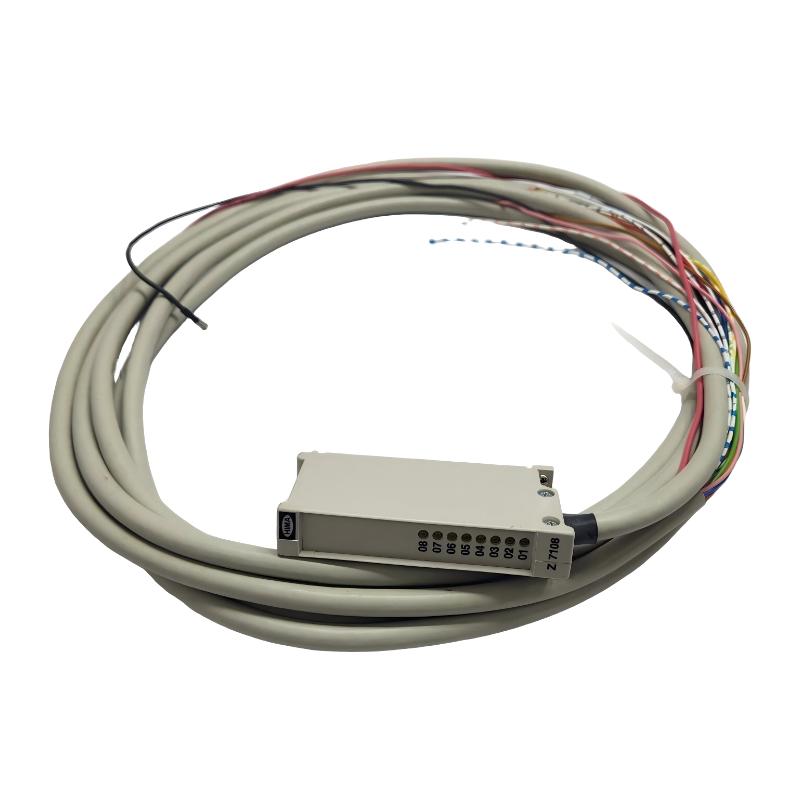
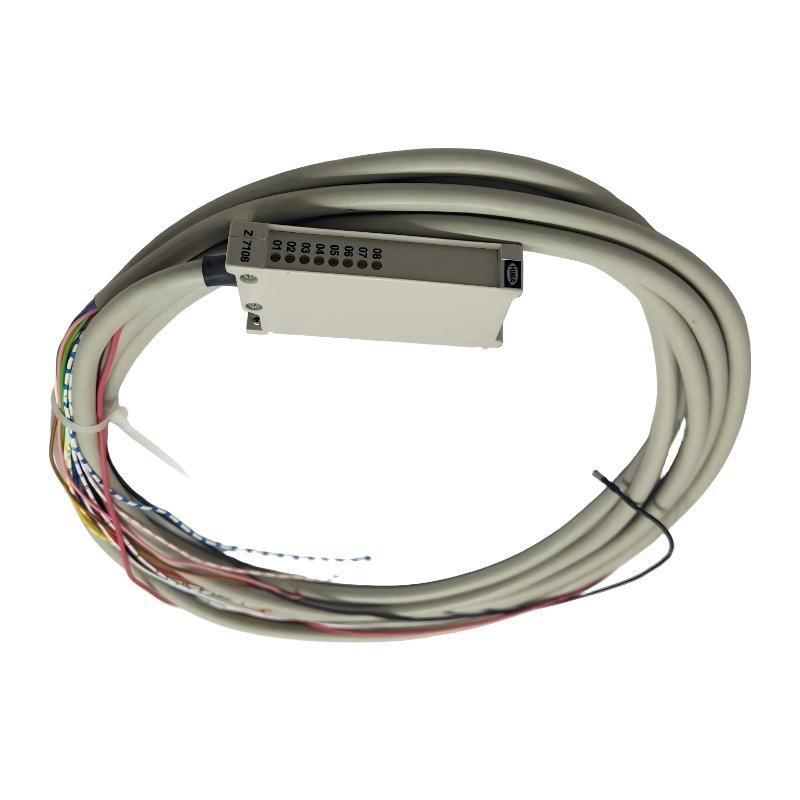
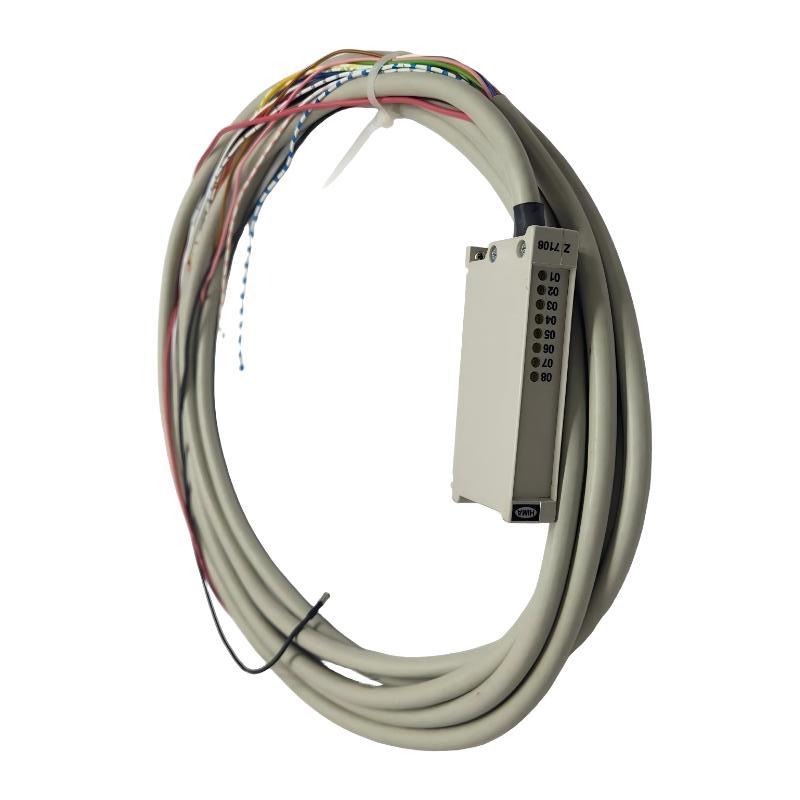
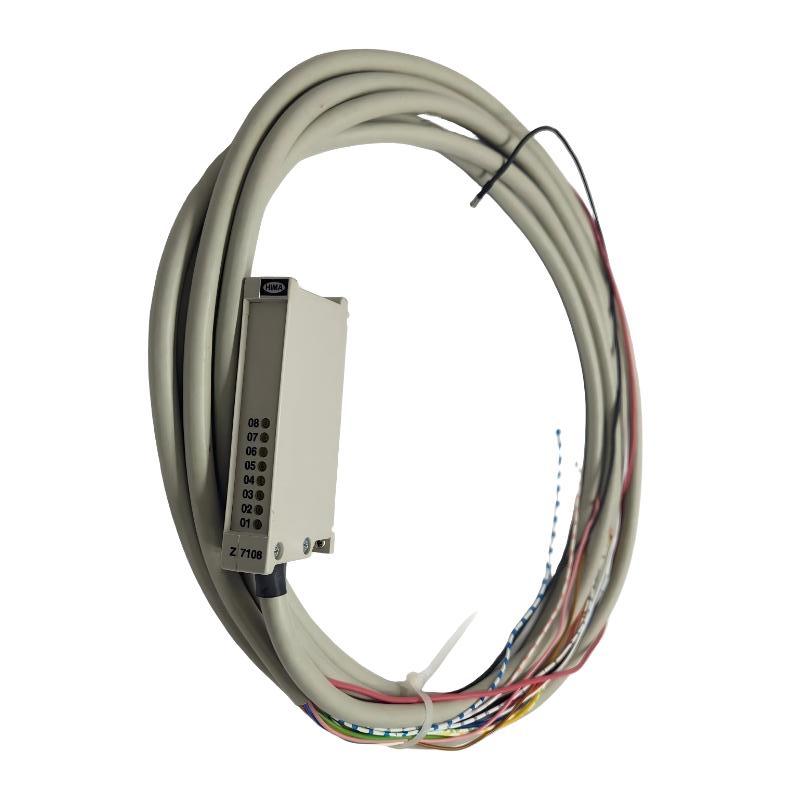
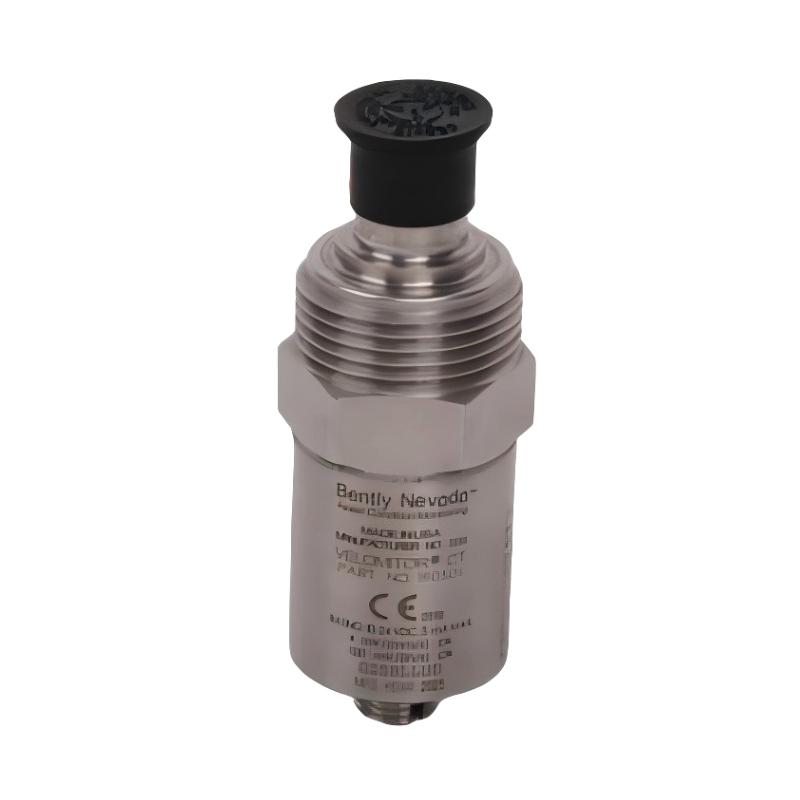
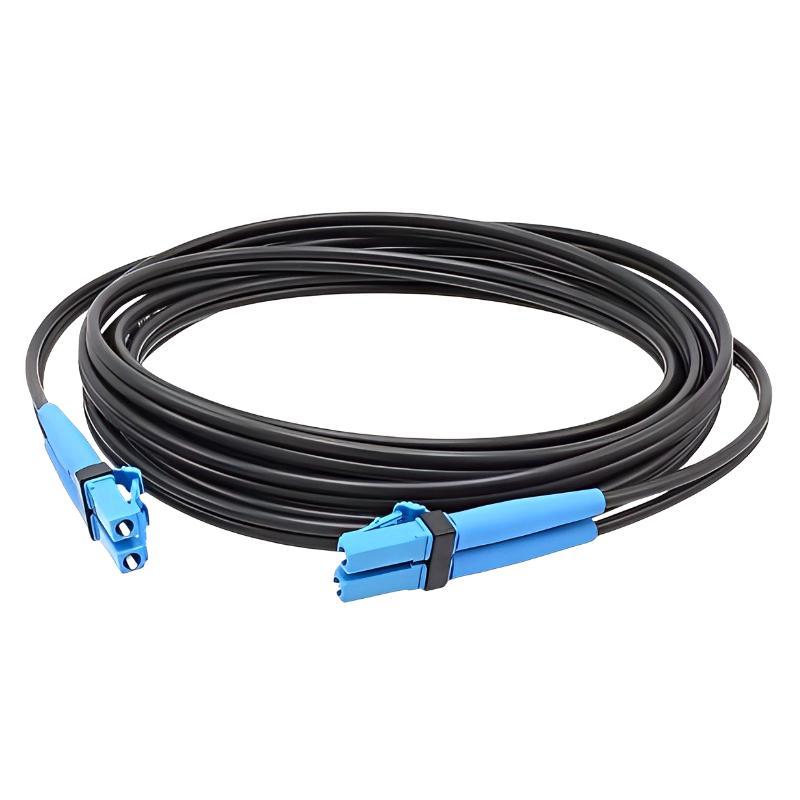
Brand:Hima DCS Modules Item No.:Z7108/3237/W/R1 Product Origin:Germany Product Dimensions:Cable Length: Optional Product Weight:Shipping Weight: 3 kg Payment:T/T, Western Union, Credit Card Goods_stock:15 Shipping Port:Xiamen, China Lead Time:1-3 Days Condition:Brand New And Original Warranty:1 Year Certificate:COO
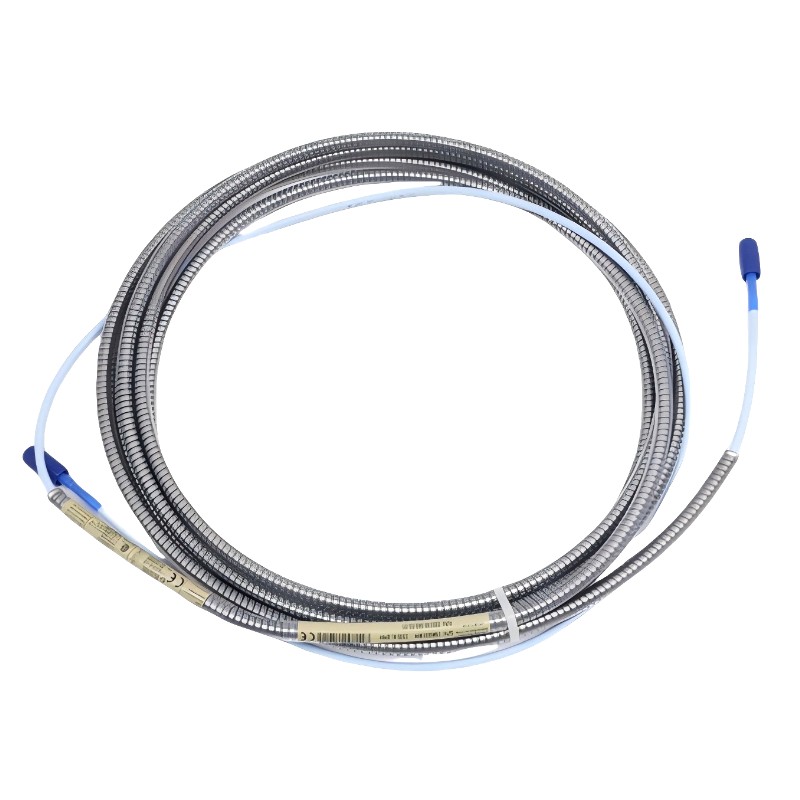
The HIMA Z7108/3237/W/R1 Cable Plug is a connection component intended for industrial automation and safety-related control applications. In a safety system, connectors and cable assemblies are part of the signal path between controllers, I/O equipment, field devices, and other system components.
Although a cable plug does not perform logic processing itself, its electrical reliability is important. A poor connection can produce intermittent signals that are difficult to diagnose and may result in communication errors, I/O faults, or unexpected system states.
The Z7108/3237/W/R1 should therefore be treated as a system-specific connection component. Before installation, the mating interface and pin arrangement should be checked carefully. The connector should fit securely without excessive force, and the cable should be routed so that mechanical stress is not transferred directly to the connector.
Cable length is specified as optional, meaning the final cable arrangement can depend on the installation requirement. During system planning, technicians should consider routing distance, signal characteristics, cabinet layout, shielding, grounding, and mechanical strain.
For replacement work, documenting the original cable routing and termination before removal is especially useful. Each conductor should be identified before the old connector is disconnected. After installing the replacement, continuity and correct pin assignment should be verified before restoring the system to normal operation.
Because HIMA equipment is commonly used in safety-related applications, connector maintenance should be performed according to the applicable system documentation and site procedures rather than relying solely on general electrical practices.
Technical Specifications
Parameter
Specification
Brand
HIMA
Model
Z7108/3237/W/R1
Product Type
Cable Plug
Application
Industrial Safety and Control Systems
Typical Use
Equipment and Cable Interconnection
Cable Length
Optional
Installation
Control Cabinet / Industrial Equipment
Typical System
Safety Automation and Process Control
Shipping Weight
3.00 kg (6.61 lb)
The HIMA Z7108/3237/W/R1 is specified with an optional cable length. The supplied shipping weight is 3.00 kg (6.61 lb).
Because the provided specification refers to shipping weight rather than the net weight of the connector assembly itself, the 3.00 kg (6.61 lb) value should be treated as the shipping weight.
Recommended Related Models
Model
Product Type
Typical Application
HIMA Z7108/3237/W/R1
Cable Plug
Safety-system cable connection
HIMA HIMax Series
Safety Controller
High-integrity process control
HIMA HIMatrix Series
Safety Controller
Distributed safety applications
HIMA X-COM Series
Communication / I/O Equipment
Industrial safety automation
HIMA F35 Series
Safety Controller
Process and machinery safety
These related HIMA products cover safety-control, distributed I/O, and process automation applications. Connector selection should always be based on the exact equipment interface and system configuration.
Popular Related Models
Model
Product Type
Typical Use
HIMA HIMax Series
Safety Controller
High-integrity process safety
HIMA HIMatrix Series
Safety Controller
Distributed safety control
HIMA F35 Series
Safety Controller
Industrial safety applications
HIMA X-COM Series
Communication / I/O Equipment
Safety-system connectivity
HIMA Z7108/3237/W/R1
Cable Plug
Cable and equipment interconnection
For replacement applications, the complete Z7108/3237/W/R1 designation should be verified against the existing HIMA installation. Connector geometry, mating interface, pin assignment, cable configuration, shielding, and system compatibility should all be confirmed before installation to avoid introducing wiring or connection faults into the safety system.
Applications
The HIMA Z7108/3237/W/R1 Cable Plug is an industrial connection component intended for use in safety-related control and automation installations. As part of a HIMA system, a correctly selected cable plug helps establish reliable electrical connections between field wiring and associated control or safety equipment.
Typical applications include:
Safety instrumented systems
Emergency shutdown systems
Industrial process automation
Turbine and compressor control
Oil and gas facilities
Chemical processing plants
Power-generation equipment
Machinery safety systems
Distributed safety-control installations
Industrial control cabinets
Cable connection components may appear simple compared with processors or I/O modules, but their electrical and mechanical integrity directly affects system reliability. A properly fitted plug helps reduce connection-related faults and simplifies maintenance of safety-control equipment.
Advantages
The HIMA Z7108/3237/W/R1 is suited to industrial installations where dependable cable termination and equipment interconnection are required. Its value lies in providing a purpose-oriented connection solution within compatible HIMA system configurations.
Reliable Electrical Interconnection
A correctly installed cable plug provides a secure connection between the cable assembly and the associated equipment.
Suitable for Safety-Control Applications
Connection components used within safety systems must maintain reliable electrical continuity during normal operation and maintenance activities.
Maintenance-Friendly Design
A dedicated plug arrangement can make equipment replacement and cable servicing more straightforward than permanently fixed wiring.
Supports Organized Panel Wiring
Proper connectorization helps keep control cabinets and safety-system wiring structured and easier to inspect.
Reduced Connection Errors
Using the correct connector type helps technicians maintain consistent terminal assignments and avoid unsuitable mating connections.
Useful for System Maintenance
A replacement plug can be valuable when an existing connector has mechanical damage, worn contacts, cable deterioration, or other connection-related problems.
Optional Cable Length
The supplied configuration allows the cable length to be treated as an application-specific selection rather than a fixed dimensional specification.
Technical FAQs
1. What is the HIMA Z7108/3237/W/R1 used for?
It is a cable plug intended for industrial control and safety-system interconnection. Its primary purpose is to provide a suitable connection between a cable assembly and compatible equipment.
2. Why are dedicated cable plugs important in safety systems?
Reliable connectors help maintain electrical continuity and consistent wiring. A loose, damaged, or incorrectly terminated connection can cause communication failures, I/O faults, or unexpected system diagnostics.
3. Can the Z7108/3237/W/R1 be substituted with a generic connector?
A generic connector should not be assumed to be interchangeable. Mechanical keying, pin assignment, electrical characteristics, cable configuration, and system compatibility should all be confirmed before selecting an alternative.
4. What can cause intermittent connector faults?
Common possibilities include loose mating, damaged contacts, cable strain, contamination, mechanical vibration, incorrect termination, corrosion, or damage to the connector housing.
5. How should a suspected cable-plug problem be diagnosed?
Begin with a visual inspection and verify mechanical engagement. Then check cable continuity, pin assignments, connector condition, and the associated module or field-device diagnostics using the approved maintenance procedure.
6. Can cable length affect system performance?
Depending on the connected circuit, cable length can affect voltage drop, signal integrity, impedance, shielding performance, or communication characteristics. The cable length should therefore be selected according to the requirements of the complete circuit.
7. What should be checked before replacing the plug?
Verify the complete part number, mating connector, pin configuration, cable type, termination arrangement, and installation requirements. Existing wiring should be documented before disconnecting the original assembly.
8. How can connector-related faults be prevented?
Use the correct connector, ensure complete mating, provide appropriate cable strain relief, maintain suitable routing, protect connections from contamination, and inspect connectors during scheduled maintenance.
9. Why should connector pins not be handled unnecessarily?
Contact surfaces can be contaminated or mechanically damaged through improper handling. Technicians should follow appropriate electrostatic and connector-handling practices for the equipment involved.
10. What should be verified after installing a replacement cable plug?
Check mechanical engagement, cable termination, pin continuity, shielding or grounding where applicable, and the associated system diagnostics. The complete safety-control circuit should then be tested according to the approved commissioning procedure.