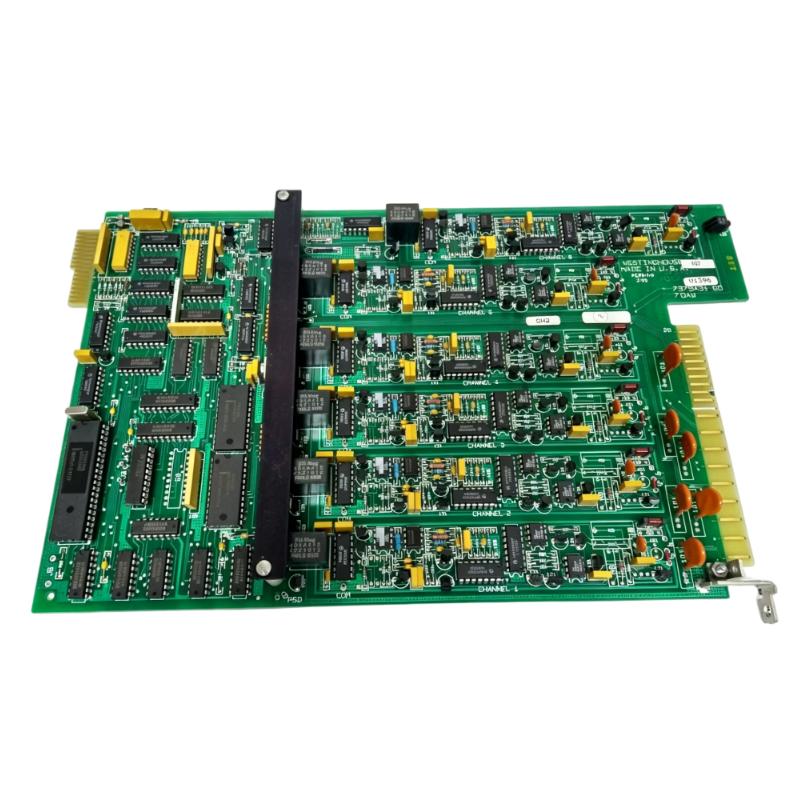
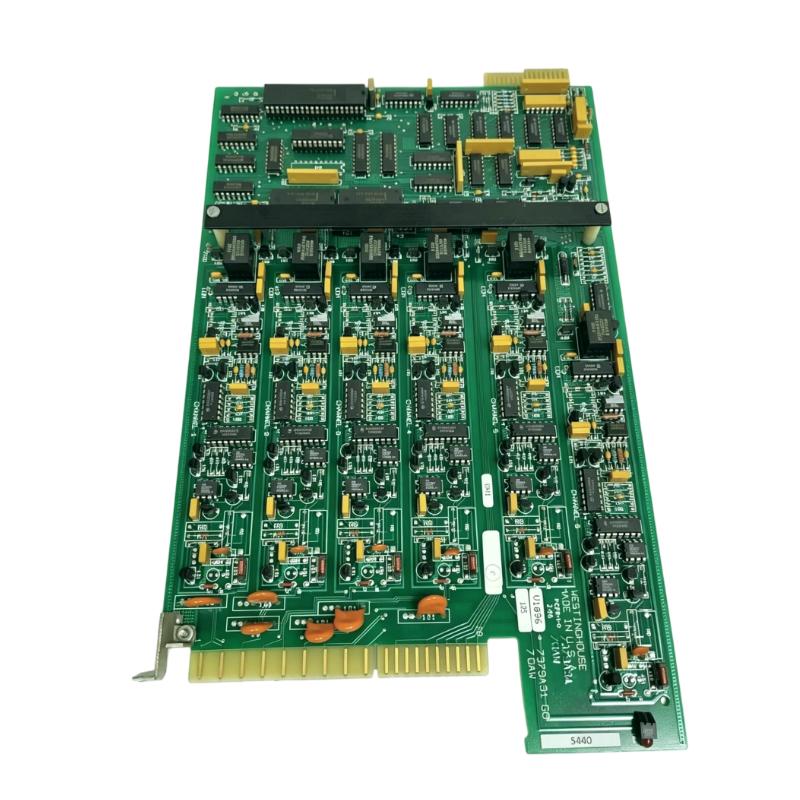
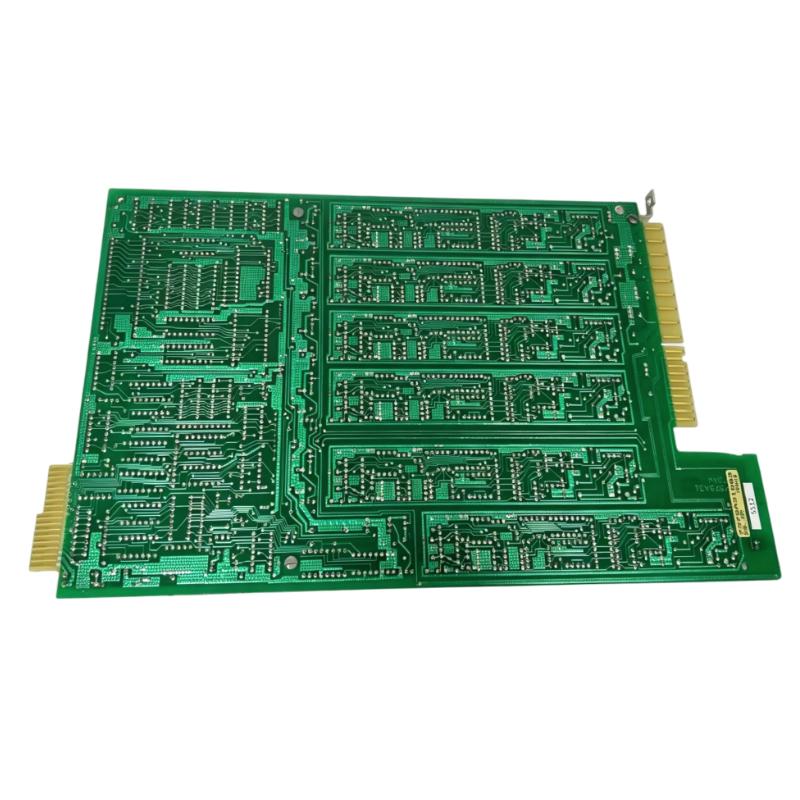
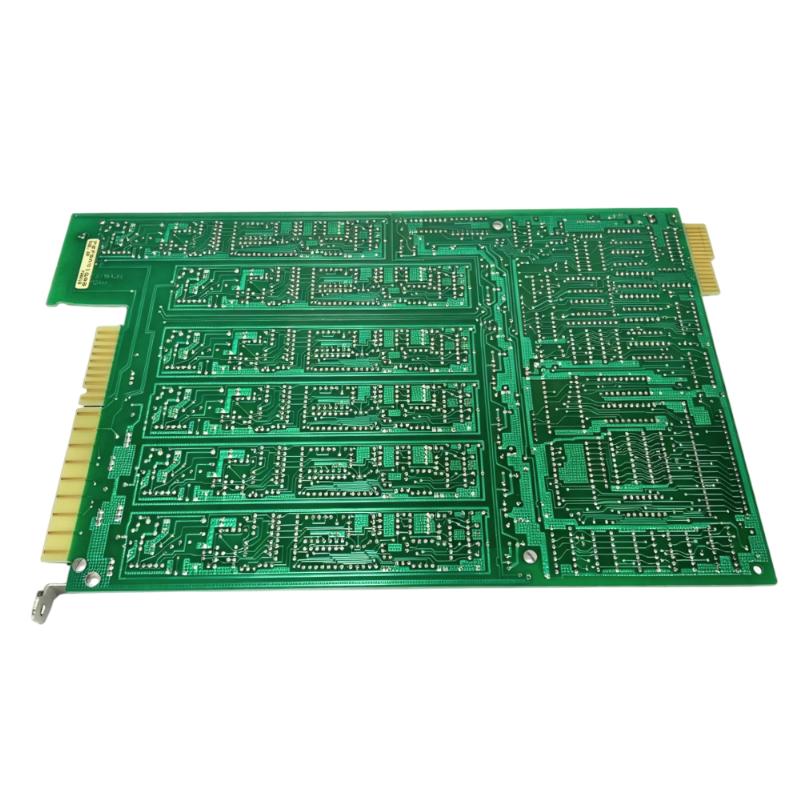
Brand:Ovation DCS Item No.:7379A31G03 Product Origin:USA Product Dimensions:200 × 35 × 120 mm Product Weight:0.63 kg Payment:T/T, Western Union, Credit Card Goods_stock:15 Shipping Port:Xiamen, China Lead Time:1-3 Days Condition:Brand New And Original Warranty:1 Year Certificate:COO
The Ovation 7379A31G03 Simulated Input Point Card is a specialized component for control-system testing and simulation. In a large power-generation or process-control environment, engineers often need to verify control logic without waiting for a particular physical process condition to occur.
Simulated input points provide a practical way to introduce controlled conditions into an Ovation system. For example, an engineer may need to evaluate how an alarm responds to a changing input, how a permissive behaves when a status changes, or whether a sequence progresses correctly under a defined set of conditions.
This capability can be especially useful during commissioning. Before a plant is fully operational, selected control functions can be tested using controlled inputs, helping engineering teams identify configuration or logic issues before they affect live process equipment.
The card can also support troubleshooting. If a field instrument appears to be providing an abnormal value or status, an appropriately designed simulation test can help determine whether the problem is located at the field device, input path, or control logic.
However, simulation must be treated carefully in a live control environment. A simulated point can influence downstream logic if it is connected to active control functions. Before testing, engineers should identify all dependent logic and place affected equipment into an appropriate safe state.
The specified dimensions of the 7379A31G03 are 200 × 35 × 120 mm, with a weight of 0.63 kg (1.39 lb). These characteristics make it suitable for integration into compatible Ovation control hardware.
For replacement work, the original card configuration and point assignments should be documented before removal. After installation, technicians should verify system recognition, point configuration, simulated values, and associated logic responses.
Technical Specifications
Parameter
Specification
Platform
Ovation
Model
7379A31G03
Product Type
Simulated Input Point Card
Application
Control-System Simulation and Testing
Primary Function
Simulated Input Point Generation
Typical Use
Logic Verification, Commissioning and Troubleshooting
System Environment
Ovation Control Architecture
Typical Industry
Power Generation and Process Automation
Dimensions
200 × 35 × 120 mm
Weight
0.63 kg (1.39 lb)
The Ovation 7379A31G03 measures 200 × 35 × 120 mm and weighs 0.63 kg (1.39 lb).
The card should be installed in its designated Ovation hardware position and configured according to the associated control-system requirements. Before performing live simulation tests, engineers should identify the control functions affected by the simulated points.
Recommended Related Models
Model / Series
Product Type
Typical Application
Ovation 7379A31G03
Simulated Input Point Card
Control-system testing
Ovation Digital Input Cards
Digital Input Card
Field status acquisition
Ovation Analog Input Cards
Analog Input Card
Process measurement
Ovation Digital Output Cards
Digital Output Card
Discrete equipment control
Ovation Controller Modules
Process Controller
Control logic execution
These Ovation hardware categories can work together to support input acquisition, control logic, output commands, and test functions. Exact compatibility depends on the installed Ovation system architecture and configuration.
Popular Related Models
Model / Series
Product Type
Typical Use
Ovation 7379A31G03
Simulated Input Point Card
Control logic simulation
Ovation Digital Input Series
Digital Input Card
Equipment status monitoring
Ovation Analog Input Series
Analog Input Card
Process signal acquisition
Ovation Digital Output Series
Digital Output Card
Field equipment control
Ovation Controller Series
Process Controller
Plant automation
For replacement applications, verify the complete Ovation 7379A31G03 model designation, assigned card position, point configuration, and controller compatibility before installation. During commissioning, simulated inputs should be introduced under controlled conditions to prevent unintended commands from reaching live plant equipment.
Applications
The Ovation 7379A31G03 Simulated Input Point Card is designed for control-system applications where simulated or internally generated input points are required within an Ovation environment. Such functionality can be valuable during control-system development, logic verification, commissioning, maintenance, and operational testing.
Typical applications include:
Power-generation control systems
Plant control logic testing
Steam turbine control
Boiler automation
Process simulation
Control-loop verification
Commissioning activities
Maintenance and troubleshooting
Operator training environments
Factory and system acceptance testing
A simulated input point allows engineers and technicians to introduce controlled input conditions into a control strategy without necessarily relying on a physical field sensor. This can make it easier to verify how control logic responds to changing process conditions.
Advantages
The Ovation 7379A31G03 provides a useful interface for test and simulation scenarios where controlled input conditions are needed within an Ovation control architecture.
Supports Controlled Input Simulation
Simulated input points can provide defined conditions for checking control logic and system responses during engineering or commissioning work.
Useful for Troubleshooting
Technicians can use controlled input conditions to help distinguish problems in control logic from faults originating in field instrumentation.
Improves Commissioning Efficiency
Simulation can reduce dependence on live process conditions during selected testing activities, allowing engineers to verify portions of a control strategy in a controlled environment.
Supports Logic Verification
Engineers can evaluate permissives, interlocks, alarms, sequences, and control responses by applying known input conditions.
Suitable for Power-Plant Automation
The card is applicable to Ovation-based control architectures used in power generation and industrial process environments.
Compact Control Hardware
The card measures 200 × 35 × 120 mm, providing a practical form factor for installation within compatible control hardware.
Convenient Maintenance Handling
With a weight of 0.63 kg (1.39 lb), the card can be handled efficiently during installation and replacement work.
Technical FAQs
1. What is the Ovation 7379A31G03 used for?
It is a simulated input point card intended to provide controlled or simulated input conditions within an Ovation control-system environment.
2. Why are simulated inputs useful in control-system testing?
They allow engineers to introduce known input conditions and observe how control logic, alarms, sequences, and interlocks respond without depending entirely on live field conditions.
3. Can simulated inputs be used to troubleshoot a field instrument?
Yes, within an approved test procedure, simulated inputs can help isolate whether an abnormal control response originates from the field instrument or from downstream control logic.
4. What types of control functions can be evaluated with simulated inputs?
Depending on system configuration, testing may include alarm thresholds, permissives, interlocks, sequencing, status handling, and control responses.
5. What should be checked if the simulated point does not change as expected?
Check card status, configuration, controller communication, point assignment, software logic, and the applicable control-system diagnostics.
6. Can a simulated input accidentally affect live equipment?
It can if the test point is connected to active control logic that can issue commands to physical equipment. Simulation testing should therefore be planned carefully and performed under an approved maintenance or commissioning procedure.
7. What is the difference between a simulated input and a physical field input?
A physical input originates from an actual field device or instrument, while a simulated input provides a controlled test condition generated within the control-system environment.
8. What should be verified before replacing the card?
Confirm the complete part number, card location, point configuration, connector arrangement, system compatibility, and any associated configuration parameters.
9. What can cause unexpected behavior during simulation testing?
Possible causes include incorrect point assignment, existing control logic, active permissives or interlocks, configuration errors, communication problems, or an incorrectly selected test condition.
10. How should the card be commissioned after replacement?
Verify card recognition and diagnostics, confirm point configuration, apply controlled test conditions, observe the expected input response, and verify that associated logic behaves correctly before returning the system to normal operation.