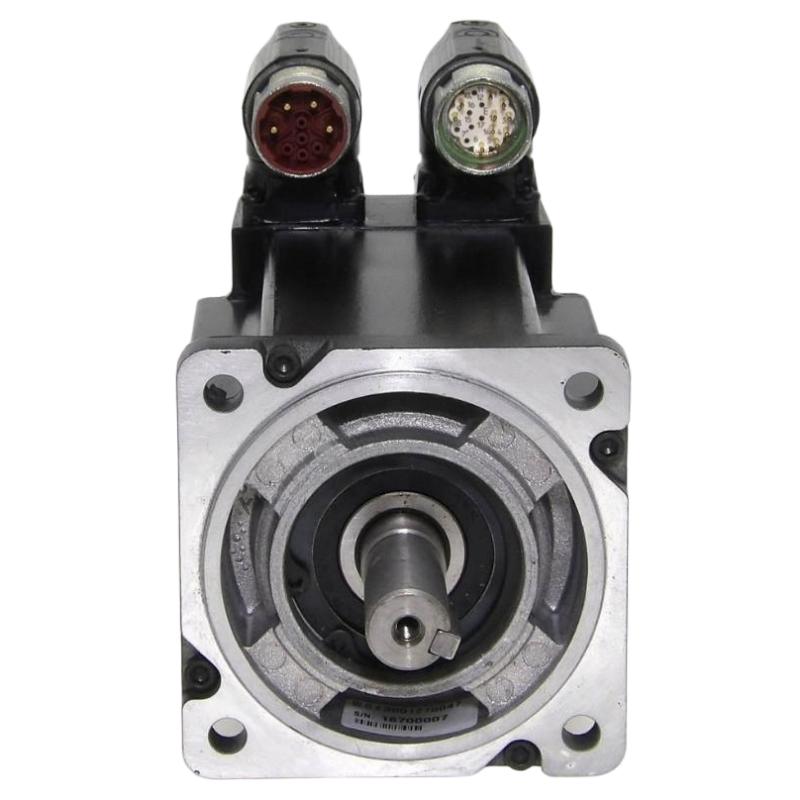
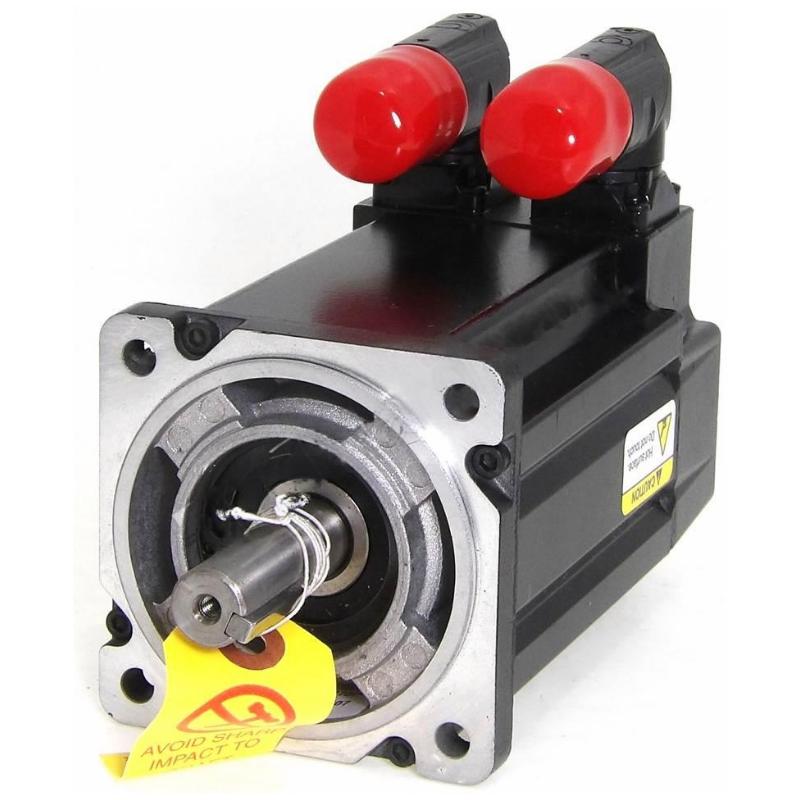
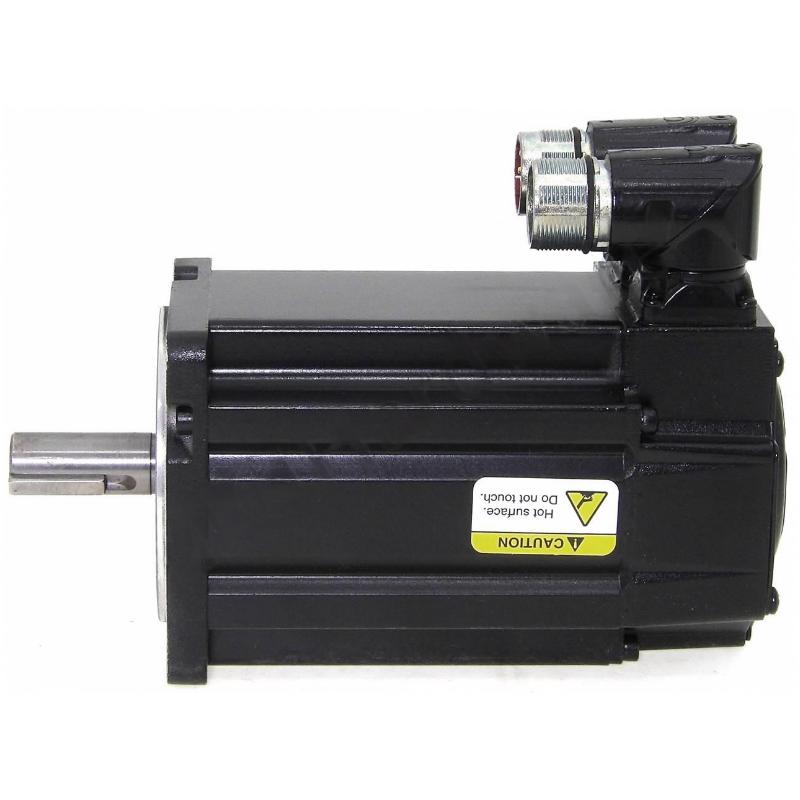
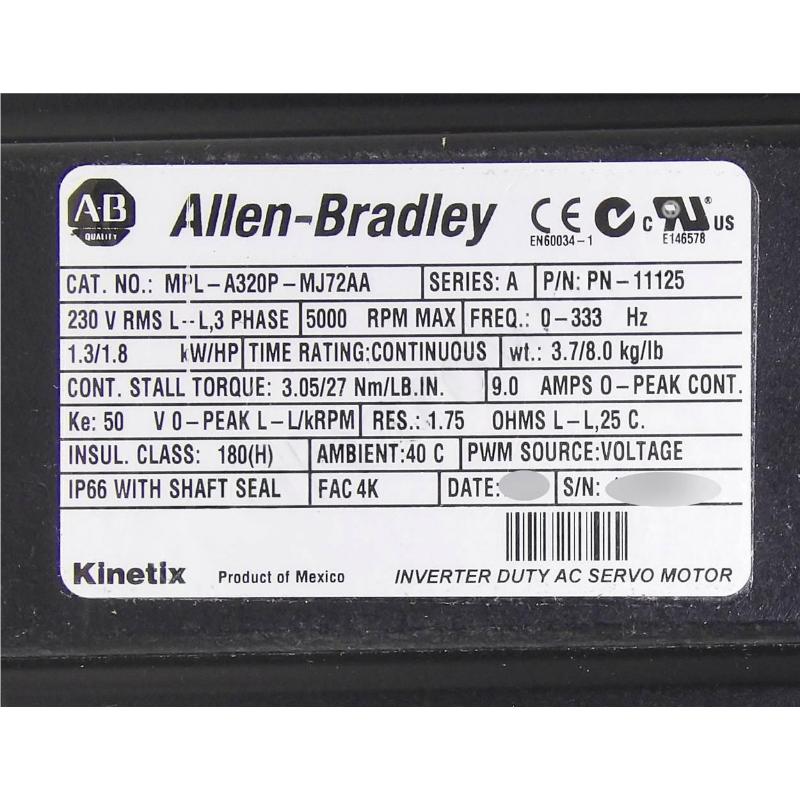
Brand:Allen Bradley PLC Item No.:MPL-A320P-MJ72AA Product Origin:USA Product Dimensions:Frame Size: 100 mm Product Weight:3.7 kg Payment:T/T, Western Union, Credit Card Goods_stock:15 Shipping Port:Xiamen, China Lead Time:1-3 Days Condition:Brand New And Original Warranty:1 Year Certificate:COO
The Allen-Bradley MPL-A320P-MJ72AA belongs to the MP-Series MPL family of AC rotary servo motors. The series is designed for machine builders who require more responsive motion control than conventional fixed-speed motors can provide.
Its 100 mm frame allows the motor to fit into compact automated equipment while maintaining the mechanical structure needed for industrial motion applications. The low-inertia design is particularly useful when the motor must repeatedly change speed or position.
A servo motor's performance depends on the complete motor-drive-controller combination. The MPL-A320P-MJ72AA is therefore intended to operate with a compatible servo amplifier that can process the motor's feedback and apply the appropriate control algorithms.
For machines performing repetitive motion, rapid response can be a major factor in productivity. Low rotor inertia reduces the effort required to change motor speed, which can help the servo axis respond more quickly to acceleration and deceleration commands.
The no-brake configuration is suitable for applications where mechanical holding is not required. Horizontal rotary axes and many belt-driven or screw-driven mechanisms can benefit from this arrangement, while vertical applications require additional evaluation of the load-holding strategy.
Mechanical installation should be treated as an important part of servo performance. Coupling misalignment, excessive shaft loading, or inadequate mounting can produce vibration and positioning problems even when the electrical configuration is correct.
With its compact frame and servo-oriented construction, the MPL-A320P-MJ72AA is a practical option for automated machinery where controlled rotary movement, repeatability, and responsive operation are central to the machine's design.
Technical Specifications
Parameter
Specification
Brand
Allen-Bradley
Manufacturer
Rockwell Automation
Model
MPL-A320P-MJ72AA
Product Family
MP-Series MPL
Product Type
AC Rotary Servo Motor
Motor Design
Low-Inertia Brushless Servo Motor
Frame Size
100 mm
Voltage Class
200/240 V AC Class
Application
Industrial Motion Control
Feedback
Encoder Feedback
Shaft Configuration
Servo Motor Shaft
Brake
No Brake
Product Series
MPL
Mounting
Metric Industrial Servo Mounting
Frame Dimension
100 mm
Weight
3.70 kg (8.16 lb)
The 100 mm frame provides a compact mounting format for machine installations. Before commissioning, verify the mounting interface, shaft and coupling arrangement, motor-drive compatibility, feedback connection, grounding, and cable routing.
Recommended Related Models
Model
Product Type
Relationship
Allen-Bradley MPL-A320P-HJ72AA
MP-Series Servo Motor
Related high-speed 100 mm configuration
Allen-Bradley MPL-A320P-HJ74AA
MP-Series Servo Motor
Related brake-equipped high-speed configuration
Allen-Bradley MPL-A320P-HH72AA
MP-Series Servo Motor
Related high-speed no-brake configuration
Allen-Bradley MPL-A320P-HK72AA
MP-Series Servo Motor
Related 100 mm high-speed configuration
Allen-Bradley MPL-A320P-HK74AA
MP-Series Servo Motor
Related high-speed configuration with brake
For a replacement application, the full catalog number should be verified. Servo motors with the same frame size can have different feedback systems, speed ratings, brake configurations, shaft arrangements, and electrical characteristics.
Popular Related MP-Series Servo Motors
Model
Product Family
Typical Application
Allen-Bradley MPL-A320H-SK72AA
MP-Series MPL
Low-inertia positioning systems
Allen-Bradley MPL-A320H-SK74AA
MP-Series MPL
Motion axes requiring shaft holding
Allen-Bradley MPL-A320P-HH72AA
MP-Series MPL
High-speed machine motion
Allen-Bradley MPL-A320P-HJ72AA
MP-Series MPL
High-speed positioning and indexing
Allen-Bradley MPL-A320P-HJ74AA
MP-Series MPL
High-speed motion with holding brake
Allen-Bradley MPL-A320P-HK72AA
MP-Series MPL
High-speed no-brake applications
Allen-Bradley MPL-A320P-HK74AA
MP-Series MPL
High-speed motion with holding brake
The Allen-Bradley MPL-A320P-MJ72AA MP-Series Servo Motor provides a compact 100 mm-frame solution for automated motion systems where responsive operation and repeatable positioning are required. Its low-inertia servo architecture makes it well suited to packaging, indexing, assembly, material handling, and other industrial applications involving frequent and precisely controlled rotary movement.
Industrial Applications
The Allen-Bradley MPL-A320P-MJ72AA is a compact MP-Series AC rotary servo motor developed for automated equipment requiring controlled, repeatable, and responsive rotary motion. Its 100 mm frame makes it suitable for machine designs where available installation space is limited, while the low-inertia motor construction supports quick changes in speed and position.
This servo motor can be applied to packaging machinery, automated assembly systems, indexing equipment, material-handling machines, printing and converting equipment, machine tools, and other production systems that depend on coordinated servo movement.
In applications with frequent starts, stops, and direction changes, the motor's low-inertia characteristics can help the axis react quickly to commands. When paired with a compatible Allen-Bradley servo drive and controller, it becomes part of a closed-loop motion system capable of accurately following programmed motion profiles.
The MPL-A320P-MJ72AA is configured without a holding brake, making it appropriate for applications where the motor does not need to mechanically hold the shaft after servo power is removed. This can be a useful configuration for horizontal machine axes and other mechanisms where a separate holding function is not required.
For OEM builders and industrial maintenance teams, the motor offers the compact mechanical format and responsive operating characteristics expected from the MPL servo family.
Motion Performance and Integration Benefits
The 100 mm frame size gives the MPL-A320P-MJ72AA a relatively compact installation footprint. This is useful when servo motors need to be installed close to gearboxes, ball screws, belts, rotary mechanisms, or other machine components.
The motor's low-inertia construction helps reduce the rotational energy that the servo system must accelerate and decelerate. In practical machine applications, this can contribute to faster response during repeated positioning and indexing cycles.
The MP-Series MPL platform is designed around closed-loop motion control. Feedback from the motor allows the servo drive to determine actual shaft movement and adjust the motor's output to maintain the desired motion command.
The no-brake configuration keeps the motor package focused on dynamic servo operation. For applications that do not require mechanical shaft holding, this can simplify the motor arrangement. For vertical axes, however, the machine designer should determine whether a brake-equipped motor or another mechanical holding method is necessary.
Mechanical installation should also be considered carefully. Correct shaft alignment and suitable coupling selection are essential for maintaining smooth operation and avoiding unnecessary radial or axial loading.
For machine builders seeking a compact servo motor for repetitive automated movement, the MPL-A320P-MJ72AA offers a practical balance of mechanical integration, feedback-based control, and responsive motion performance.
Technical FAQs
1. What is the MPL-A320P-MJ72AA used for?
The motor is designed for industrial closed-loop motion-control applications. It can be used on machine axes requiring controlled speed, positioning, acceleration, and repeatable rotary movement.
2. What is the benefit of using an MPL-Series low-inertia motor?
Low inertia allows the rotor to change speed quickly. This is particularly beneficial for indexing, positioning, pick-and-place, packaging, and other applications with frequent acceleration and deceleration.
3. Does the MPL-A320P-MJ72AA include a holding brake?
No. This configuration is supplied without a holding brake. If an axis must remain mechanically stationary after motor power is removed, a suitable brake-equipped motor or external holding mechanism should be evaluated.
4. Can the motor be used with a PLC-controlled motion system?
Yes, when connected through a compatible servo drive and motion-control architecture. The PLC or motion controller can issue the required motion commands while the servo drive manages the motor and feedback loop.
5. Why is encoder feedback important for this motor?
Encoder feedback provides the control system with information about actual motor movement. The servo drive can use this information to regulate speed and position and compensate for deviations from the commanded motion.
6. What should be considered when selecting a coupling?
The coupling should match the motor shaft interface and be capable of handling the application's torque and speed. Alignment, allowable radial and axial loads, torsional stiffness, and operating speed should also be considered.
7. What could cause excessive vibration during servo operation?
Possible causes include shaft misalignment, an unsuitable coupling, mechanical imbalance, excessive load inertia, incorrect servo tuning, bearing problems, or feedback-related issues. The mechanical and electrical systems should be inspected together.
8. How can poor positioning accuracy be diagnosed?
Check the servo tuning parameters first, followed by encoder feedback, mechanical backlash, coupling alignment, load inertia, and motion commands. If the error occurs only at certain speeds or positions, the mechanical transmission should receive particular attention.
9. What should be checked before commissioning the motor?
Verify motor and drive compatibility, motor parameters, power wiring, feedback wiring, grounding, shaft alignment, coupling installation, acceleration limits, and operating speed. The machine should initially be tested at controlled speed before full production operation.
10. Is the maximum motor speed suitable for continuous operation?
Maximum speed represents the upper operating capability and should not automatically be interpreted as the recommended continuous speed for every load. Continuous operation depends on torque, thermal conditions, duty cycle, load inertia, and the complete servo system.