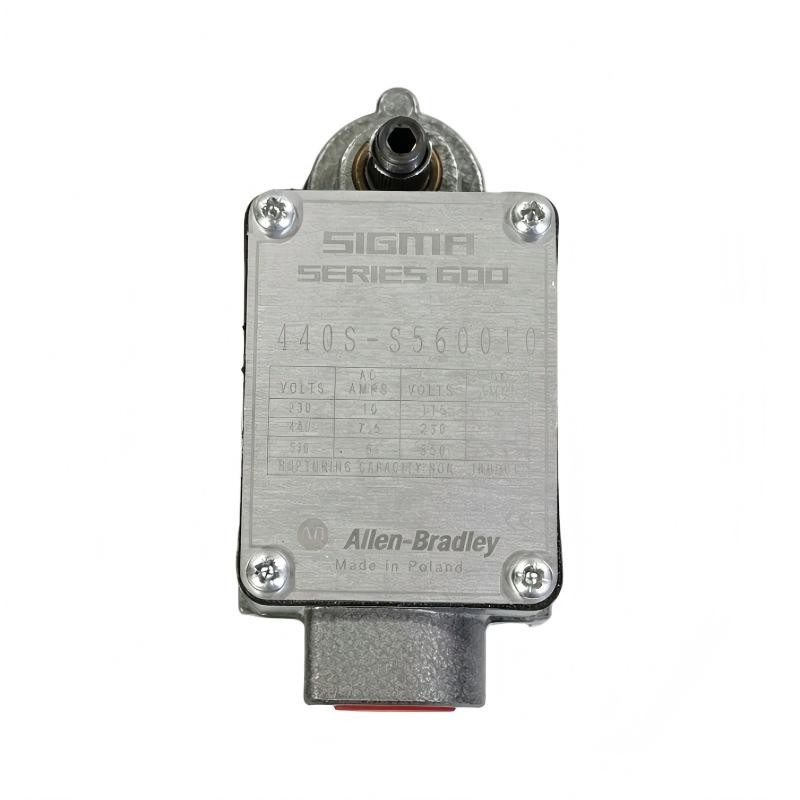
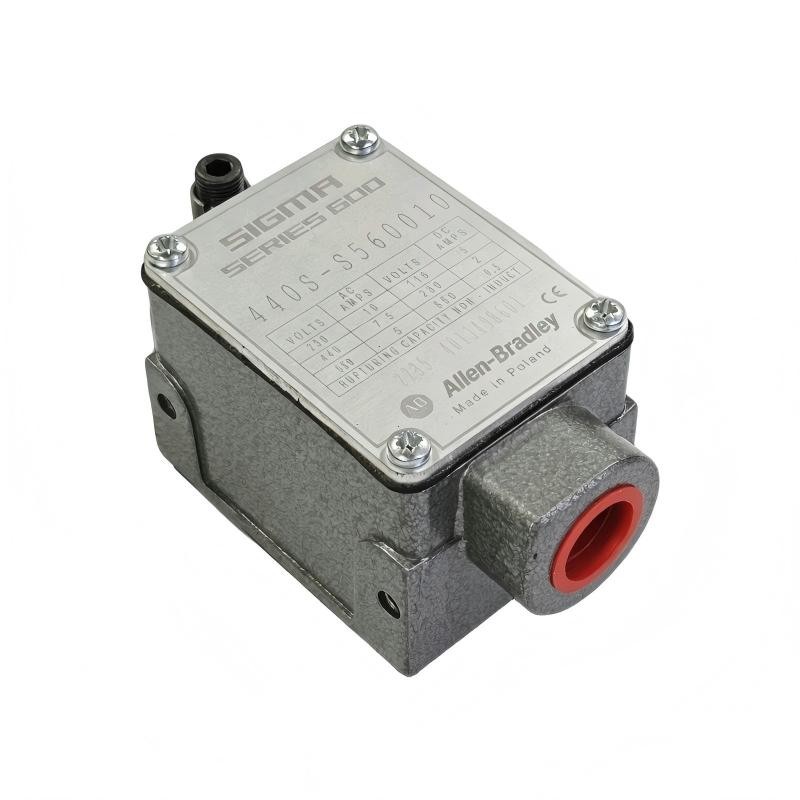
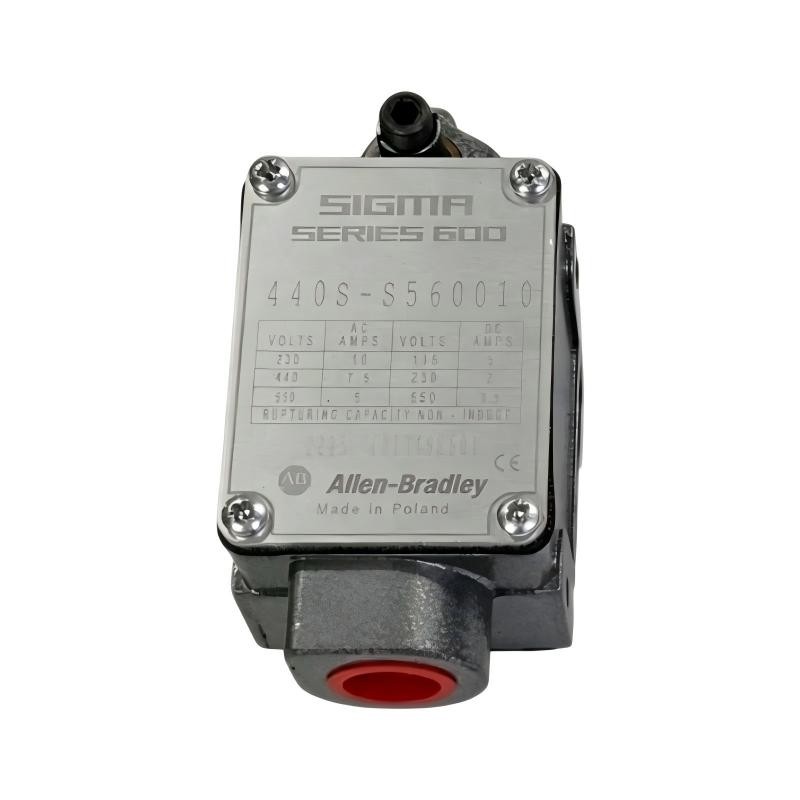
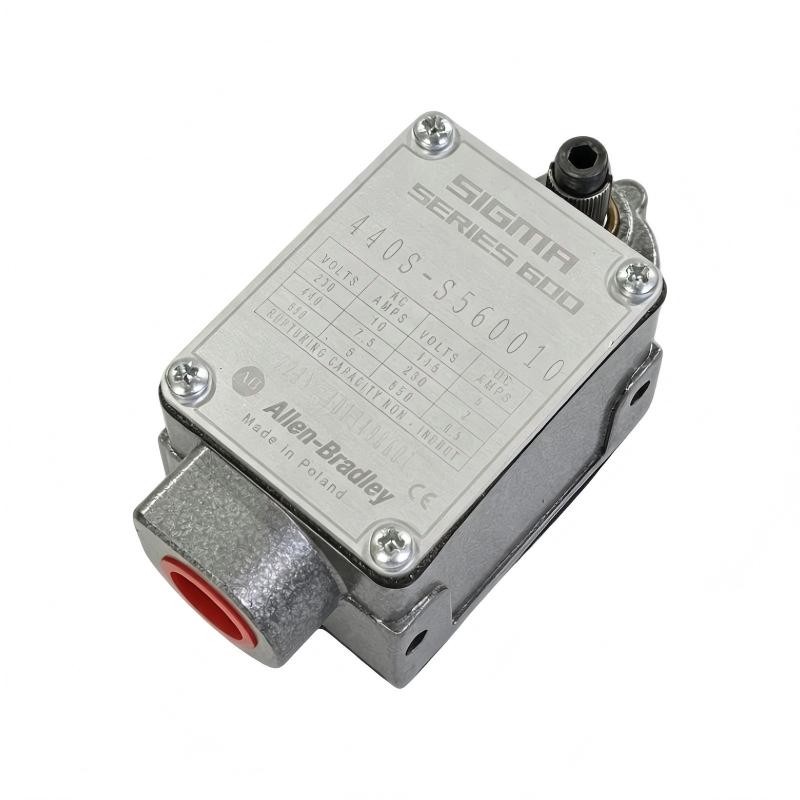
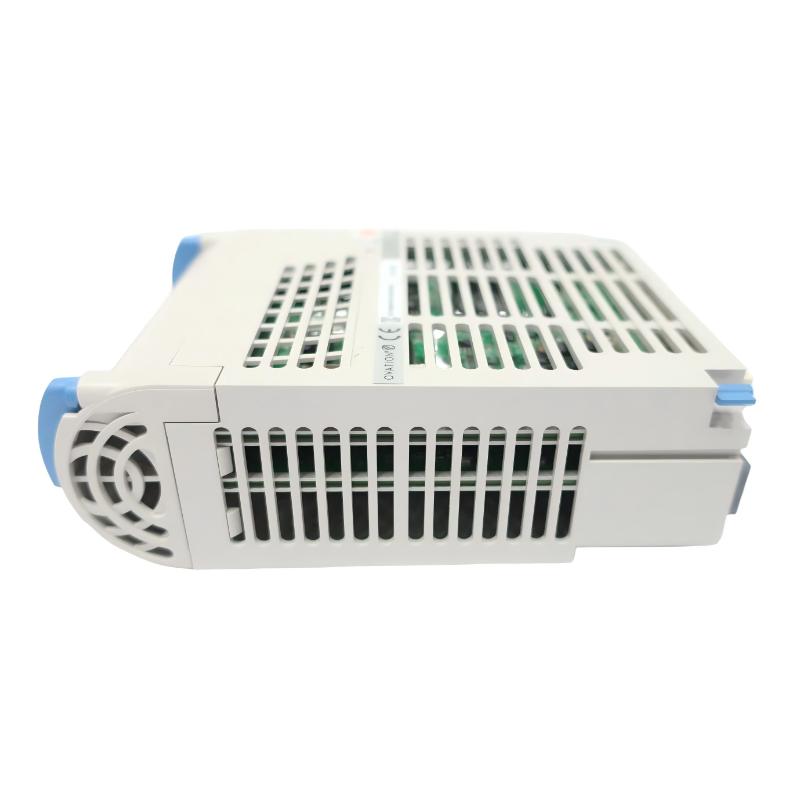
Allen Bradley 440S-S560010 GuardMaster Safety Limit Switches
Allen Bradley 440S-S560010 GuardMaster Safety Limit Switches
0.0
Points
Brand:Allen Bradley PLC Item No.:440S-S560010 Product Origin:USA Product Dimensions:114 x 83 x 76 mm Product Weight:1.06 kg Payment:T/T, Western Union, Credit Card Goods_stock:15 Shipping Port:Xiamen, China Lead Time:1-3 Days Condition:Brand New And Original Warranty:1 Year Certificate:COO
The Allen-Bradley 440S-S560010 belongs to the GuardMaster family of safety products intended for industrial machine protection. Its role is centered on monitoring a physical protective device and providing the corresponding status to a safety-control system.
A typical application may involve a machine enclosure or access guard surrounding hazardous movement. When the guard is correctly closed and the safety system confirms the required conditions, the machine can be permitted to operate. When the guard is opened, the safety architecture can initiate the appropriate protective response.
The exact safety behavior depends on the complete system design. The switch itself should therefore be selected and installed as part of a broader machine-safety solution rather than treated as an independent protective device.
Mechanical installation is particularly important. A safety limit switch must remain securely mounted and correctly aligned throughout normal machine operation. Vibration, repeated guard movement, impact, or mechanical interference can affect switch performance if the installation is poorly designed.
Electrical installation also requires attention. Wiring, safety relays or controllers, emergency-stop circuits, and other safety devices should be designed as a coordinated system. The safety function should then be validated after commissioning and following relevant modifications.
The 440S-S560010 has listed dimensions of 114 × 83 × 76 mm, with a weight of 1.06 kg (2.34 lb). Its compact format can simplify integration into machine guarding, although the available mounting position and actuator movement should always be considered during mechanical design.
For machine builders and industrial maintenance teams, the GuardMaster name provides a dedicated safety component for applications requiring monitored protective guarding.
Technical Specifications
Parameter
Specification
Brand
Allen-Bradley
Manufacturer
Rockwell Automation
Model
440S-S560010
Product Family
GuardMaster
Product Type
Safety Limit Switch
Safety Device Type
Guard / Access Monitoring Switch
Application
Machine Guarding and Safety Systems
Installation
Industrial Machinery
Dimensions
114 × 83 × 76 mm
Weight
1.06 kg (2.34 lb)
The compact dimensions allow the switch to be integrated into many machine-guarding arrangements. Installation should provide secure mechanical mounting, suitable alignment, protected cable routing, and adequate access for inspection and maintenance.
Recommended Related Models
Model
Product Type
Relationship
Allen-Bradley 440S-S560010
GuardMaster Safety Limit Switch
Target model
Allen-Bradley 440K-T11330
GuardMaster Safety Interlock Switch
Related safety switch
Allen-Bradley 440K-T11180
GuardMaster Safety Interlock Switch
Related guard-monitoring device
Allen-Bradley 440K-T11405
GuardMaster Safety Interlock Switch
Related machine-safety component
Allen-Bradley 440R-D22R2
GuardMaster Safety Relay
Related safety-control component
Allen-Bradley 440R-S13R2
GuardMaster Safety Relay
Related safety-control device
When selecting a replacement or companion component, verify the required safety function, mechanical configuration, actuator arrangement, electrical characteristics, and safety-control architecture rather than selecting solely by product family.
Popular Related GuardMaster Models
Model
Product Family
Typical Application
Allen-Bradley 440S-S560010
GuardMaster
Safety limit and guard monitoring
Allen-Bradley 440K-T11330
GuardMaster
Guard interlocking
Allen-Bradley 440K-T11180
GuardMaster
Machine access protection
Allen-Bradley 440K-T11405
GuardMaster
Protective guard monitoring
Allen-Bradley 440R-D22R2
GuardMaster
Safety relay applications
Allen-Bradley 440R-S13R2
GuardMaster
Machine safety control
Allen-Bradley 440C-CR30
GuardMaster
Configurable safety control
The Allen-Bradley 440S-S560010 GuardMaster Safety Limit Switch is a compact safety component designed for machine guard and access monitoring. With dimensions of 114 × 83 × 76 mm and a weight of 1.06 kg (2.34 lb), it can be integrated into a wide range of industrial guarding arrangements. When properly selected, installed, connected, and validated as part of a complete safety architecture, it provides a practical solution for monitoring protective access points on automated machinery.
Industrial Applications
The Allen-Bradley 440S-S560010 GuardMaster Safety Limit Switches are designed for machine safety applications where access to hazardous areas must be monitored as part of a safety control system. A safety limit switch can detect the position of a machine guard, door, or other protective device and provide a signal to the associated safety-control architecture.
These switches are particularly suitable for industrial machinery with movable guards or access points. Typical applications include packaging machines, conveyors, automated assembly equipment, material-handling systems, machining equipment, production cells, and manufacturing lines.
In a properly engineered safety system, a guard-mounted switch can help determine whether a protective access point is in the required safe position before hazardous machine operation is permitted. This makes the device useful for applications where operators and maintenance personnel need controlled access to machinery.
The 440S-S560010 has compact dimensions of 114 × 83 × 76 mm and a listed weight of 1.06 kg (2.34 lb). Its relatively compact housing makes it practical for installation around machine guarding where available space may be limited.
For machine builders and safety-system integrators, the GuardMaster family provides a dedicated safety-oriented solution for monitoring protective guarding and supporting a structured machine-safety strategy.
Guard Monitoring for Safer Machine Access
Machine guarding is an important part of industrial safety design, but a physical guard alone may not provide sufficient information to the control system. A safety switch can provide the electrical interface needed to monitor whether a movable protective guard is in the required position.
The Allen-Bradley 440S-S560010 GuardMaster Safety Limit Switch is intended for this type of application. When integrated with an appropriate safety-control system, the switch can help ensure that machine operation is coordinated with the condition of a monitored guard.
This is particularly useful for machinery where access doors or guards must be opened periodically for setup, inspection, cleaning, or maintenance. The safety system can use the guard status as one of the conditions determining whether hazardous motion is permitted.
A major advantage of dedicated safety devices is their role within a complete safety architecture. The switch should not be viewed as an isolated protective solution. Correct mechanical installation, appropriate actuator and guard design, suitable safety logic, and proper risk assessment are all essential.
The compact 114 × 83 × 76 mm form factor also provides useful installation flexibility. At 1.06 kg (2.34 lb), the switch can be incorporated into machine guarding without adding substantial mechanical load.
For OEMs seeking a recognizable industrial safety component, the GuardMaster range offers a practical choice for guard-position monitoring in automated machinery.
Technical FAQs
1. What is the Allen-Bradley 440S-S560010?
The 440S-S560010 is an Allen-Bradley GuardMaster safety limit switch designed for monitoring the position of machine guards and protective access points.
2. What is the purpose of a safety limit switch?
Its primary purpose is to provide a signal associated with the position of a protective device, such as a movable machine guard or access door, so that the safety-control system can respond appropriately.
3. Can a safety limit switch directly stop a dangerous machine?
The switch is normally one component within a complete safety system. Whether it directly controls a machine's stopping function depends on the specific safety architecture, control devices, wiring, and risk assessment.
4. Why is mechanical alignment important?
Incorrect alignment can prevent reliable switching and may cause premature wear or inconsistent operation. The switch and its associated guard or actuator should be installed according to the applicable equipment requirements.
5. What can cause intermittent safety-switch signals?
Possible causes include mechanical misalignment, loose mounting, damaged wiring, excessive vibration, actuator problems, contamination, or incorrect installation.
6. Should a safety switch be connected to an ordinary PLC input?
A safety-related function generally requires an appropriately designed safety-control architecture. A standard PLC input alone should not automatically be treated as providing a safety-rated function.
7. What should be checked if the machine remains in a safety fault state?
Inspect the guard position, switch alignment, actuator engagement, wiring, safety-controller status, and other safety devices connected to the circuit. The complete safety chain should be evaluated rather than bypassing the switch.
8. Can the switch be bypassed for troubleshooting?
Safety devices should not be casually bypassed. Any diagnostic procedure involving temporary safety-system changes must follow the machine's documented safety procedures and appropriate qualified-person controls.
9. How should a failed safety limit switch be replaced?
The replacement should match the required safety function and mechanical configuration. After replacement, the complete safety function should be tested to confirm that the protective system operates as intended.
10. Why is risk assessment important when using safety switches?
A safety switch is only one part of a machine-safety system. The required safety performance depends on the hazards, machine design, stopping characteristics, access frequency, control architecture, and applicable safety requirements.