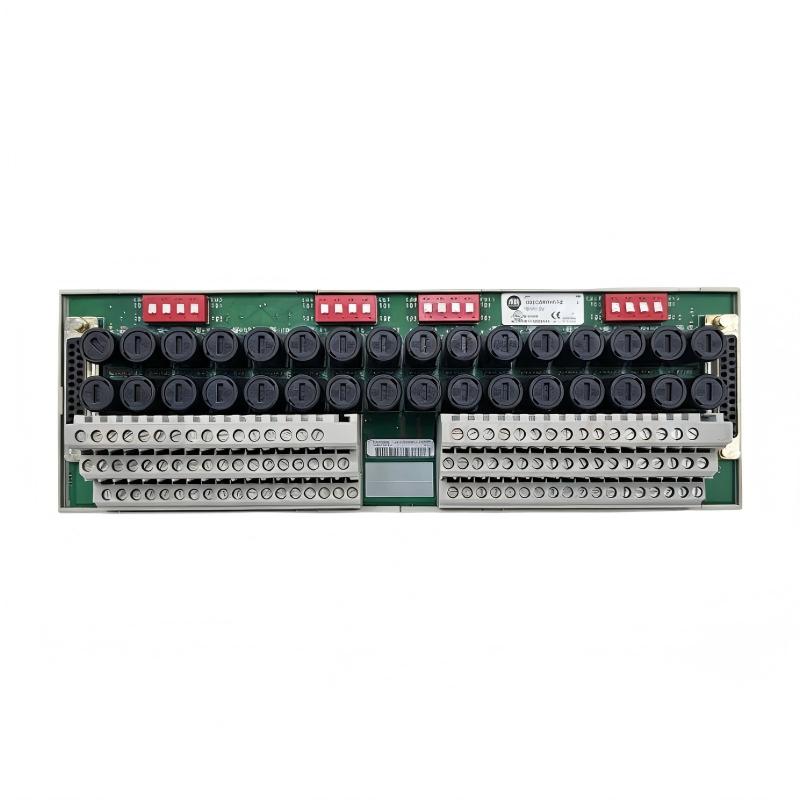
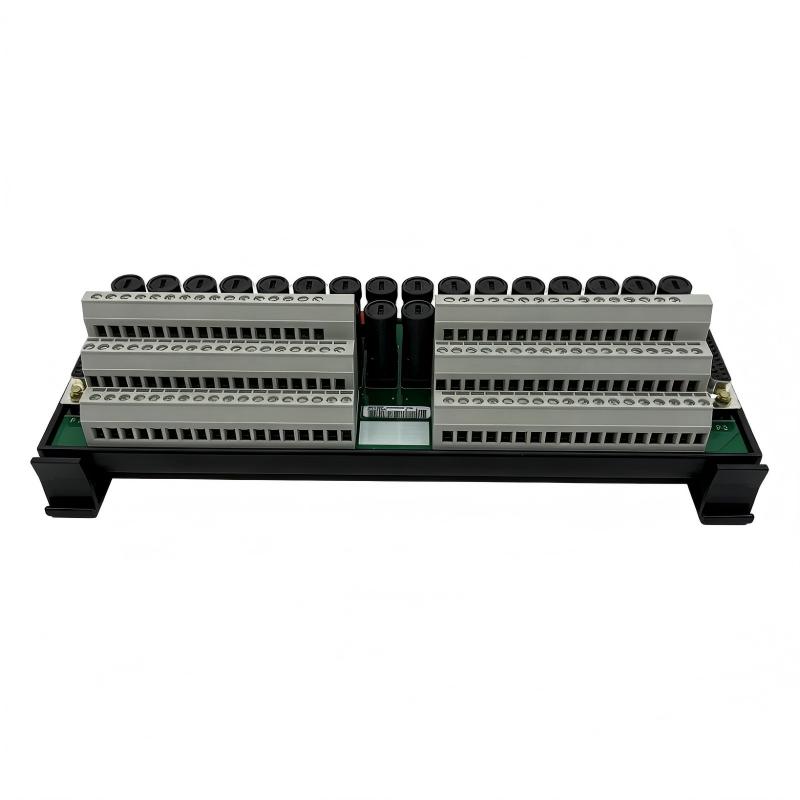
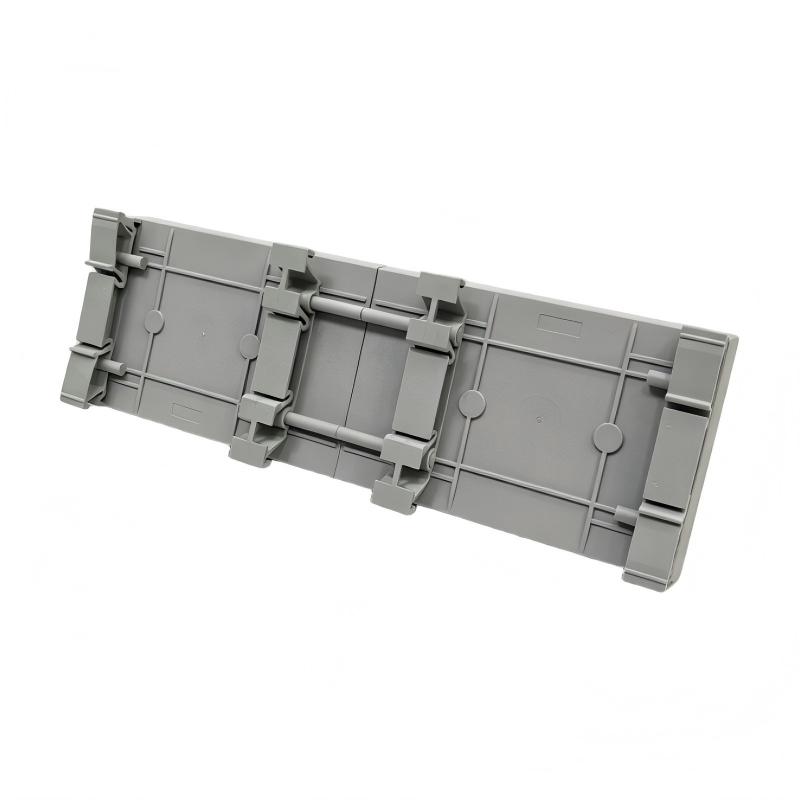
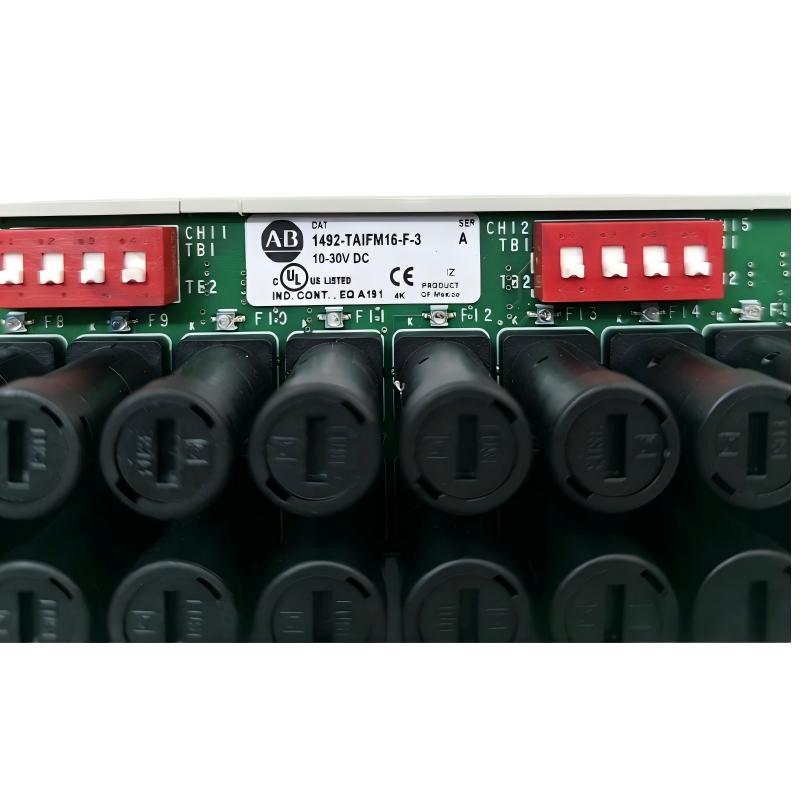
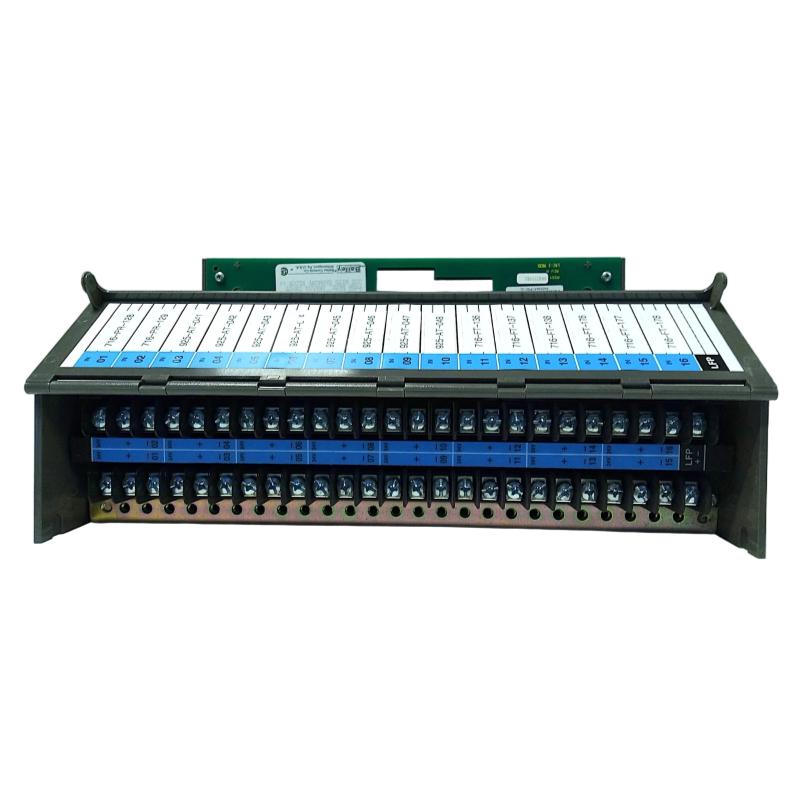
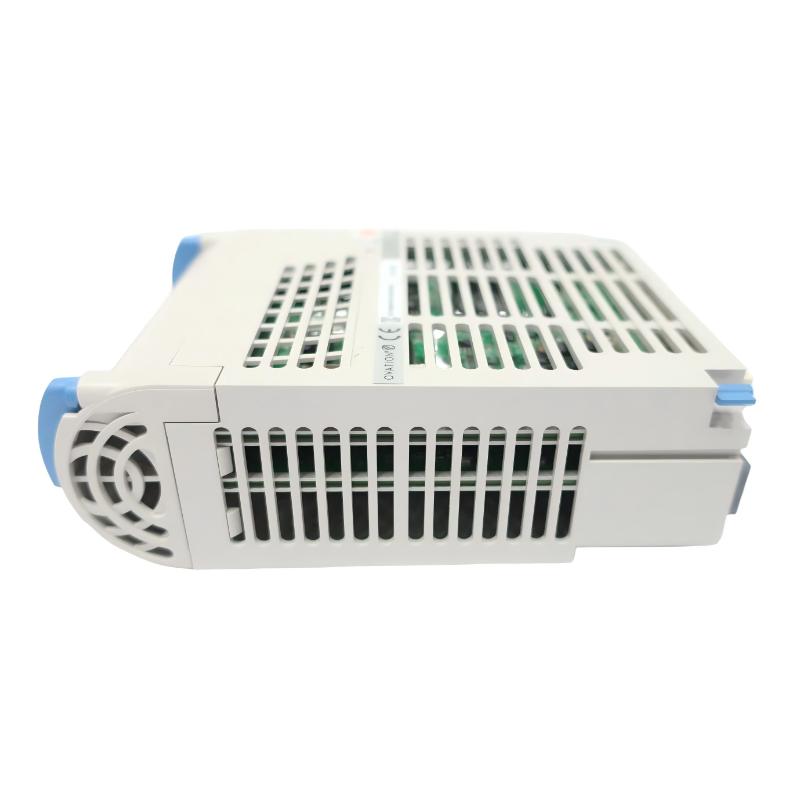
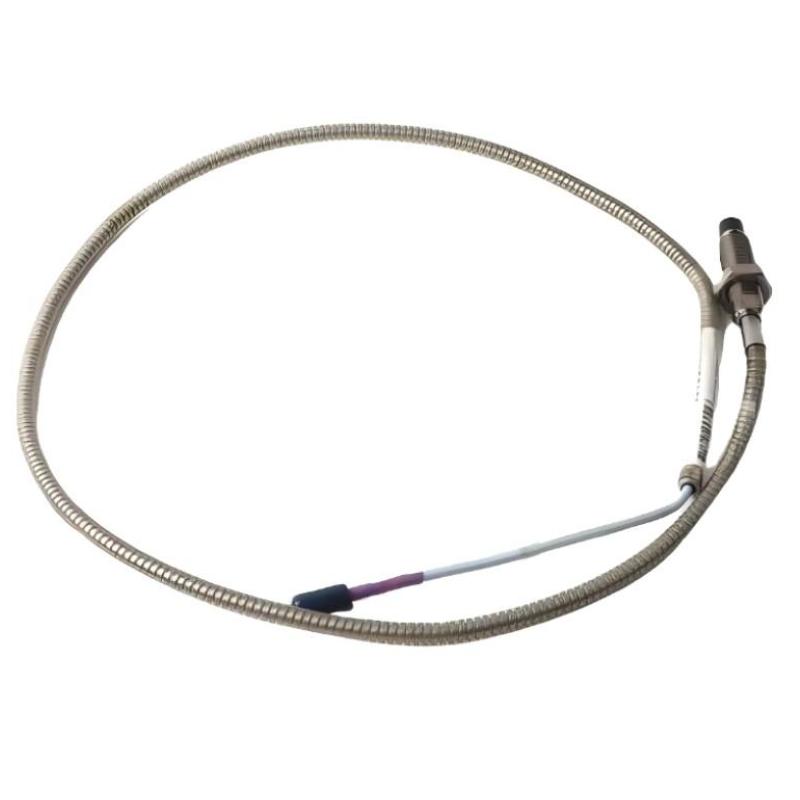
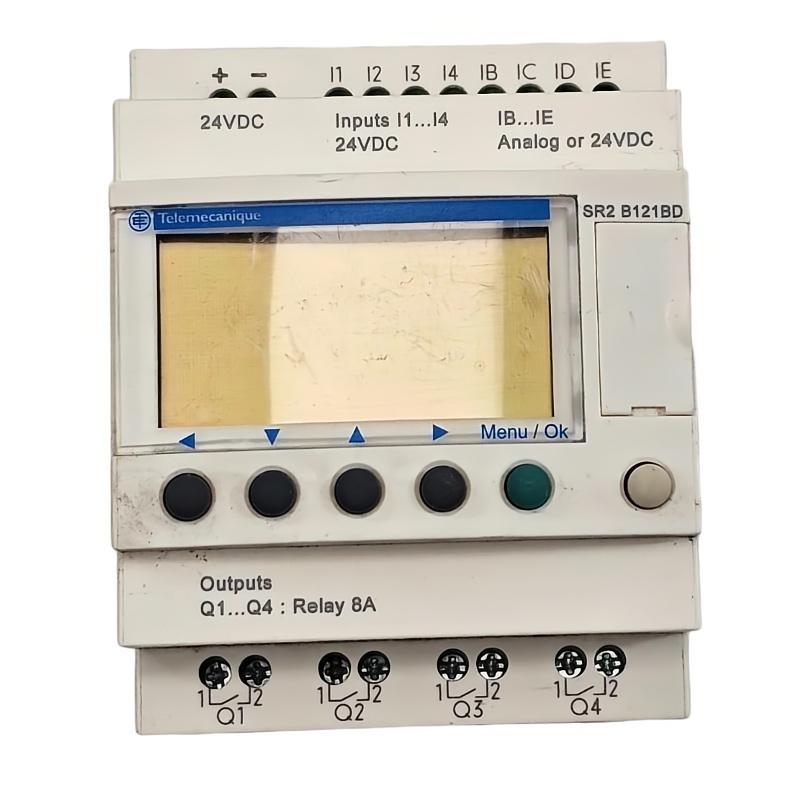
Brand:Allen Bradley PLC Item No.:1492-TAIFM16-F-3 Product Origin:USA Product Dimensions:120 x 80 x 40 mm Product Weight:0.31 kg Payment:T/T, Western Union, Credit Card Goods_stock:15 Shipping Port:Xiamen, China Lead Time:1-3 Days Condition:Brand New And Original Warranty:1 Year Certificate:COO
Terminal Module Integration in Industrial Automation
The Allen-Bradley 1492-TAIFM16-F-3 is designed around one of the most practical requirements of industrial control-panel construction: keeping field wiring organized.
A modern automation system may connect a PLC or remote I/O system to numerous field devices. Each device introduces additional wiring that must be identified, terminated, tested, and eventually maintained. A structured terminal interface can make this process significantly more manageable.
During panel assembly, terminal modules can create a defined boundary between field wiring and control equipment. This helps panel builders maintain a consistent wiring strategy and can make electrical inspection easier before the machine is commissioned.
For maintenance personnel, the advantage becomes even more apparent when troubleshooting. A technician can inspect the relevant terminal connections and perform electrical checks at an accessible interface point rather than immediately removing PLC or I/O hardware.
Terminal organization also supports future modifications. When a machine gains additional sensors or actuators, a clearly structured control cabinet makes it easier to identify existing circuits and determine where new wiring should be integrated.
The 1492-TAIFM16-F-3 measures 120 × 80 × 40 mm and weighs 0.31 kg (0.68 lb). Its compact dimensions allow it to fit into many industrial control-panel layouts without consuming excessive space.
However, the exact terminal configuration remains more important than physical size when selecting a replacement. Technicians should verify the complete catalog number and electrical interface before connecting field circuits.
For OEMs, system integrators, and maintenance departments, the 1492-TAIFM16-F-3 offers a straightforward approach to creating cleaner and more serviceable industrial wiring installations.
Technical Specifications
Parameter
Specification
Brand
Allen-Bradley
Manufacturer
Rockwell Automation
Model
1492-TAIFM16-F-3
Product Type
Terminal Module
Application
Industrial Control Wiring
Function
Field Wiring Interface
System Application
PLC / I/O Automation
Installation
Industrial Control Cabinet
Dimensions
120 × 80 × 40 mm
Weight
0.31 kg (0.68 lb)
The module's compact format is suitable for structured panel layouts. Installation should follow the applicable wiring configuration and provide secure connections, clear conductor identification, and convenient access for inspection.
Recommended Related Models
Model
Product Type
Relationship
Allen-Bradley 1492-TAIFM16-F-3
Terminal Module
Target model
Allen-Bradley 1492-TIFM40F-24-2
Terminal Module
Related terminal interface
Allen-Bradley 1492-TIFM40F-24
Terminal Module
Related interface configuration
Allen-Bradley 1492-TIFM40F
Terminal Module
Related wiring interface
Allen-Bradley 1492-TIFM30F-3
Terminal Module
Related terminal interface
Allen-Bradley 1492-J4
Terminal Block
Related control-panel component
When choosing a replacement or related terminal component, verify the exact wiring configuration, terminal arrangement, electrical requirements, and mechanical installation method.
Popular Related Terminal Models
Model
Product Family
Typical Application
Allen-Bradley 1492-TAIFM16-F-3
Terminal Interface
Industrial field wiring
Allen-Bradley 1492-TIFM40F-24-2
Terminal Interface
PLC field connections
Allen-Bradley 1492-TIFM40F-24
Terminal Interface
Control-panel wiring
Allen-Bradley 1492-TIFM40F
Terminal Interface
Industrial automation
Allen-Bradley 1492-TIFM30F-3
Terminal Interface
Machine control wiring
Allen-Bradley 1492-J4
Terminal Block
Industrial termination
Allen-Bradley 1492-JD3
Terminal Block
Control-panel connections
The Allen-Bradley 1492-TAIFM16-F-3 Terminal Module is a compact solution for organizing field connections in industrial automation cabinets. With dimensions of 120 × 80 × 40 mm and a weight of 0.31 kg (0.68 lb), it provides a practical interface between field wiring and compatible control hardware. For OEMs, panel builders, and automation integrators, its structured termination approach can help create cleaner wiring, simplify commissioning, and improve long-term maintenance efficiency.
Industrial Control and Field Wiring Applications
The Allen-Bradley 1492-TAIFM16-F-3 Terminal Module is a compact interface component intended to help organize field wiring within industrial automation and control systems. Terminal modules provide a practical connection point between field devices and control hardware, making them valuable in PLC cabinets, machine panels, and distributed automation installations.
In a typical industrial control system, sensors, switches, actuators, solenoids, and other field devices must be connected to PLC or I/O hardware. As the number of field circuits increases, structured termination becomes increasingly important. A dedicated terminal module can help keep these connections orderly and easier to identify.
The 1492-TAIFM16-F-3 is suitable for machine automation, packaging equipment, material-handling systems, assembly machinery, production lines, process equipment, and other control-panel applications where dependable field wiring is required.
Its listed dimensions are 120 × 80 × 40 mm, with a weight of 0.31 kg (0.68 lb). This relatively compact footprint makes it convenient for control cabinets where wiring density and available installation space are important considerations.
For OEM panel builders and automation integrators, the use of a structured terminal interface can improve cabinet organization and simplify service work. Clearly arranged connections can make commissioning more efficient and help technicians isolate wiring problems without unnecessarily disturbing other parts of the control system.
Organized Termination for Efficient Panel Wiring
Industrial automation panels often contain a large number of individual conductors. If field connections are poorly organized, even a relatively simple machine can become difficult to commission and maintain.
The Allen-Bradley 1492-TAIFM16-F-3 provides a dedicated terminal interface that can help establish a more structured connection between field wiring and the associated control equipment.
This type of arrangement is valuable during machine construction. Panel builders can organize field circuits into a defined termination area, making conductor identification and electrical testing more straightforward before the machine enters production.
The same organization becomes useful during maintenance. If an input signal disappears or an actuator fails to respond, technicians can inspect the relevant terminal connections and wiring before moving on to the PLC or I/O hardware.
The module's 120 × 80 × 40 mm dimensions provide a compact solution for many industrial panel layouts. With a weight of 0.31 kg (0.68 lb), it is also lightweight enough for convenient cabinet installation.
A terminal module does not replace the functionality of a PLC or I/O module. Its value lies in providing a practical interface for wiring and making the overall electrical architecture easier to manage.
For control-panel projects where clean wiring, accessibility, and serviceability are priorities, the 1492-TAIFM16-F-3 can be a useful component for building a professional automation installation.
Technical FAQs
1. What is the Allen-Bradley 1492-TAIFM16-F-3?
The 1492-TAIFM16-F-3 is an Allen-Bradley Terminal Module designed to provide an organized interface for field wiring in compatible industrial automation systems.
2. What is the main function of a terminal module?
It provides defined connection points between field wiring and control-system hardware, helping simplify wiring organization and maintenance.
3. Can the terminal module process electrical signals?
No. A terminal module is primarily an interface and termination component. Signal processing and control functions are performed by the connected PLC, I/O, or other control equipment.
4. Why is organized field termination useful in PLC systems?
It provides a clear connection structure that can make wiring verification, commissioning, fault tracing, and future maintenance more efficient.
5. What can cause an intermittent signal at a terminal connection?
Possible causes include loose conductors, damaged wiring, poor termination, vibration, contamination, or a fault in the connected field device.
6. What should be checked if an I/O point stops responding?
Inspect the field device, wiring, terminal connections, I/O channel, controller status, and relevant control logic. A terminal connection should be included in the troubleshooting process.
7. Why should individual conductors be labeled?
Clear conductor identification reduces wiring errors during installation and makes it easier for technicians to trace individual circuits during maintenance.
8. Can a damaged terminal module affect multiple signals?
It can, depending on the circuit arrangement and the nature of the damage. Multiple affected signals should prompt an inspection of common wiring and interface points.
9. Is a terminal module interchangeable with any similarly sized terminal block?
Not necessarily. Electrical configuration, terminal arrangement, mechanical installation, and interface requirements must be verified before selecting a substitute.
10. What should be checked after installing a terminal module?
Verify every conductor against the electrical drawings, confirm secure termination, check signal continuity where appropriate, and test the connected circuits before returning the machine to normal operation.