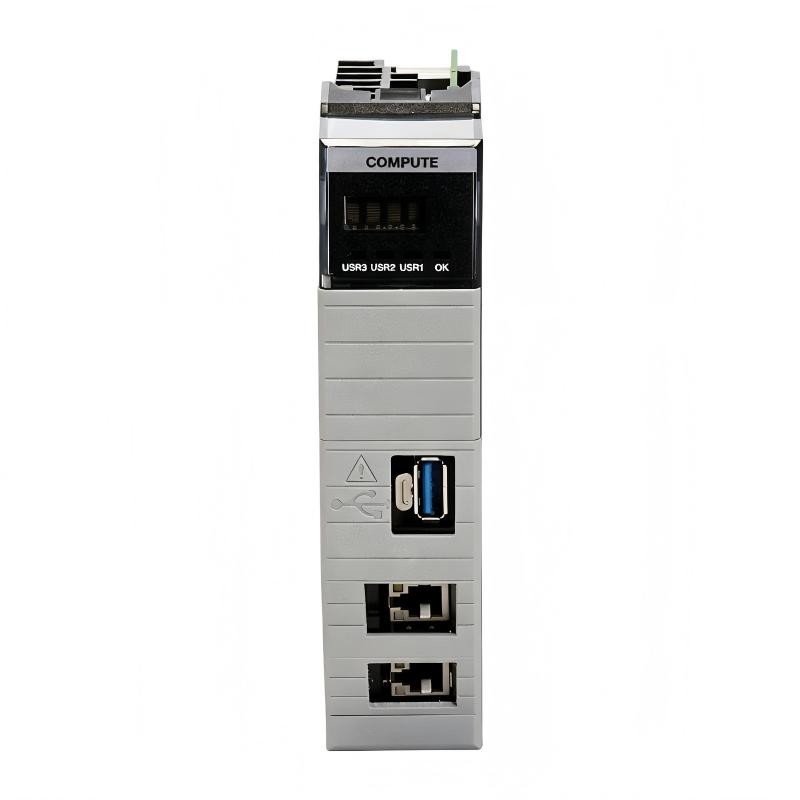
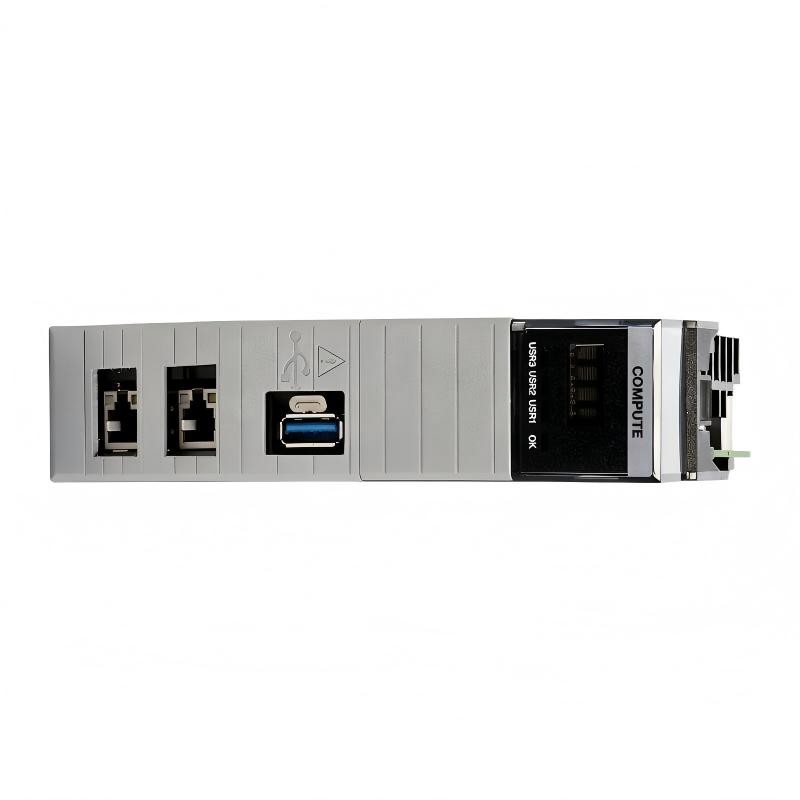
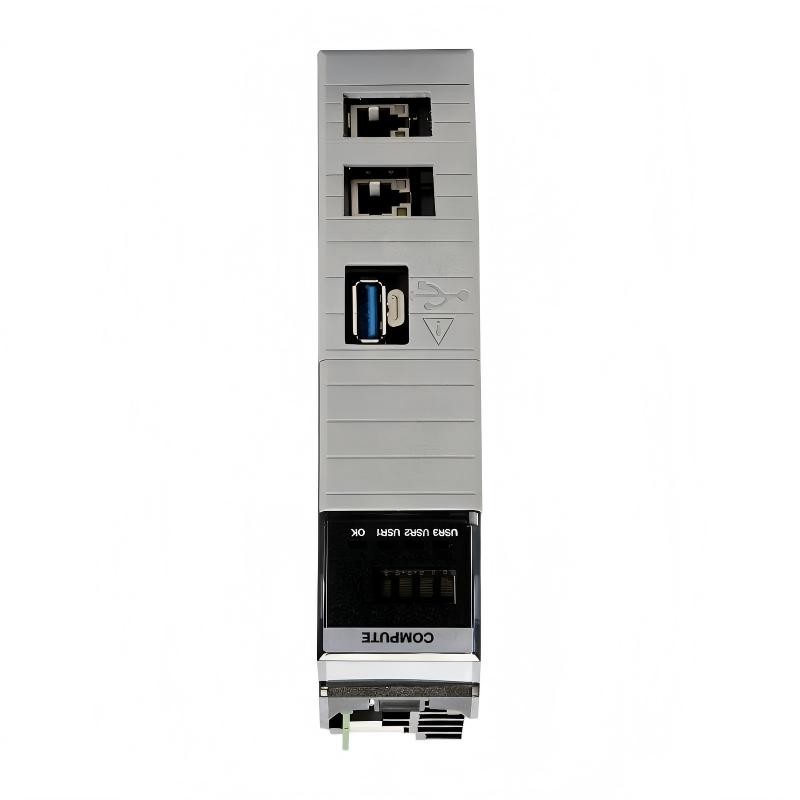
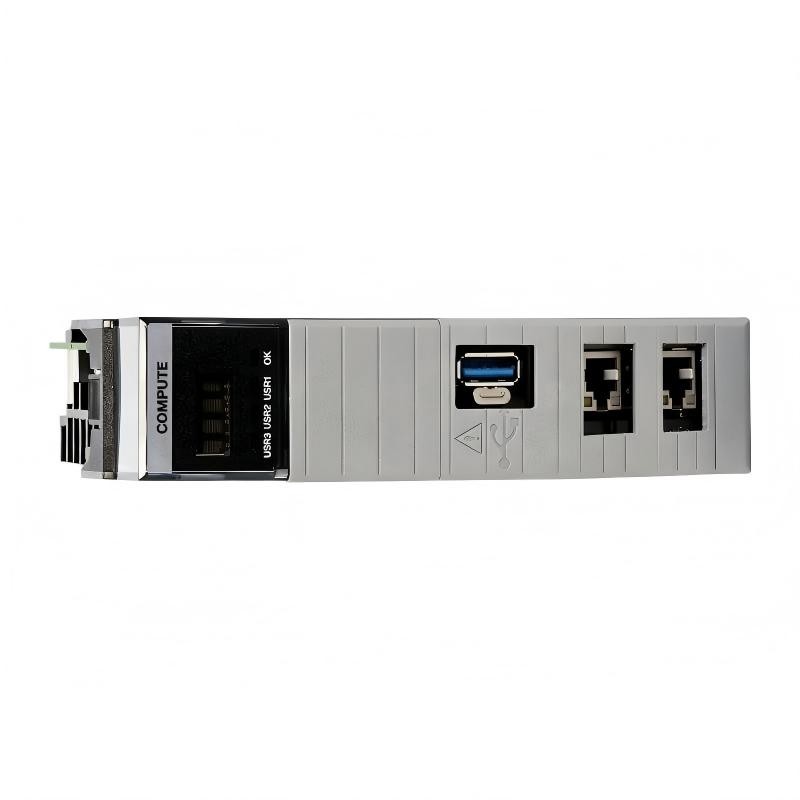
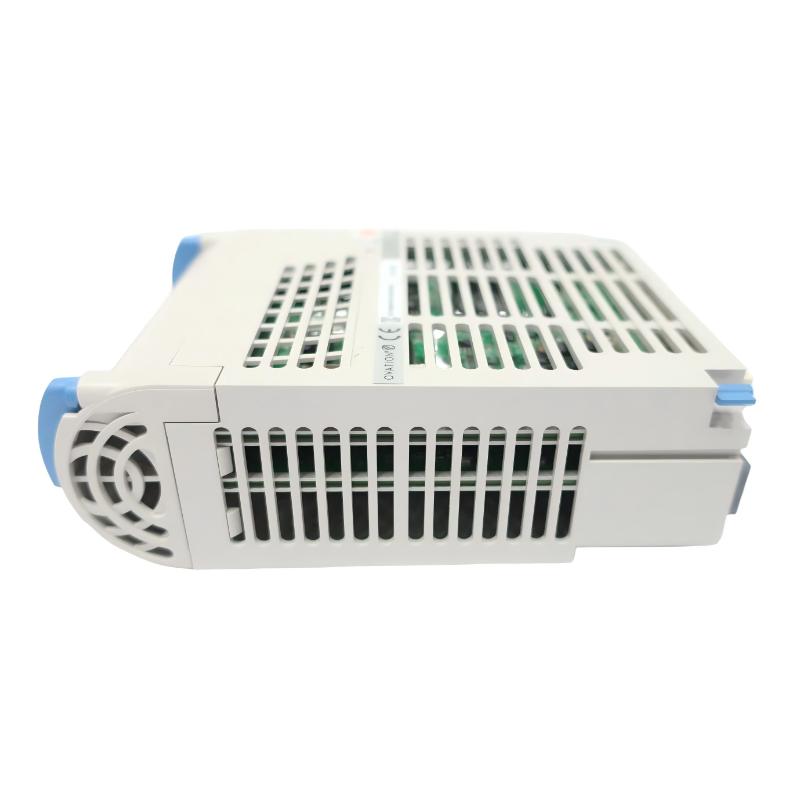
Allen Bradley 1756-CMS1C1 ControlLogix Compute Module
Allen Bradley 1756-CMS1C1 ControlLogix Compute Module
0.0
Points
Brand:Allen Bradley PLC Item No.:1756-CMS1C1 Product Origin:USA Product Dimensions:130 × 35 × 121 mm Product Weight:0.394 kg Payment:T/T, Western Union, Credit Card Goods_stock:15 Shipping Port:Xiamen, China Lead Time:1-3 Days Condition:Brand New And Original Warranty:1 Year Certificate:COO
The role of industrial controllers has expanded significantly as factories move toward connected production environments. A modern machine may need to control physical processes while simultaneously collecting equipment data, monitoring performance, and supporting higher-level applications.
The Allen-Bradley 1756-CMS1C1 ControlLogix Compute Module is positioned within this evolving architecture as a computing component rather than simply another conventional I/O device.
This distinction matters. A well-designed automation system should assign each workload to the most appropriate hardware. Real-time control requires predictable execution, while analytics and information-processing tasks may require different computing resources.
A dedicated compute module can help create this separation. It provides a platform for additional computing tasks while allowing the primary control architecture to focus on machine operation.
For production environments, this can support more advanced approaches to equipment monitoring and manufacturing intelligence. Instead of transferring every piece of raw information to an external computer, selected processing tasks can potentially be handled closer to the machine.
For system integrators, this architecture can also reduce the need for separate computing hardware in some applications. A compact module measuring 130 × 35 × 121 mm can be incorporated into the broader ControlLogix cabinet design.
The module's 0.394 kg (0.87 lb) weight makes it relatively easy to accommodate from a mechanical standpoint, although the complete cabinet layout should always account for ventilation, wiring, service access, and the requirements of all installed equipment.
When commissioning a compute-based application, technicians should verify both the computing environment and the underlying automation network. Communication problems can sometimes appear to be application failures, while software issues can similarly be mistaken for hardware problems.
For industrial organizations seeking to modernize existing ControlLogix architectures, computing capability can provide another layer of flexibility. The 1756-CMS1C1 can therefore be considered as part of a broader strategy for integrating control and industrial computing.
Technical Specifications
Parameter
Specification
Brand
Allen-Bradley
Manufacturer
Rockwell Automation
Model
1756-CMS1C1
Product Family
ControlLogix
Product Type
Compute Module
Application
Industrial Computing
Primary Function
Computing / Data Processing
System Application
Industrial Automation
Installation
ControlLogix System
Dimensions
130 × 35 × 121 mm
Weight
0.394 kg (0.87 lb)
The compact module format allows computing capability to be incorporated into an industrial automation architecture without requiring a large standalone computer enclosure. System designers should evaluate the complete hardware, software, communication, and environmental requirements before deployment.
Recommended Related Models
Model
Product Type
Relationship
Allen-Bradley 1756-CMS1C1
ControlLogix Compute Module
Target model
Allen-Bradley 1756-CMS1B4
ControlLogix Compute Module
Related compute model
Allen-Bradley 1756-L81E
ControlLogix Controller
Related control processor
Allen-Bradley 1756-L83E
ControlLogix Controller
High-performance control processor
Allen-Bradley 1756-EN2TR
ControlLogix EtherNet/IP Module
Related communication module
Allen-Bradley 1756-A10
ControlLogix Chassis
Related system hardware
The correct combination of processor, compute hardware, communication modules, chassis, and software should be selected according to the intended application architecture.
Popular Related ControlLogix Models
Model
Product Family
Typical Application
Allen-Bradley 1756-CMS1C1
ControlLogix
Industrial computing
Allen-Bradley 1756-CMS1B4
ControlLogix
Compute applications
Allen-Bradley 1756-L81E
ControlLogix
Machine and process control
Allen-Bradley 1756-L83E
ControlLogix
Advanced controller applications
Allen-Bradley 1756-L85E
ControlLogix
Large-scale automation
Allen-Bradley 1756-EN2TR
ControlLogix
EtherNet/IP communication
Allen-Bradley 1756-EN4TR
ControlLogix
High-performance industrial networking
Allen-Bradley 1756-A10
ControlLogix
Modular chassis systems
The Allen-Bradley 1756-CMS1C1 ControlLogix Compute Module provides a compact computing option for industrial automation architectures that require capabilities beyond conventional PLC control. With dimensions of 130 × 35 × 121 mm and a weight of 0.394 kg (0.87 lb), it can fit efficiently into ControlLogix-based installations while supporting the move toward more connected, data-driven manufacturing. For OEMs and system integrators, its greatest value lies in combining industrial control with additional computing resources in a structured automation architecture.
The Allen-Bradley 1756-CMS1C1 ControlLogix Compute Module is designed for industrial automation architectures that require computing capabilities alongside conventional control functions. As part of the ControlLogix ecosystem, a compute module can extend the capabilities of an automation platform by supporting applications that require additional processing resources without replacing the core control architecture.
Modern manufacturing systems increasingly combine real-time control with data processing, equipment monitoring, analytics, and connected production functions. A dedicated compute module can help separate these workloads from the primary machine-control tasks, allowing the automation system to handle a broader range of industrial applications.
The 1756-CMS1C1 is particularly relevant to advanced manufacturing environments, production-line monitoring, machine data collection, industrial analytics, process optimization, and connected automation architectures. It can be considered by OEMs, system integrators, and plant engineering teams looking to build more capable ControlLogix-based systems.
With listed dimensions of 130 × 35 × 121 mm and a weight of 0.394 kg (0.87 lb), the module provides computing capability in a compact ControlLogix form factor.
For industrial users, the key advantage is the ability to integrate computing resources into an established automation environment while maintaining a clear separation between control and higher-level processing workloads.
Extending ControlLogix Beyond Conventional Control
Traditional PLC systems are primarily designed to execute deterministic control logic. However, modern factories increasingly require additional computing resources for data analysis, visualization, equipment monitoring, and other information-intensive applications.
The Allen-Bradley 1756-CMS1C1 addresses this broader requirement by providing a computing-oriented component within the ControlLogix architecture.
This approach can be valuable when machine data needs to be processed locally rather than sent immediately to a separate computer or remote server. Local computing can help reduce architectural complexity and provide a more integrated approach to industrial data processing.
For OEMs, this creates opportunities to design machines with more advanced monitoring and information capabilities. System integrators can also use compute resources as part of larger industrial architectures that connect control, production data, and operational applications.
Another advantage is cabinet efficiency. The module measures 130 × 35 × 121 mm, allowing computing functionality to be incorporated without requiring a large standalone industrial computer enclosure. Its 0.394 kg (0.87 lb) weight is also relatively low compared with many traditional industrial computing platforms.
The role of a compute module should nevertheless be clearly defined during system design. Real-time control responsibilities should remain appropriately assigned to the control architecture, while computing workloads should be configured according to application requirements.
For organizations pursuing more connected and information-rich automation systems, the 1756-CMS1C1 represents an interesting option for extending the capabilities of a ControlLogix installation.
Technical FAQs
1. What is the Allen-Bradley 1756-CMS1C1?
The 1756-CMS1C1 is an Allen-Bradley ControlLogix Compute Module intended to provide computing capabilities within compatible industrial automation architectures.
2. How is a compute module different from a traditional PLC processor?
A PLC processor is primarily responsible for executing deterministic control logic, while a compute module is intended to support additional computing workloads and applications.
3. Can the 1756-CMS1C1 replace a ControlLogix controller?
A compute module should not automatically be considered a replacement for a conventional ControlLogix controller. The two components can serve different functions within an automation architecture.
4. What types of workloads can benefit from additional industrial computing?
Potential workloads include data processing, equipment monitoring, analytics, local applications, production information processing, and other computing-intensive tasks associated with industrial operations.
5. Why separate computing workloads from control logic?
Separating workloads can help protect the deterministic behavior of the control system while allowing additional applications to process data without placing unnecessary demands on the primary controller.
6. Can a compute module communicate with other automation equipment?
Communication depends on the complete system architecture, configured interfaces, software environment, and associated ControlLogix components. The required communication paths should be designed before deployment.
7. What should be checked if an application running on the compute module behaves unexpectedly?
Check application configuration, available computing resources, communication paths, system status, software configuration, and any relevant diagnostic information.
8. Can the compute module be used for industrial data processing?
Yes, computing-oriented industrial modules can be useful for applications where machine or process data needs to be processed locally as part of a broader automation architecture.
9. Does installing a compute module change the PLC control program automatically?
No. Adding computing hardware does not automatically modify the existing control logic. Integration requires appropriate system configuration and application development.
10. What should be considered before adding a compute module to an existing ControlLogix system?
Evaluate chassis compatibility, system architecture, available resources, communication requirements, software needs, application workload, and the relationship between computing tasks and real-time control.