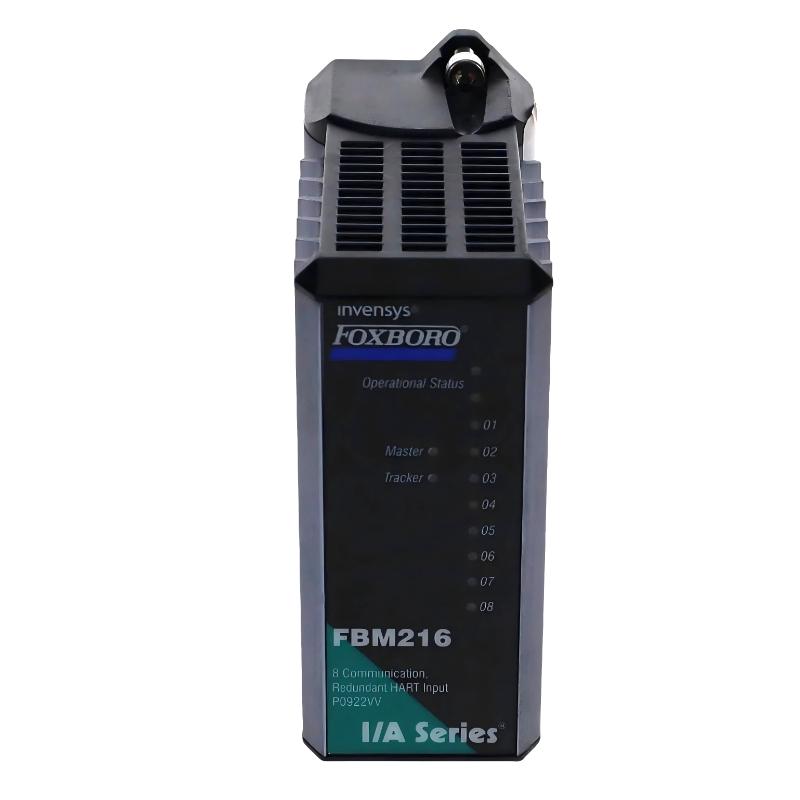
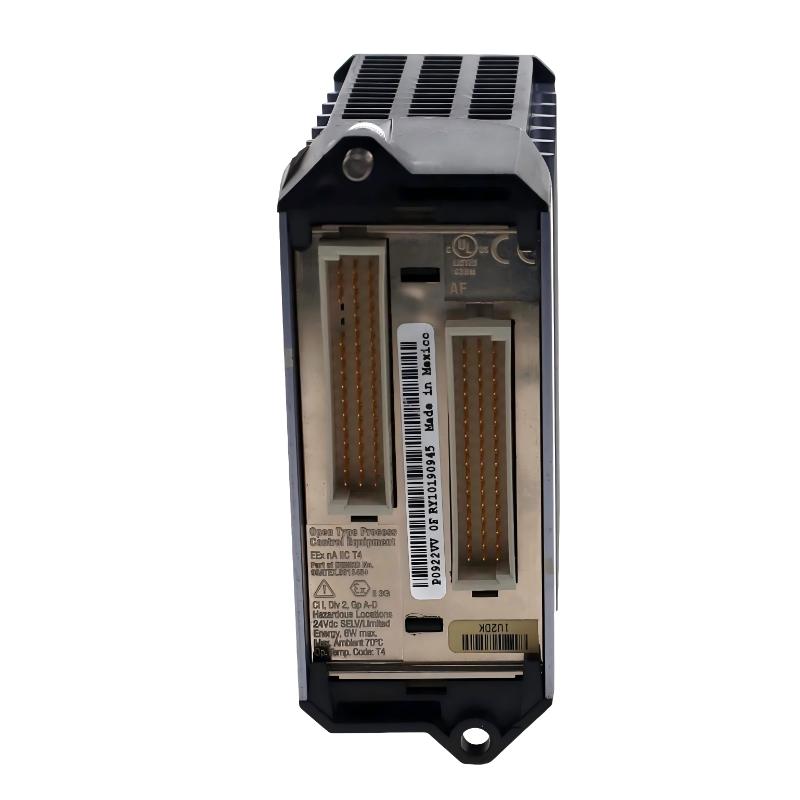
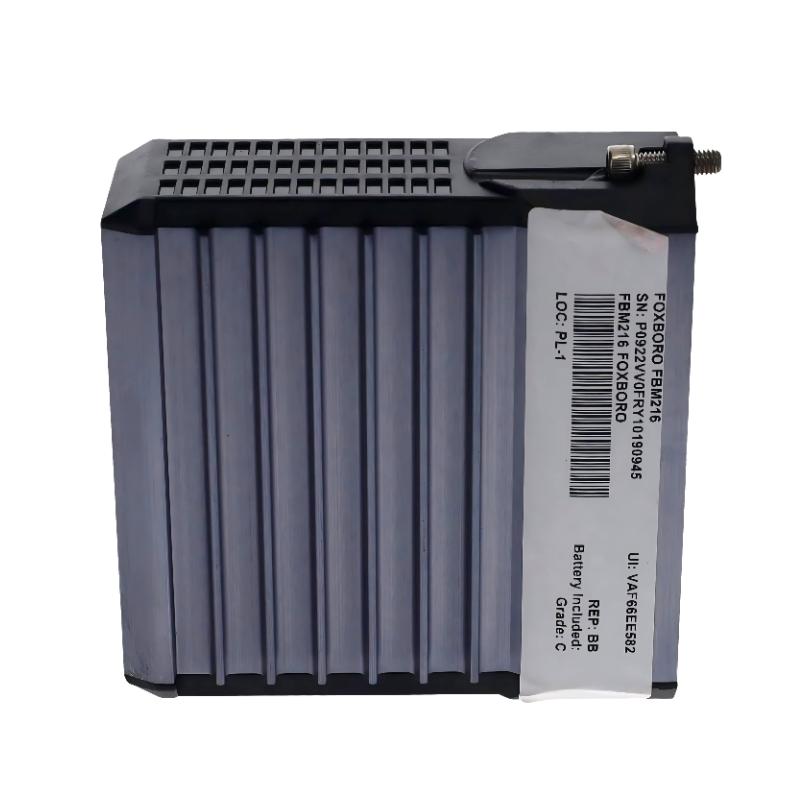
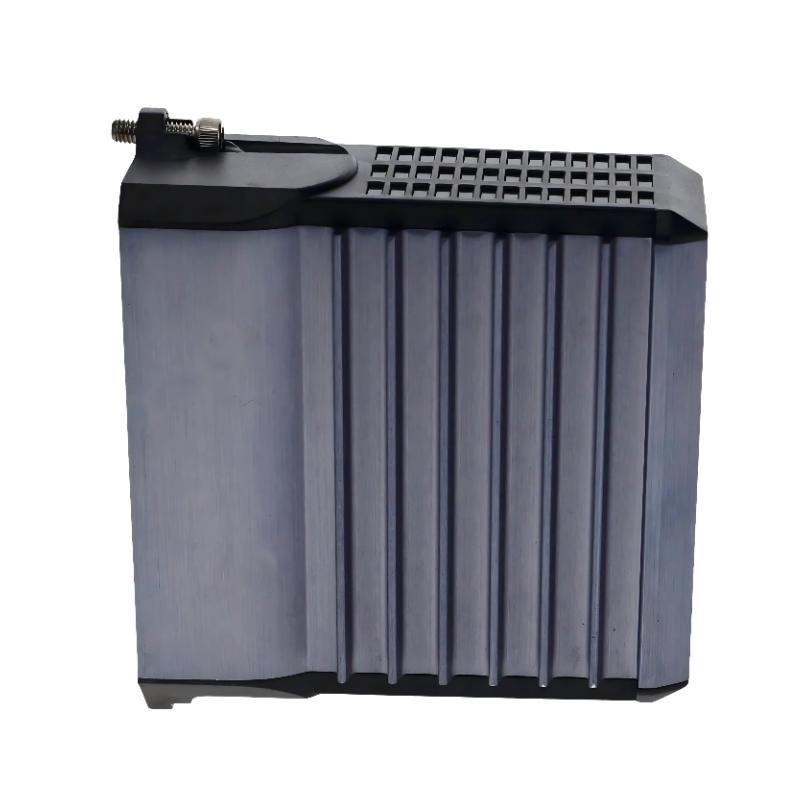
Foxboro FBM216 P0922VV Communication Redundancy Input Interface Module
Foxboro FBM216 P0922VV Communication Redundancy Input Interface Module
0.0
Points
Brand:Foxboro Module Item No.:FBM216 Product Origin:USA Product Dimensions:114 x 45 x 104 mm Product Weight:0.284 kg Payment:T/T, Western Union, Credit Card Goods_stock:15 Shipping Port:Xiamen, China Lead Time:1-3 Days Condition:Brand New And Original Warranty:1 Year Certificate:COO
Process automation places unusually high demands on control-system reliability. Unlike many discrete machine applications, process plants may operate continuously for long periods, making dependable signal acquisition and communication particularly important.
The Foxboro FBM216 P0922VV is designed for use within this type of industrial control environment. As a communication redundancy input interface module, it forms part of the infrastructure that connects process information with the broader DCS architecture.
A typical process-control installation can contain thousands of individual signals. Temperature transmitters, pressure instruments, flow measurements, level devices, switches, valves, and other field equipment all contribute information to the control system.
When a signal fails, determining the cause requires more than checking the field instrument itself. Engineers may need to examine the entire signal chain, including field wiring, terminals, interface hardware, communication paths, and controller configuration.
This is where a structured DCS architecture provides an important advantage. Clearly defined interface points make troubleshooting more systematic and help maintenance teams identify the actual source of a problem.
Redundancy can add another layer of resilience. When the system architecture incorporates redundant communication or interface paths, certain individual failures may be managed without immediately interrupting the overall control strategy.
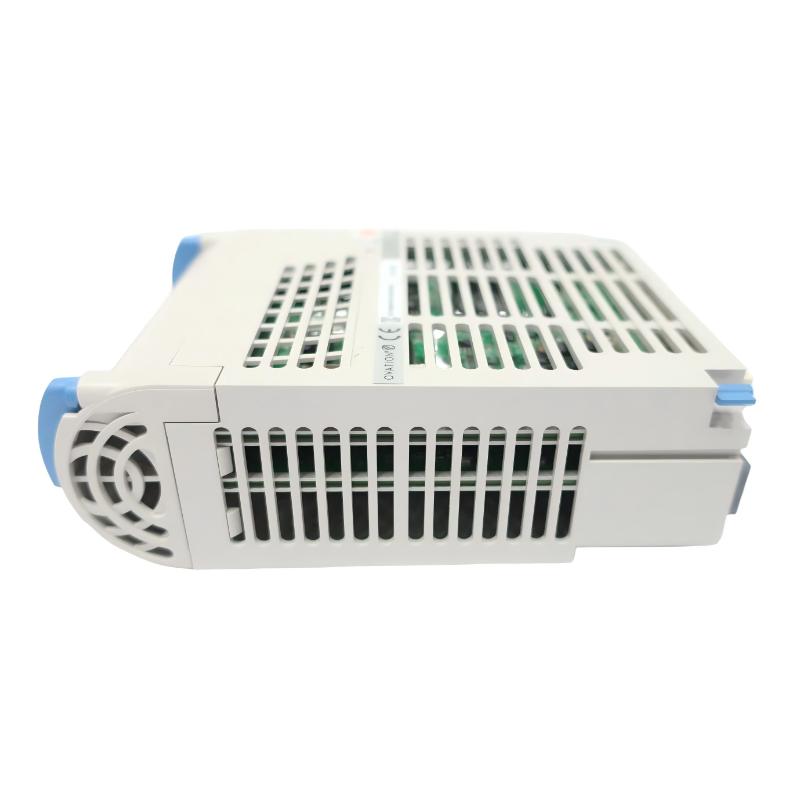
The physical characteristics of the FBM216 P0922VV are also convenient for industrial installations. Its dimensions are 114 × 45 × 104 mm, while the listed weight is 0.284 kg (0.63 lb). This compact design allows the module to be incorporated into control-system cabinets without occupying excessive space.
For retrofit projects, replacing an existing interface module requires careful attention to the complete model designation. The FBM216 P0922VV identifier should be matched against the installed DCS architecture and engineering documentation before procurement.
For process-industry operators and automation professionals, maintaining the correct interface hardware is an important part of keeping a DCS reliable over its operational lifetime.
Technical Specifications
Parameter
Specification
Brand
Foxboro
Product Family
Foxboro DCS
Model
FBM216 P0922VV
Product Type
Communication Redundancy Input Interface Module
Application
Distributed Control System
Function
Input Signal Interface / Communication
System Application
Process Automation
Installation
Industrial DCS Control System
Dimensions
114 × 45 × 104 mm
Weight
0.284 kg (0.63 lb)
The compact dimensions make the module suitable for industrial control-system installations where cabinet space and organized module placement are important. The complete DCS configuration should be reviewed when selecting or replacing the module.
Recommended Related Models
Model
Product Type
Relationship
Foxboro FBM216 P0922VV
Communication Redundancy Input Interface Module
Target model
Foxboro FBM201
Fieldbus Module
Related DCS interface
Foxboro FBM202
Fieldbus Module
Related DCS interface
Foxboro FBM203
Fieldbus Module
Related DCS interface
Foxboro FBM204
Fieldbus Module
Related DCS interface
Foxboro FBM205
Fieldbus Module
Related DCS interface
When selecting a related module, verify the exact function, signal type, communication architecture, system generation, and hardware compatibility rather than relying solely on the FBM series number.
Popular Related Foxboro DCS Models
Model
Product Family
Typical Application
Foxboro FBM216 P0922VV
Foxboro DCS
Redundant input interfacing
Foxboro FBM201
Foxboro DCS
Field signal interfacing
Foxboro FBM202
Foxboro DCS
Industrial process I/O
Foxboro FBM203
Foxboro DCS
DCS field interfacing
Foxboro FBM204
Foxboro DCS
Process automation
Foxboro FBM205
Foxboro DCS
Distributed control applications
Foxboro FBM206
Foxboro DCS
Field interface applications
Foxboro FBM207
Foxboro DCS
Industrial control systems
The Foxboro FBM216 P0922VV Communication Redundancy Input Interface Module is a compact DCS interface component intended for industrial process-control environments where dependable signal integration and communication availability are important. With dimensions of 114 × 45 × 104 mm and a weight of 0.284 kg (0.63 lb), it fits efficiently into industrial control installations while supporting structured input interfacing. For DCS operators, OEMs, system integrators, and maintenance teams, accurate model matching and systematic signal-path troubleshooting are essential when installing or replacing this type of module.
DCS Communication and Redundant Input Applications
The Foxboro FBM216 P0922VV Communication Redundancy Input Interface Module is designed for industrial control environments where dependable signal interfacing and system availability are important. As part of a Foxboro distributed control system architecture, this type of interface module can help connect field-level information with the control infrastructure while supporting a structured approach to system redundancy.
In process industries, automation equipment is expected to operate continuously and reliably. Refineries, chemical plants, power facilities, water-treatment plants, and other process environments can contain large numbers of field signals. A dependable interface between field instrumentation and the DCS is therefore essential for maintaining accurate process visibility and stable plant operation.
The FBM216 P0922VV is particularly relevant to DCS installations where communication reliability and redundancy are important design considerations. It can be incorporated into automation architectures requiring dependable signal transmission, organized field interfacing, and maintainable control-system infrastructure.
With listed dimensions of 114 × 45 × 104 mm and a weight of 0.284 kg (0.63 lb), the module has a compact form factor suitable for dense industrial control installations.
For plant operators, system integrators, and maintenance engineers, selecting the correct interface module can simplify replacement work and help maintain consistency within an existing Foxboro control architecture.
Built for Reliable DCS Signal Integration
A distributed control system depends on multiple layers of hardware working together. Field instruments generate process information, interface modules connect those signals to the control system, and controllers use the information to supervise and regulate plant operations.
The Foxboro FBM216 P0922VV occupies an important position within this type of architecture. Its role as a communication redundancy input interface module makes it relevant to installations where signal availability and system continuity are important considerations.
Redundancy is particularly valuable in process automation because an interruption in a communication or signal path can affect operators' ability to monitor or control equipment. Properly designed redundant architectures can reduce the impact of individual component or communication-path problems.
For engineering teams, the physical design of the interface module is also significant. Measuring 114 × 45 × 104 mm, the FBM216 P0922VV can be accommodated in relatively compact control-system arrangements. Its 0.284 kg (0.63 lb) weight places only a small mechanical load on the installation.
Maintenance personnel can also benefit from a clearly structured interface architecture. When a process signal becomes unreliable, troubleshooting can proceed through the field instrument, wiring, interface module, communication path, and controller rather than immediately replacing major DCS components.
For replacement applications, the complete FBM216 P0922VV model should be matched carefully. DCS interface modules may have specific electrical, communication, and system-level compatibility requirements, so a visually similar module should not automatically be treated as an equivalent replacement.
Technical FAQs
1. What is the Foxboro FBM216 P0922VV?
The FBM216 P0922VV is a Foxboro Communication Redundancy Input Interface Module intended for compatible distributed control system applications.
2. What is the purpose of an input interface module in a DCS?
An input interface module provides an interface between field-level signals and the DCS control architecture, allowing process information to be incorporated into the control system.
3. Why is redundancy important in process automation?
Redundant architectures can improve system availability by reducing the effect of certain individual hardware or communication-path failures.
4. Can a communication problem appear as an input signal fault?
Yes. A signal may appear unavailable because of a field device problem, wiring issue, interface problem, communication interruption, or controller-side issue. Troubleshooting should therefore cover the complete signal path.
5. What should be checked when an input becomes intermittent?
Inspect the field device, field wiring, terminals, interface module, communication path, system diagnostics, and controller configuration to determine where the interruption originates.
6. Can the FBM216 be replaced without checking the DCS configuration?
The replacement should be checked against the existing DCS architecture and configuration. Hardware compatibility alone may not guarantee correct system operation.
7. What can cause unstable communication with an interface module?
Possible causes include wiring problems, poor connections, communication-path faults, configuration errors, power issues, environmental interference, or problems elsewhere in the control architecture.
8. Why is correct module identification important during maintenance?
Foxboro systems can contain multiple interface modules with different functions and configurations. Matching the exact model helps reduce the risk of installing an incompatible component.
9. Should a suspected interface-module failure be confirmed before replacement?
Yes. System diagnostics, wiring checks, communication status, and associated field signals should be reviewed before replacing the module whenever operating conditions permit.
10. What should be verified after installing a replacement interface module?
Verify the physical installation, power and communication connections, module recognition, system diagnostics, signal status, and correct operation of the associated control loops before returning the system to normal service.