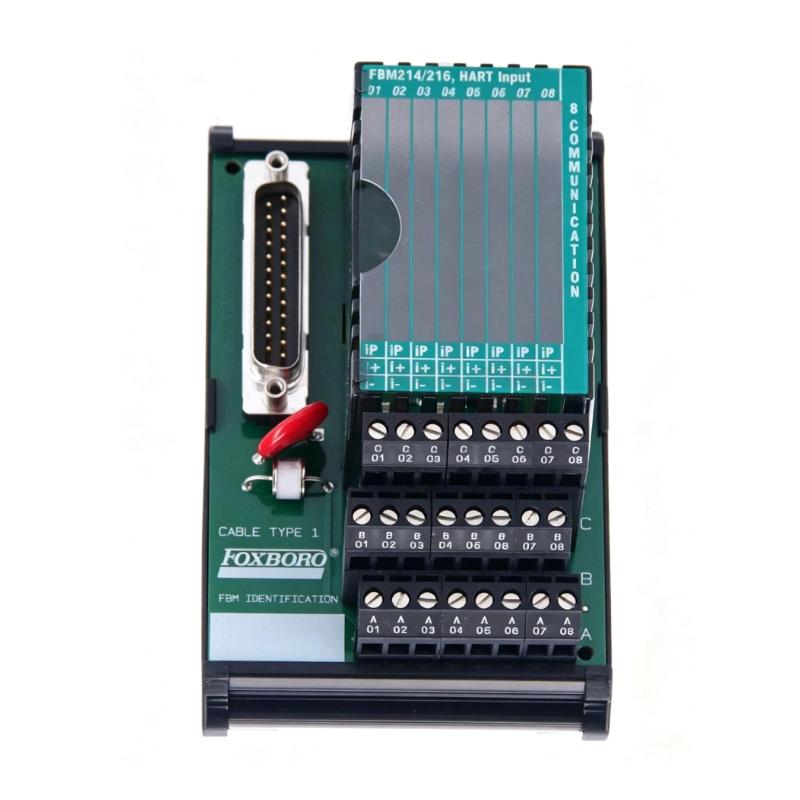
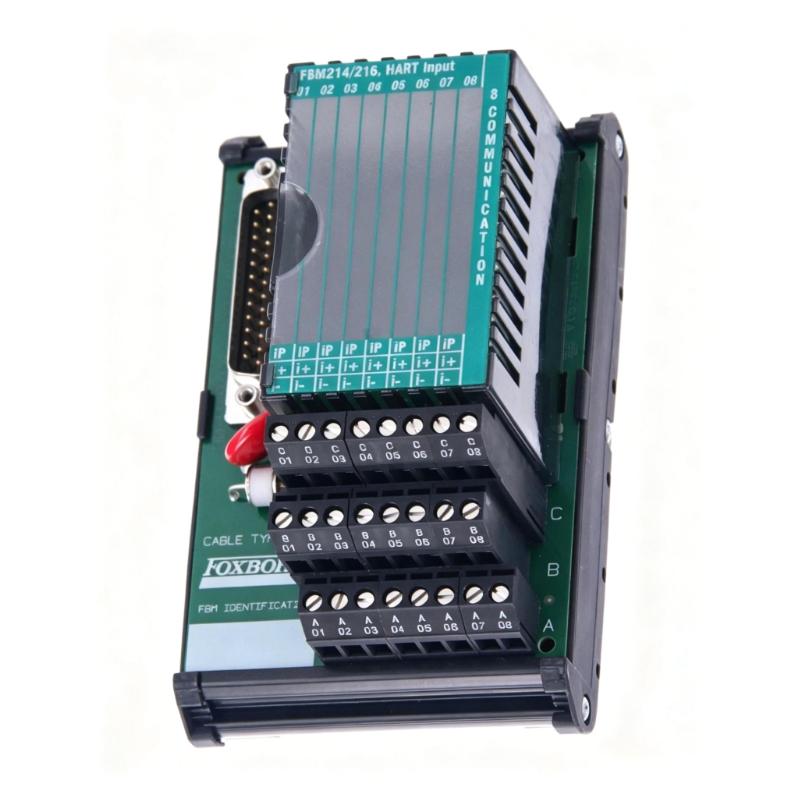
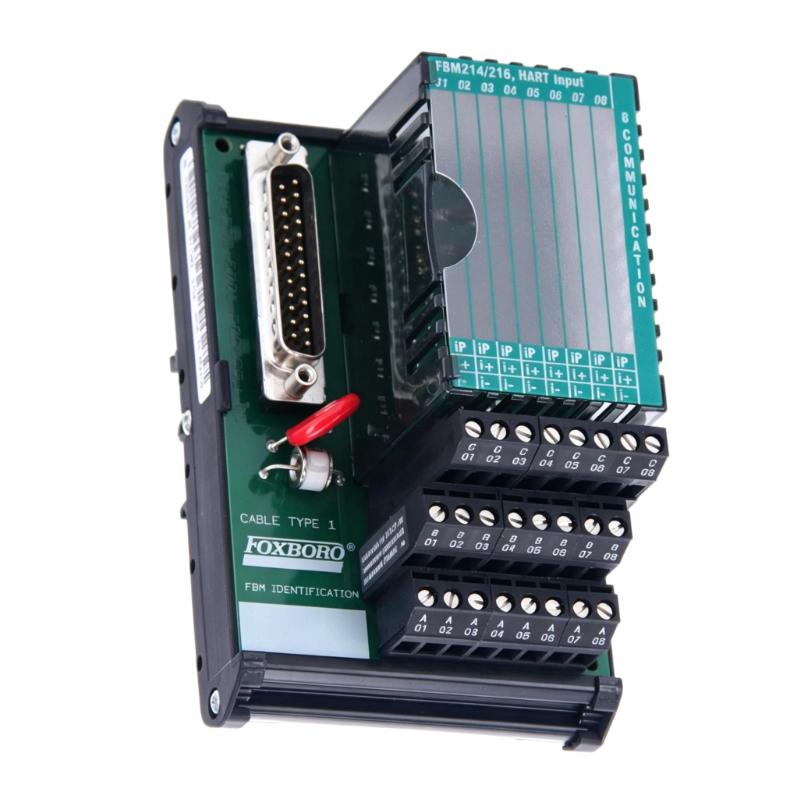
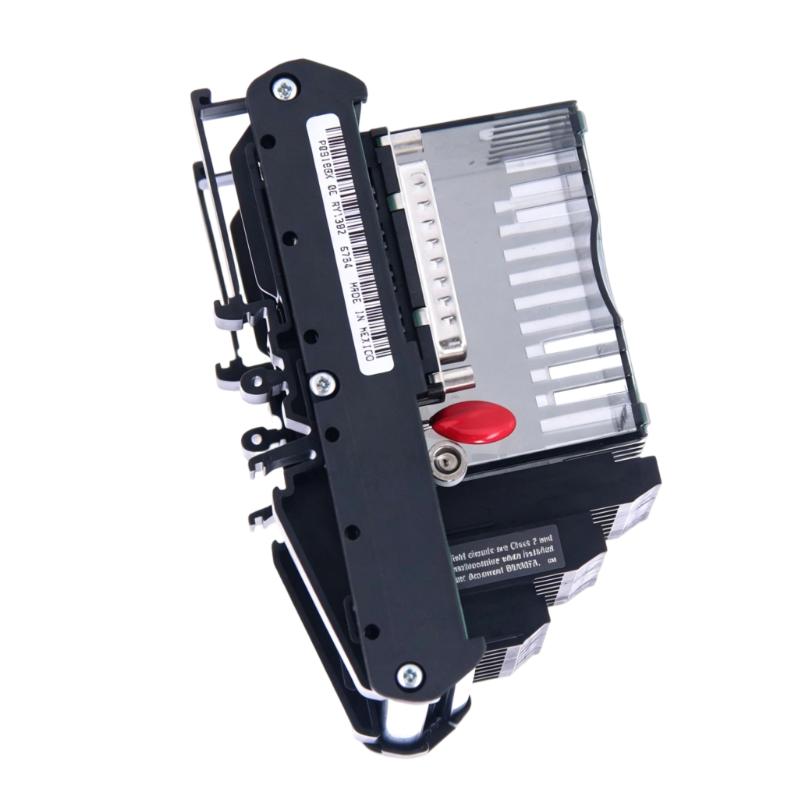
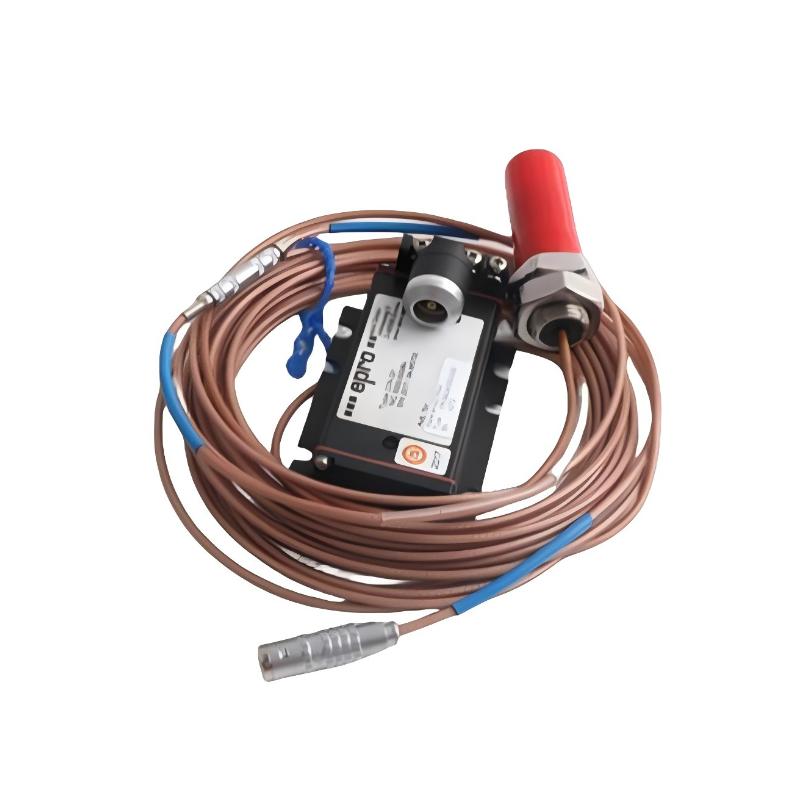
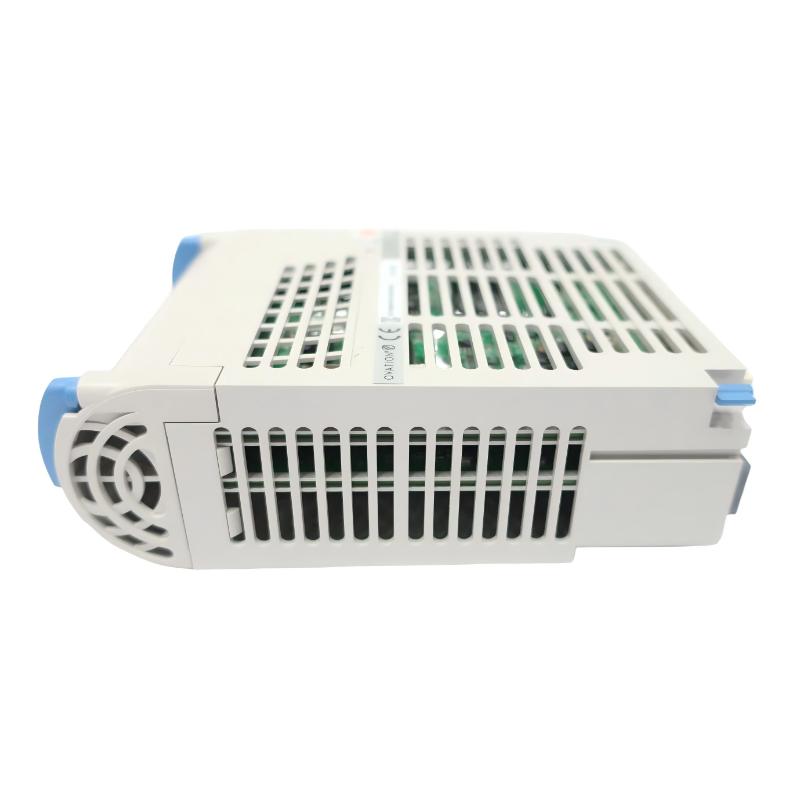
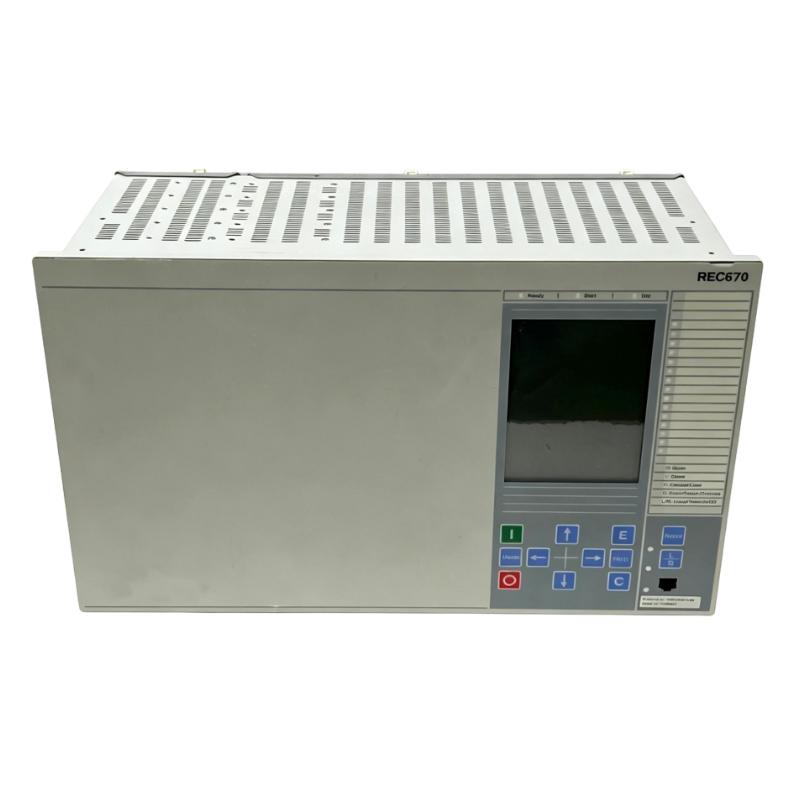
Brand:Foxboro Module Item No.:FBM216 Product Origin:USA Product Dimensions:125 × 76 × 80 mm Product Weight:0.181 kg Payment:T/T, Western Union, Credit Card Goods_stock:15 Shipping Port:Xiamen, China Lead Time:1-3 Days Condition:Brand New And Original Warranty:1 Year Certificate:COO
Terminal Integrity in Continuous-Process Automation
Reliable process control begins at the field level. Even sophisticated DCS controllers and interface modules depend on the physical wiring that carries information from instruments and devices throughout the plant.
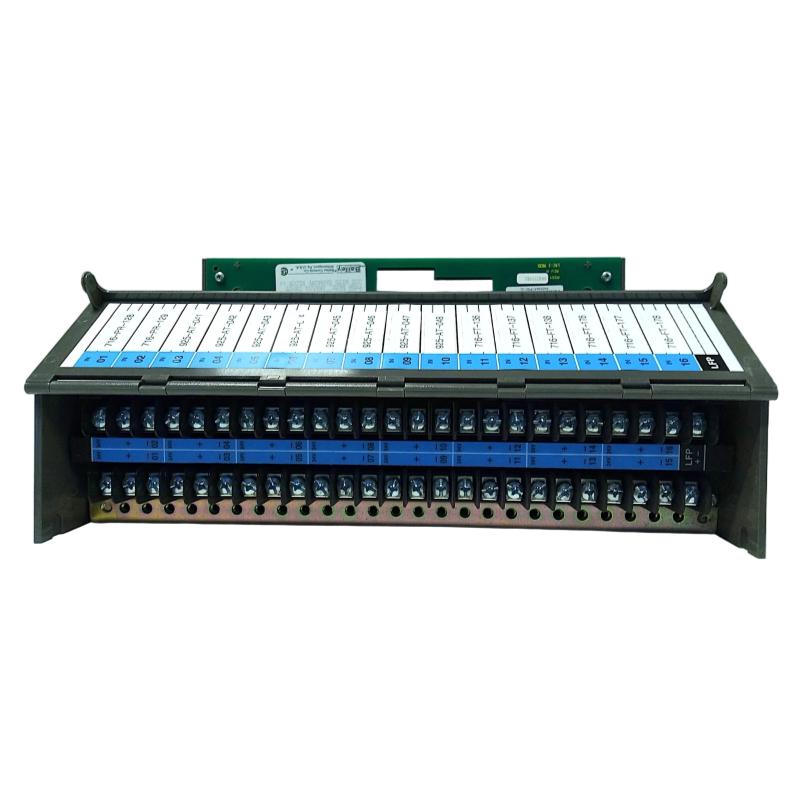
The Foxboro FBM216 P0916BX Compressed Terminal Components support this basic but important part of the control architecture. By providing the appropriate terminal arrangement for the applicable installation, they help establish an organized connection between field circuits and the associated DCS hardware.
This is especially important in continuous-process facilities. A refinery or chemical plant may operate thousands of process instruments simultaneously, with each signal contributing to the operator's understanding of plant conditions.
When a signal becomes unreliable, engineers need to be able to determine whether the problem originates at the instrument, cable, terminal, interface module, or control system. Well-organized terminal components make this troubleshooting process more structured.
During installation, each conductor should be identified against the applicable wiring documentation. Connections should be secure, and cables should be routed so that unnecessary mechanical force is not transferred directly to the terminal area.
For retrofit projects, the condition of existing terminal components should also be considered. If previous maintenance activities have caused physical damage or altered the original arrangement, restoring the appropriate component can help return the installation to a more predictable configuration.
The FBM216 P0916BX measures 125 × 76 × 80 mm and weighs 0.181 kg (0.40 lb). These dimensions should be considered when planning cabinet or terminal-area installation, particularly where multiple wiring interfaces are positioned close together.
For plant maintenance teams, keeping the correct terminal components available can shorten repair work when a connection problem is identified. For system integrators, selecting the correct interface hardware during the design phase can help create a cleaner and more maintainable DCS installation.
Technical Specifications
Parameter
Specification
Brand
Foxboro
Product Family
Foxboro DCS
Model
FBM216 P0916BX
Product Type
Compressed Terminal Components
Associated System
FBM216
Application
DCS Field Wiring
Function
Terminal / Wiring Interface
System Application
Process Automation
Installation
Industrial Control / DCS Cabinet
Dimensions
125 × 76 × 80 mm
Weight
0.181 kg (0.40 lb)
The compact dimensions make the terminal components practical for organized DCS wiring arrangements. Exact installation requirements should be determined from the associated FBM216 system configuration and electrical documentation.
Recommended Related Models
Model
Product Type
Relationship
Foxboro FBM216 P0916BX
Compressed Terminal Components
Target model
Foxboro FBM216 P0922VV
Communication Redundancy Input Interface Module
Associated FBM216 interface
Foxboro FBM201
Fieldbus Module
Related DCS interface
Foxboro FBM202
Fieldbus Module
Related DCS interface
Foxboro FBM203
Fieldbus Module
Related DCS interface
Foxboro FBM204
Fieldbus Module
Related DCS interface
For replacement procurement, verify the complete model designation and the exact terminal arrangement required by the existing Foxboro DCS installation.
Popular Related Foxboro Models
Model
Product Family
Typical Application
Foxboro FBM216 P0916BX
Foxboro DCS
Terminal connection
Foxboro FBM216 P0922VV
Foxboro DCS
Redundant input interfacing
Foxboro FBM201
Foxboro DCS
Field signal interface
Foxboro FBM202
Foxboro DCS
Process I/O applications
Foxboro FBM203
Foxboro DCS
DCS field interfacing
Foxboro FBM204
Foxboro DCS
Process automation
Foxboro FBM205
Foxboro DCS
Industrial control
Foxboro FBM206
Foxboro DCS
Field interface applications
The Foxboro FBM216 P0916BX Compressed Terminal Components provide a compact termination solution for compatible Foxboro DCS installations. Measuring 125 × 76 × 80 mm and weighing 0.181 kg (0.40 lb), they can be integrated into structured process-control wiring arrangements without adding significant cabinet load. For DCS engineers, OEMs, system integrators, and maintenance teams, accurate terminal identification, secure wiring, and systematic signal verification are essential for dependable long-term operation.
Process Control Wiring Applications
The Foxboro FBM216 P0916BX Compressed Terminal Components are associated with Foxboro distributed control system installations where reliable field wiring and orderly signal termination are essential. Terminal components may appear simple compared with controllers or I/O modules, but they form an important part of the electrical connection between field devices and the DCS.
In process automation environments, large numbers of transmitters, switches, actuators, and other instruments must be connected to control-system hardware. A well-organized terminal arrangement helps keep these circuits clearly identified and easier to inspect during commissioning and maintenance.
The FBM216 P0916BX is suited to industrial process-control environments where Foxboro FBM216-related installations require compatible terminal components. Applications can include chemical processing, oil and gas facilities, power generation, water treatment, refining, and other continuous-process operations.
The listed dimensions are 125 × 76 × 80 mm, while the weight is 0.181 kg (0.40 lb). Its compact format allows it to be incorporated into control-system wiring arrangements without adding substantial cabinet load.
For DCS engineers, panel builders, and maintenance teams, selecting the correct terminal component is important because the physical connection between field wiring and interface equipment must remain secure and correctly organized throughout the operating life of the plant.
Practical Termination for Foxboro DCS Installations
A DCS installation can contain a large number of field circuits. Pressure, temperature, flow, level, valve-position, and status signals all need dependable electrical paths into the control architecture.
The Foxboro FBM216 P0916BX Compressed Terminal Components are intended to support the connection side of a compatible Foxboro FBM216 installation. Their purpose is focused on physical termination and wiring organization rather than signal processing.
Good termination practice provides several practical benefits. During commissioning, engineers can verify field circuits systematically. During maintenance, technicians have a defined location for checking wiring and connections. During plant modifications, clearly organized terminals also make circuit identification considerably easier.
The 125 × 76 × 80 mm dimensions provide a manageable footprint for control-system installations. At 0.181 kg (0.40 lb), the components are lightweight while still providing a dedicated mechanical interface for the applicable wiring arrangement.
For replacement work, exact model identification is especially important. Terminal components may have specific mechanical arrangements and electrical interfaces that correspond to particular FBM configurations. A component that looks similar may not necessarily provide the correct connection arrangement.
Before installation, maintenance personnel should review the existing wiring documentation, terminal assignments, associated FBM hardware, and overall DCS architecture. This approach helps prevent wiring errors and reduces the possibility of introducing additional faults during maintenance.
For industrial plants that depend on continuous process operation, dependable terminal connections are a small but important part of overall DCS reliability.
Technical FAQs
1. What is the Foxboro FBM216 P0916BX?
The FBM216 P0916BX is identified as a set of compressed terminal components associated with Foxboro FBM216-related DCS installations.
2. What is the role of terminal components in a DCS?
Terminal components provide physical connection points for field wiring, helping establish an organized interface between field circuits and control-system hardware.
3. Do terminal components process process signals?
No. Terminal components primarily provide electrical termination and connection. Signal processing is handled by the appropriate DCS interface and control hardware.
4. Why can a loose terminal cause a process-control problem?
A loose connection can introduce resistance, intermittent contact, or signal interruption. In a process-control loop, this may result in unstable or missing measurements.
5. What should be checked when a field signal becomes intermittent?
Check the field instrument, cable, terminal connections, interface hardware, communication path, and DCS diagnostics to isolate the actual source of the problem.
6. Why is terminal identification important during maintenance?
Correct identification helps technicians work on the intended circuit and reduces the risk of accidentally disconnecting or rewiring another process signal.
7. Can the FBM216 P0916BX be substituted with a generic terminal component?
A generic component should not automatically be considered compatible. Mechanical configuration, terminal arrangement, wiring requirements, and system compatibility must be verified first.
8. What can cause terminal connections to deteriorate over time?
Vibration, repeated maintenance, thermal cycling, environmental contamination, mechanical stress, and improper installation can contribute to connection degradation.
9. Should terminal connections be inspected during DCS maintenance?
Yes. Terminal condition should be considered as part of routine inspection and troubleshooting, particularly when unexplained signal instability occurs.
10. What should be verified after terminal-component replacement?
Verify the terminal arrangement, conductor identification, connection security, field-circuit continuity, associated FBM status, and correct signal operation before returning the process to normal service.