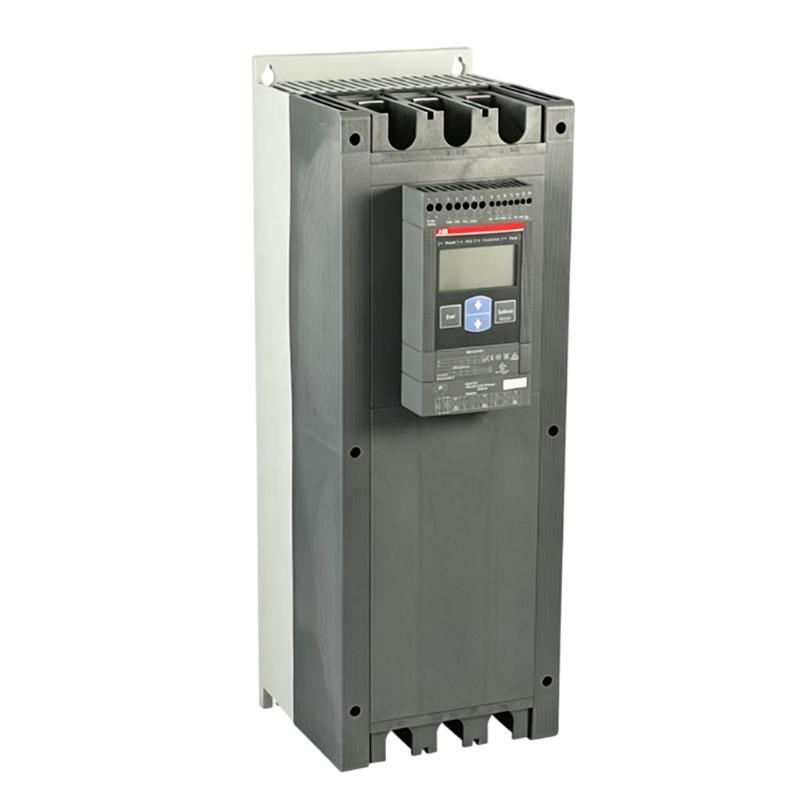
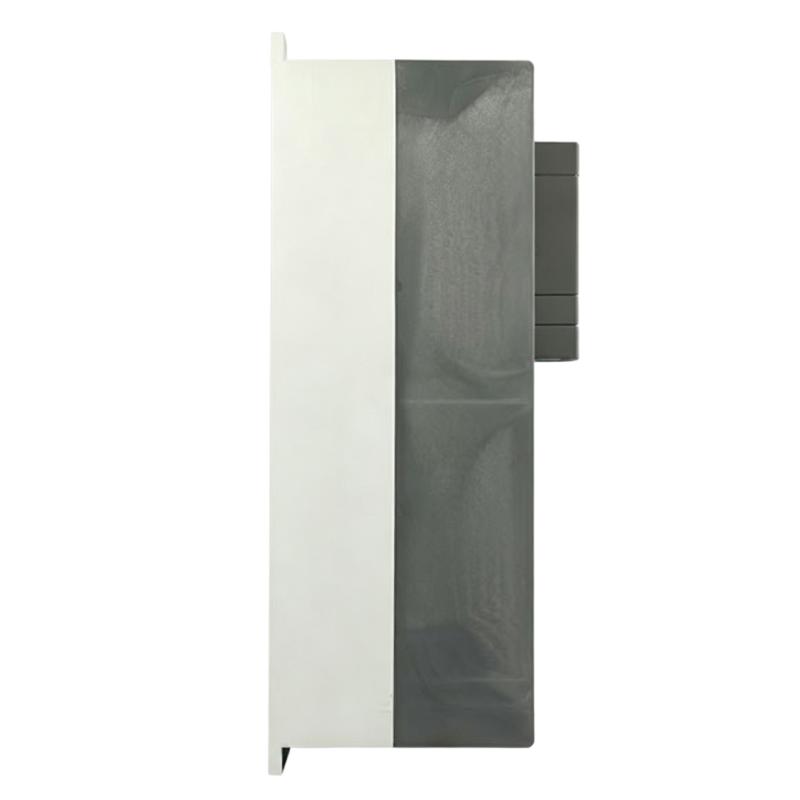
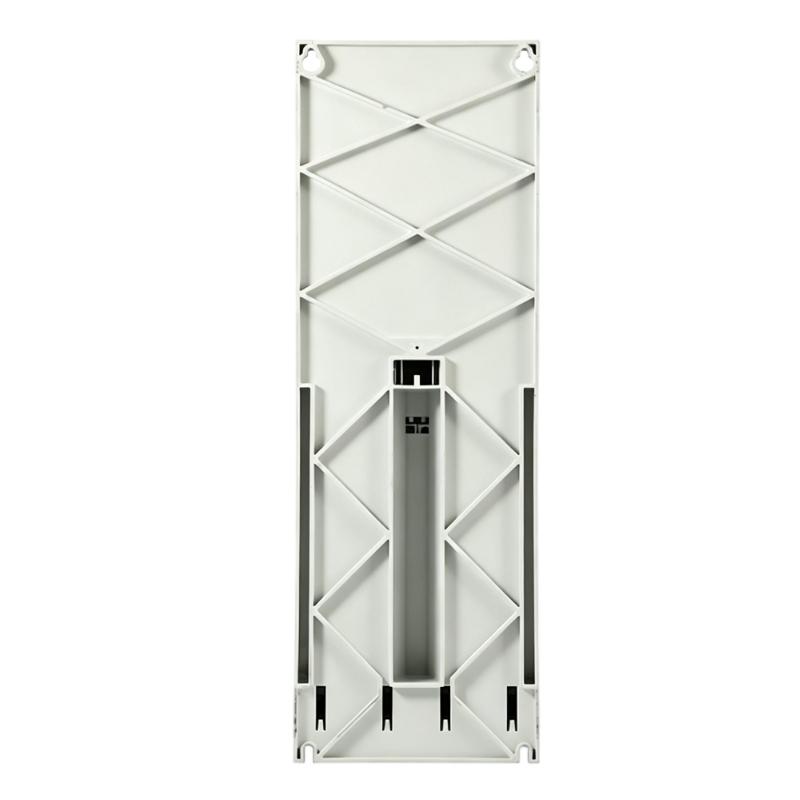
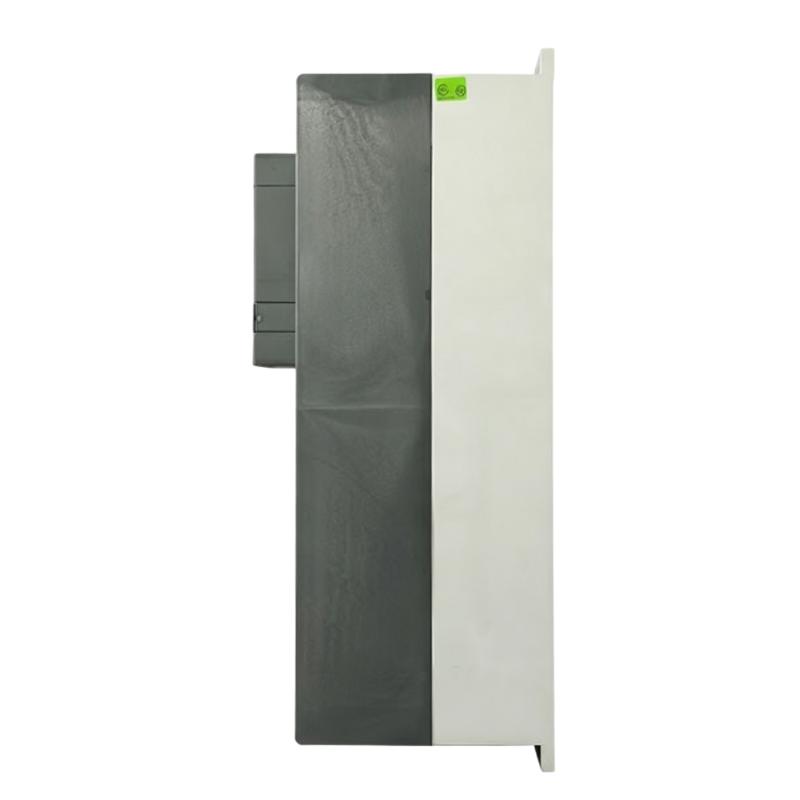
Brand:ABB PLC Item No.:PSE300-600-70 Product Origin:Sweden (SE) Product Dimensions:550 x 190 x 236.5 mm Product Weight:13.9 kg Payment:T/T, Western Union, Credit Card Goods_stock:15 Shipping Port:Xiamen, China Lead Time:1-3 Days Condition:Brand New And Original Warranty:1 Year Certificate:COO
The starting phase of an industrial motor can place considerable demand on both the electrical network and the mechanical equipment. This becomes more significant as motor size increases or when the driven machine has high inertia.
The ABB PSE300-600-70 1SFA897114R7000 Soft Starter is designed to address this challenge by providing controlled motor starting and stopping for compatible applications.
Unlike a variable-frequency drive, a soft starter is primarily concerned with the transition between stopped and running states. This makes it particularly useful for machinery that operates at a fixed speed but needs a gentler starting process.
Consider a large pump installation. A sudden application of full motor voltage can produce a rapid increase in torque and current. Depending on the system, this can contribute to pressure transients, mechanical stress, and disturbances on the electrical supply. Controlled starting provides a more gradual transition.
The same principle applies to conveyors. A controlled acceleration profile can reduce sudden tension in belts and mechanical couplings, helping the machinery reach normal operating conditions in a more predictable manner.
For maintenance engineers, it is important to distinguish between starter-related faults and motor or load problems. A soft starter may correctly report an overload or startup failure because the driven machine is mechanically restricted. Replacing the starter without investigating the underlying condition may not solve the problem.
The PSE300-600-70 has a listed size of 550 × 190 × 236.5 mm and a weight of 13.90 kg (30.64 lb). Its larger footprint should be taken into account when replacing an existing starter or designing a new motor-control cabinet.
Proper ventilation and service access are also important considerations for cabinet installation. Power-electronic equipment generates heat, and maintaining appropriate environmental conditions contributes to long-term reliability.
For industrial users seeking controlled starting for larger fixed-speed motor applications, the ABB PSE300-600-70 provides a focused and professional motor-control solution.
Technical Specifications
Parameter
Specification
Brand
ABB
Model
PSE300-600-70
Part Number
1SFA897114R7000
Product Type
Soft Starter
Product Family
ABB PSE
Application
Industrial Motor Control
Main Function
Controlled Motor Starting and Stopping
Motor Application
Three-Phase Industrial Motors
Typical Loads
Pumps, Fans, Compressors, Conveyors, Blowers
Installation
Industrial Control Cabinet
Dimensions
550 × 190 × 236.5 mm
Weight
13.90 kg (30.64 lb)
The physical dimensions should be considered when planning cabinet mounting, cable routing, ventilation, and maintenance access. Motor and application requirements should be verified before commissioning.
Recommended Related Models
Model
Product Type
Relationship
ABB PSE300-600-70
Soft Starter
Target model
ABB PSE250-600-70
Soft Starter
Related PSE model
ABB PSE370-600-70
Soft Starter
Related higher-capacity model
ABB PSE470-600-70
Soft Starter
Related PSE model
ABB PSTX300-600-70
Advanced Soft Starter
Related ABB motor-control solution
ABB PSTX370-600-70
Advanced Soft Starter
Related soft-starting equipment
The best alternative depends on motor characteristics, load type, starting duty, and required control functionality.
Popular Related ABB Models
Model
Product Family
Typical Application
ABB PSE300-600-70
PSE Soft Starter
Industrial motor starting
ABB PSE250-600-70
PSE Soft Starter
Motor-control applications
ABB PSE370-600-70
PSE Soft Starter
Heavy motor applications
ABB PSE470-600-70
PSE Soft Starter
Large industrial motors
ABB PSTX300-600-70
PSTX Soft Starter
Advanced motor control
ABB PSTX370-600-70
PSTX Soft Starter
Industrial motor starting
ABB PSTX470-600-70
PSTX Soft Starter
Large motor applications
ABB PSTX570-600-70
PSTX Soft Starter
Heavy-duty motor control
The ABB PSE300-600-70 1SFA897114R7000 Soft Starter is designed for controlled starting and stopping of compatible industrial motors, making it a strong choice for fixed-speed applications where electrical and mechanical starting stress needs to be managed. With dimensions of 550 × 190 × 236.5 mm and a weight of 13.90 kg (30.64 lb), it is suited to larger motor-control installations and should be incorporated carefully into cabinet and thermal-management plans. For pumps, conveyors, fans, compressors, blowers, and similar machinery, the PSE300-600-70 offers a practical approach to smoother motor operation and dependable industrial starting performance.
Applications
The ABB PSE300-600-70 1SFA897114R7000 Soft Starter is an industrial motor-starting solution designed for applications where controlled acceleration and stopping are preferred over direct-on-line starting. It is intended for larger motor installations where managing starting current and reducing mechanical stress can make a meaningful difference to equipment reliability.
The soft starter is well suited to fixed-speed motor applications such as pumps, fans, compressors, conveyors, blowers, and other industrial machinery. These loads often do not require continuous speed adjustment, but they can benefit significantly from a smoother transition between stopped and running conditions.
For pumping systems, controlled starting can help reduce sudden pressure changes. In conveyor applications, smoother acceleration can reduce mechanical shock to belts, gearboxes, couplings, and driven machinery. Compressor and fan installations can likewise benefit from a more controlled motor-starting sequence.
The PSE300-600-70 is also a practical option for industrial facilities looking to improve motor-starting performance without replacing a fixed-speed motor application with a variable-frequency drive.
Its listed dimensions are 550 × 190 × 236.5 mm, with a weight of 13.90 kg (30.64 lb). The larger physical format reflects its application as a higher-capacity industrial soft starter and should be considered carefully when designing or modifying a motor-control cabinet.
Advantages
Controlled Starting for Larger Industrial Motors
The ABB PSE300-600-70 is designed for applications where uncontrolled motor starting can create excessive electrical or mechanical stress. By providing controlled acceleration, the soft starter helps create a smoother transition from standstill to normal operation.
This can be particularly valuable for motors driving equipment with significant inertia or demanding starting characteristics.
Lower Mechanical Impact
Direct-on-line starting can subject mechanical components to an abrupt torque transition. A controlled starting profile can reduce this impact, helping protect shafts, couplings, belts, gearboxes, pumps, and other connected machinery.
For facilities with frequent motor starts, this can translate into improved equipment handling and potentially lower mechanical maintenance requirements.
Well Suited to Fixed-Speed Applications
A soft starter is especially attractive when the motor normally operates at one fixed speed. Instead of adding continuous speed-control functionality that the application does not require, the PSE300-600-70 focuses on the starting and stopping process.
This makes it a strong fit for many conventional industrial motor applications.
Efficient Control Cabinet Integration
The unit measures 550 × 190 × 236.5 mm and weighs 13.90 kg (30.64 lb). Its physical size should be incorporated into cabinet layout calculations, mounting arrangements, ventilation planning, and service-access requirements.
Designed for Industrial Motor-Control Duties
The PSE platform provides dedicated soft-starting equipment for industrial applications. For system integrators, using a purpose-built soft starter can simplify the motor-control architecture where variable-speed operation is unnecessary.
Technical FAQs
1. What is the ABB PSE300-600-70 used for?
It is used to provide controlled starting and stopping for compatible three-phase industrial motors, helping reduce electrical and mechanical stress during motor acceleration and deceleration.
2. Which applications are commonly suited to this type of soft starter?
Typical applications include pumps, fans, compressors, conveyors, blowers, and other fixed-speed industrial machinery.
3. How does a soft starter differ from a VFD?
A soft starter primarily controls the motor's acceleration and deceleration. A VFD provides continuous variable-speed control by changing the motor's operating frequency and voltage.
4. Why is controlled starting beneficial for large motors?
Large motors can draw substantial starting current and generate significant starting torque. Controlled acceleration can help reduce the impact on the electrical supply and connected mechanical equipment.
5. Can the PSE300-600-70 be used for continuous speed regulation?
A soft starter is not intended to provide continuous variable-speed operation. If an application requires adjustable operating speed, a suitable variable-frequency drive should normally be evaluated instead.
6. What could cause a soft starter to trip during startup?
Potential causes include excessive mechanical load, unsuitable starting settings, motor problems, supply abnormalities, incorrect wiring, excessive starting frequency, or thermal limitations.
7. Why should the driven load be considered when selecting a soft starter?
Different loads require different starting torque and acceleration characteristics. A starter must be appropriately matched to both the motor and the mechanical application.
8. What should be checked if the motor hums but does not accelerate properly?
Check the incoming supply, motor connections, starting parameters, mechanical load, starter diagnostics, and motor condition. A mechanical restriction can produce symptoms similar to an electrical problem.
9. Can frequent starts increase the thermal load on the starter?
Yes. Every motor start generates heat in the power electronics. Starting frequency and duty cycle therefore need to be considered when designing the application.
10. What should be checked after commissioning the soft starter?
Verify electrical connections, motor protection, control signals, starting parameters, fault status, acceleration behavior, stopping behavior, and overall motor performance under the actual load.