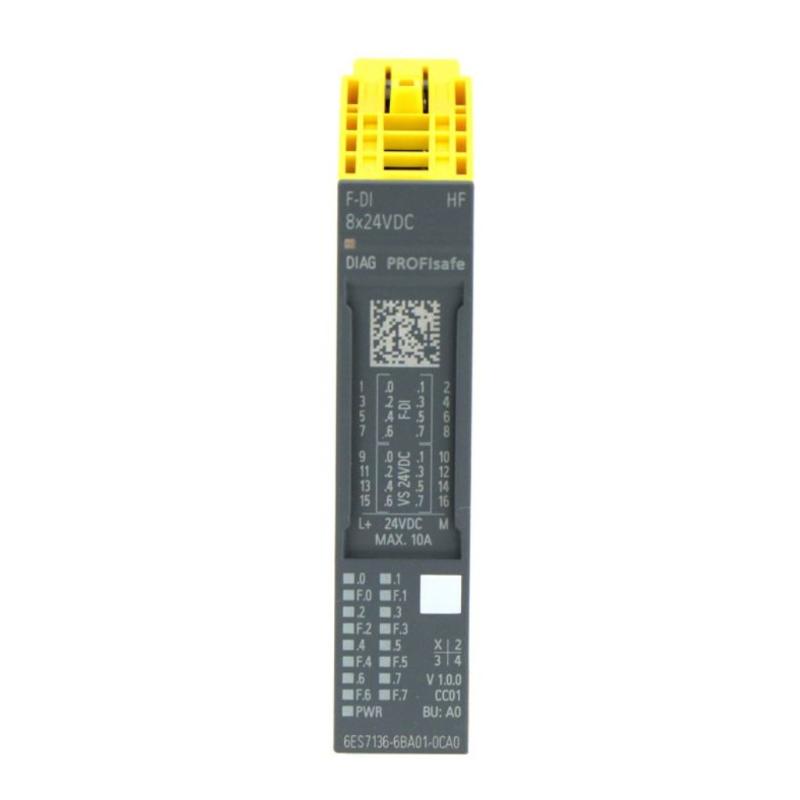
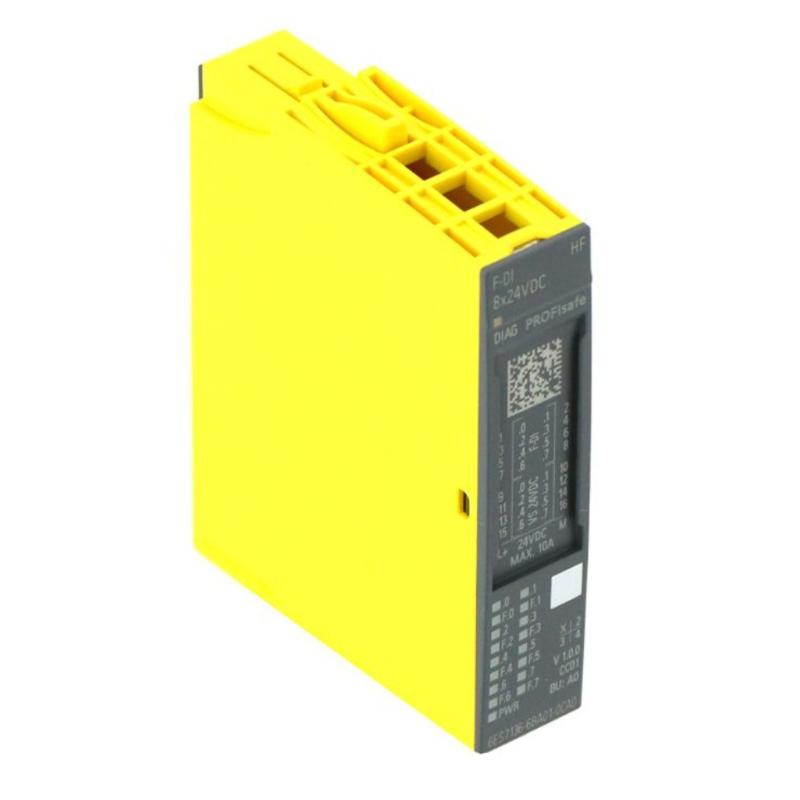
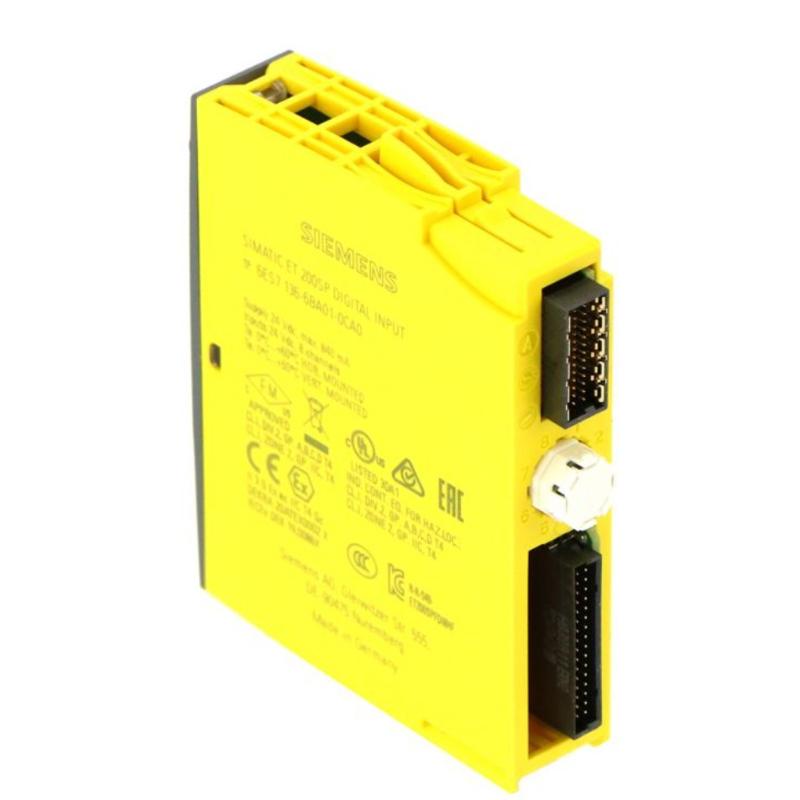
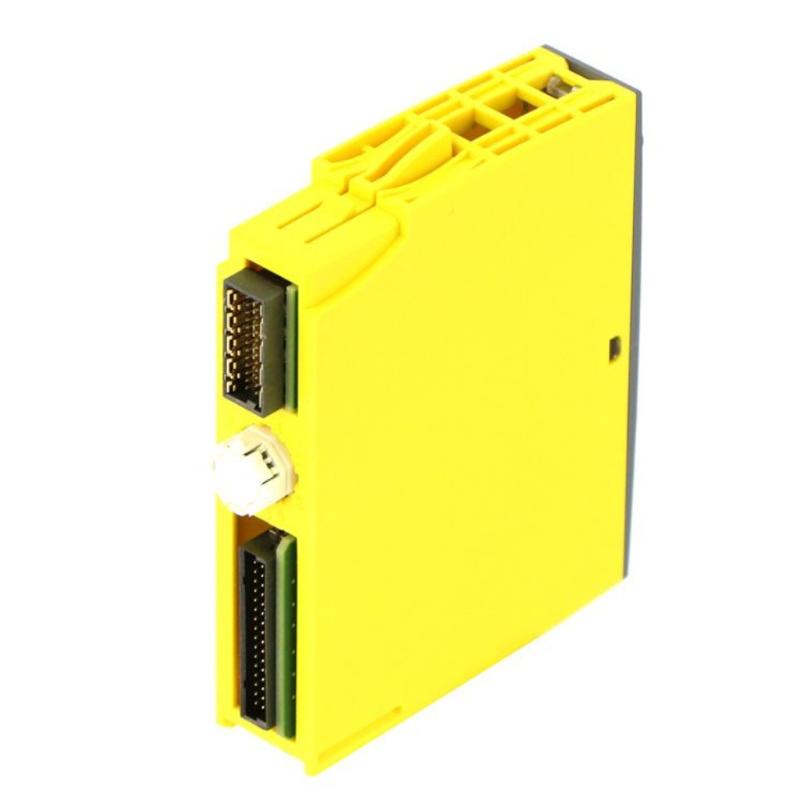
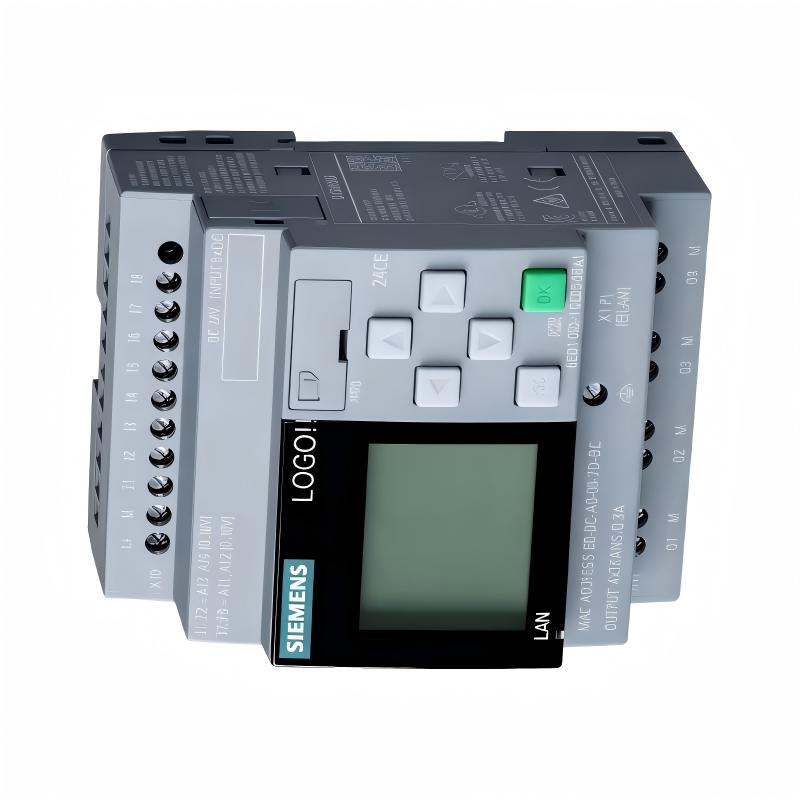
Brand:Siemens Item No.:6AG1136-6BA01-2CA0 Product Origin:Germany Product Dimensions:15 × 73 × 58 mm Product Weight:0.061 kg Payment:T/T, Western Union, Credit Card Goods_stock:15 Shipping Port:Xiamen, China Lead Time:1-3 Days Condition:Brand New And Original Warranty:1 Year Certificate:COO
The Siemens 6AG1136-6BA01-2CA0 Digital Input Module serves an important role in PLC-based automation by connecting real-world switching signals with the controller's digital logic. Although digital input technology is straightforward in principle, reliable signal acquisition is fundamental to machine sequencing, equipment monitoring, and automated decision-making.
A modern production machine may depend on dozens or hundreds of discrete signals. Sensors confirm component positions, switches indicate mechanical states, and operator controls provide commands. Each of these signals must be acquired consistently so that the PLC can execute the intended control program.
The value of a professional digital input module therefore extends beyond simply receiving an ON or OFF signal. A well-organized I/O architecture helps engineers create predictable control systems, simplifies commissioning, and makes troubleshooting more systematic when a machine stops unexpectedly.
The compact design of the 6AG1136-6BA01-2CA0 is advantageous for installations where cabinet space is at a premium. It can also be considered for compatible Siemens automation upgrades and replacement applications where maintaining an established system architecture is more practical than redesigning the entire control system.
For automation distributors and industrial maintenance professionals, accurate model identification is particularly important. Matching the complete 6AG1136-6BA01-2CA0 order number helps ensure that the replacement component corresponds to the intended hardware configuration.
Technical Specifications
Parameter
Description
Manufacturer
Siemens
Model Number
6AG1136-6BA01-2CA0
Product Type
Digital Input Module
Product Family
SIPLUS / SIMATIC Automation
Signal Function
Digital Signal Acquisition
Application
Industrial Automation and Machine Control
Installation
Modular I/O System
System Role
Field Signal Monitoring
Dimensions
15 × 73 × 58 mm
Weight
0.06 kg (0.13 lb)
Design
Compact Modular Construction
Typical Signals
Sensors, switches, status feedback and control inputs
Recommended Related Models
Model
Description
Siemens 6AG1136-6BA00-2CA0
Digital Input Module
Siemens 6AG1132-6GD51-7BA0
Digital Output Module
Siemens 6AG1134-6JD00-2CA1
Analog Input Module
Siemens 6AG1135-6HD00-7BA1
Analog Output Module
Popular Related Models
Model
Product Type
Siemens 6ES7131-6BF00-0BA0
Digital Input Module
Siemens 6ES7131-6BH00-0BA0
Digital Input Module
Siemens 6ES7131-6TF00-0CA0
Digital Input Module
Siemens 6ES7132-6BF00-0BA0
Digital Output Module
Siemens 6ES7134-6GF00-0AA1
Analog Input Module
Applications and Control System Integration
The Siemens 6AG1136-6BA01-2CA0 Digital Input Module is a compact industrial automation component designed for reliable digital signal acquisition in Siemens control architectures. It provides the interface required for bringing binary field signals into an automation system, allowing the controller to monitor equipment status, sensor conditions, switching operations, and machine sequences.
This type of digital input module is well suited to automated production lines, packaging machinery, material handling systems, process equipment, machine tools, and other PLC-based installations where dependable signal acquisition is essential. Typical field signals may originate from proximity sensors, position switches, push buttons, contact devices, and machine-status feedback circuits.
Its compact 15 × 73 × 58 mm form factor is particularly useful in applications where panel space is limited. For system integrators and machine builders, the module can help create a clean, modular I/O arrangement while supporting straightforward maintenance and system expansion.
For replacement projects, automation upgrades, and new control-system installations, the 6AG1136-6BA01-2CA0 offers a practical Siemens hardware solution for dependable digital monitoring.
Engineering Benefits at a Glance
Dependable Digital Signal Acquisition
The module is designed to receive binary field information and make that status available to the automation controller. Consistent signal acquisition is essential for accurate machine sequencing and process monitoring.
Compact Installation Footprint
Its narrow modular construction helps engineers make efficient use of control cabinet and distributed I/O space. This is especially valuable in machine designs with a high number of I/O points.
Designed for Industrial Automation
The module fits professional Siemens automation environments where dependable operation, organized system architecture, and efficient maintenance are important considerations.
Efficient Machine Status Monitoring
Digital inputs allow a PLC to identify whether equipment has reached a particular position, whether a sensor has been activated, or whether a switching device has changed state.
Simplified System Maintenance
A modular I/O approach makes troubleshooting more structured. Technicians can isolate field wiring, input channels, controller configuration, and connected devices during fault diagnosis.
A Practical Choice for Automation Projects
For OEMs, system integrators, and maintenance teams working with Siemens-based equipment, this module can provide a convenient way to expand or replace compatible digital input hardware.
Technical FAQs
1. What is the primary function of the Siemens 6AG1136-6BA01-2CA0?
It is used to acquire digital signals from field devices and transfer their status into a Siemens automation system for processing by the controller.
2. What field devices are commonly connected to digital input modules?
Typical devices include proximity sensors, limit switches, push buttons, contact switches, and machine-status signals.
3. How should an engineer troubleshoot a channel that remains inactive?
Start by checking the field device, supply voltage, wiring, terminal connections, channel configuration, and available PLC diagnostics. Testing the field signal independently can help isolate the problem.
4. What can cause an input to remain permanently active?
Potential causes include a short circuit, incorrect wiring, a continuously active field device, incorrect signal configuration, or a fault in the connected circuit.
5. Why is input signal diagnosis important in PLC systems?
Accurate diagnosis helps distinguish between a failed field device, wiring problem, I/O hardware issue, and PLC configuration error, reducing unnecessary component replacement.
6. Can a digital input module monitor machine-position sensors?
Yes. Position sensors and limit switches are common sources of binary feedback used by PLCs to determine machine states and sequence operations.
7. How does input filtering affect digital signal processing?
Input filtering can help prevent short electrical disturbances or contact bounce from being interpreted as unintended state changes. The appropriate configuration depends on the application and signal characteristics.
8. What should be considered when replacing an existing digital input module?
Engineers should verify the exact Siemens order number, electrical specifications, wiring arrangement, controller compatibility, configuration requirements, and the characteristics of the existing field devices.
9. What is the difference between a digital input and an analog input?
A digital input normally represents discrete states such as ON/OFF, while an analog input processes continuously varying values such as temperature, pressure, or level.
10. How can technicians identify whether a fault is in the module or field wiring?
Checking the field signal at the terminal, comparing the affected channel with a known-good channel, and reviewing PLC diagnostics can help determine whether the problem originates in the field circuit or I/O hardware.