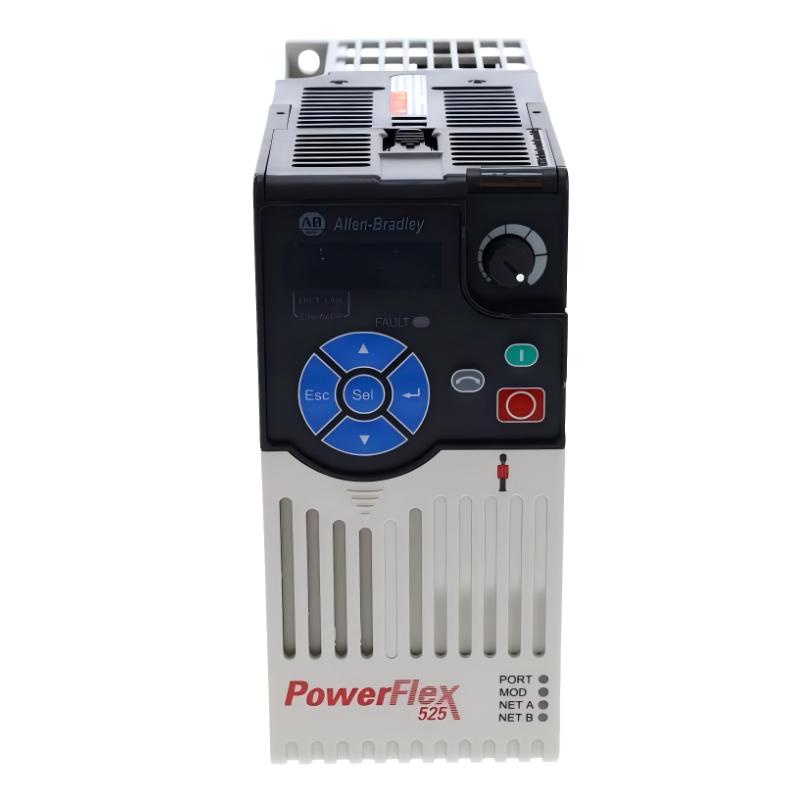
Brand:Allen Bradley PLC Item No.:MPL-B320P-HJ72AA Product Origin:USA Product Dimensions:Frame Size: 100 mm Product Weight:3.7 kg Payment:T/T, Western Union, Credit Card Goods_stock:15 Shipping Port:Xiamen, China Lead Time:1-3 Days Condition:Brand New And Original Warranty:1 Year Certificate:COO
The Allen Bradley MPL-B320P-HJ72AA Servo Motor is an industrial motion-control component designed for automated equipment requiring repeatable and controlled movement. Servo motors are commonly selected for machine axes where position, speed, acceleration, and synchronization need to be managed more precisely than with conventional motor-control methods.
A servo motor does not normally operate as an isolated component. It forms part of a complete motion system that includes a compatible servo drive, controller, feedback arrangement, mechanical transmission, and machine load. The performance of the complete axis depends on how effectively these components are matched and configured.
The 100 mm frame size gives the MPL-B320P-HJ72AA a practical mechanical format for industrial machinery. With a supplied weight of 3.7 kg, or approximately 8.16 lb, it can also be handled relatively easily during machine construction, maintenance, and motor replacement.
Correct identification is particularly important when replacing a servo motor. Models within the same product family can have different electrical characteristics, feedback configurations, shaft arrangements, connectors, and other mechanical details. The complete catalog number should therefore be checked before a replacement is installed.
Commissioning should begin with verification of the motor power and feedback connections. The associated servo drive should be configured with the appropriate motor information, after which the axis can be tested under controlled conditions. Rotation direction, acceleration, deceleration, positioning behavior, and fault response should be evaluated before normal production operation.
For industrial automation applications, the MPL-B320P-HJ72AA can be considered for precision positioning, indexing, assembly, packaging, material handling, and coordinated motion systems. Proper motor-drive matching, mechanical installation, tuning, and preventive maintenance are important for achieving dependable servo performance.
The 100 mm frame size should be considered when planning the mechanical mounting arrangement and available machine space. The supplied 3.7 kg weight corresponds to approximately 8.16 lb and should be included in equipment handling and mechanical design considerations.
Recommended Related Models
For applications using the Allen Bradley MPL servo motor family, related configurations can be evaluated according to frame size, motor performance, feedback arrangement, mounting requirements, and application duty.
Recommended comparison categories include:
MPL-series servo motors with similar frame configurations
MPL servo motors with alternative performance characteristics
Compact servo motors for automated machine axes
Servo motors designed for positioning and indexing
Servo motors for coordinated multi-axis applications
Compatible Allen Bradley servo drives and motion-control components
For replacement applications, the complete motor catalog number should be matched with the existing servo drive and mechanical system rather than relying on frame size alone.
Popular Related Models
Common Allen Bradley motion-control product groups that may be evaluated alongside this motor include:
Allen Bradley MPL-series servo motors
Compact-frame MPL servo motor configurations
Higher-performance MPL servo motor configurations
Servo motors for packaging and assembly machinery
Servo motors for precision positioning systems
Allen Bradley servo drives used with MPL motor systems
Before installing the MPL-B320P-HJ72AA, engineers should verify the complete catalog number, frame size, feedback configuration, electrical requirements, mounting arrangement, shaft details, cabling, and servo-drive compatibility. Accurate system matching is essential for reliable motion performance and trouble-free commissioning.
Applications
The Allen Bradley MPL-B320P-HJ72AA is a 100 mm frame servo motor designed for industrial motion-control applications where controlled, repeatable, and coordinated movement is required. It can be used as part of a complete servo axis together with a compatible servo drive, motion controller, feedback system, and mechanical transmission.
Typical applications include:
Automated assembly equipment
Packaging and filling machinery
Pick-and-place systems
Precision indexing machines
Material-handling equipment
Machine tools and automated manufacturing systems
Printing and converting machinery
Robotics and multi-axis motion systems
Automated production lines
Positioning and synchronized-motion applications
The motor is especially relevant to machinery where accurate speed control, positioning, acceleration, and deceleration directly affect production quality.
Motion Control Advantages
Built for Precision Motion
The MPL-B320P-HJ72AA is intended for applications where controlled motion is more important than simple continuous rotation. Servo technology allows machine designers to develop repeatable positioning and motion sequences.
100 mm Frame Format
The 100 mm frame size provides a defined mechanical format for machine integration. Mounting dimensions, shaft configuration, coupling requirements, and available installation space should all be considered when designing the servo axis.
Practical Motor Weight
The supplied motor weight is 3.7 kg, equivalent to approximately 8.16 lb. This provides a manageable form factor for installation, machine assembly, and routine service work.
Suitable for Dynamic Machine Axes
Servo motors are commonly used for axes that must repeatedly accelerate, decelerate, stop, and reposition. With suitable drive tuning and mechanical design, the motor can support demanding automated motion sequences.
Works as Part of a Complete Motion System
Reliable servo performance depends on more than the motor itself. The motor, servo drive, controller, feedback system, mechanical load, and cabling should be selected and configured as a coordinated system.
Technical FAQs
1. What is the Allen Bradley MPL-B320P-HJ72AA?
The Allen Bradley MPL-B320P-HJ72AA is an industrial servo motor with a 100 mm frame size. It is designed for use in closed-loop motion-control systems requiring controlled and repeatable motor movement.
2. What applications can use this servo motor?
Typical applications include automated assembly, packaging, indexing, positioning, material handling, machine tools, printing equipment, and other industrial machinery requiring controlled motion.
3. What does the 100 mm frame size mean?
The 100 mm frame size describes the motor's mechanical frame classification. It helps engineers evaluate mounting compatibility and machine layout, but it does not by itself establish complete electrical compatibility.
4. Does the MPL-B320P-HJ72AA operate with a servo drive?
Yes. The motor is normally operated through a compatible servo drive. The drive supplies controlled electrical power and works with the motor feedback system to regulate the motion axis.
5. Why is feedback necessary in a servo system?
Feedback provides the motion controller and drive with information about motor operation. This enables closed-loop correction of the axis and supports accurate positioning, speed regulation, and coordinated motion.
6. What should be checked before replacing another servo motor?
Engineers should verify the complete catalog number, frame size, electrical characteristics, feedback configuration, mounting arrangement, shaft and coupling requirements, connectors, and compatibility with the installed servo drive.
7. What can cause a servo axis to lose positioning accuracy?
Possible causes include incorrect tuning, mechanical backlash, excessive load, feedback problems, coupling errors, vibration, incorrect motion parameters, or mechanical wear. Troubleshooting should examine the complete axis rather than only the motor.
8. What preventive maintenance is appropriate for this motor?
Maintenance should include inspection of connectors, cables, mounting hardware, shaft and coupling condition, abnormal vibration, unusual noise, contamination, and operating temperature. Mechanical alignment should also be checked where applicable.
9. What can cause the servo motor to overheat?
Excessive load, high-duty operation, inadequate cooling, mechanical binding, incorrect tuning, frequent high-demand acceleration and deceleration, or unsuitable operating conditions can contribute to overheating.
10. How should the motor be commissioned?
Technicians should first verify motor and feedback wiring and confirm servo-drive compatibility. Appropriate motor parameters should then be configured, followed by controlled testing of rotation, speed, acceleration, deceleration, positioning, and fault response before production operation.