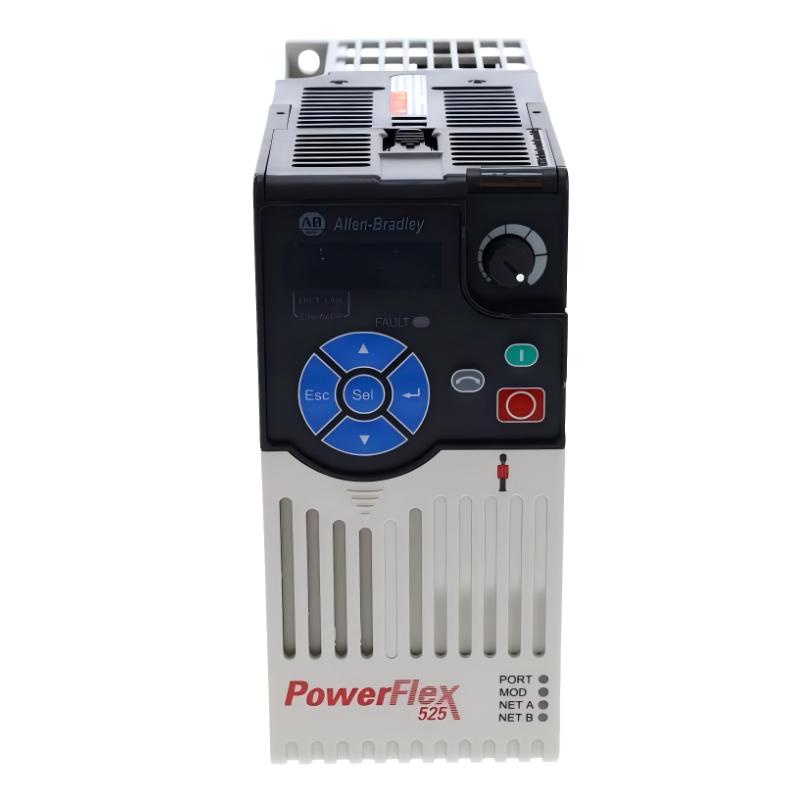
Brand:Siemens Item No.:6AG1331-7TF01-7AB0 Product Origin:Germany Product Dimensions:40 × 125 × 117 mm Product Weight:0.254 kg Payment:T/T, Western Union, Credit Card Goods_stock:15 Shipping Port:Xiamen, China Lead Time:1-3 Days Condition:Brand New And Original Warranty:1 Year Certificate:COO
The Siemens 6AG1331-7TF01-7AB0 Analog Input Module is designed to provide analog signal acquisition within an industrial automation environment. It allows field-level measurement information to become usable data for PLC-based control, process monitoring, diagnostics, and operator visualization.
In a typical application, a sensor or transmitter measures a physical process variable and generates an electrical signal. The analog input module receives the signal and passes the measurement information into the control system. The PLC can then use the value for control logic, alarm handling, trend monitoring, or closed-loop regulation.
The 6AG1331-7TF01-7AB0 has listed dimensions of 40 × 125 × 117 mm and a weight of 0.254 kg (0.56 lb). Its compact format can be advantageous when designing control cabinets where module density, wiring access, and maintenance space must be considered together.
For replacement and retrofit applications, the complete Siemens order number should be verified carefully. Analog modules that appear similar can have different signal characteristics, channel configurations, and system requirements. Correct identification is therefore important before installation.
Technical Specifications
Specification
Details
Brand
Siemens
Model
6AG1331-7TF01-7AB0
Product Type
Analog Input Module
Product Family
SIPLUS
Dimensions
40 × 125 × 117 mm
Weight
0.254 kg / 0.56 lb
Application
Industrial analog signal acquisition
Primary Function
Analog field signal interface
Installation
Industrial automation system
System Integration
Compatible Siemens automation architecture
Dimensions: The listed dimensions are 40 × 125 × 117 mm. Cabinet planning should also allow appropriate clearance for field wiring, terminal access, ventilation, and maintenance.
Weight: The listed module weight is 0.254 kg, equivalent to approximately 0.56 lb.
Installation considerations: Before commissioning, verify the exact mounting arrangement, terminal assignments, supported field signal characteristics, wiring, shielding, grounding, and PLC configuration required by the application.
Recommended Related Models
For a Siemens analog acquisition system, related products should be selected according to the field signal, channel requirements, automation platform, and environmental conditions. Relevant categories include:
Siemens SIPLUS analog input modules
Siemens SIMATIC analog I/O modules
Siemens digital input and output modules
Siemens signal-conditioning components
Siemens PLC and distributed I/O systems
Compatible terminal and wiring accessories
Industrial sensors and analog transmitters
For a replacement application, the exact order number should be confirmed together with the electrical and system requirements rather than selecting a module based only on dimensions or product-family similarity.
Popular Related Models
Siemens offers a broad range of analog input modules for factory automation, process control, and industrial measurement applications. Individual models can differ in supported signal types, channel arrangements, electrical specifications, and system compatibility.
When expanding an existing automation installation around the 6AG1331-7TF01-7AB0, engineers may evaluate other compatible Siemens analog input configurations according to the required field instrumentation and control architecture.
Before installing a replacement or additional module, verify:
Exact Siemens order number
Supported input signal characteristics
Required channel configuration
Sensor or transmitter compatibility
Terminal and wiring arrangement
PLC or I/O-system compatibility
Hardware and software configuration
Environmental requirements
Cabinet installation requirements
Proper coordination between the field instrument, analog input module, PLC, and application software is essential for accurate measurement and dependable industrial automation performance.
Applications
The Siemens 6AG1331-7TF01-7AB0 is an analog input module intended for industrial automation systems that need to acquire continuous process signals from field instruments. It provides an interface between sensors or transmitters and the control system, allowing measured values to be processed by the PLC for monitoring, regulation, alarms, diagnostics, and visualization.
Typical applications include:
Industrial process monitoring
Factory automation
Machine control systems
Temperature and pressure measurement
Flow and level monitoring
Energy and utility applications
Production equipment
Distributed I/O installations
Process-control systems
PLC-based data acquisition
The module is suitable for automation architectures where dependable analog signal acquisition and organized integration with the control system are important.
Reliable Analog Signal Acquisition
Continuous process measurement
Analog input technology allows the automation controller to receive continuously varying process information instead of only discrete ON/OFF states. This is useful for monitoring changing physical conditions within industrial equipment.
Efficient PLC integration
The module can serve as an interface between field instrumentation and a compatible Siemens automation system, allowing measured values to be incorporated into control programs and operator interfaces.
Practical cabinet installation
The module has listed dimensions of 40 × 125 × 117 mm, providing a compact form factor for industrial control cabinets and automation assemblies.
Useful for process diagnostics
Acquired analog values can be used for alarm thresholds, process trends, equipment diagnostics, interlocks, and other control functions.
Suitable for industrial applications
The SIPLUS designation is associated with Siemens equipment intended for industrial environments where application conditions and system reliability need to be carefully considered.
Flexible system design
Analog input modules can be positioned as part of centralized or distributed automation architectures, depending on the overall Siemens control-system configuration.
Technical FAQs
1. What is the Siemens 6AG1331-7TF01-7AB0?
The Siemens 6AG1331-7TF01-7AB0 is an analog input module designed to acquire compatible analog signals from field devices and make the resulting measurement information available to an industrial automation system.
2. What is the purpose of an analog input module?
An analog input module receives continuously varying electrical signals from field instruments and converts the input information into process data that the automation controller can use.
3. What types of systems can use this module?
The module can be considered for compatible Siemens industrial automation systems used in machine control, process monitoring, production equipment, utilities, and other applications requiring analog signal acquisition.
4. How does an analog input differ from a digital input?
A digital input normally identifies discrete conditions such as ON or OFF. An analog input is used to acquire a variable signal representing a changing process condition.
5. Can field sensors and transmitters be connected to the module?
Compatible sensors or transmitters can be connected when their electrical signal characteristics correspond to the supported input configuration. The exact field-device output and module configuration should be verified before commissioning.
6. Why is signal configuration important?
The input configuration must correspond to the actual field signal. Incorrect configuration can produce inaccurate measurements, diagnostic conditions, or unreliable process-control behavior.
7. What should be checked when wiring the module?
Terminal assignments, signal wiring, polarity where applicable, shielding, grounding, cable routing, and field-device connections should be checked carefully. Proper installation helps minimize measurement errors caused by wiring or electrical interference.
8. What can cause an analog value to fluctuate?
Possible causes include electrical noise, inadequate shielding, grounding problems, loose connections, damaged field wiring, an unstable sensor or transmitter, or an incorrect signal configuration.
9. Can analog input data be used for closed-loop control?
Yes. When correctly integrated with a suitable PLC or controller, acquired analog values can be used as process feedback for regulation, control algorithms, alarms, sequencing, and other automation functions.
10. What maintenance should be performed on an analog input module?
Routine checks should include terminal connections, field wiring, signal stability, module diagnostics, cabinet conditions, and controller communication. When an abnormal value occurs, both the field instrument and the input channel should be investigated.