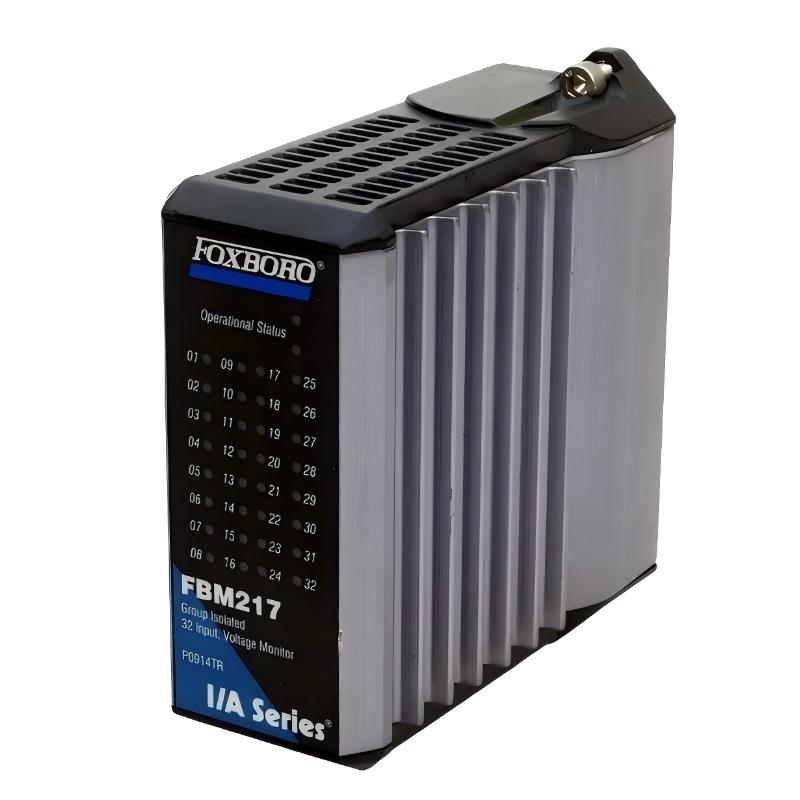
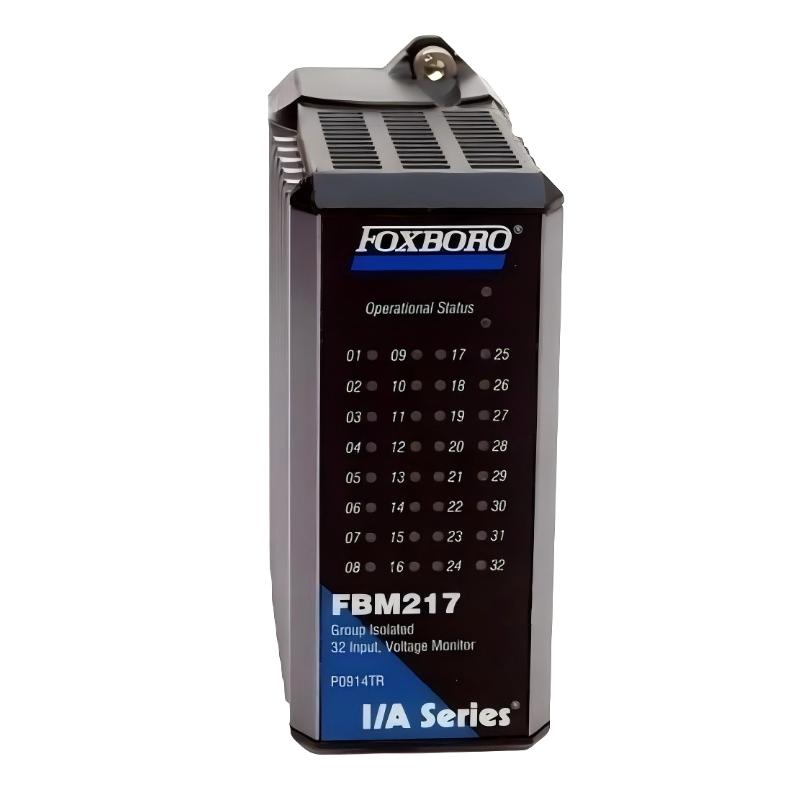
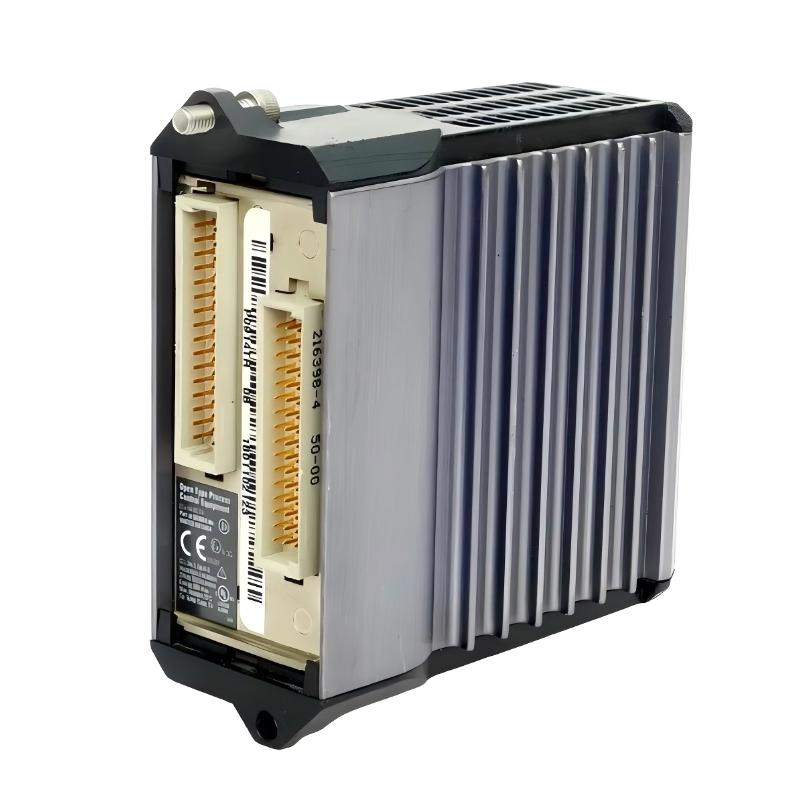
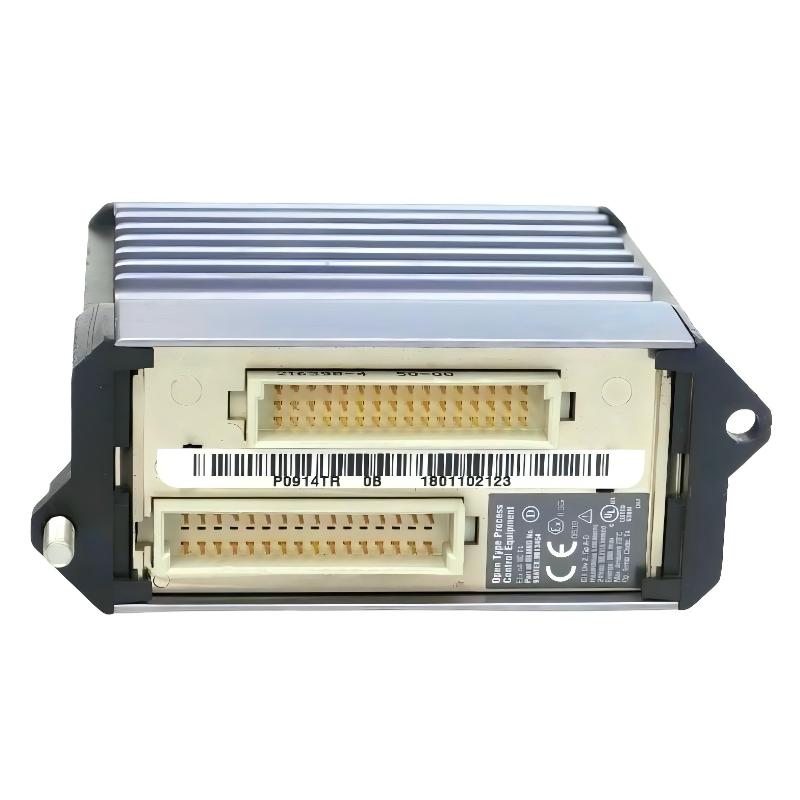
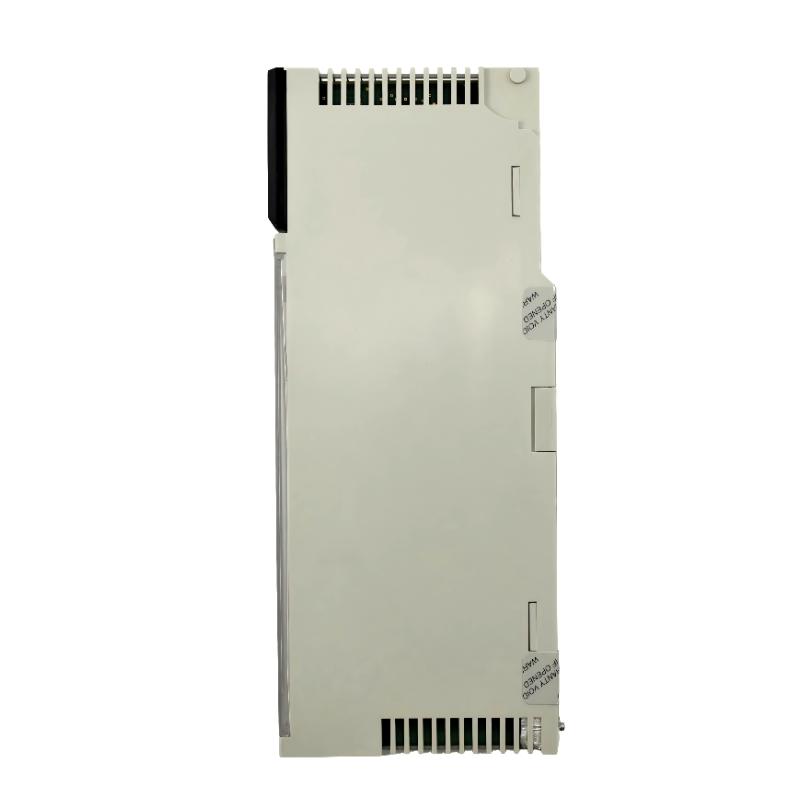
Brand:Foxboro Module Item No.:FBM217 Product Origin:USA Product Dimensions:114 x 45 x 104 mm Product Weight:0.284 kg Payment:T/T, Western Union, Credit Card Goods_stock:15 Shipping Port:Xiamen, China Lead Time:1-3 Days Condition:Brand New And Original Warranty:1 Year Certificate:COO
Discrete signals may represent simple ON/OFF conditions, but they play an important role in industrial automation. Equipment status, alarm contacts, valve positions, permissives, interlocks, and operating states all depend on reliable acquisition of binary field information.
The Foxboro FBM217 P0914TR Discrete Input Interface Module is designed to provide this interface within a Foxboro distributed control system. By collecting discrete field signals and making them available to the DCS, the module helps operators maintain centralized visibility of equipment and process conditions.
In a typical process plant, discrete inputs may come from many different parts of the facility. A pump may provide a running or fault indication, a valve may provide an open or closed position signal, while a pressure switch or other field device may generate an alarm condition. Bringing these signals into the DCS allows them to participate in monitoring, alarm handling, sequencing, permissive logic, and other automation functions.
The FBM217 is also well suited to applications where cabinet efficiency matters. Its compact construction enables a relatively high level of field-interface functionality within a limited installation area.
For system integrators, plant engineers, and maintenance teams, the FBM217 P0914TR offers a practical solution for connecting discrete field information to a Foxboro process-control environment.
Technical Specifications
Parameter
Specification
Brand
Foxboro
Model
FBM217
Part Number
P0914TR
Product Type
Discrete Input Interface Module
I/O Type
Discrete Input
System
Foxboro I/A Series
Application
Process Control and Industrial Automation
Signal Type
Binary / Discrete Field Signals
Installation
Distributed I/O Architecture
Dimensions
114 × 45 × 104 mm
Weight
0.28 kg (0.63 lb)
The supplied dimensions for the Foxboro FBM217 P0914TR are 114 × 45 × 104 mm. The specified weight is 0.284 kg, equivalent to 0.28 kg (0.63 lb) when rounded to two decimal places.
When installing or replacing the module, physical dimensions should be considered together with the electrical characteristics and system architecture. Engineers should verify field termination, signal requirements, module compatibility, DCS configuration, and the specific P0914TR hardware revision before commissioning.
Recommended Related Models
For Foxboro DCS installations requiring different field-interface functions, the following FBM models can be considered alongside the FBM217:
Model
Product Type
Typical Application
Foxboro FBM201
Analog Input Module
Process measurement acquisition
Foxboro FBM202
Analog Output Module
Analog control-loop output
Foxboro FBM203
Discrete Input Module
Binary field-status monitoring
Foxboro FBM204
Discrete Output Module
Discrete control commands
Foxboro FBM216b
HART Communication Input Module
Intelligent analog instrumentation
The appropriate module should be selected according to the required field signal, DCS architecture, termination arrangement, and control strategy. Exact hardware compatibility should be confirmed before substitution.
Popular Related Models
The following Foxboro FBM-series products are also relevant to process automation and distributed I/O projects:
Model
Product Type
Typical Application
Foxboro FBM201
Analog Input Module
Analog process signal acquisition
Foxboro FBM202
Analog Output Module
Analog control and actuator signals
Foxboro FBM203
Discrete Input Module
Equipment and process status monitoring
Foxboro FBM204
Discrete Output Module
Discrete equipment control
Foxboro FBM216b
HART Communication Input Module
HART-enabled field instrumentation
Foxboro FBM217
Discrete Input Interface Module
Discrete field signal acquisition
For Foxboro DCS applications that depend on reliable binary status information, the FBM217 P0914TR is a practical interface option. Its compact design, dedicated discrete-input function, and compatibility with distributed process-control architectures make it well suited to equipment monitoring, alarm acquisition, interlock logic, and plant-wide status management.
Applications
The Foxboro FBM217 P0914TR Discrete Input Interface Module is designed for industrial process control systems that need dependable monitoring of discrete field signals. It provides an interface between field devices and the Foxboro distributed control system, allowing equipment status, switching conditions, alarms, and other binary signals to be incorporated into the control strategy.
Typical applications include oil and gas facilities, chemical plants, refineries, power generation systems, water treatment installations, and general industrial automation. The FBM217 can be used for monitoring equipment running status, valve positions, limit switches, alarm contacts, interlocks, and other discrete field conditions.
Its compact FBM format makes it suitable for distributed I/O installations where cabinet space, signal organization, and reliable communication with the control system are important considerations.
For plant modernization projects, the FBM217 P0914TR can also provide a practical interface for bringing discrete field information into an established Foxboro control architecture.
Built for Reliable Discrete Signal Monitoring
Reliable Field Status Acquisition
The FBM217 provides a dedicated interface for discrete signals, allowing the DCS to monitor the operating state of field equipment and process devices.
Broad Industrial Application
Discrete inputs are fundamental to many automation systems. The module can support signals associated with switches, contacts, equipment status, alarms, and interlock circuits.
Efficient DCS Integration
As an FBM-series interface module, the FBM217 is designed for integration into a Foxboro distributed control system, helping organize field signals within the plant's overall automation architecture.
Practical for Process Plants
Continuous-process facilities often require a large number of discrete status points. The FBM217 provides a structured way to bring these signals into the control environment.
Compact Installation
The 114 × 45 × 104 mm form factor allows the module to be incorporated into distributed I/O cabinets without requiring excessive installation space.
Useful for Retrofit Work
For maintenance teams and system integrators working on existing Foxboro installations, the FBM217 can be a practical choice when additional discrete input capacity or replacement hardware is required.
Improved Operational Visibility
Bringing discrete equipment states into the DCS allows operators to monitor field conditions centrally and use these signals as part of alarms, sequences, permissives, and interlock logic.
Technical FAQs
1. What is the primary function of the Foxboro FBM217 P0914TR?
The FBM217 P0914TR is a discrete input interface module used to acquire binary field signals and make those signals available to the Foxboro distributed control system.
2. What types of field devices can provide signals to the FBM217?
Typical sources include limit switches, auxiliary contacts, equipment status contacts, alarm contacts, position switches, and other compatible discrete devices.
3. What is the difference between a discrete input and an analog input?
A discrete input normally represents a defined state such as ON/OFF, open/closed, or running/stopped. An analog input represents a continuously variable process value such as pressure, temperature, flow, or level.
4. Can the FBM217 be used for equipment status monitoring?
Yes. Monitoring equipment status is one of the common applications for discrete input interfaces. Signals such as motor running status, valve position, breaker status, or pump availability can be incorporated into the DCS when the field circuits are properly designed.
5. Can discrete inputs be used in alarm logic?
Yes. Discrete field signals can be used by the control system as alarm conditions, permissives, sequence inputs, or interlock information, depending on the overall control-system configuration.
6. What should be checked if a discrete input remains in the wrong state?
Check the field device first, followed by wiring continuity, terminal connections, signal polarity, field power, channel configuration, and the corresponding DCS indication. The input circuit should also be checked for loose or damaged connections.
7. Can the FBM217 be used with safety-related signals?
The suitability of the FBM217 for a particular safety function depends on the complete system architecture and applicable safety requirements. A standard DCS input module should not automatically be considered a certified safety I/O solution.
8. What is important when configuring a discrete input channel?
The signal type, field-device behavior, channel assignment, input logic, alarm requirements, and DCS database configuration should all be verified. Correct configuration ensures that the physical field state is represented properly in the control system.
9. Can the FBM217 be used in an existing Foxboro DCS?
It can be used when the specific FBM217 version, P0914TR part number, system hardware, termination arrangement, and software configuration are compatible with the existing Foxboro installation.
10. What should be verified before replacing an FBM217?
Confirm the complete model and part number, I/O function, field wiring, termination hardware, system compatibility, configuration requirements, and any redundancy or availability requirements. A similar-looking module should not be substituted without verifying its electrical and system compatibility.