Siemens

  1. Home
  2. Products
  3. Siemens
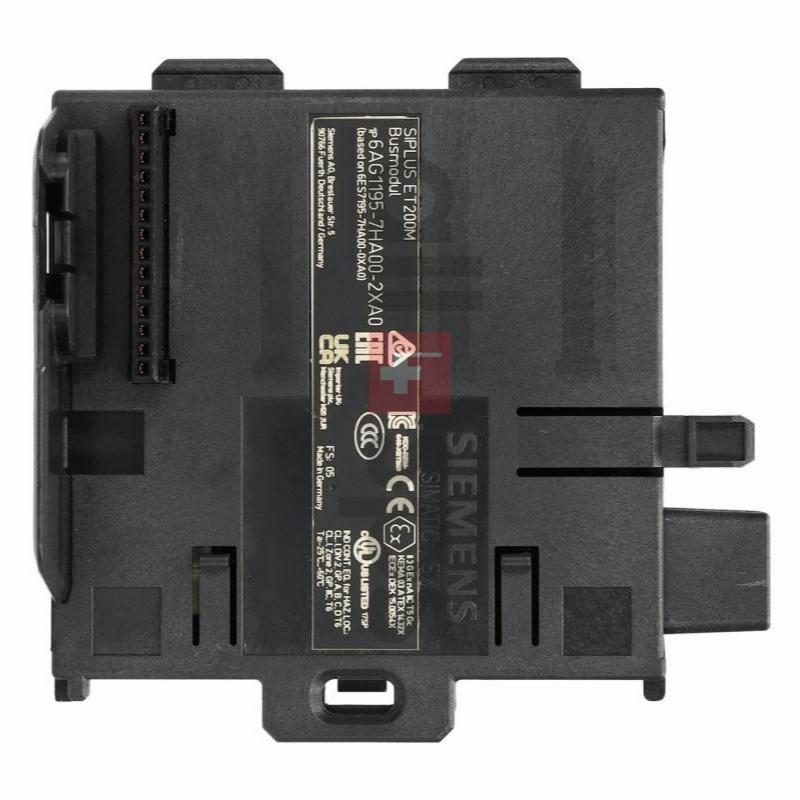
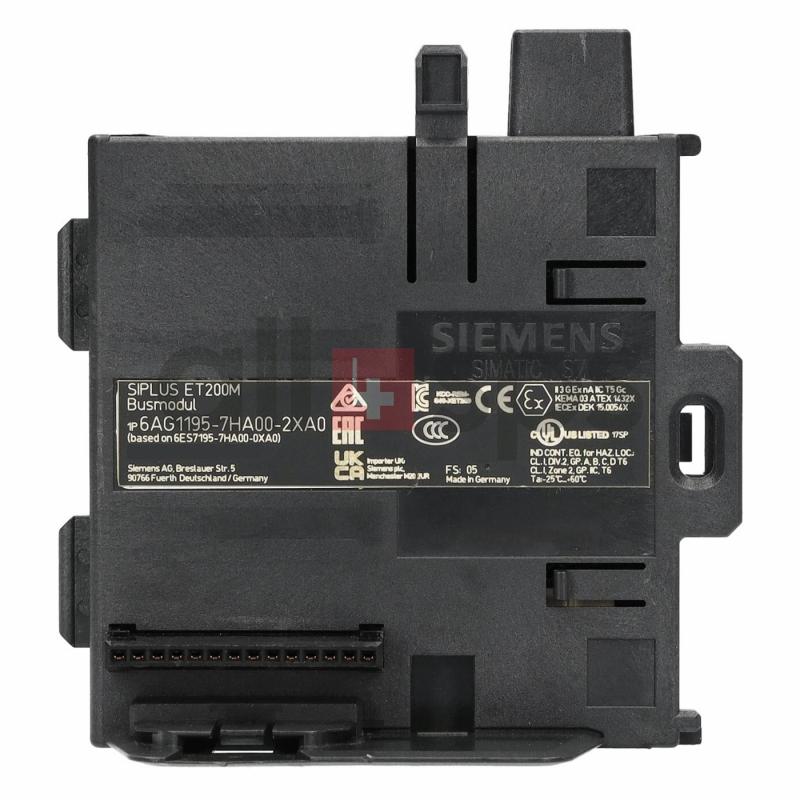
  4. Siemens 6AG1195-7HA00-2XA0 Active Bus Module
Siemens 6AG1195-7HA00-2XA0 Active Bus Module

Siemens 6AG1195-7HA00-2XA0 Active Bus Module

0.0
Points

Brand:Siemens
Item No.:6AG1195-7HA00-2XA0
Product Origin:Germany
Product Dimensions:97 × 92 × 30 mm
Product Weight:0.111 kg
Payment:T/T, Western Union, Credit Card
Goods_stock:15
Shipping Port:Xiamen, China
Lead Time:1-3 Days
Condition:Brand New And Original
Warranty:1 Year
Certificate:COO

Add to cart


Introduction

The Siemens 6AG1195-7HA00-2XA0 Active Bus Module is a compact industrial automation component developed for modular system architectures. Unlike a CPU or conventional I/O module, its purpose is to support the bus structure that allows compatible automation components to operate together as an integrated station.

In modern distributed automation, the quality of the communication infrastructure is just as important as the individual controller and I/O modules. A properly selected active bus component helps maintain an organized system architecture while providing the connection required for compatible modules to exchange data through the station's internal bus structure.

The 6AG1195-7HA00-2XA0 measures 97 × 92 × 30 mm and weighs 0.11 kg (0.24 lb). Its compact footprint makes it well suited to installations where control-panel space is limited and modular equipment needs to be arranged efficiently.

For OEM machine builders, system integrators, panel manufacturers, and industrial maintenance teams, this Active Bus Module can be a valuable replacement or system-building component when working with compatible Siemens automation equipment. Selecting the correct original part number is especially important when maintaining an established automation station, as bus architecture and module compatibility must match the existing configuration.


Technical Specifications

SpecificationDetails
ProductSiemens 6AG1195-7HA00-2XA0
Product TypeActive Bus Module
Main FunctionActive bus integration
ApplicationModular industrial automation
InstallationCompatible Siemens modular system
Dimensions (W × H × D)97 × 92 × 30 mm
Weight0.11 kg (0.24 lb)
DesignCompact industrial module
Typical UseDistributed I/O and modular automation architecture

The 97 × 92 × 30 mm dimensions provide a compact installation profile, while the 0.11 kg (0.24 lb) weight makes the module easy to handle during panel assembly, replacement, and maintenance operations.


Recommended Related Models

When developing or maintaining a Siemens modular automation station, the following components can be considered alongside the 6AG1195-7HA00-2XA0, subject to system compatibility:

ModelProduct TypeTypical Role
Siemens 6AG1195-7HA00-2XA0Active Bus ModuleActive modular bus connection
Siemens 6AG1193-6BP40-7DA1Base UnitModule mounting and system connection
Siemens 6AG1193-6PA00-7AA0Terminal ModuleStation termination
Siemens 6AG1155 seriesInterface ModuleDistributed I/O network interface
Siemens 6AG1131 seriesDigital Input ModuleDigital field signal acquisition

Popular Related Models

For system upgrades, spare-parts planning, and industrial automation maintenance, these related Siemens components may also be relevant:

ModelProduct TypeApplication
Siemens 6AG1195-7HA00-2XA0Active Bus ModuleModular bus architecture
Siemens 6AG1193-6BP40-7DA1Base UnitET 200SP modular installation
Siemens 6AG1193-6PA00-7AA0Terminal ModuleStation termination
Siemens 6AG1155-6AU02-7BN0Interface ModuleDistributed I/O communication
Siemens 6AG1193-6AR00-7AA0Bus AdapterNetwork connection


Applications

The Siemens 6AG1195-7HA00-2XA0 Active Bus Module is designed for use in modular industrial automation architectures where reliable backplane communication and flexible station configuration are essential. As an active bus component, it supports the integration of compatible modules within Siemens distributed I/O systems.

This type of bus module is particularly valuable in applications that require modular expansion, structured cabinet installation, and dependable communication between automation components. Typical environments include factory automation, machine building, process control, production equipment, and distributed I/O installations.

The compact design is also advantageous for control panels with limited available space. By providing an active connection point within the modular architecture, the 6AG1195-7HA00-2XA0 helps engineers create scalable automation stations without unnecessarily increasing cabinet complexity.


Advantages

Active bus architecture
The 6AG1195-7HA00-2XA0 provides an active bus connection within a compatible Siemens modular automation system, supporting structured communication between installed components.

Flexible station design
Its active bus functionality is well suited to modular architectures where automation stations may need to be expanded, rearranged, or maintained over their service life.

Compact industrial construction
Measuring only 97 × 92 × 30 mm, the module occupies relatively little cabinet space while providing an important system-level function.

Efficient modular integration
The component is designed to work as part of a larger Siemens automation architecture rather than as a standalone controller, making it useful for organized distributed system designs.

Suitable for demanding automation applications
Its SIPLUS-oriented product designation makes it an attractive choice for industrial applications where environmental robustness and dependable system integration are important purchasing factors.

Maintenance-friendly system architecture
An active bus module can simplify the organization of modular stations and make troubleshooting more systematic when the complete hardware configuration is properly documented.


Technical FAQs

1. What is the primary purpose of the Siemens 6AG1195-7HA00-2XA0?
The 6AG1195-7HA00-2XA0 is an Active Bus Module used within compatible Siemens modular automation architectures. Its primary role is to establish an active bus connection between system components.

2. Is the 6AG1195-7HA00-2XA0 a PLC CPU?
No. It is not a programmable controller or CPU module. It is a system-level bus component that supports communication and integration between compatible modular components.

3. What is the benefit of using an active bus module?
An active bus module provides the electrical and communication infrastructure needed for compatible modular components to operate as part of an integrated station. This can support flexible station configuration and expansion.

4. Does the module process analog or digital field signals?
No. It is not a conventional analog or digital I/O module. Field signal acquisition and output are handled by the appropriate I/O modules installed in the automation system.

5. Can the 6AG1195-7HA00-2XA0 be installed in any Siemens I/O station?
No. Compatibility depends on the specific Siemens system architecture and module family. The complete station configuration should be checked before installation or replacement.

6. What should engineers verify before replacing an active bus module?
The complete article number, compatible system family, station configuration, mechanical installation arrangement, bus architecture, and environmental requirements should be verified before replacement.

7. Can a faulty bus module affect multiple automation modules?
Yes. Because the bus module participates in the system communication architecture, a malfunction can potentially interrupt communication or prevent correctly configured modules from operating as expected.

8. What symptoms may indicate a bus-module problem?
Possible symptoms include communication faults, unexpected module diagnostic indications, loss of connection with downstream components, or failure of part of a modular station to initialize correctly. System diagnostics should be checked before replacing hardware.

9. Is the 6AG1195-7HA00-2XA0 suitable for system expansion?
Where supported by the relevant Siemens architecture, an active bus module can form part of a modular expansion strategy. The allowable station configuration and module compatibility should be confirmed during system planning.

10. How can the reliability of an active bus connection be maintained?
Use the correct compatible components, ensure proper mechanical installation, keep connections clean and secure, follow the specified installation sequence, and use controller and station diagnostics to identify communication problems during commissioning and maintenance.


Look forward to your comments!Comment
Latest comments
Tags:
Need Assistance? Chat with Us on WhatsApp!
Need Assistance? Click to Inquire
Back to top