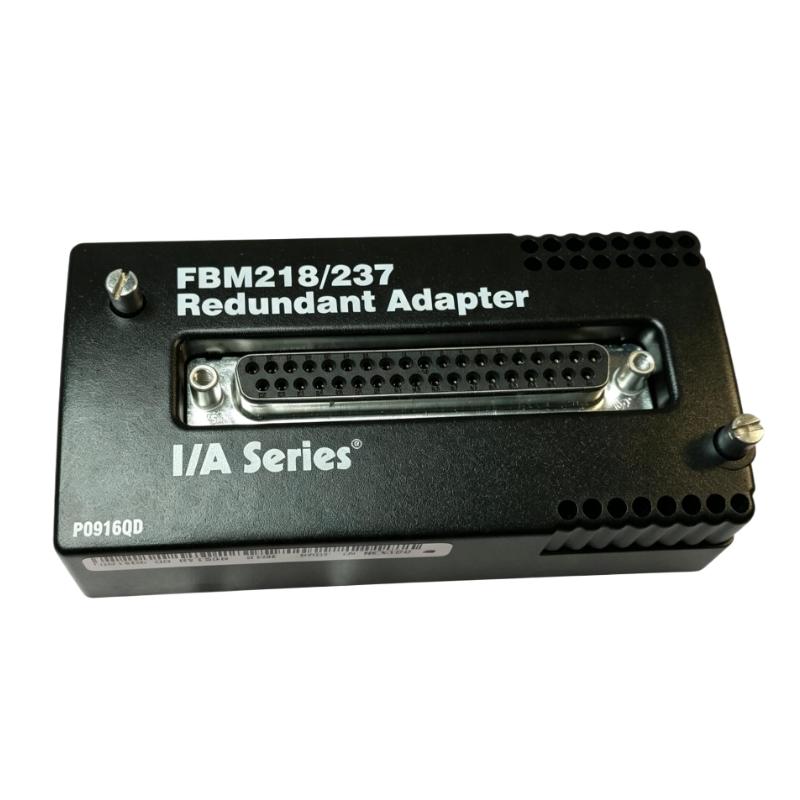
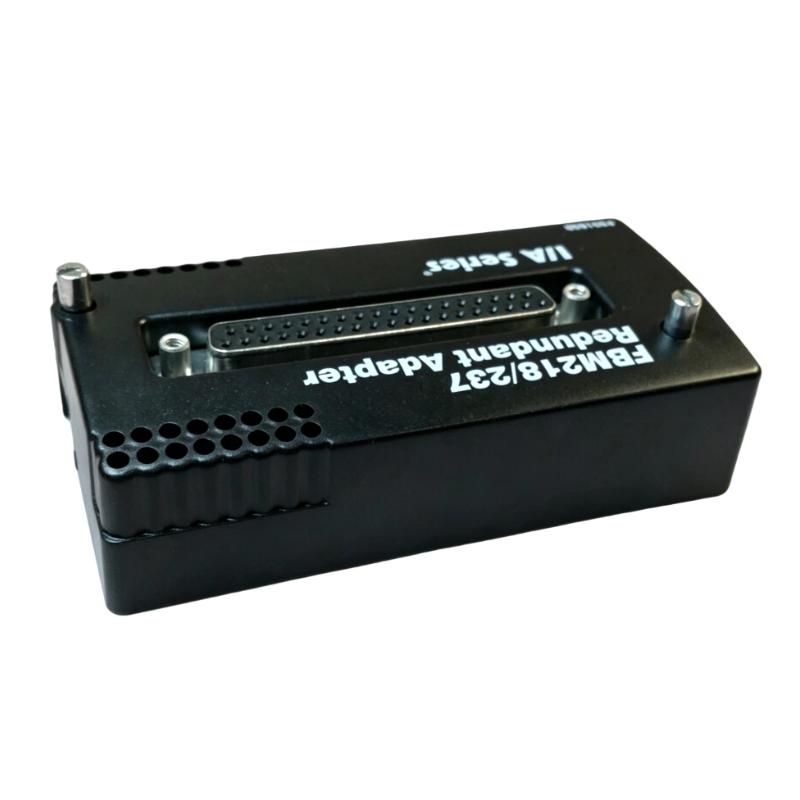
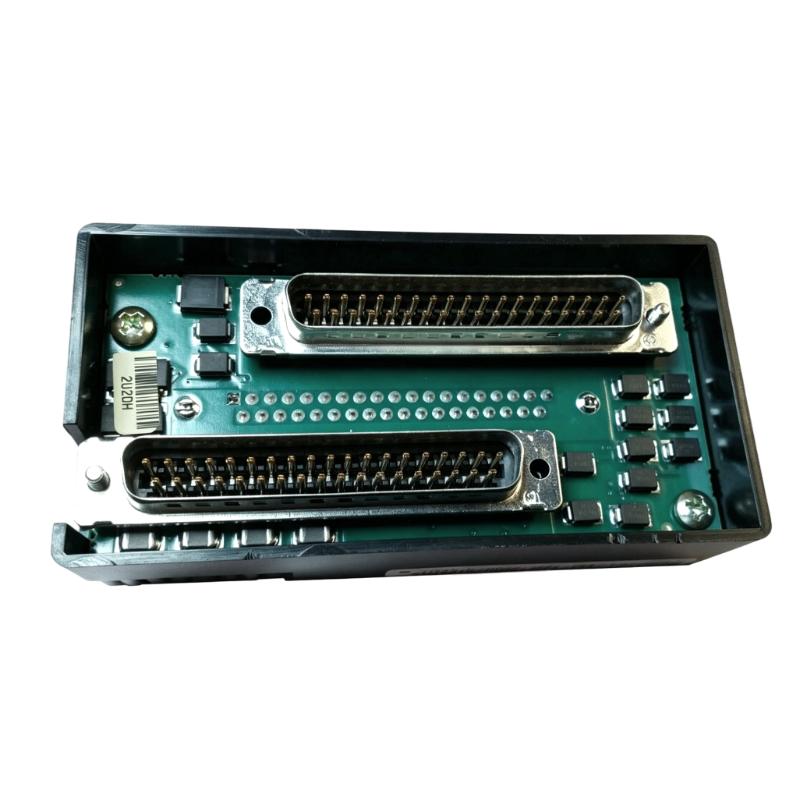
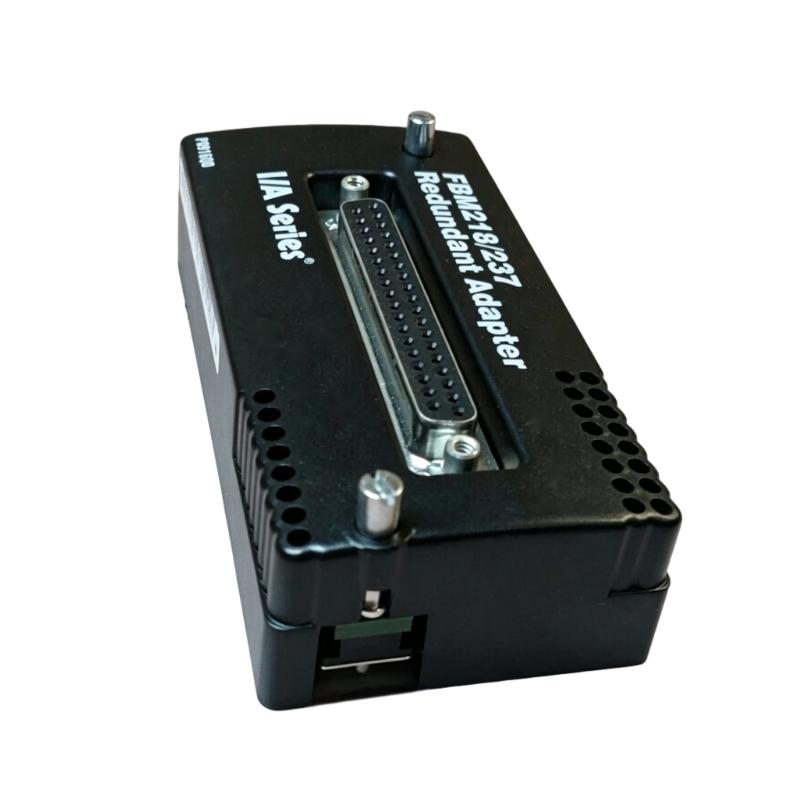
Brand:Foxboro Module Item No.:FBM218/237 Product Origin:USA Product Dimensions:110 x 23 x 80 mm Product Weight:0.2 kg Payment:T/T, Western Union, Credit Card Goods_stock:15 Shipping Port:Xiamen, China Lead Time:1-3 Days Condition:Brand New And Original Warranty:1 Year Certificate:COO
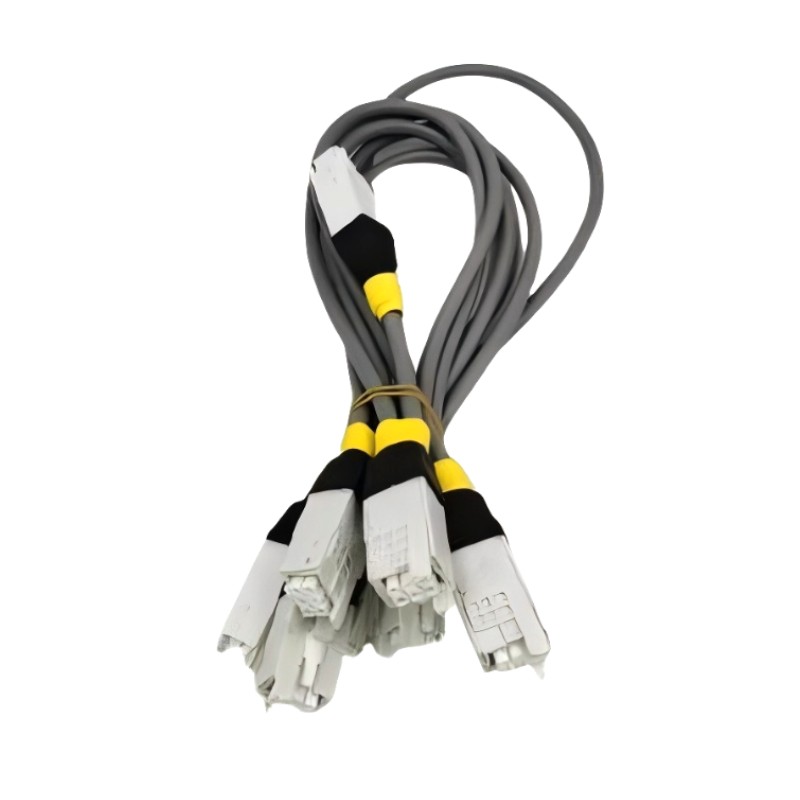
Foxboro FBM218/237 P0916QD Redundancy Adapter is an industrial automation component designed to support reliable high-availability control system architectures. It provides an effective connection solution for redundant module configurations, helping improve process control stability and operational efficiency.
In modern process automation environments, uninterrupted operation is essential for maintaining productivity and safety. This redundancy adapter helps strengthen system reliability by supporting coordinated operation between compatible Foxboro control modules.
Designed for professional DCS applications, Foxboro FBM218/237 P0916QD combines reliable connectivity, compact installation characteristics, and efficient system integration. It is suitable for automation maintenance projects, control system upgrades, and high-reliability process applications.
Technical Specifications and Product Data
Parameter
Specification
Manufacturer
Foxboro
Model
FBM218/237 P0916QD
Product Type
Redundancy Adapter
Application
Distributed Control System Redundant Configuration
Compatible Platform
Foxboro DCS / I/A Series Systems
Function
Redundant Module Interface Support
Dimensions
110 × 23 × 80 mm
Weight
0.20 kg (0.44 lb)
Installation Type
Industrial Control System Integration
Application Area
Process Automation, DCS, Critical Control Systems
Recommended Related Models
Model
Product Type
Foxboro FBM216 P0917XQ
Redundancy Adapter
Foxboro FBM218 P0916QD
Redundancy Adapter Module
Foxboro FBM237 P0916QD
Redundant Interface Module
Foxboro FBM Series Redundancy Components
DCS System Accessory
Popular Related Models
Model
Product Type
Foxboro FBM201 P0914SQ
Analog Input Module
Foxboro FBM202 P0914ST
Analog Output Module
Foxboro FBM203 P0914SY
Digital Input Module
Foxboro FCP280 Control Processor
DCS Control Processor
Process Automation Applications and High-Availability Integration
Foxboro FBM218/237 P0916QD Redundancy Adapter is a dedicated automation system accessory designed to support redundant configurations within Foxboro distributed control system architectures. It provides reliable interface capability between redundant modules, helping improve system availability and maintain stable control performance in critical industrial applications.
This redundancy adapter is widely used in process industries including oil and gas, chemical processing, power generation, refining, and large-scale manufacturing facilities. It supports high-availability control strategies where continuous operation, fault tolerance, and reliable module communication are essential.
With its compact form factor and dependable integration capability, Foxboro FBM218/237 P0916QD helps engineers build more resilient control systems while simplifying redundancy configuration and maintenance activities.
Reliability Advantages and System Features
Foxboro FBM218/237 P0916QD Redundancy Adapter is designed to enhance distributed control system stability by supporting redundant communication structures. It provides a practical solution for improving operational continuity and reducing the impact of individual module interruptions.
Advantage
Description
Enhanced System Availability
Supports redundant architectures for continuous process operation
Reliable Module Interface
Provides stable connection between compatible control modules
Improved Fault Tolerance
Helps maintain system performance during component-related issues
Compact Industrial Design
Enables efficient installation within control system layouts
Easy System Maintenance
Supports replacement and upgrade requirements in DCS environments
By improving redundancy management within Foxboro systems, this adapter helps process engineers achieve higher equipment availability and more reliable automation performance in demanding industrial applications.
Technical FAQs – Engineering Questions & Answers
1. What is the main function of the Foxboro FBM218/237 P0916QD?
The FBM218/237 P0916QD provides redundancy interface functionality, allowing compatible Foxboro modules to operate within redundant control system configurations.
2. Why are redundancy adapters important in DCS systems?
Redundancy adapters help maintain system continuity by supporting backup communication paths and improving protection against individual module failures.
3. Which control systems use Foxboro FBM218/237 P0916QD?
It is designed for Foxboro distributed control system environments, particularly applications requiring high availability and reliable module coordination.
4. How does redundancy improve industrial process reliability?
Redundant architectures allow critical control functions to continue operating when a primary component experiences a fault or requires maintenance.
5. What should be confirmed before installing this redundancy adapter?
Engineers should verify module compatibility, system architecture, wiring configuration, and redundancy settings before installation.
6. What problems may occur if redundancy configuration is incorrect?
Incorrect configuration may result in communication failures, improper module switching, or reduced system availability.
7. How can the redundancy adapter be diagnosed during troubleshooting?
Diagnosis typically includes checking system status information, communication conditions, module indicators, and control system alarms.
8. Can the adapter support continuous process operation strategies?
Yes. It is designed for applications where maintaining stable control operation and minimizing downtime are important requirements.
9. What industries commonly use redundant control systems?
Industries such as energy, chemical processing, oil and gas, pharmaceuticals, and manufacturing frequently use redundant automation systems.
10. What maintenance practices help ensure reliable redundancy performance?
Regular inspection of system configuration, module status, communication connections, and diagnostic information helps maintain stable operation.