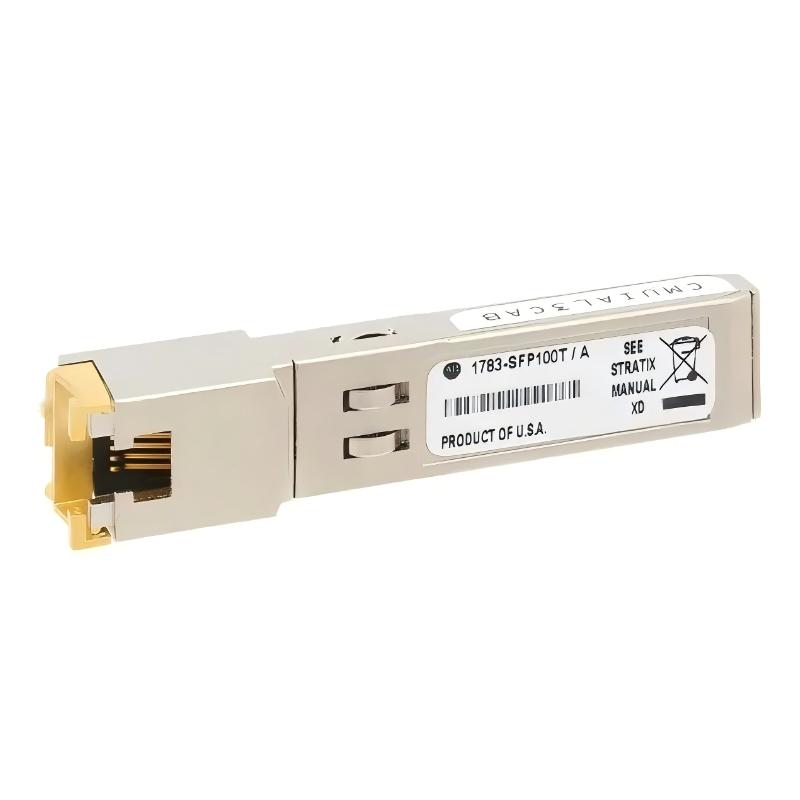
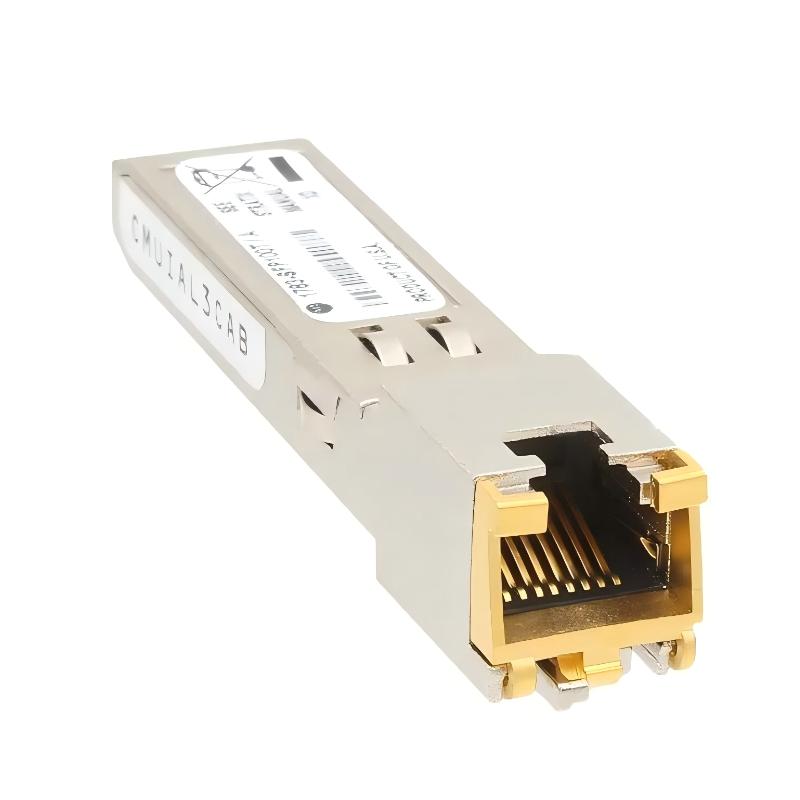
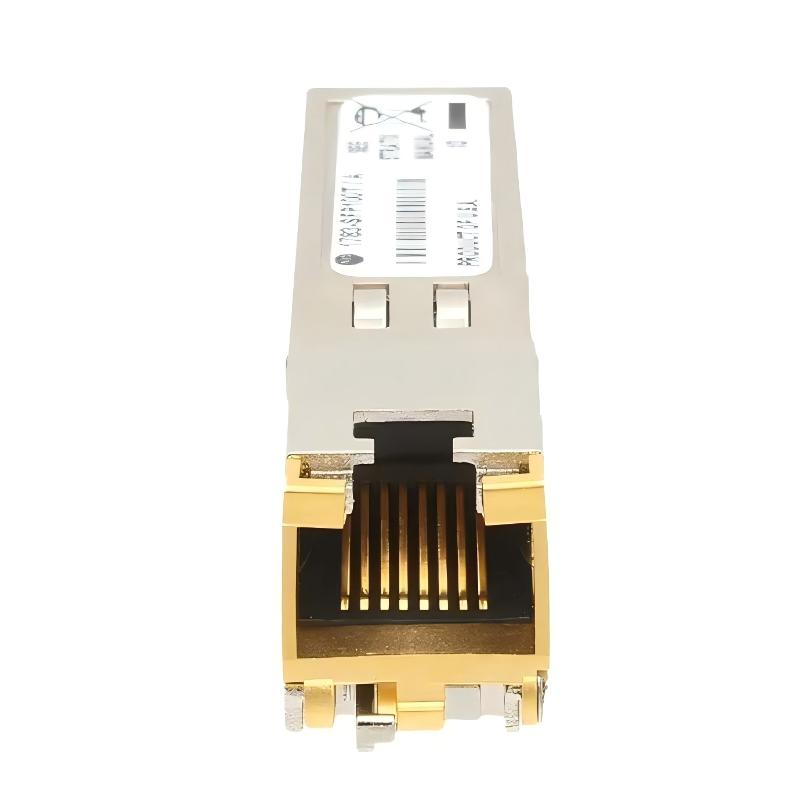
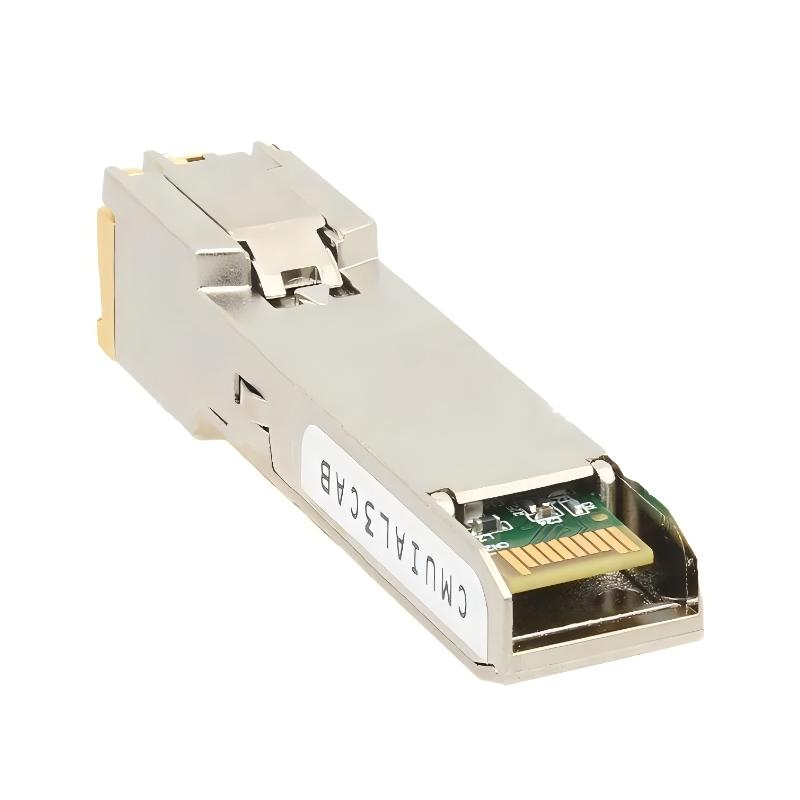
Allen Bradley 1783-SFP100T Stratix SFP Fiber-Optic Transceivers
Allen Bradley 1783-SFP100T Stratix SFP Fiber-Optic Transceivers
0.0
Points
Brand:Allen Bradley PLC Item No.:1783-SFP100T Product Origin:USA Product Dimensions:90 × 25 × 50 mm Product Weight:0.2 kg Payment:T/T, Western Union, Credit Card Goods_stock:15 Shipping Port:Xiamen, China Lead Time:1-3 Days Condition:Brand New And Original Warranty:1 Year Certificate:COO
The Allen Bradley 1783-SFP100T Stratix SFP Fiber-Optic Transceiver is a networking component identified for use in industrial Ethernet environments. SFP transceivers provide a modular approach to network interfaces, allowing compatible switches to support different connection options according to the installed module and network design.
For industrial automation systems, selecting the correct transceiver is important for maintaining communication between network devices and minimizing unplanned downtime. Before purchasing or installing the 1783-SFP100T, confirm the exact media type, interface specifications, supported data rate, and host-switch compatibility using the manufacturer's documentation. These checks help ensure that the selected component meets the requirements of the existing network.
Technical Specifications
Parameter
Specification
Brand
Allen Bradley
Product Family
Stratix
Model
1783-SFP100T
Product Type
SFP Transceiver
Listed Description
Stratix SFP Fiber-Optic Transceiver
Dimensions
90 × 25 × 50 mm
Weight
0.20 kg (0.44 lb)
Application
Industrial Ethernet networking
Host Compatibility
Verify against the supported transceiver list for the target device
Media Type
Confirm with manufacturer documentation
Data Rate
Confirm with manufacturer documentation
Connector Type
Confirm with manufacturer documentation
Note: The supplied dimensions and weight are retained as provided. Verify the physical dimensions, interface type, and technical ratings against the official product documentation before ordering.
Recommended Related Models
The following Allen-Bradley Stratix products may be relevant when planning or maintaining an industrial Ethernet network. They are related networking components, not necessarily direct substitutes for the 1783-SFP100T.
Model
Product Category
Selection Consideration
1783-SFP100FX
SFP Transceiver
Compare interface type and supported media
1783-SFP1GSX
SFP Transceiver
Verify data rate, fiber type, and host compatibility
1783-SFP1GLX
SFP Transceiver
Check optical specifications and transmission requirements
1783-SFP1GSX10
SFP Transceiver
Confirm supported link characteristics and switch compatibility
Confirm each catalog number's current specifications and compatibility before selecting a replacement.
Popular Related Models
These Allen-Bradley Stratix networking products may also be useful when configuring or expanding an industrial Ethernet network.
Model
Product Type
Typical Application
1783-BMS10CA
Stratix Ethernet Switch
Industrial Ethernet switching
1783-BMS20CL
Stratix Ethernet Switch
Industrial network connectivity
1783-MS10T
Stratix Ethernet Switch
Industrial network distribution
1783-ETAP
Ethernet/IP Tap
Network access and topology support in compatible systems
1783-NATR
Network Address Translation Device
Network address translation for supported industrial networks
Select networking components based on the required topology, port configuration, network protocol, and environmental conditions. Verify the exact model specifications before purchase or installation.
Applications
The Allen Bradley 1783-SFP100T Stratix SFP Fiber-Optic Transceiver is a network connectivity component associated with industrial Ethernet infrastructure. Small form-factor pluggable (SFP) modules are used to provide a physical network interface in compatible switches and networking equipment.
Factory Automation: Connecting network infrastructure used by PLCs, HMIs, industrial computers, and other automation devices.
Control System Networking: Supporting communication infrastructure between automation network components.
Industrial Network Expansion: Providing an interface option when configuring or maintaining supported Stratix network equipment.
Maintenance and Replacement: Replacing a transceiver with the same approved part number when servicing existing network installations.
Before installation, verify the exact transceiver type, supported media, network speed, connector, and compatibility with the target switch. The model designation alone should not be used to assume fiber-optic specifications.
Key Features and Benefits
Compact SFP Form Factor: Designed around a pluggable transceiver format for compatible networking hardware.
Industrial Network Integration: Intended for consideration within supported industrial Ethernet infrastructure.
Flexible Network Configuration: SFP-based equipment can support different interface options depending on the transceiver and host device.
Serviceability: A removable transceiver format can simplify replacement and maintenance when the host equipment supports it.
Model-Specific Identification: The full catalog number helps reduce confusion when sourcing replacement networking components.
Important: Confirm the manufacturer's specifications for the 1783-SFP100T before determining whether it is a copper or optical transceiver, which media it supports, and what data rate or transmission distance applies.
Technical FAQs
Q1: What is the Allen Bradley 1783-SFP100T?
It is a cataloged Stratix SFP transceiver model associated with Allen-Bradley industrial networking equipment. Consult the relevant product documentation to confirm its exact interface and supported applications.
Q2: What does SFP mean in industrial networking?
SFP stands for Small Form-factor Pluggable. It is a compact, removable transceiver format used to provide a network interface in compatible switches and other networking devices.
Q3: Is this model compatible with every Stratix switch?
No. Compatibility depends on the host switch model, supported transceiver list, software or firmware requirements, and interface specifications. Check the switch documentation before installation.
Q4: How can I determine whether the transceiver supports copper or fiber?
Check the official datasheet and product label for the media type, connector, wavelength where applicable, and supported cable specifications. Do not infer the media type from the SFP form factor alone.
Q5: What information is important when selecting a replacement transceiver?
Verify the exact part number, host device compatibility, interface type, supported data rate, connector, transmission medium, and applicable distance limitations.
Q6: Does the transceiver determine the network speed?
The transceiver's supported data rate is one factor. The host switch port, network configuration, connected equipment, and cabling must also support the intended speed.
Q7: Can an SFP transceiver be replaced while the switch is powered on?
Hot-swapping depends on the specific host equipment and the manufacturer's instructions. Follow the switch's installation and safety guidance rather than assuming that powered replacement is supported.
Q8: What are common causes of a transceiver link failure?
Potential causes include incompatible transceivers, incorrect cabling, dirty or damaged connectors, unsupported interface settings, and faults at the remote network device. Check device indicators and diagnostics to narrow down the issue.
Q9: Does this transceiver require special configuration?
The required setup depends on the host switch and interface. Some installations work once a compatible module and cable are installed, while others may require port configuration or troubleshooting.
Q10: How should an SFP transceiver be handled during maintenance?
Follow the manufacturer's handling instructions, avoid touching exposed contacts, protect optical interfaces from dust where applicable, and use suitable electrostatic-discharge precautions when required.