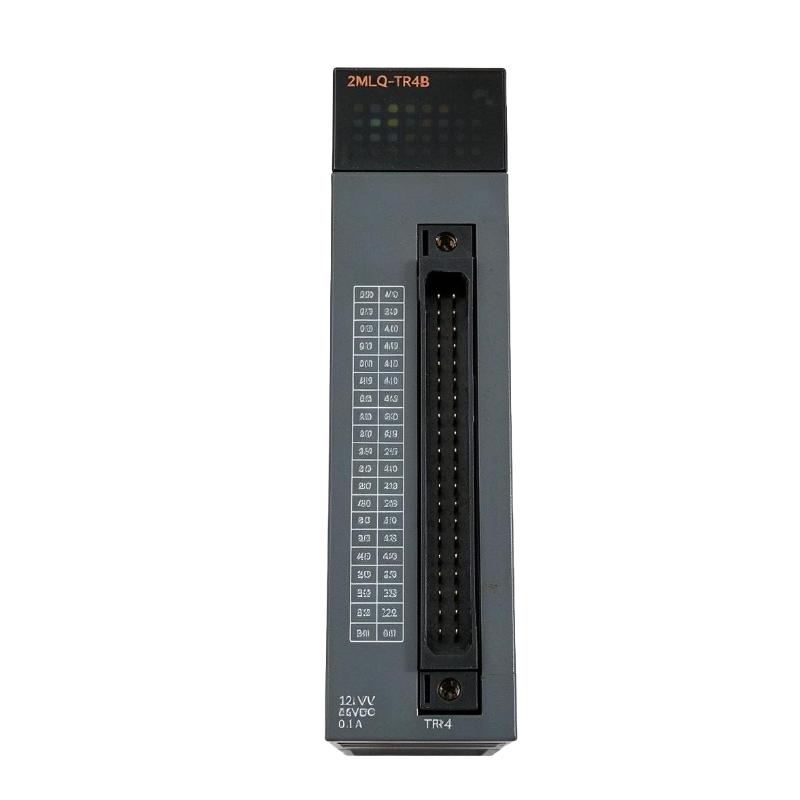
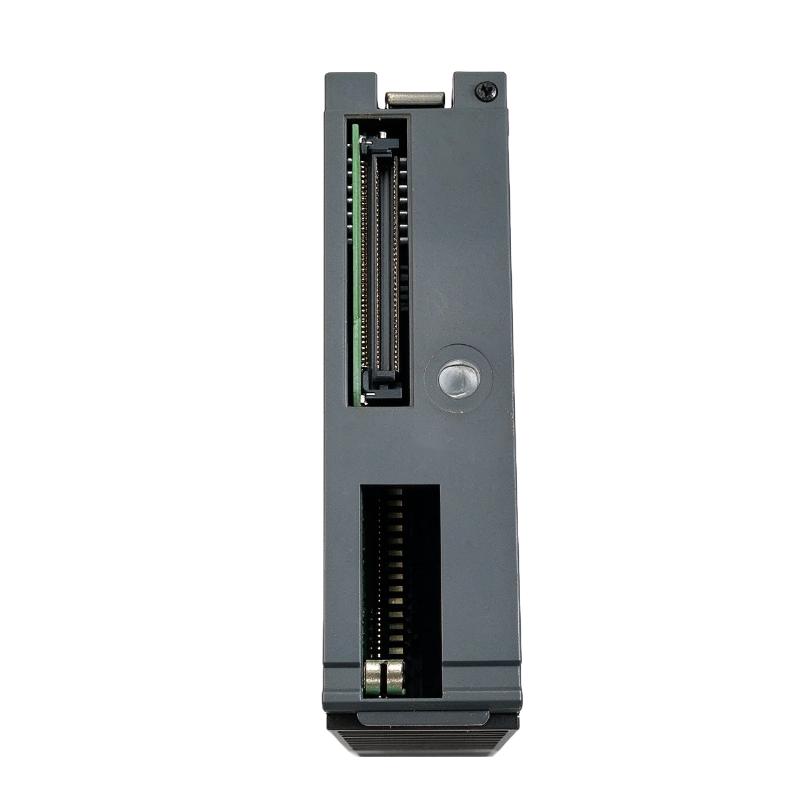
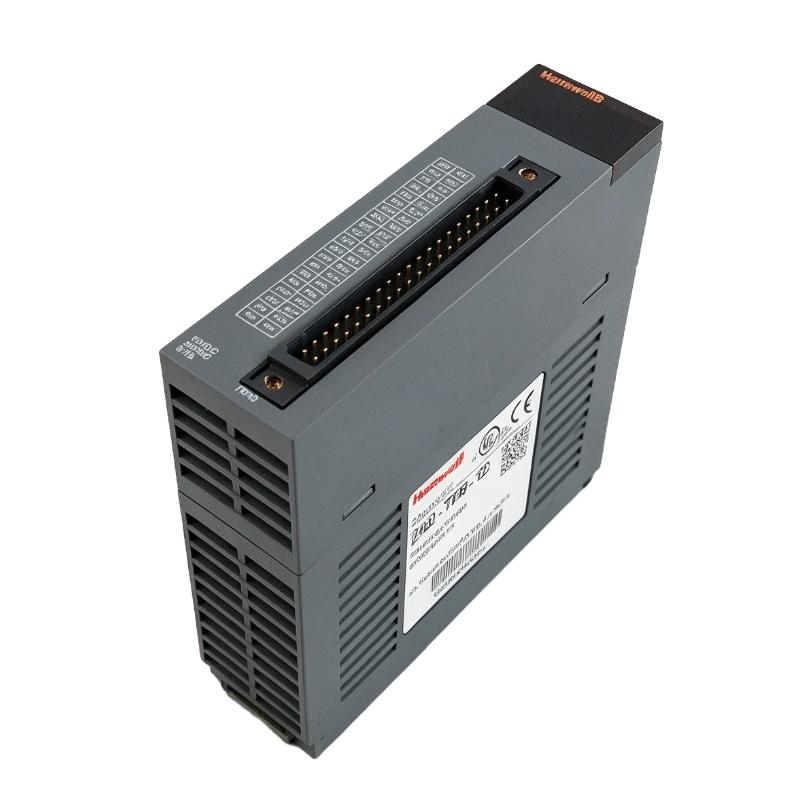
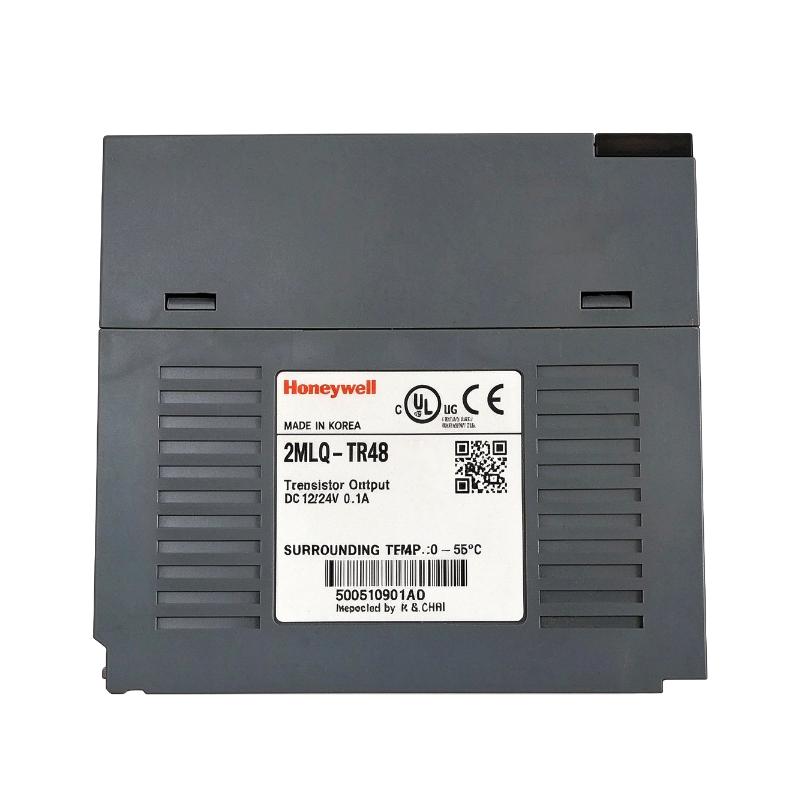
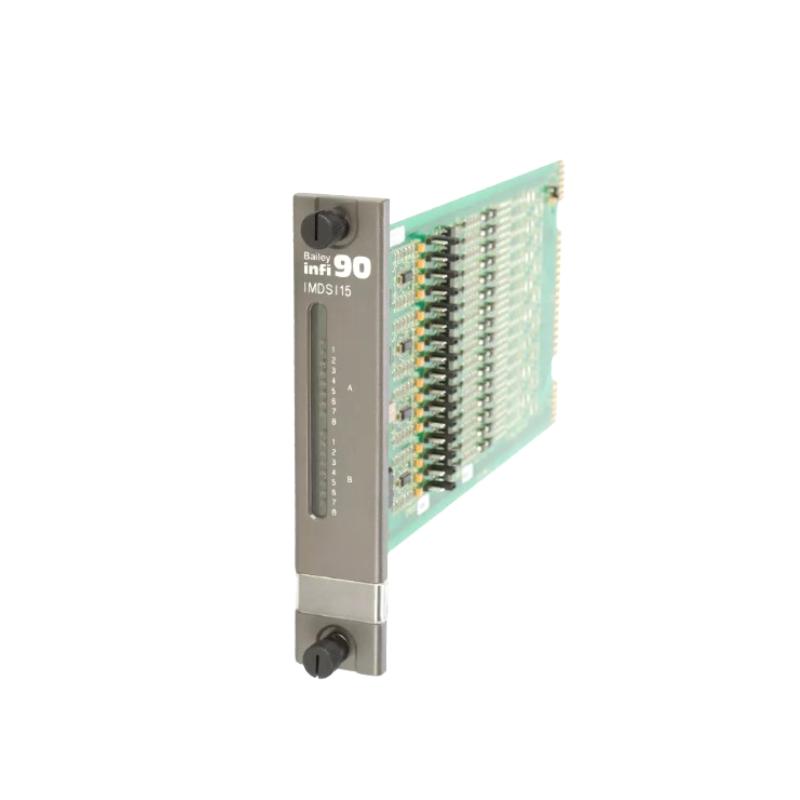
Brand:Honeywell DCS Item No.:2MLQ-TR4B Product Origin:USA Product Dimensions:114 × 48 × 127 mm Product Weight:0.1 kg Payment:T/T, Western Union, Credit Card Goods_stock:15 Shipping Port:Xiamen, China Lead Time:1-3 Days Condition:Brand New And Original Warranty:1 Year Certificate:COO
In a modern automation cabinet, digital output modules are responsible for turning PLC logic into physical actions. The Honeywell 2MLQ-TR4B addresses this requirement with a 32-point transistor output configuration intended for MasterLogic-200 systems.
Its primary role is to provide controlled digital switching between the PLC system and compatible field equipment. In a typical installation, the PLC program determines when an output should operate, while the 2MLQ-TR4B provides the corresponding electrical switching interface to the connected device.
The transistor-based architecture is particularly useful for machinery and automation applications in which outputs may change state repeatedly during production. Compared with mechanical relay switching, semiconductor outputs can provide a more appropriate solution for many high-cycle DC control tasks.
The 2MLQ-TR4B also offers a practical channel count for applications that need numerous discrete outputs. Instead of spreading control points across several smaller modules, engineers can consolidate up to 32 output signals within one module, helping create a cleaner and more organized I/O design.
For system integrators, OEMs, and maintenance teams working with Honeywell MasterLogic-200 equipment, the 2MLQ-TR4B is a valuable component for expanding, maintaining, or replacing transistor-based digital output capacity.
Technical Specifications
Parameter
Specification
Brand
Honeywell
Model
2MLQ-TR4B
Product Type
Transistor Output Module
PLC Platform
MasterLogic-200
Output Type
Digital Transistor Output
Number of Output Points
32
Output Technology
Solid-State Transistor
Application
Industrial Digital Output Control
Field Circuit
DC Control
Output Status
LED Indication
Module Function
Discrete Field Device Control
Dimensions
114 × 48 × 127 mm
Weight
0.10 kg (0.22 lb)
Recommended Related Models
Model
Product Type
Typical Role
Honeywell 2MLQ-TR4A
Transistor Output Module
Alternative 32-point transistor output configuration
Honeywell 2MLQ-TR2A
Transistor Output Module
Lower-density transistor output solution
Honeywell 2MLQ-TR8A
Transistor Output Module
Higher-density transistor output solution
Honeywell 2MLQ-RY2A
Relay Output Module
Mechanical relay output alternative
Honeywell 2MLQ-RY2B
Relay Output Module
Alternative relay output configuration
Honeywell 2MLQ-SS2A
Triac Output Module
Solid-state AC output alternative
Popular Related Models
Model
Product Type
Honeywell 2MLI-D24A
Digital Input Module
Honeywell 2MLI-D24B
Digital Input Module
Honeywell 2MLI-D28A
Digital Input Module
Honeywell 2MLQ-TR2A
Transistor Output Module
Honeywell 2MLQ-TR4A
Transistor Output Module
Honeywell 2MLQ-TR8A
Transistor Output Module
Honeywell 2MLQ-RY1A
Relay Output Module
Honeywell 2MLQ-RY2A
Relay Output Module
Honeywell 2MLQ-SS2A
Triac Output Module
Applications
The 2MLQ-TR4B fits naturally into control systems where reliable digital output switching is essential. Its multi-channel design allows engineers to centralize numerous field commands within the MasterLogic-200 I/O structure.
Automated machinery: Controls pneumatic valves, actuators, indicator lamps, and other discrete devices.
Assembly lines: Provides individual output commands for machine stations and sequential operations.
Packaging equipment: Supports repetitive control signals for actuators, solenoids, sensors interfaces, and auxiliary mechanisms.
Conveyor systems: Controls compatible DC devices used for starting, stopping, diverting, and positioning.
Material handling: Provides PLC-controlled output signals for sorting and transfer equipment.
Factory automation: Adds high-density digital output capacity to PLC control cabinets.
Equipment upgrades: Can be used where additional transistor output channels are required in an existing MasterLogic-200 installation.
OEM machinery: Offers a practical I/O solution for machine builders requiring multiple discrete DC outputs in a compact format.
The module is particularly useful when the application benefits from semiconductor switching rather than mechanical relay contacts.
Why the 2MLQ-TR4B Stands Out
High channel density Thirty-two output channels allow a single module to handle a considerable number of discrete control points. This can simplify panel architecture and reduce the need for additional I/O hardware.
Transistor switching technology The solid-state output design is well suited to applications involving frequent switching cycles. It avoids the mechanical contact wear associated with conventional relay outputs.
Efficient PLC integration As part of the MasterLogic-200 I/O family, the 2MLQ-TR4B can be incorporated into an established Honeywell PLC architecture for machine and process control applications.
Compact form factor The 114 × 48 × 127 mm housing provides a practical balance between channel capacity and cabinet utilization, making the module attractive for installations where control-panel space is limited.
Industrial DC control capability The module is intended for compatible DC field circuits, making it appropriate for many commonly encountered PLC output applications.
Convenient status monitoring Output indication assists commissioning and maintenance personnel in checking the operational state of individual channels without relying entirely on external test equipment.
Designed for practical maintenance A clearly organized I/O architecture makes it easier to trace PLC output commands through field wiring and connected equipment during troubleshooting.
Technical FAQs
1. What type of device is the Honeywell 2MLQ-TR4B? The 2MLQ-TR4B is a 32-point transistor output module for the Honeywell MasterLogic-200 PLC system.
2. How many output channels are provided? The module provides 32 discrete transistor output points, allowing multiple compatible field devices to be controlled from one I/O module.
3. What is the main difference between a transistor output module and a relay output module? A transistor output uses semiconductor switching and is generally better suited to rapid, repetitive DC switching. Relay outputs use mechanical contacts and can support different types of loads, but their switching frequency and contact life are different.
4. What type of field devices can be connected to the output channels? Compatible DC loads such as solenoid valves, indicator devices, actuator interfaces, and suitable relay or contactor interface circuits can be considered, provided their electrical characteristics remain within the module's specified limits.
5. What should be checked before connecting a field load? The engineer should verify the field voltage, load current, polarity, output configuration, inrush characteristics, and common-circuit loading. The load should always remain within the module's electrical ratings.
6. Why might a transistor output remain OFF even though the PLC program commands it ON? Possible causes include incorrect field wiring, insufficient external supply voltage, incorrect polarity, excessive load current, an incompatible load, an output-channel fault, or a PLC program/addressing issue. Checking the output indication together with the field voltage is a useful first diagnostic step.
7. How can an output-channel fault be isolated? First confirm that the PLC logic is generating the expected output command. Next check the module's output indication, field supply, wiring continuity, common connection, and load. If the PLC command and wiring are correct but the expected electrical output is absent, the module channel may require further testing or replacement.
8. Can all 32 output channels operate simultaneously? Simultaneous operation depends on the individual load current and the applicable common-current limitations. The total current distribution should be calculated during system design rather than assuming that every channel can operate at maximum load at the same time.
9. Is external field power required for connected loads? The output circuit should be integrated with the appropriate external DC field supply according to the module's wiring arrangement. The PLC module itself should not be treated as a universal power source for arbitrary field loads.
10. What is important when replacing an existing 2MLQ-TR4B module? Verify the exact model, output configuration, PLC compatibility, terminal arrangement, field-voltage requirements, wiring, and software I/O addressing before replacement. After installation, test each required output channel under controlled conditions before returning the equipment to normal production.