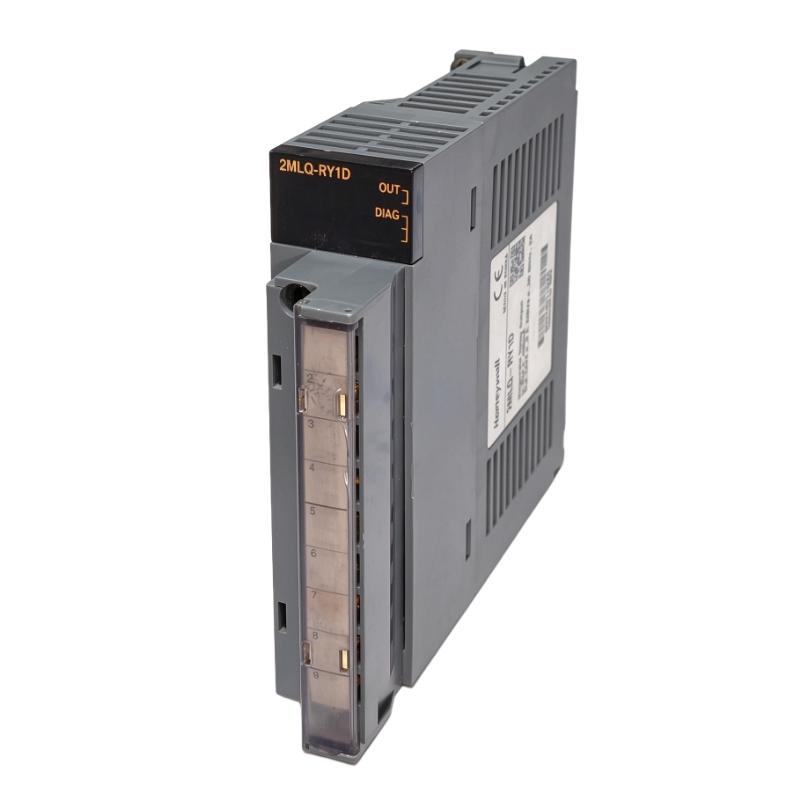
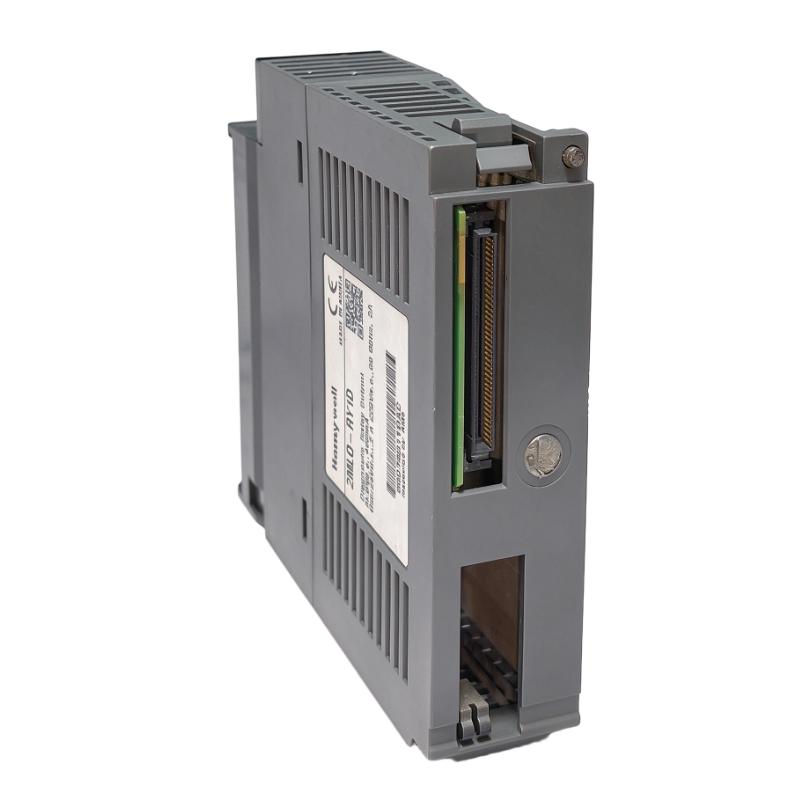
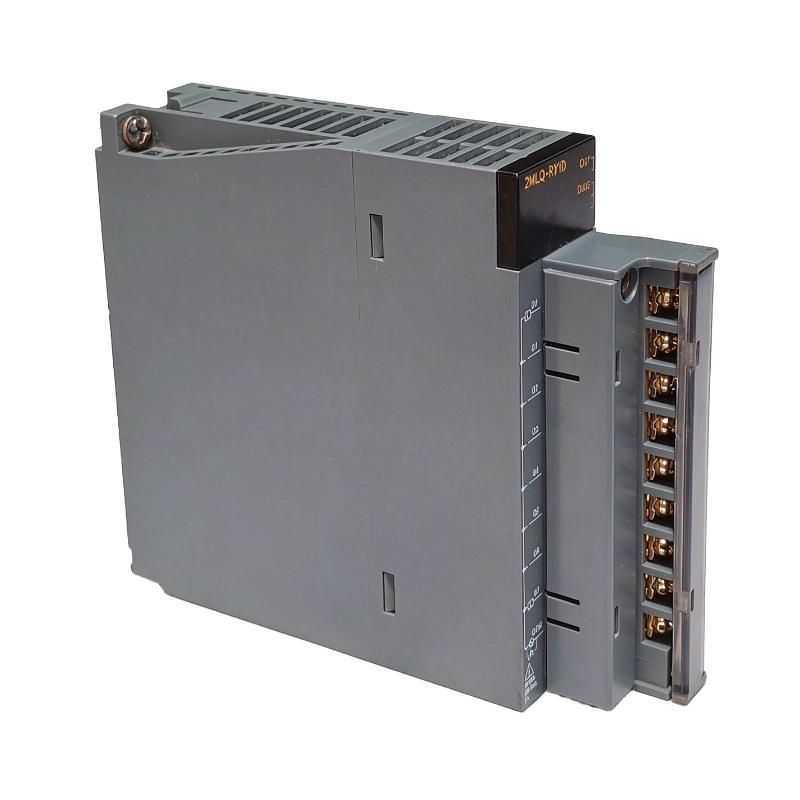
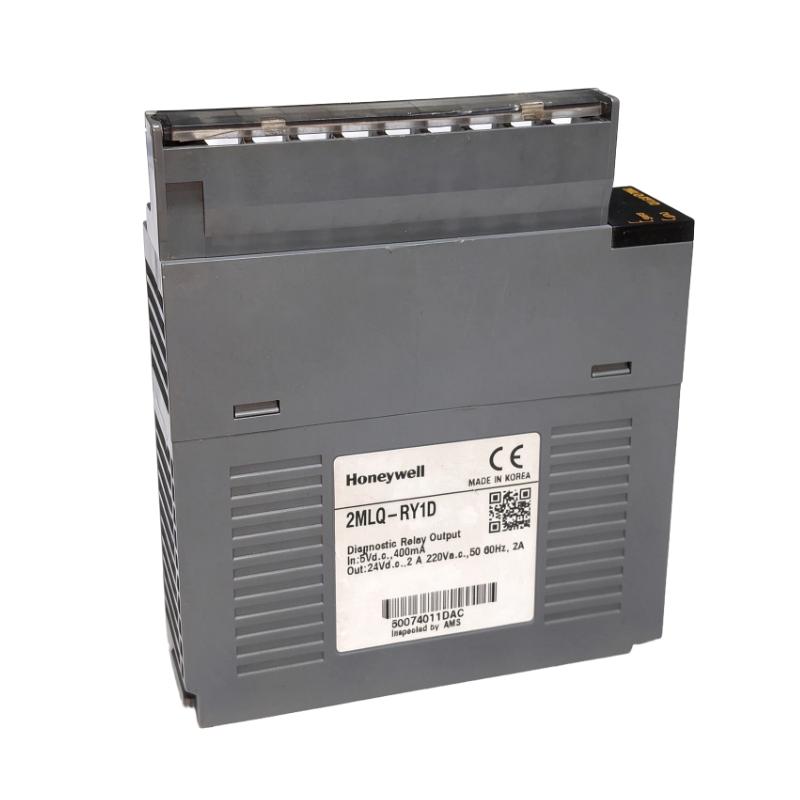
Brand:Honeywell DCS Item No.:2MLQ-RY1D Product Origin:USA Product Dimensions:114 × 48 × 127 mm Product Weight:0.17 kg Payment:T/T, Western Union, Credit Card Goods_stock:15 Shipping Port:Xiamen, China Lead Time:1-3 Days Condition:Brand New And Original Warranty:1 Year Certificate:COO
The output stage of a PLC system is where software commands ultimately become physical control actions. The Honeywell 2MLQ-RY1D addresses this requirement with a relay-based output architecture combined with diagnostic functionality, providing an interface between the MasterLogic-200 control system and compatible field equipment.
Relay technology remains valuable in industrial automation because it provides a physical contact interface that can be appropriate for many discrete control applications. When correctly applied, relay outputs can provide a straightforward method of switching compatible field circuits while maintaining separation between PLC control logic and the connected equipment.
The diagnostic aspect of the 2MLQ-RY1D adds another useful dimension for maintenance. Industrial troubleshooting is rarely limited to determining whether a PLC program contains an error; technicians often need to establish whether the output module, wiring, field supply, or load is responsible for an unexpected condition. Diagnostic information can support this process by providing additional visibility into the output system.
The module's compact construction also makes it suitable for modular automation cabinets where efficient use of space is important. For system integrators and maintenance teams working with compatible MasterLogic-200 systems, the 2MLQ-RY1D offers a practical combination of relay output control and diagnostic support.
Technical Specifications
Parameter
Specification
Brand
Honeywell
Model
2MLQ-RY1D
Product Type
Diagnostic Output Relay Module
PLC Platform
MasterLogic-200
Output Technology
Electromechanical Relay
Output Function
Digital Relay Output
Diagnostic Function
Output Diagnostic Support
Application
Industrial Discrete Control
Field Interface
Relay Contact Output
Module Function
PLC-to-Field Device Switching
Dimensions
114 × 48 × 127 mm
Weight
0.17 kg (0.37 lb)
Recommended Related Models
Model
Product Type
Typical Role
Honeywell 2MLQ-RY1A
Relay Output Module
Related relay output solution
Honeywell 2MLQ-RY2A
Relay Output Module
Higher-channel relay output option
Honeywell 2MLQ-RY2B
Relay Output Module
Alternative relay output configuration
Honeywell 2MLQ-TR2A
Transistor Output Module
Solid-state DC output alternative
Honeywell 2MLQ-TR4A
Transistor Output Module
32-point transistor output option
Honeywell 2MLQ-TR8A
Transistor Output Module
High-density transistor output solution
Popular Related Models
Model
Product Type
Honeywell 2MLI-D24A
Digital Input Module
Honeywell 2MLI-D24B
Digital Input Module
Honeywell 2MLI-D28A
Digital Input Module
Honeywell 2MLQ-TR4A
Transistor Output Module
Honeywell 2MLQ-TR4B
Transistor Output Module
Honeywell 2MLQ-TR8A
Transistor Output Module
Honeywell 2MLQ-TR8B
Transistor Output Module
Honeywell 2MLQ-RY1A
Relay Output Module
Honeywell 2MLQ-RY2A
Relay Output Module
Applications
The 2MLQ-RY1D is suited to industrial control environments where relay-based discrete outputs and diagnostic visibility are valuable.
Production lines: Providing discrete output commands for sequential machine operations.
Control panels: Interfacing PLC logic with field devices that require relay contacts.
Packaging machinery: Managing discrete control functions associated with automated machine cycles.
Material-handling systems: Supporting relay-based control of compatible conveyor and handling equipment.
Industrial auxiliary systems: Controlling alarms, status devices, interposing circuits, and other discrete loads.
PLC retrofit projects: Providing an output interface for compatible MasterLogic-200 installations.
Maintenance-oriented systems: Useful where diagnostic information can help technicians identify abnormal output conditions more efficiently.
The relay architecture gives system designers an alternative to solid-state transistor outputs when the characteristics of a mechanical contact interface are more appropriate for the application.
Why Engineers Choose the 2MLQ-RY1D
Relay-based switching The 2MLQ-RY1D provides a mechanical relay output interface, making it suitable for compatible field circuits where relay contacts are preferred over semiconductor switching.
Diagnostic capability The diagnostic-oriented design can help maintenance personnel investigate output-related problems more efficiently, particularly when troubleshooting a machine or control cabinet during commissioning or service.
Flexible field interfacing Relay outputs can be useful when the connected control circuit requires an isolated contact interface rather than a direct transistor switching arrangement.
Practical industrial integration Designed for the MasterLogic-200 platform, the module fits into a structured PLC I/O architecture and can be incorporated into compatible control systems.
Compact modular construction The module occupies a relatively small footprint while providing a dedicated output interface, helping maintain an organized control-panel layout.
Maintenance-friendly design Diagnostic information combined with systematic PLC and field-circuit testing can shorten troubleshooting time and help technicians distinguish between PLC logic, output circuitry, wiring, and field-device problems.
Suitable for discrete control The module is well matched to applications in which field devices operate according to straightforward ON/OFF commands generated by the PLC program.
Technical FAQs
1. What is the Honeywell 2MLQ-RY1D? The 2MLQ-RY1D is a Diagnostic Output Relay Module designed for use with the Honeywell MasterLogic-200 PLC platform.
2. Why use a relay output instead of a transistor output? Relay outputs provide a mechanical contact interface and can be advantageous when the connected circuit requires relay-style switching characteristics. Transistor outputs are generally better suited to fast, repetitive DC switching.
3. What types of devices can be controlled through relay outputs? Depending on the module's electrical ratings and field wiring, suitable applications may include contactor interfaces, indicator devices, auxiliary relays, solenoid circuits, and other discrete loads. The electrical characteristics of each load must be verified before connection.
4. What does the diagnostic function provide? Diagnostic functionality is intended to provide additional information about output operation and abnormal conditions, helping maintenance personnel identify potential problems during commissioning and troubleshooting.
5. Can the relay output be used as a high-speed switching output? Relay contacts are not normally selected for high-frequency switching. Their mechanical nature makes them more appropriate for applications with moderate switching rates where relay contact operation is acceptable.
6. What should be checked if a relay output does not operate? Check the PLC program and output command first. Then verify the module status, field supply, wiring, common connections, relay contact condition, and connected load. Diagnostic information should also be reviewed when available.
7. What can cause repeated relay output failures? Possible causes include loads exceeding the specified contact rating, excessive inrush current, unsuitable load types, incorrect suppression arrangements, wiring faults, or switching conditions outside the module's intended operating limits.
8. Is an external interface required for large loads? If the connected load exceeds the relay contact's permitted electrical rating, an appropriate interposing relay, contactor, or other interface should be used. The output module should not be used to switch loads beyond its specified limits.
9. How can the diagnostic function help during commissioning? During commissioning, technicians can compare the PLC's commanded output state with the module's diagnostic/status information and the actual field-device response. This provides a structured way to identify problems before the equipment enters normal production.
10. What should be considered when replacing a 2MLQ-RY1D? Confirm the exact model, PLC compatibility, output configuration, field wiring, load characteristics, contact ratings, and diagnostic requirements. After replacement, individual outputs should be tested under controlled conditions before restoring the equipment to automatic operation.