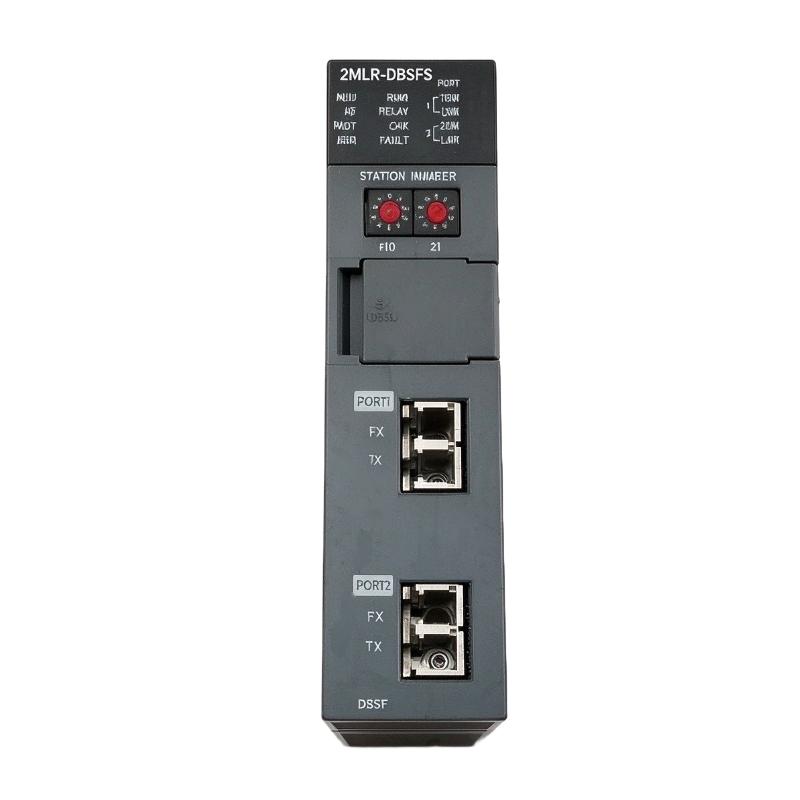
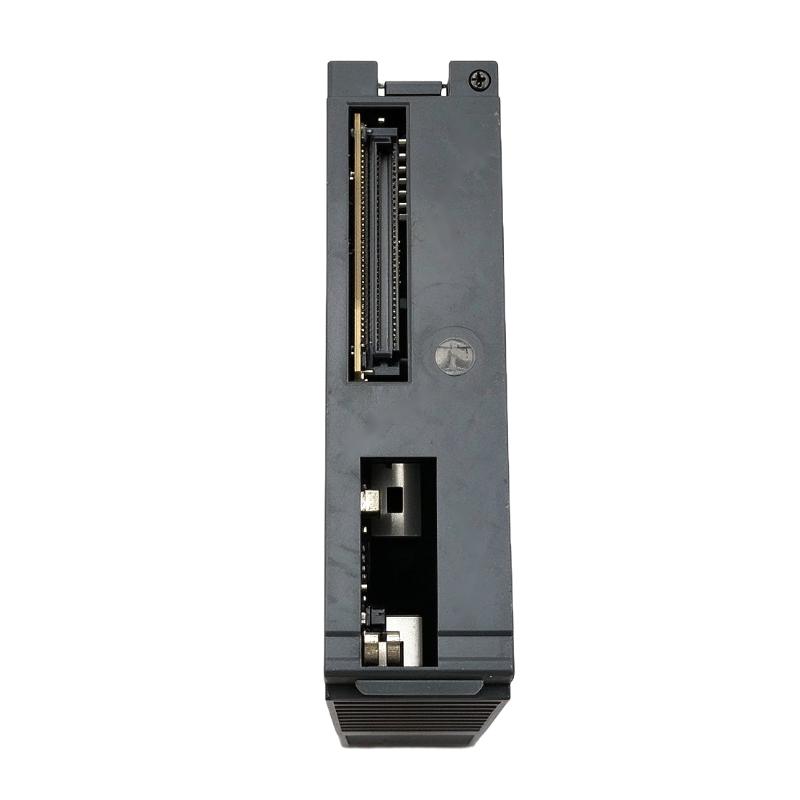
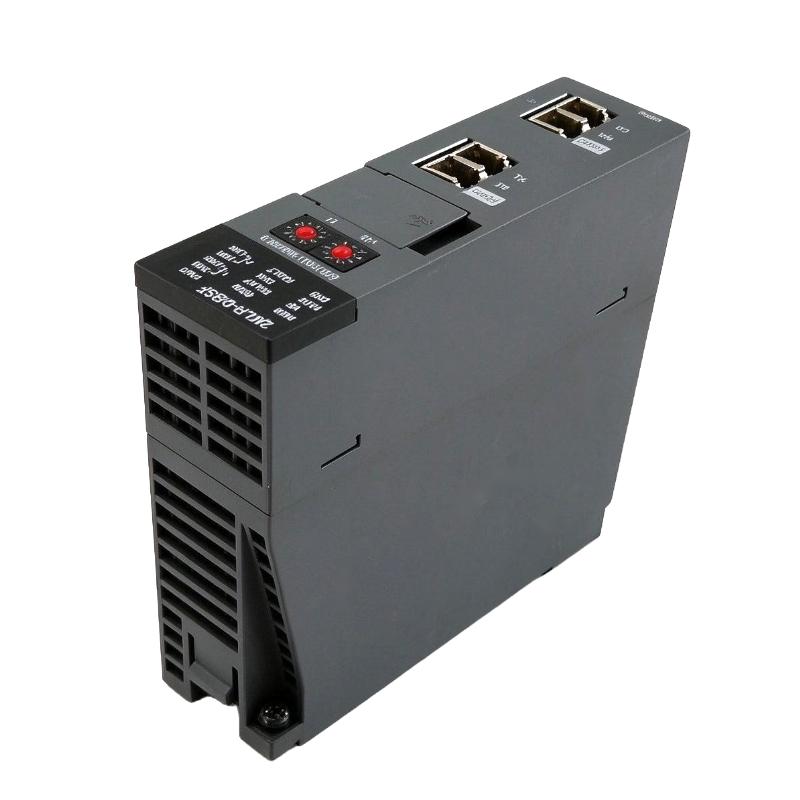
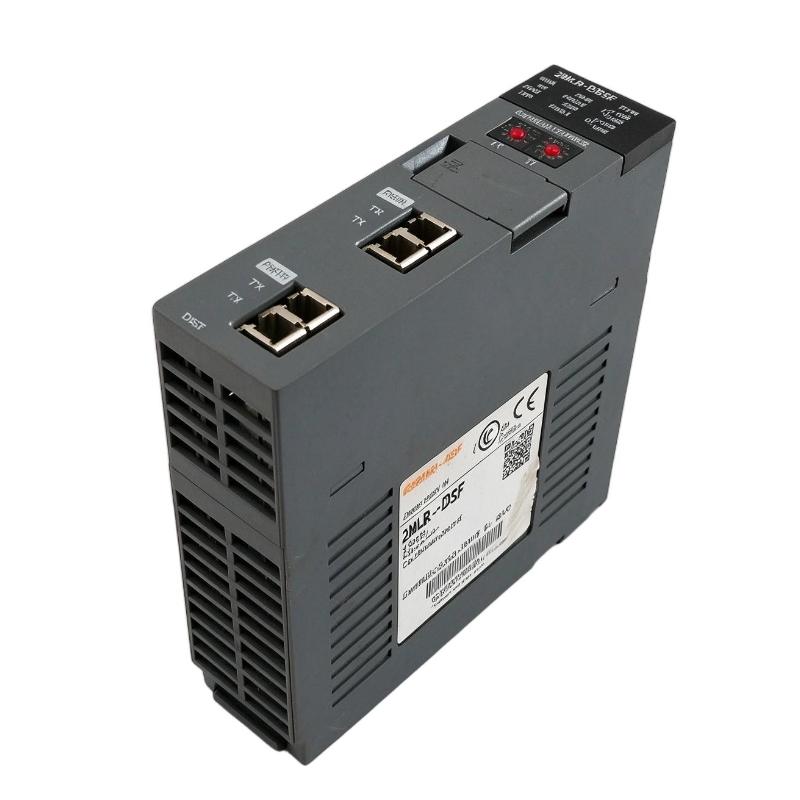
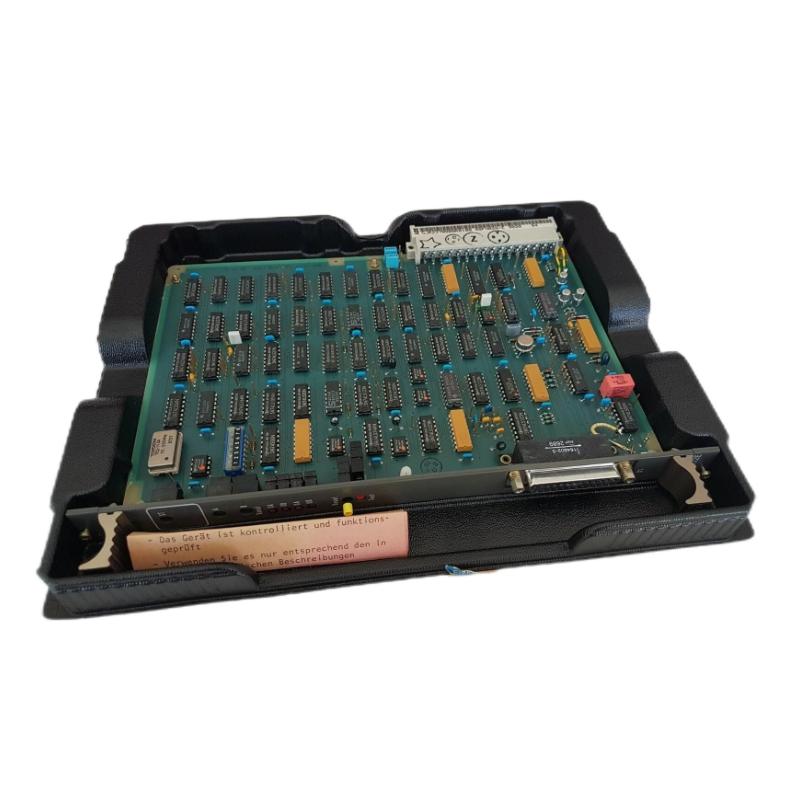
Brand:Honeywell DCS Item No.:2MLR-DBSFS Product Origin:USA Product Dimensions:150 x 25 x 100 mm Product Weight:0.12 kg Payment:T/T, Western Union, Credit Card Goods_stock:15 Shipping Port:Xiamen, China Lead Time:1-3 Days Condition:Brand New And Original Warranty:1 Year Certificate:COO
Industrial automation systems are rarely static. Production requirements change, machines gain additional functions, and control systems are frequently expanded years after their original installation. A well-designed expansion architecture can therefore be just as important as the original PLC configuration.
The Honeywell 2MLR-DBSFS serves as an Expansion Drive Module for compatible Honeywell automation systems. Its purpose is to provide an organized means of extending the control architecture when additional hardware or system capability is required.
The module's slim 25 mm profile is particularly useful in control cabinets where every millimeter of installation space matters. Its overall dimensions of 150 × 25 × 100 mm provide a relatively compact solution, while the low 0.12 kg weight makes handling straightforward during system installation or maintenance.
For system integrators, the value of an expansion module goes beyond simply adding hardware. A structured expansion approach helps keep the cabinet organized, makes future modifications easier, and can simplify maintenance by maintaining a clear relationship between the main control system and its additional components.
When used within a compatible Honeywell automation architecture, the 2MLR-DBSFS can support practical system growth while helping engineers maintain a clean and serviceable control-panel design.
Technical Specifications
Parameter
Specification
Brand
Honeywell
Model
2MLR-DBSFS
Product Type
Expansion Drive Module
Module Function
System Expansion
Application
Industrial Automation System Expansion
Installation
Modular Control System
Dimensions
150 × 25 × 100 mm
Weight
0.12 kg (0.26 lb)
Recommended Related Models
Model
Product Type
Typical Role
Honeywell 2MLR-AC12
Power Supply Module
Provides system power for compatible PLC architecture
Honeywell 2MLR-AC22
Power Supply Module
Alternative PLC system power solution
Honeywell 2MLQ-TR4A
Transistor Output Module
Digital output expansion
Honeywell 2MLQ-TR4B
Transistor Output Module
Alternative transistor output expansion
Honeywell 2MLQ-TR8A
Transistor Output Module
High-density digital output
Honeywell 2MLI-D24A
Digital Input Module
Digital input expansion
Popular Related Models
Model
Product Type
Honeywell 2MLR-AC12
Power Supply Module
Honeywell 2MLR-AC22
Power Supply Module
Honeywell 2MLR-DBSFS
Expansion Drive Module
Honeywell 2MLI-D24A
Digital Input Module
Honeywell 2MLI-D24B
Digital Input Module
Honeywell 2MLQ-TR4A
Transistor Output Module
Honeywell 2MLQ-TR4B
Transistor Output Module
Honeywell 2MLQ-TR8A
Transistor Output Module
Honeywell 2MLQ-RY1D
Diagnostic Output Relay Module
Applications
The 2MLR-DBSFS is intended for expansion-oriented applications where additional automation hardware needs to be incorporated into a compatible control system.
PLC system expansion – Supports the addition of compatible system hardware within an established automation architecture.
Industrial control cabinets – Provides an expansion interface while maintaining a compact cabinet layout.
Machine automation – Useful when an existing control platform needs to accommodate additional control functions.
OEM equipment – Helps machine builders create expandable automation architectures for future system growth.
Production-line upgrades – Can be considered when additional hardware is introduced during equipment modernization.
Modular automation systems – Supports a structured approach to extending the installed control platform.
Maintenance and replacement – Provides an option for replacing a compatible expansion drive module in an existing system.
System integration projects – Can be incorporated when the automation architecture requires additional expansion capability.
The module should be installed only within a system architecture for which its electrical and hardware compatibility has been verified.
Designed for Flexible System Expansion
Expansion-focused functionality The 2MLR-DBSFS is intended to support expansion of the automation system, giving engineers greater flexibility when the original PLC configuration needs to grow.
Space-conscious construction With a thickness of only 25 mm and overall dimensions of 150 × 25 × 100 mm, the module can help preserve valuable cabinet space in densely populated automation panels.
Lightweight design The module weighs just 0.12 kg, making it easy to handle during installation, maintenance, and system modification work.
Cleaner system architecture A dedicated expansion module can help maintain a more organized connection between the main control platform and additional hardware rather than relying on improvised interfaces.
Useful for system upgrades Industrial equipment often evolves after its original commissioning. An expansion-oriented module can help engineers accommodate additional functionality without completely redesigning the existing control architecture.
Maintenance-friendly installation The compact and lightweight format makes physical handling straightforward during service work, particularly when access inside a crowded control cabinet is limited.
Suitable for long-term automation planning For OEMs and integrators, designing expansion capability into a PLC architecture can make future modifications easier and reduce the disruption associated with later system upgrades.
Technical FAQs
1. What is the Honeywell 2MLR-DBSFS used for? The 2MLR-DBSFS is an Expansion Drive Module intended to support expansion within a compatible Honeywell automation system.
2. Why is an expansion module used in an industrial control system? An expansion module allows additional compatible hardware or system functions to be incorporated into an existing control architecture without necessarily replacing the complete PLC system.
3. Should the 2MLR-DBSFS be installed in any PLC system? No. Compatibility should be confirmed before installation. The controller family, expansion architecture, associated hardware, wiring, and system configuration must all be checked.
4. What should be verified before installing the module? Engineers should verify the exact part number, system compatibility, installation position, connection requirements, power requirements, and applicable PLC configuration before commissioning.
5. What could happen if an incompatible expansion module is installed? An incompatible module may fail to communicate correctly with the control system, generate diagnostic conditions, or prevent the expanded hardware from operating as intended. Compatibility should therefore be confirmed before energizing the system.
6. Can the module be used to increase system capacity? Its primary purpose is to provide expansion capability within the supported automation architecture. The actual increase in system capacity depends on the associated controller, expansion hardware, and system configuration.
7. How should an expansion-related fault be investigated? Start by checking the module installation and physical connections. Then verify system power, communication or expansion connections, controller configuration, module recognition, and diagnostic information. This systematic approach helps isolate configuration and hardware problems.
8. Can loose connections affect expansion-module operation? Yes. Poorly seated connectors or loose wiring can interrupt the electrical or communication path between the expansion module and associated hardware. Physical connections should be inspected carefully during troubleshooting.
9. Is configuration required after replacing the module? Depending on the system architecture, the replacement may require verification or configuration in the PLC engineering environment. The controller should correctly recognize the installed hardware before normal operation is resumed.
10. What is the recommended approach when adding the 2MLR-DBSFS to an existing system? Document the existing hardware configuration first, verify compatibility, install the module according to the system design, check all connections, configure the PLC if required, and then perform a controlled functional test before placing the expanded system back into production.