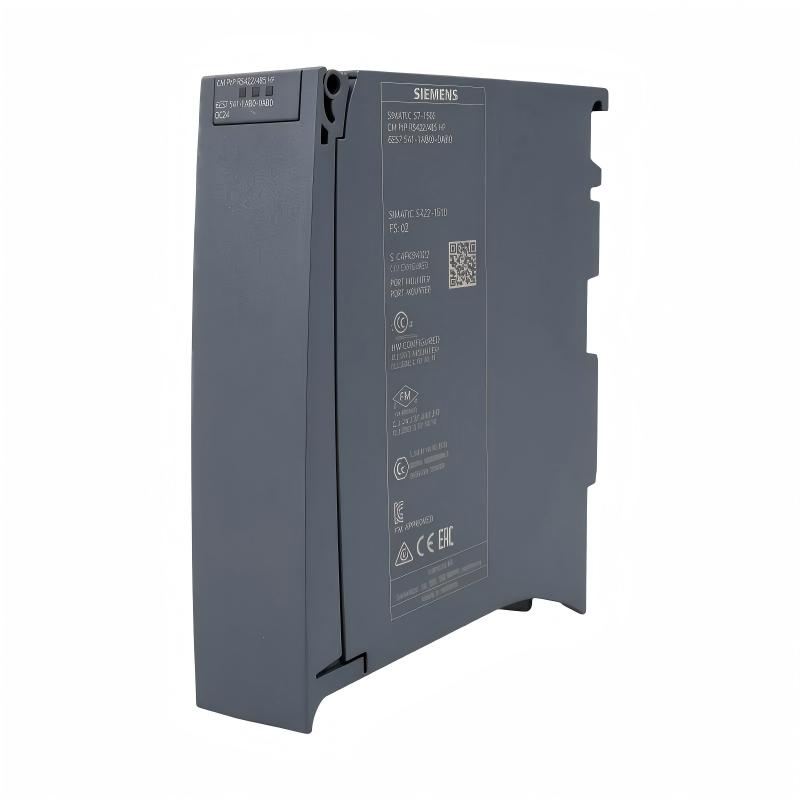
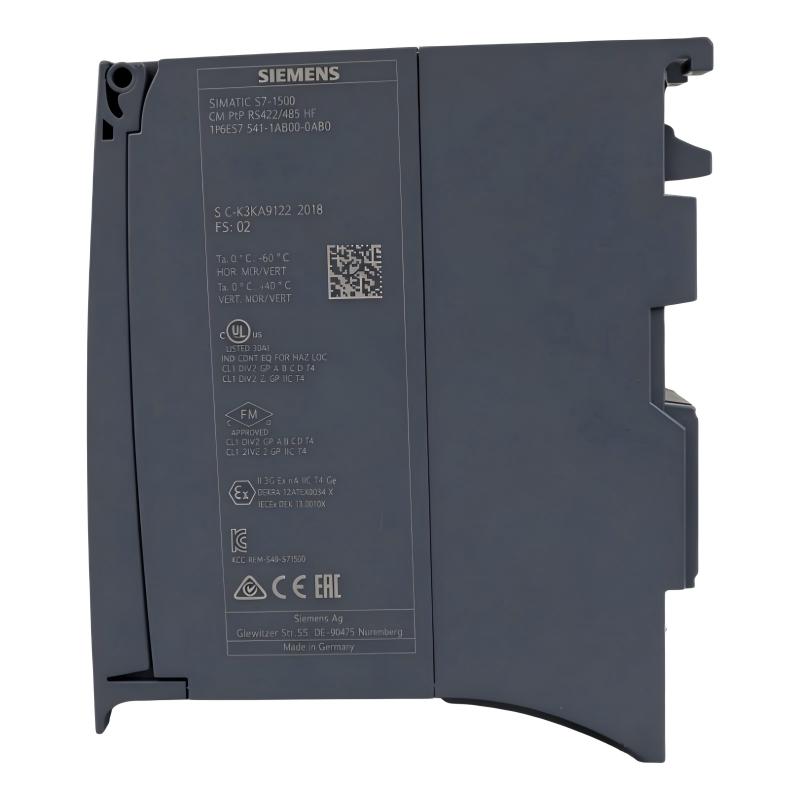
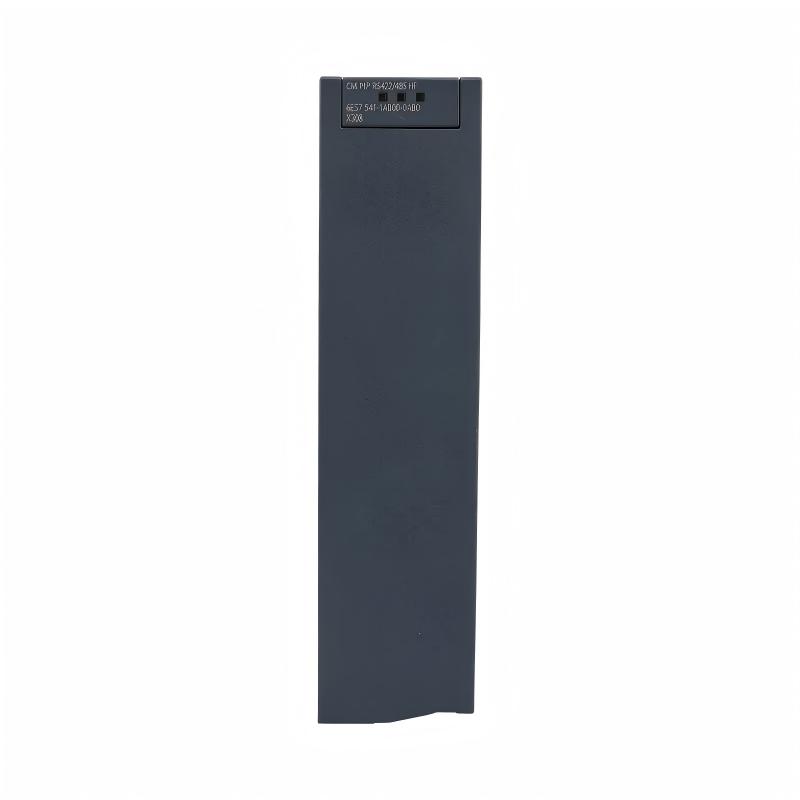
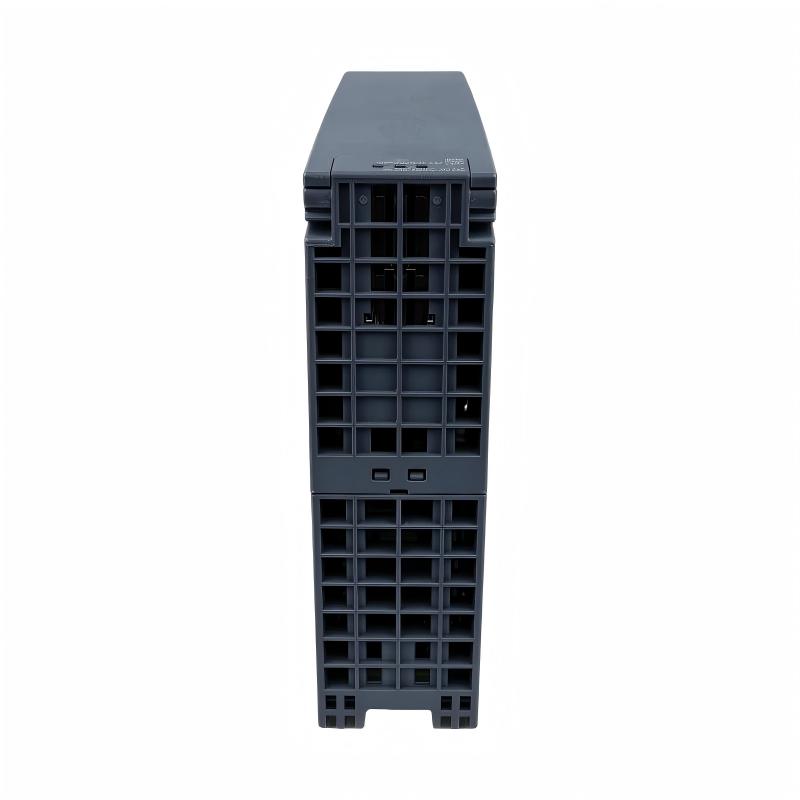
Brand:Siemens Item No.:6ES7541-1AB00-0AB0 Product Origin:Germany Product Dimensions:35 x 147 x 127 mm Product Weight:0.268 kg Payment:T/T, Western Union, Credit Card Goods_stock:15 Shipping Port:Xiamen, China Lead Time:1-3 Days Condition:Brand New And Original Warranty:1 Year Certificate:COO
The communication layer of an industrial control system determines how effectively its individual components work together. A modern machine may have a central PLC, distributed I/O, drives, HMIs, additional controllers, and supervisory equipment. These devices depend on reliable communication to exchange information and coordinate their functions.
The Siemens 6ES7541-1AB00-0AB0 is an S7-1500 Communication Module designed for communication-related applications within compatible Siemens automation systems. Its modular construction supports the overall architecture of the S7-1500 family and provides engineers with a dedicated option for expanding communication capabilities.
In practical automation projects, communication can be used to exchange machine states, process values, control commands, diagnostic information, and other system data. When these communication paths are properly designed, separate automation stations can operate as one coordinated production system.
This approach is particularly valuable in machine building. OEMs often need to create several machine variants while maintaining a consistent control platform. Modular communication hardware makes it possible to adapt the connectivity layer without fundamentally changing the complete control architecture.
For system integrators, the same principle applies to larger production environments. Different PLCs and automation stations may have individual control responsibilities while still sharing information through a structured communication architecture. This can improve coordination between machine sections and simplify the overall engineering concept.
Reliable communication is not determined by the module alone. The complete installation must be considered, including network topology, cabling, connectors, configuration, addressing, grounding, shielding, electromagnetic conditions, and connected equipment. A disciplined commissioning process should verify each part of the communication path.
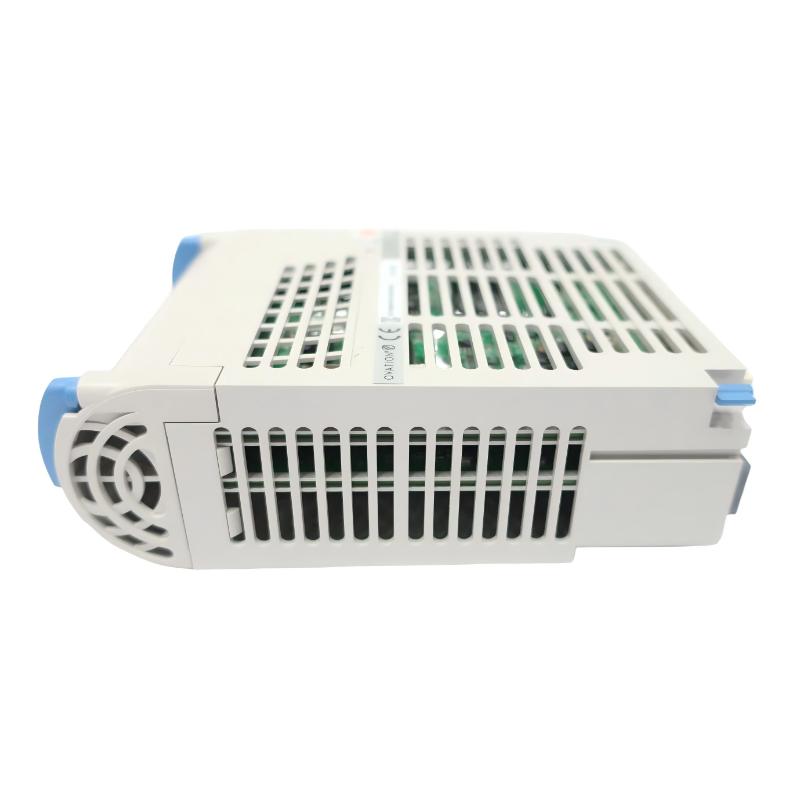
The physical design of the module also supports efficient cabinet engineering. Measuring 35 × 147 × 127 mm, the 6ES7541-1AB00-0AB0 occupies a relatively narrow mounting position. Its weight is 0.268 kg (0.59 lb), making it suitable for modular control-panel installation.
For automation engineers, OEMs, and system integrators, the 6ES7541-1AB00-0AB0 offers a balanced combination of S7-1500 integration, modular communication expansion, compact installation, and scalable system design. It is a practical component for appropriately engineered Siemens automation architectures where reliable data exchange is an essential part of machine performance.
Technical Specifications
Parameter
Specification
Brand
Siemens
Model
6ES7541-1AB00-0AB0
Product Family
SIMATIC S7-1500
Product Type
Communication Module
Module Function
Industrial Communication
Application
Industrial Automation
PLC Platform
S7-1500
Installation
Modular PLC System
Dimensions
35 × 147 × 127 mm
Weight
0.268 kg (0.59 lb)
Recommended Related Models
Model
Product Type
Typical Role
Siemens 6ES7540-1AD00-0AA0
S7-1500 Communication Module
Communication expansion
Siemens 6AG1541-1AB00-7AB0
SIPLUS S7-1500 Communication Module
Communication expansion
Siemens 6AG1541-1AD00-7AB0
SIPLUS S7-1500 Communication Module
Communication expansion
Siemens 6AG1540-1AD00-7AA0
SIPLUS S7-1500 Communication Module
Communication expansion
Siemens 6AG1542-5DX00-7XE0
SIPLUS S7-1500 Communication Module
Communication expansion
Siemens 6AG1443-5DX05-4XE0
Communication Processor
Industrial communication
Popular Related Models
Model
Product Type
Siemens 6ES7541-1AB00-0AB0
S7-1500 Communication Module
Siemens 6ES7540-1AD00-0AA0
S7-1500 Communication Module
Siemens 6AG1541-1AB00-7AB0
SIPLUS S7-1500 Communication Module
Siemens 6AG1541-1AD00-7AB0
SIPLUS S7-1500 Communication Module
Siemens 6AG1540-1AD00-7AA0
SIPLUS S7-1500 Communication Module
Siemens 6AG1542-5DX00-7XE0
SIPLUS S7-1500 Communication Module
Siemens 6AG1543-1AX00-2XE0
SIPLUS S7-1500 Communication Module
Siemens 6AG1543-1MX00-7XE0
SIPLUS S7-1500 Communication Module
Siemens 6AG1443-5DX05-4XE0
Communication Processor
Applications
The 6ES7541-1AB00-0AB0 fits a range of compatible S7-1500 automation architectures where communication functions are required.
PLC communication – Provides communication resources within compatible S7-1500 systems.
Distributed I/O architectures – Supports communication between the controller and appropriately configured distributed automation equipment.
Machine automation – Helps different machine sections exchange operational information.
Production-line control – Supports interconnected automation stations in coordinated production environments.
Drive integration – Can form part of architectures where controllers exchange information with compatible drive systems.
HMI and supervisory integration – Supports communication architectures involving operator and higher-level automation systems.
OEM machinery – Provides a modular option for communication-oriented machine designs.
System integration – Fits appropriately engineered Siemens-based automation projects.
Industrial modernization – Can be considered when expanding communication functionality in compatible S7-1500 installations.
Advantages for a Structured Automation Architecture
Purpose-built communication expansion The module gives engineers an additional communication resource, making it easier to build systems with multiple connected automation components.
S7-1500 modular design Its compact module format supports the structured installation philosophy of the S7-1500 family and works naturally alongside compatible CPUs and I/O modules.
Efficient control-cabinet use With a 35 mm width, the module occupies limited panel space, an important consideration for compact machine cabinets.
Scalable connectivity A modular communication strategy allows automation systems to grow as more devices, machine sections, or data-exchange requirements are introduced.
Organized system architecture Separating communication functions into dedicated hardware can make complex automation systems easier to understand, commission, and maintain.
Improved engineering flexibility OEMs can incorporate communication hardware into standardized control designs while adapting the rest of the architecture to individual machine requirements.
Maintenance-oriented design A clearly organized communication architecture helps technicians investigate module status, network conditions, configuration, and remote-device problems in a logical sequence.
Professional Siemens solution For industrial automation applications, the module combines compact installation with the modular architecture expected from the S7-1500 platform.
Technical FAQs
1. What is the Siemens 6ES7541-1AB00-0AB0? It is an S7-1500 Communication Module designed to provide communication-related functionality within compatible Siemens industrial automation systems.
2. What is the primary function of a communication module? Its primary function is to provide communication capability that allows compatible automation devices to exchange information according to the configured system architecture.
3. What types of equipment can communicate within an S7-1500-based system? Depending on the system design and supported communication technology, this may include PLCs, distributed I/O, drives, HMIs, engineering stations, and supervisory systems.
4. Why must communication parameters be configured correctly? The connected devices need compatible settings and communication methods to interpret exchanged data correctly. Incorrect parameters can prevent communication even when the physical connection is intact.
5. What should be checked if the communication link fails? Inspect the module's diagnostic status, physical connections, configuration, addressing where applicable, communication parameters, and the status of the remote device.
6. What causes intermittent communication failures? Possible causes include poor connectors, damaged cables, electromagnetic interference, unstable power, configuration errors, addressing conflicts, or faults in other network devices.
7. Can PLC cabinet wiring influence communication quality? Yes. Communication cables should be routed appropriately and separated from strong interference sources. Grounding and shielding should be implemented according to the applicable installation requirements.
8. How can communication faults be isolated systematically? Begin with module diagnostics, then verify the physical connection and configuration. After that, test the communication partner and inspect other network components if necessary.
9. Why should the communication architecture be documented? Documentation makes commissioning and troubleshooting faster and provides a reference for future module replacement, maintenance, and system expansion.
10. What should be verified before commissioning the communication module? Confirm system compatibility, module configuration, communication parameters, physical connections, addressing where applicable, diagnostic status, and successful data exchange with the intended devices.