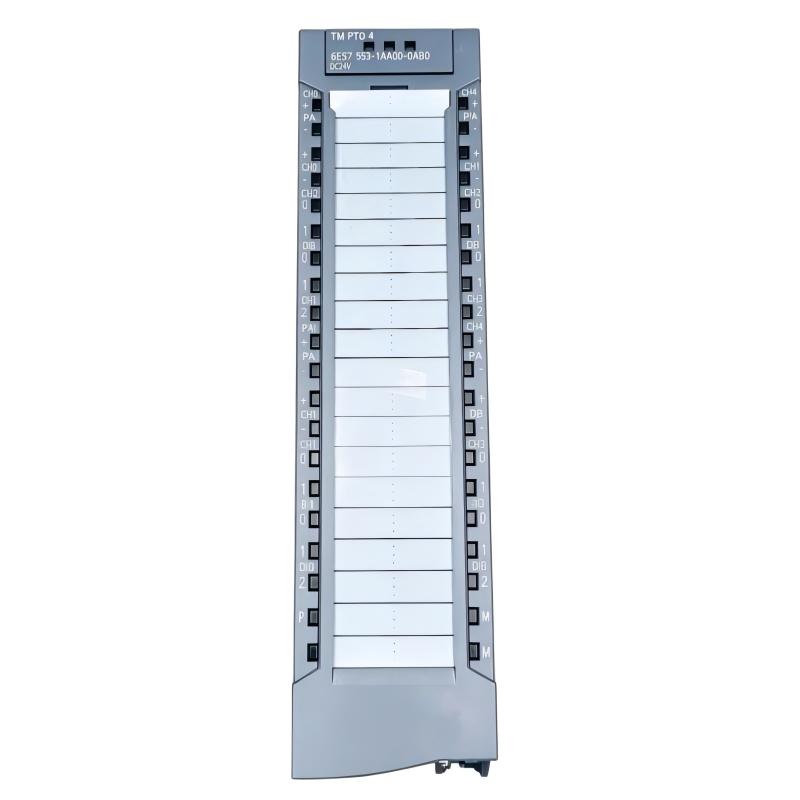
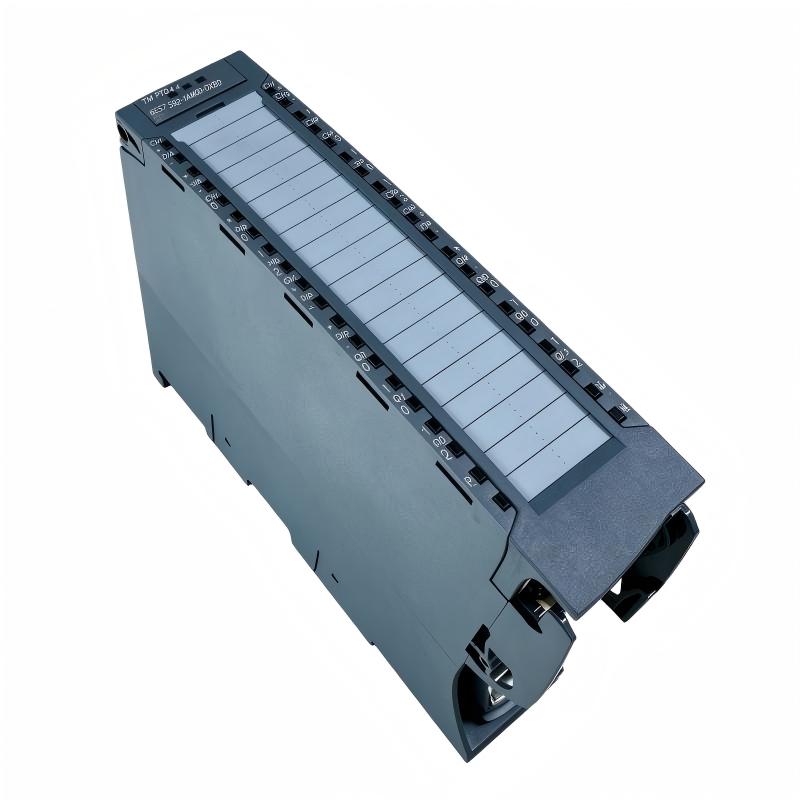
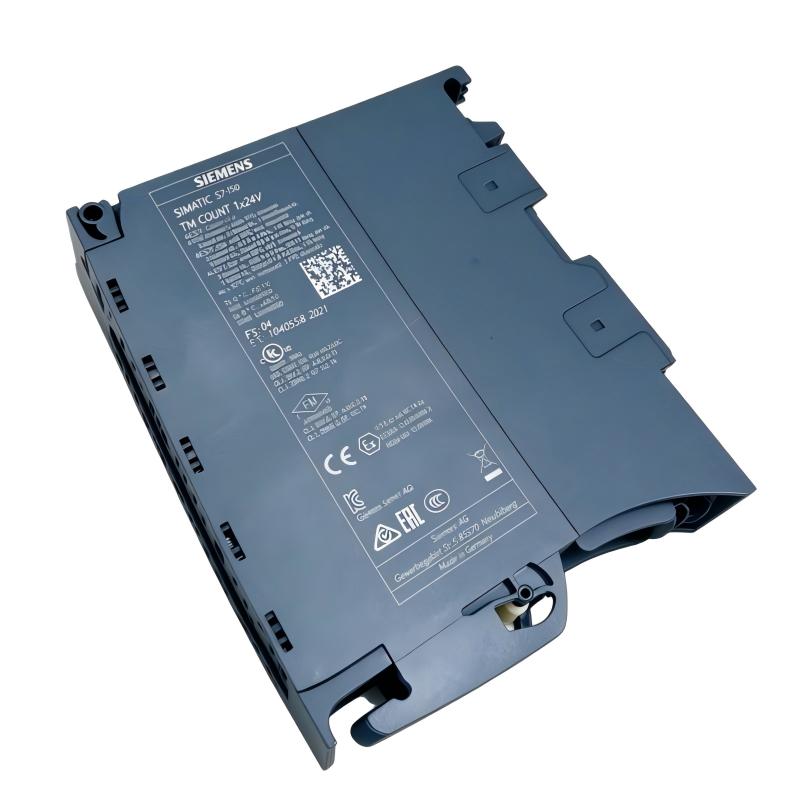
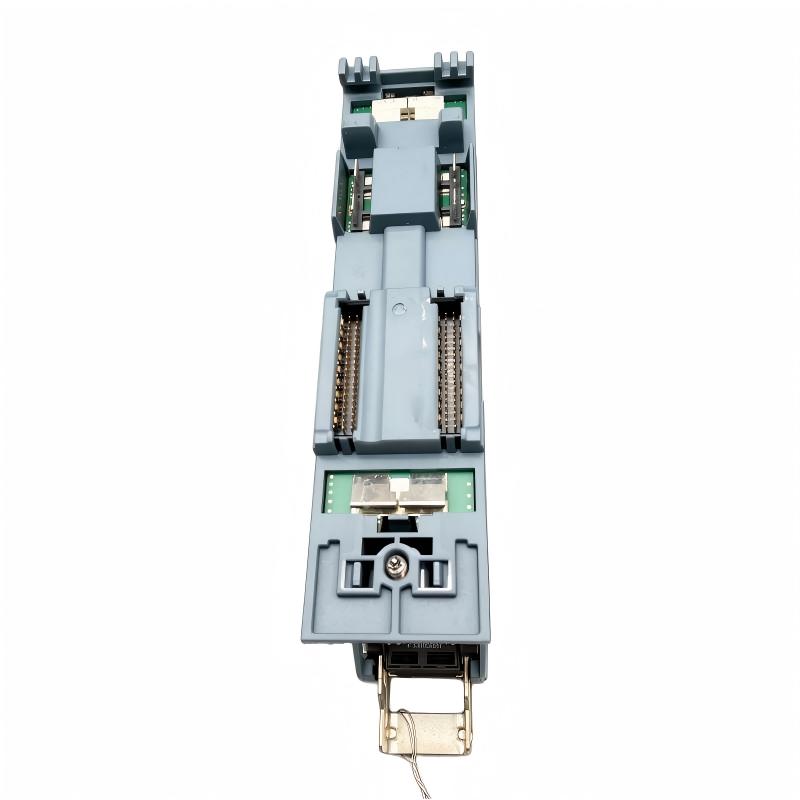
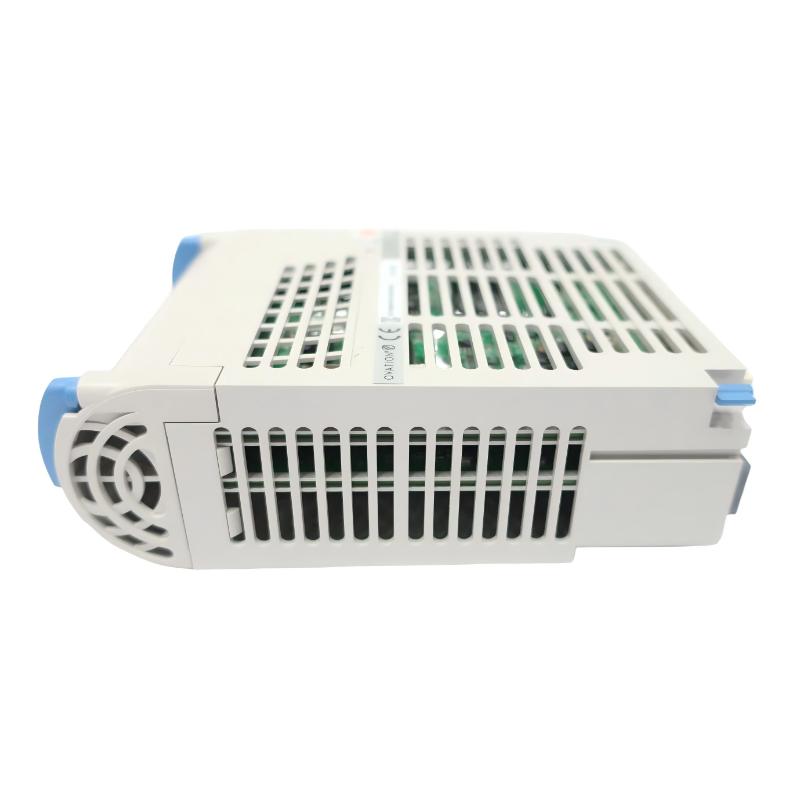
Brand:Siemens Item No.:6ES7553-1AA00-0AB0 Product Origin:Germany Product Dimensions:35 x 147 x 129 mm Product Weight:0.411 kg Payment:T/T, Western Union, Credit Card Goods_stock:15 Shipping Port:Xiamen, China Lead Time:1-3 Days Condition:Brand New And Original Warranty:1 Year Certificate:COO
Modern industrial automation systems are rarely built around a single controller operating in isolation. Production lines and advanced machines often contain several functional sections, distributed I/O, communication devices, drives, HMIs, and additional control stations. These components need well-defined interfaces to operate together as one coordinated system.
The Siemens 6ES7553-1AA00-0AB0 is an S7-1500 Interface Module designed for interface-related applications within compatible Siemens automation architectures. Its modular design supports the structured approach used by the S7-1500 family, allowing engineers to incorporate dedicated interface functionality into a broader control system.
An interface is more than a physical connection. In a well-designed automation architecture, it establishes a clear relationship between different system sections. One controller or station may be responsible for a particular machine process, while another section handles a separate function. The interface between them allows the overall system to coordinate operation without unnecessarily combining every function into a single hardware unit.
This approach can be valuable in large machines and production lines. Dividing the system into logical sections can make engineering more manageable and can also help maintenance personnel understand the relationship between individual control stations.
For OEMs, modular interface architecture provides additional flexibility during machine development. A standard machine platform can be designed around a consistent S7-1500 architecture while different variants use different combinations of control, I/O, communication, and interface hardware.
System integrators can also benefit when expanding existing automation installations. A clearly structured interface layer can provide a practical path for connecting additional system sections while preserving an organized cabinet and control architecture.
Reliable operation still depends on correct engineering. Hardware compatibility, configuration, physical connections, system parameters, grounding, shielding, cable routing, and electromagnetic conditions should all be considered. If an interface does not operate correctly, technicians should approach the problem systematically rather than replacing hardware immediately.
The 6ES7553-1AA00-0AB0 measures 35 × 147 × 129 mm and weighs 0.411 kg (0.91 lb). Its standardized form factor allows efficient integration into modular control cabinets alongside compatible S7-1500 components.
For industrial automation engineers, OEMs, and system integrators, the 6ES7553-1AA00-0AB0 provides a structured and space-efficient interface solution for compatible Siemens automation systems. Its modular design supports scalable control architectures in which clear system boundaries and dependable interconnection are essential to efficient machine operation.
Technical Specifications
Parameter
Specification
Brand
Siemens
Model
6ES7553-1AA00-0AB0
Product Family
SIMATIC S7-1500
Product Type
Interface Module
Primary Function
System Interface
Application
Industrial Automation
PLC Platform
S7-1500
Installation
Modular PLC System
Dimensions
35 × 147 × 129 mm
Weight
0.411 kg (0.91 lb)
Recommended Related Models
Model
Product Type
Typical Role
Siemens 6ES7550-1AA01-0AB0
Counter Module
High-speed counting
Siemens 6ES7551-1AB00-0AB0
Count and Position Decoder Module
Position and counting
Siemens 6ES7552-1AA00-0AB0
Time-Control Digital Module
Time-controlled functions
Siemens 6ES7541-1AB00-0AB0
Communication Module
Communication expansion
Siemens 6ES7541-1AD00-0AB0
Communication Module
Communication expansion
Siemens 6ES7547-1JF00-0AB0
Communication Module
Communication expansion
Popular Related Models
Model
Product Type
Siemens 6ES7553-1AA00-0AB0
S7-1500 Interface Module
Siemens 6ES7550-1AA01-0AB0
Counter Module
Siemens 6ES7551-1AB00-0AB0
Count and Position Decoder Module
Siemens 6ES7552-1AA00-0AB0
Time-Control Digital Module
Siemens 6ES7540-1AD00-0AA0
Communication Module
Siemens 6ES7541-1AB00-0AB0
Communication Module
Siemens 6ES7541-1AD00-0AB0
Communication Module
Siemens 6ES7545-5DA00-0AB0
Communication Module
Siemens 6ES7547-1JF00-0AB0
Communication Module
Applications
The 6ES7553-1AA00-0AB0 can be incorporated into compatible Siemens automation systems for structured interfacing between system components.
S7-1500 system expansion – Supports interface functions within appropriately configured PLC architectures.
Distributed automation – Helps connect separate sections of an automation installation.
Machine control systems – Supports coordinated operation between different machine components.
Production lines – Can be used where multiple automation stations need structured system interfacing.
Modular machine platforms – Provides a dedicated interface solution for expandable OEM designs.
Industrial system integration – Fits Siemens-based control architectures requiring additional interface functionality.
Control cabinet engineering – Supports organized hardware layouts in modular PLC installations.
Factory automation – Contributes to interconnected automation systems used across production environments.
System modernization – Can be considered when expanding or restructuring compatible Siemens automation architectures.
Where the Module Adds Value
Dedicated interface functionality The 6ES7553-1AA00-0AB0 provides a specialized hardware component for interface-related tasks, helping engineers build more structured automation architectures.
Modular S7-1500 integration Its design follows the modular concept of the S7-1500 platform, making it suitable for control systems that combine CPUs, I/O, communication, and interface components.
Efficient cabinet utilization The 35 mm module width helps conserve valuable control-panel space, particularly in compact machine cabinets with high component density.
Clear system separation Dedicated interface hardware can help divide automation functions into logical sections, making larger systems easier to engineer and maintain.
Scalable machine architecture OEMs can use modular interface concepts when developing machines with multiple functional sections or different equipment configurations.
Simplified system expansion A structured interface layer can make future expansion more manageable when additional automation stations or system functions need to be incorporated.
Maintenance-oriented design Clearly defined interface hardware can make troubleshooting more systematic by allowing technicians to isolate problems between individual sections of an automation system.
Professional engineering solution For machine builders and system integrators, the module provides a compact way to introduce dedicated interface functionality into compatible Siemens control architectures.
Technical FAQs
1. What is the Siemens 6ES7553-1AA00-0AB0? It is an S7-1500 Interface Module intended for interface-related functions within compatible Siemens industrial automation systems.
2. What is the purpose of an interface module in an automation system? An interface module provides a defined hardware interface between system components or automation sections according to the architecture and communication functions being used.
3. Why are interface modules useful in modular automation? They allow different sections of a control system to be organized into clearly defined functional units, which can simplify engineering and system expansion.
4. Can an interface module be used in distributed automation architectures? It can form part of an appropriately engineered distributed architecture where different automation sections need to be connected through supported system interfaces.
5. What should be checked before integrating the module? Verify hardware compatibility, system configuration, supported interface functions, firmware and engineering requirements where applicable, and the characteristics of connected system components.
6. What can cause an interface communication fault? Possible causes include incorrect configuration, incompatible hardware, wiring problems, incorrect addressing or parameters where applicable, power issues, or faults in connected modules.
7. How should an interface-related fault be diagnosed? Start by checking module diagnostics and status information. Then verify physical connections, system configuration, communication parameters where applicable, and the condition of the connected automation components.
8. Can electromagnetic interference affect interface signals? Yes. Electrical noise from drives, motors, contactors, and other equipment can affect signal integrity. Appropriate installation, grounding, shielding, and cable routing should be considered.
9. Why is correct system configuration important? The connected components must be recognized and configured consistently. Configuration mismatches can prevent the interface from operating as intended.
10. What should be verified during commissioning? Check the hardware arrangement, module configuration, physical connections, system diagnostics, applicable communication or interface parameters, and successful data exchange or system interaction.