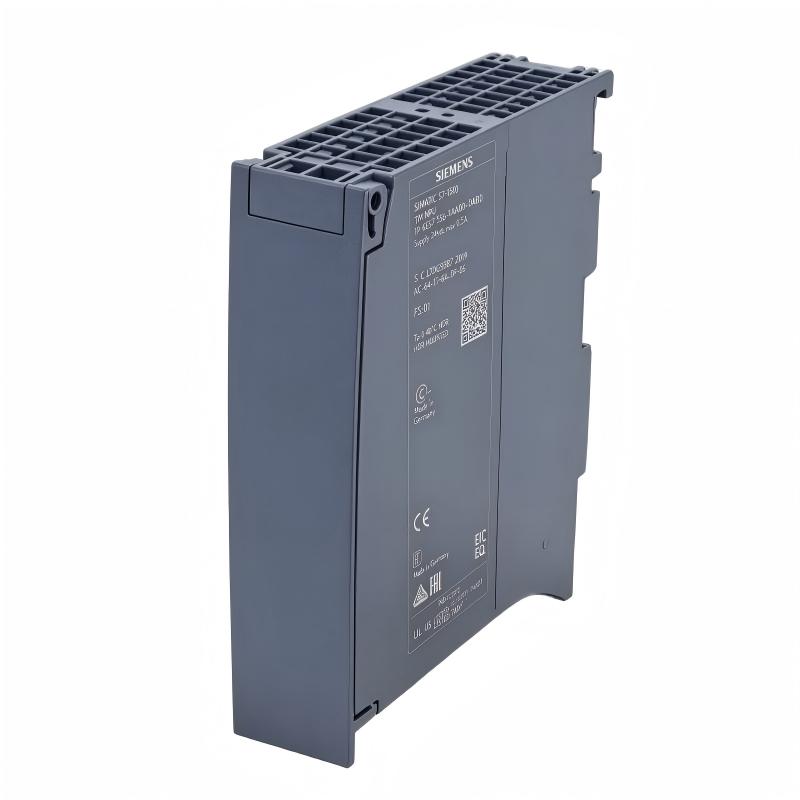
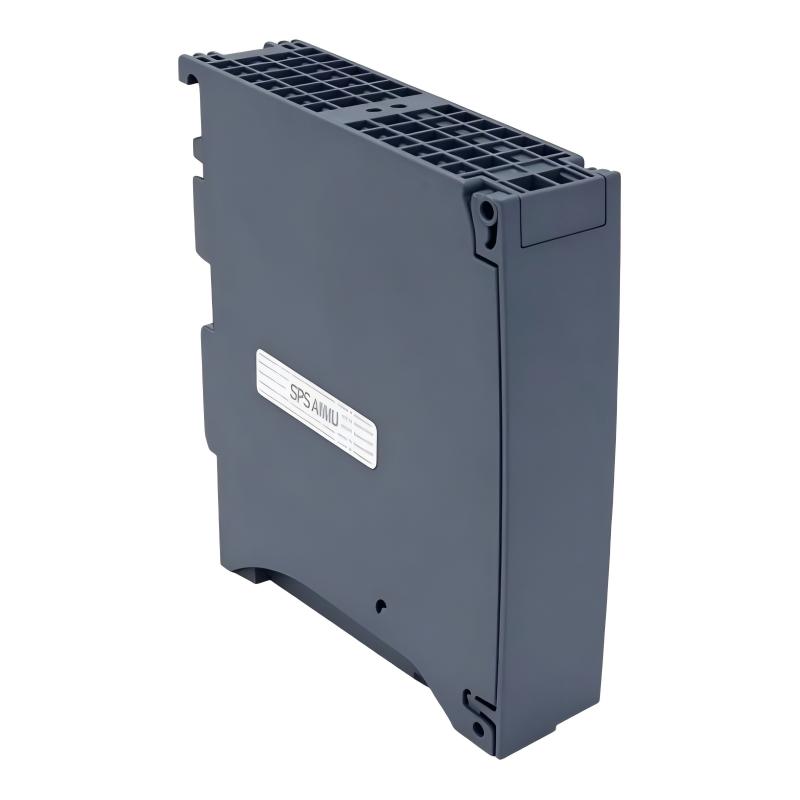
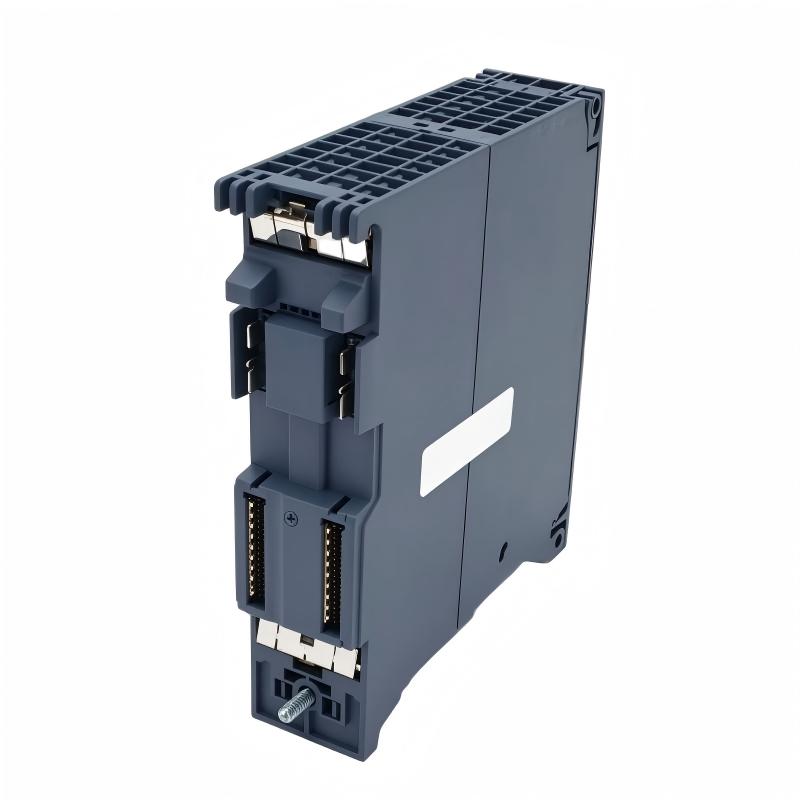
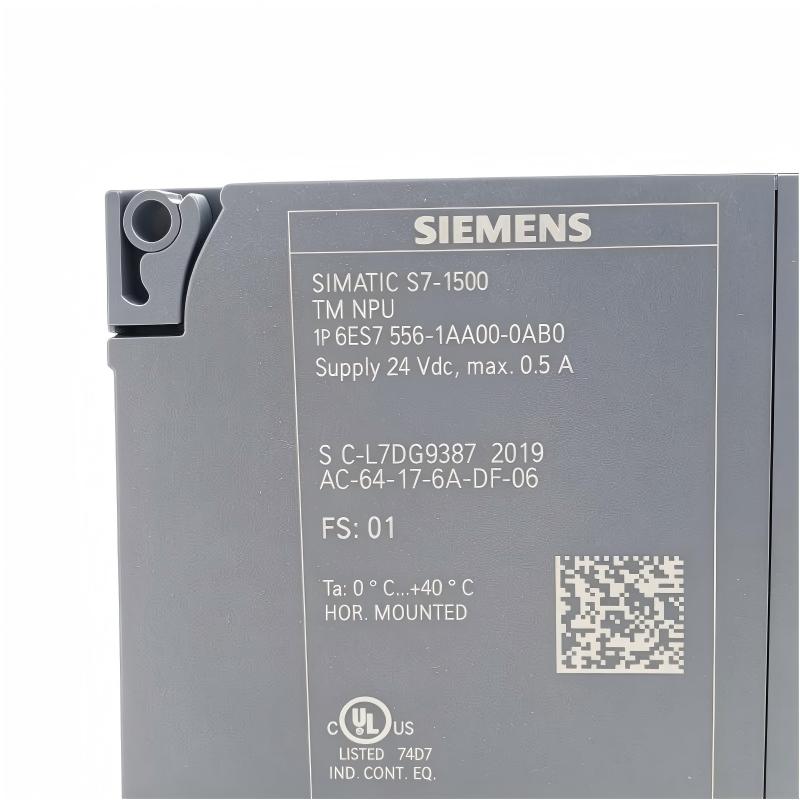
Brand:Siemens Item No.:6ES7556-1AA00-0AB0 Product Origin:Germany Product Dimensions:35 x 147 x 129 mm Product Weight:0.392 kg Payment:T/T, Western Union, Credit Card Goods_stock:15 Shipping Port:Xiamen, China Lead Time:1-3 Days Condition:Brand New And Original Warranty:1 Year Certificate:COO
Industrial processes often require more than simple ON/OFF control. A modern automation system may need to acquire process information, evaluate operating conditions, coordinate machine functions, and respond to changing production requirements. Specialized process modules can provide dedicated hardware resources for these applications.
The Siemens 6ES7556-1AA00-0AB0 is a SIMATIC S7-1500 Process Module designed for process-oriented applications within compatible Siemens automation architectures. Its role is to complement the central PLC system with specialized process functionality while retaining the modular structure of the S7-1500 platform.
A process module can be particularly valuable when an application has requirements that do not fit comfortably into a basic digital or analog I/O architecture. Instead of forcing every specialized function into general-purpose PLC logic, engineers can use dedicated hardware designed for the relevant process task.
This concept is useful across many industrial environments. Production machinery may require specialized process feedback, while process equipment can depend on accurate acquisition and evaluation of field information. In both cases, the control system needs a reliable way to bring process conditions into the automation program.
For OEM machine builders, modular process hardware can simplify the development of specialized equipment. A common S7-1500 control architecture can serve as the foundation for several machine variants, while process-specific modules are incorporated according to the individual machine's requirements.
System integrators can take a similar approach when modernizing or expanding an existing control system. Rather than replacing the complete architecture, engineers can introduce suitable modular hardware where additional process functionality is required.
Correct engineering remains essential. A process module operates as part of a larger system that includes field devices, wiring, power supplies, PLC software, configuration data, and the physical process itself. If the resulting process information appears incorrect, each part of this chain should be checked systematically.
Electrical installation is also important. Industrial environments can contain significant electromagnetic interference from motors, drives, switching devices, and power circuits. Appropriate cable routing, shielding, grounding, and separation should therefore be considered during system design.
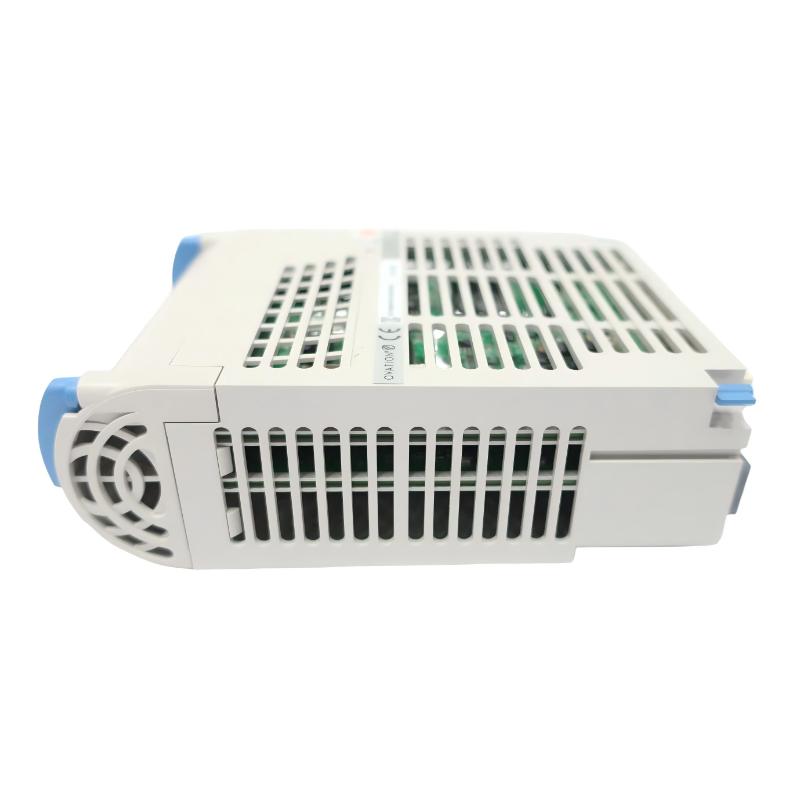
The 6ES7556-1AA00-0AB0 measures 35 × 147 × 129 mm and weighs 0.392 kg (0.86 lb). Its compact width supports efficient cabinet engineering and allows the module to be installed alongside other S7-1500 components in a structured control panel.
For automation engineers, OEMs, and system integrators, the 6ES7556-1AA00-0AB0 provides a modular process-control building block for compatible Siemens systems. Its dedicated process orientation, compact design, and S7-1500 integration make it a practical option for automation projects requiring more specialized process handling.
Technical Specifications
Parameter
Specification
Brand
Siemens
Model
6ES7556-1AA00-0AB0
Product Family
SIMATIC S7-1500
Product Type
Process Module
Primary Function
Process Signal Handling
Application
Industrial Automation
PLC Platform
S7-1500
Installation
Modular PLC System
Dimensions
35 × 147 × 129 mm
Weight
0.392 kg (0.86 lb)
Recommended Related Models
Model
Product Type
Typical Role
Siemens 6ES7550-1AA01-0AB0
Counter Module
High-speed counting
Siemens 6ES7551-1AB00-0AB0
Count and Position Decoder Module
Position and counting
Siemens 6ES7552-1AA00-0AB0
Time-Control Digital Module
Time-controlled functions
Siemens 6ES7553-1AA00-0AB0
Interface Module
System interfacing
Siemens 6ES7541-1AD00-0AB0
Communication Module
Communication expansion
Siemens 6ES7547-1JF00-0AB0
Communication Module
Communication expansion
Popular Related Models
Model
Product Type
Siemens 6ES7556-1AA00-0AB0
Process Module
Siemens 6ES7550-1AA01-0AB0
Counter Module
Siemens 6ES7551-1AB00-0AB0
Count and Position Decoder Module
Siemens 6ES7552-1AA00-0AB0
Time-Control Digital Module
Siemens 6ES7553-1AA00-0AB0
Interface Module
Siemens 6ES7521-1BH10-0AA0
Digital Input Module
Siemens 6ES7521-1BH50-0AA0
Digital Input Module
Siemens 6AG1531-7NF10-7AB0
Analog Input Module
Siemens 6AG1532-5HF00-7AB0
Analog Output Module
Applications
The 6ES7556-1AA00-0AB0 can be incorporated into compatible S7-1500 systems where specialized process signal handling is required.
Process automation – Supports process-related signal acquisition and control architectures.
Machine automation – Provides dedicated process functionality for specialized equipment.
Production systems – Can be integrated into automated manufacturing processes requiring additional process handling.
Industrial monitoring – Supports applications where process conditions need to be incorporated into PLC control.
OEM machinery – Useful for machine designs requiring specialized process functions.
Control-system expansion – Adds dedicated process capability to an appropriately configured S7-1500 system.
Process equipment – Suitable for automation architectures involving specialized process signals.
Factory automation – Can contribute to integrated control systems where process data forms part of machine operation.
System integration projects – Provides another modular hardware option for customized Siemens automation solutions.
What Makes the Process Module Valuable
Dedicated process functionality The module provides specialized process-oriented hardware that can complement standard PLC CPUs and I/O modules in suitable automation architectures.
Natural S7-1500 integration Its modular construction fits the S7-1500 platform, allowing engineers to combine process functionality with other control-system components.
More focused signal handling Dedicated process hardware can be advantageous when an application has requirements that are not efficiently addressed through basic digital or analog I/O alone.
Flexible machine architecture Different machines require different combinations of process functions. A modular approach allows engineers to build the control system around the actual application.
Efficient cabinet layout The module has a width of only 35 mm, helping preserve valuable cabinet space in compact automation panels.
Suitable for OEM designs Machine builders can incorporate specialized process functions into standardized S7-1500 control architectures while maintaining a consistent hardware platform.
Simplified expansion When an existing automation system requires additional process functionality, modular hardware can provide a cleaner expansion path than redesigning the complete control system.
Professional industrial solution For demanding automation projects, the module offers a structured hardware approach to integrating specialized process functions into compatible Siemens systems.
Technical FAQs
1. What is the Siemens 6ES7556-1AA00-0AB0? It is a SIMATIC S7-1500 Process Module intended for specialized process-related functions within compatible Siemens automation systems.
2. What is the difference between a process module and standard I/O? Standard I/O generally handles basic signal acquisition or output, while a process module is designed for more specialized process-oriented functions and signal handling.
3. Why would an automation system require a dedicated process module? Certain applications have specialized process requirements that may be more effectively handled by dedicated hardware than by standard I/O and general-purpose PLC programming alone.
4. Can a process module work as part of a larger S7-1500 architecture? Yes. It is intended to be integrated into an appropriately engineered S7-1500 automation system alongside compatible CPUs, I/O, communication, and other modules.
5. What should be considered when selecting a process module? Engineers should evaluate the required process function, signal characteristics, system compatibility, configuration requirements, software support, and interaction with connected field equipment.
6. What can cause incorrect process data? Possible causes include faulty field devices, wiring problems, electrical interference, incorrect configuration, unsuitable signal characteristics, or errors in the PLC application.
7. How should a process-module fault be diagnosed? Start with module diagnostics and status information, then inspect field wiring, connected devices, configuration, PLC logic, and the overall process signal path.
8. Can electrical interference affect process signals? Yes. Motors, variable-frequency drives, contactors, and other electrical equipment can introduce interference. Proper grounding, shielding, cable routing, and installation practices are important.
9. Why is configuration consistency important? The hardware configuration and PLC program must correctly correspond to the installed module and intended process function. Mismatches can result in incorrect operation or diagnostic conditions.
10. What should be checked during commissioning? Verify hardware compatibility, module configuration, field connections, signal behavior, diagnostic status, PLC logic, and the relationship between actual process conditions and the values received by the control system.