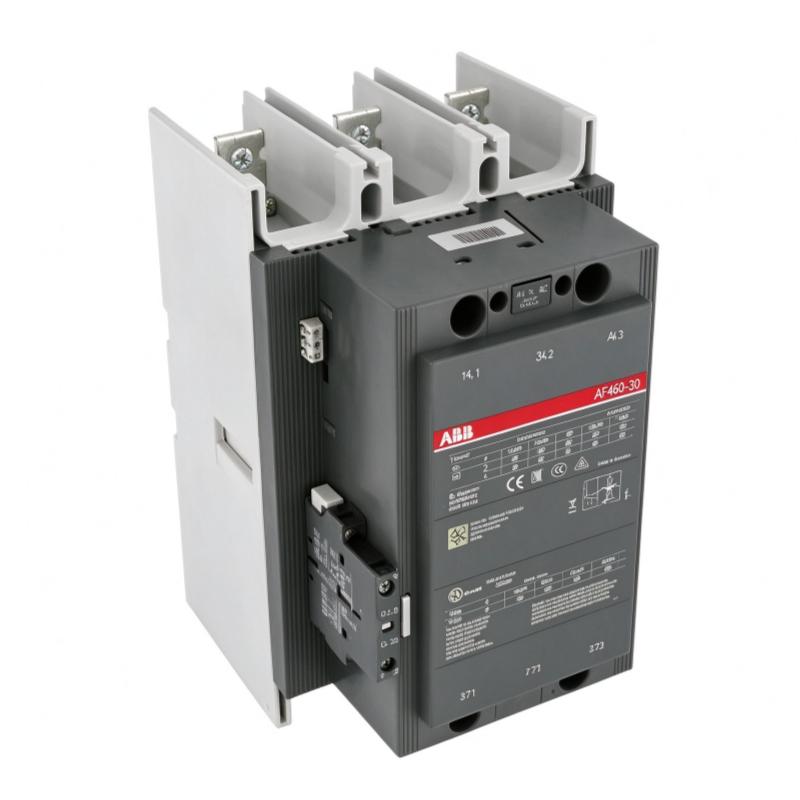
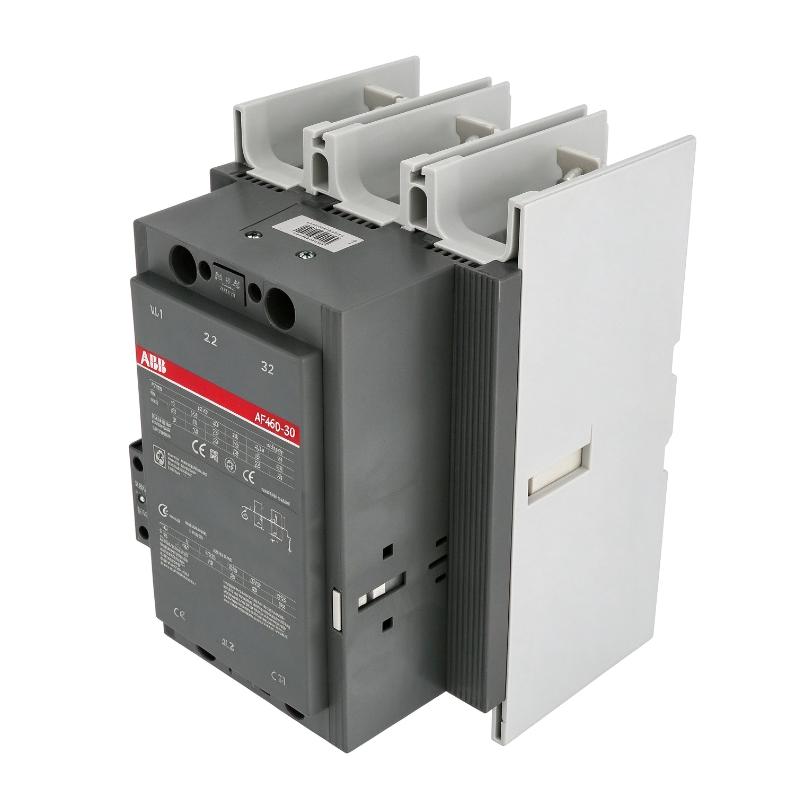
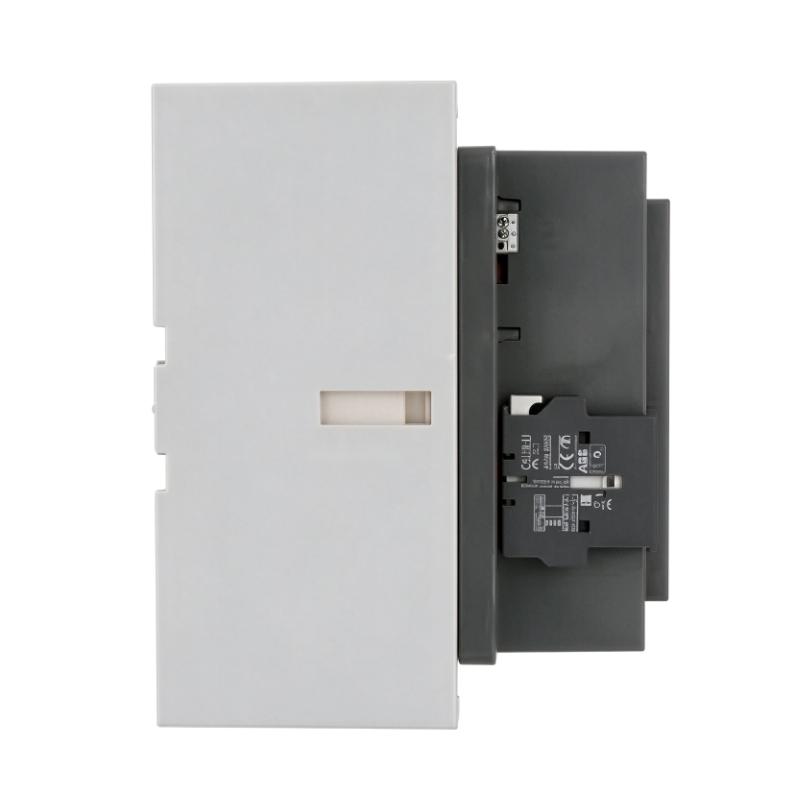
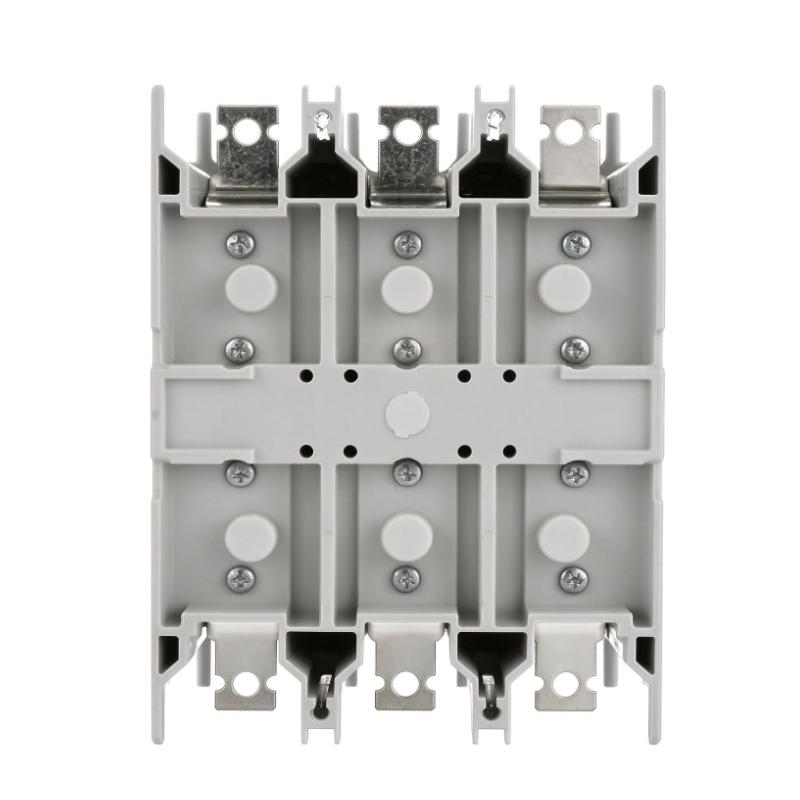
Brand:ABB PLC Item No.:AF460-30-11-71 Product Origin:Sweden (SE) Product Dimensions:278 × 186 × 216 mm Product Weight:10.6 kg Payment:T/T, Western Union, Credit Card Goods_stock:15 Shipping Port:Xiamen, China Lead Time:1-3 Days Condition:Brand New And Original Warranty:1 Year Certificate:COO
The ABB AF460-30-11-71 1SFL597001R7111 Contactor is a heavy-duty industrial switching device designed for demanding power control applications. Part of ABB's AF contactor range, it combines a three-pole main contact arrangement with a wide-range AC/DC control supply, making it suitable for engineered motor control and power distribution systems.
With a rated control voltage range of 250–500 V AC at 50/60 Hz or 250–500 V DC, this model is designed to accommodate variations in the control supply while maintaining reliable switching performance. Its built-in surge protection and pre-mounted auxiliary contacts support integration into industrial control panels and electrical assemblies.
For maintenance engineers, panel builders, and industrial procurement teams, the AF460-30-11-71 offers a practical solution for high-power switching applications where the correct electrical ratings and system compatibility are essential. Confirm the exact model and operating requirements before selecting it for a replacement or new installation.
Technical Specifications
Parameter
Specification
Brand
ABB
Model
AF460-30-11-71
Order Number
1SFL597001R7111
Product Type
Three-Pole Industrial Contactor
Contactor Series
ABB AF Series
Control Supply
AC/DC
Rated Control Voltage
250–500 V AC, 50/60 Hz / 250–500 V DC
Number of Main Poles
3
Main Contacts
3 Normally Open (NO)
Auxiliary Contacts
1 NO + 1 NC
Rated Operational Current, AC-3
460 A at 400 V AC
Rated Operational Power, AC-3
250 kW at 400 V AC
Rated Operational Current, AC-1
Up to 700 A under specified conditions
Maximum Rated Operational Voltage (IEC)
1000 V
Built-in Surge Protection
Yes
Main Circuit Connection
Busbar terminals
Dimensions (H × W × D)
278 × 186 × 216 mm
Dimensions (inches)
10.94 × 7.32 × 8.50 in
Weight
10.60 kg / 23.37 lb
Recommended Related Models
The following ABB contactors may be worth considering when comparing control voltage requirements and switching capacity. Each model must be checked against the application's electrical and mechanical requirements.
ABB AF460-30-11-70 1SFL597001R7011 — A related AF460 contactor variant with a different control voltage range.
ABB AF460-30-11-69 1SFL597001R6911 — An alternative AF460 variant for applications requiring a different control supply.
ABB AF460-30-11-68 1SFL597001R6811 — Another control-voltage variant within the AF460 contactor family.
ABB AF580-30-11-71 1SFL617001R7111 — A higher-capacity AF contactor model for applications requiring a different switching rating.
These models are not automatically interchangeable. Verify coil voltage, current rating, auxiliary contacts, terminal arrangement, and installation requirements before ordering.
Popular Related Models
For broader industrial switching and power control requirements, the following ABB contactors may also be relevant:
ABB AF460-30-11 1SFL597001R7011 — AF460 contactor variant with a 100–250 V AC/DC control supply range.
ABB AF580-30-11-71 1SFL617001R7111 — AF580 series contactor for higher-rated switching applications.
ABB AF750-30-11-71 1SFL637001R7111 — AF750 series contactor for demanding industrial power control systems.
ABB AF400 Series Contactors — A family of industrial contactors used in motor starting, isolation, bypass, and power distribution applications.
When selecting a related model, prioritize the electrical ratings, control supply, load characteristics, and compatibility with the existing panel. Choosing the correct contactor helps support safe operation, maintainability, and long-term reliability in industrial electrical systems.
Applications
The ABB AF460-30-11-71 1SFL597001R7111 DC Contactor is an industrial switching device designed for demanding electrical control applications. Contactors in this class are used to switch power circuits remotely, making them important components in industrial machinery, power distribution assemblies, and automated production systems.
Industrial Motor Control: Used in motor switching applications where the contactor's rated operating conditions match the electrical load.
Power Distribution Panels: Integrated into control cabinets and electrical assemblies for managing power circuits.
Manufacturing Equipment: Suitable for evaluating in industrial machinery and production lines that require electrically controlled switching.
Heavy-Duty Electrical Systems: Considered for applications involving substantial electrical loads, subject to the contactor's rated voltage, current, and utilization category.
Automation Control Panels: Used as part of an appropriately engineered control circuit for coordinated industrial equipment operation.
Equipment Maintenance and Replacement: Relevant to maintenance teams sourcing the specified ABB contactor for existing installations.
Correct selection requires checking the supply voltage, load characteristics, switching frequency, and applicable electrical standards before installation.
Advantages
Reliable Industrial Switching
The AF460 series designation identifies the device as a contactor intended for industrial electrical switching applications. Correct application and installation help support dependable operation in demanding environments.
Integration into Electrical Control Systems
A contactor can form part of a larger control arrangement involving protection devices, control relays, PLC outputs, and operator interfaces. The complete circuit must be designed around the equipment's electrical ratings.
Suitable for Engineered Power Assemblies
Its industrial contactor format makes it relevant to electrical panels and machinery where controlled switching of power circuits is required.
Practical Spare Parts Identification
The full model designation, AF460-30-11-71, and order number 1SFL597001R7111 provide important identifiers for procurement, inventory management, and replacement verification.
Supports Equipment Lifecycle Management
Sourcing the correct contactor helps maintenance teams preserve established panel configurations and reduce the risk of selecting an electrically incompatible substitute.
Flexible System Design
When incorporated into a properly engineered electrical assembly, a contactor can support remote switching and coordinated operation alongside suitable overload protection and short-circuit protection.
Technical FAQs
Q1: What is the primary function of the ABB AF460-30-11-71 contactor?
Its stated product type is a DC contactor. Before specifying it for a particular circuit, verify the manufacturer's exact designation and the intended switching application, since the product name alone does not establish every electrical operating characteristic.
Q2: What is the difference between a DC contactor and an AC contactor?
DC and AC switching involve different arc-extinction requirements. A contactor must be specifically rated for the type of current, voltage, load, and circuit configuration in which it will operate.
Q3: Can this contactor be controlled by a PLC?
Potentially, provided the control interface and coil requirements are compatible with the PLC output or an appropriate interposing relay. Confirm the coil voltage, input current, and output switching capability before connecting the control circuit.
Q4: How should the contactor's current rating be selected?
Selection depends on the actual load current, operating voltage, load characteristics, switching frequency, ambient conditions, and applicable utilization category. The contactor's verified ratings must meet the requirements of the application.
Q5: Does a contactor provide overload and short-circuit protection by itself?
A contactor is primarily a switching device. Appropriate overload and short-circuit protective devices must be selected and coordinated separately according to the system design and applicable standards.
Q6: What should be checked if the contactor fails to close?
Check the control supply, coil circuit, control interlocks, wiring, and mechanical condition. Ensure that any troubleshooting is performed by qualified personnel using appropriate electrical isolation procedures.
Q7: What can cause excessive contact wear?
Possible causes include excessive switching frequency, unsuitable load ratings, electrical arcing, incorrect application, and inadequate coordination with protective devices. Review operating conditions and inspect the equipment according to the applicable maintenance procedure.
Q8: Can the contactor switch both resistive and inductive loads?
That depends on its verified ratings and the applicable utilization category. Inductive loads can create different switching stresses from resistive loads, so the same current rating should not automatically be assumed suitable for both.
Q9: What information is required when replacing an existing contactor?
Confirm the full part number, rated operating voltage, current, coil characteristics, auxiliary contact arrangement, terminal configuration, mounting requirements, and compatibility with the existing protection and control circuits.
Q10: What safety precautions are necessary during installation?
Isolate all relevant power sources, verify the absence of hazardous voltage, follow the manufacturer's installation instructions, and ensure that wiring, protective devices, clearances, and grounding meet applicable electrical requirements. Installation should be carried out by qualified personnel.