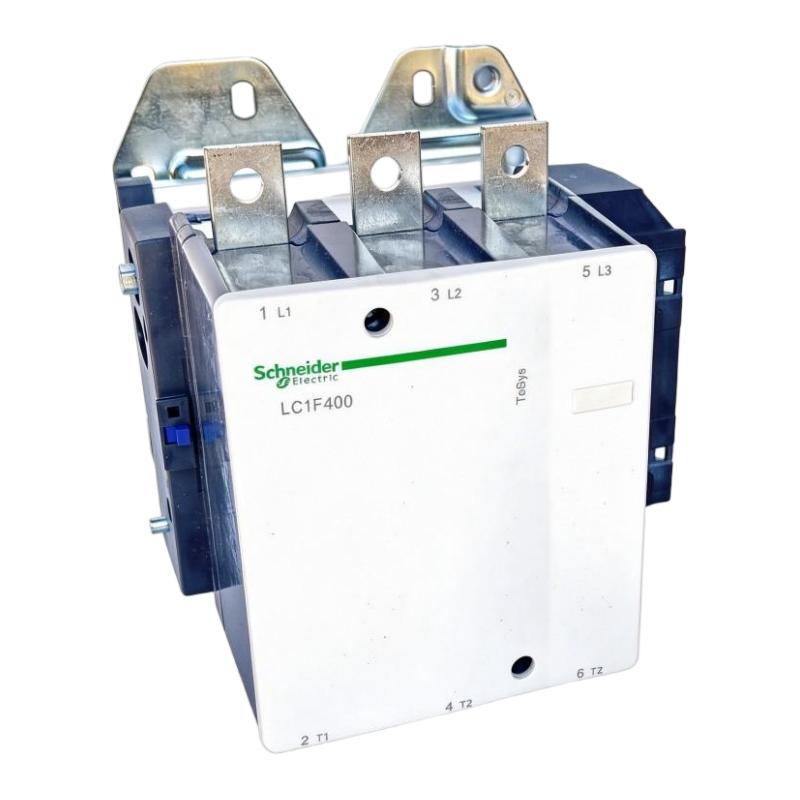
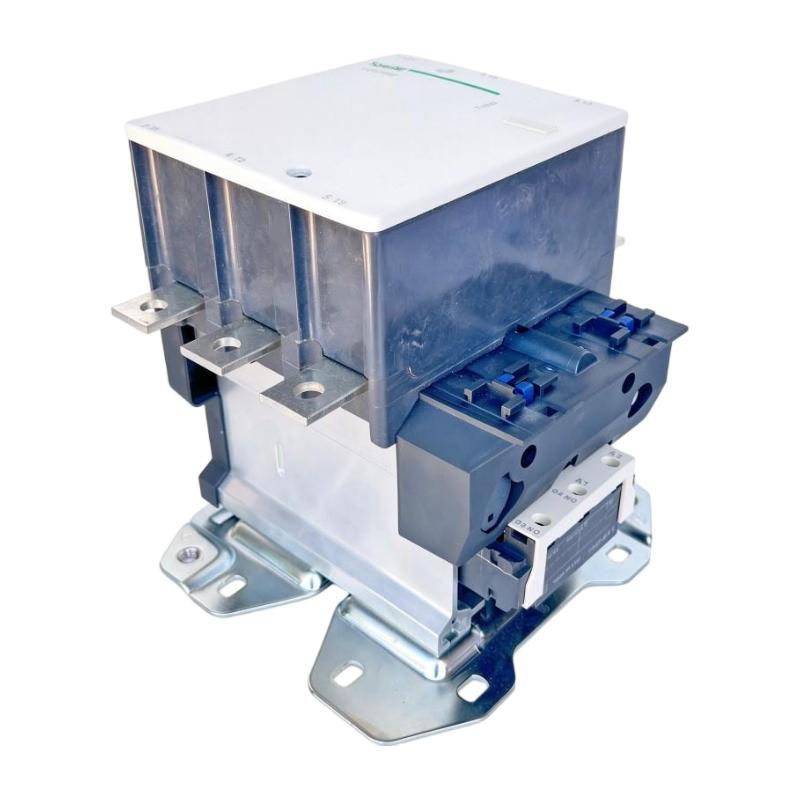
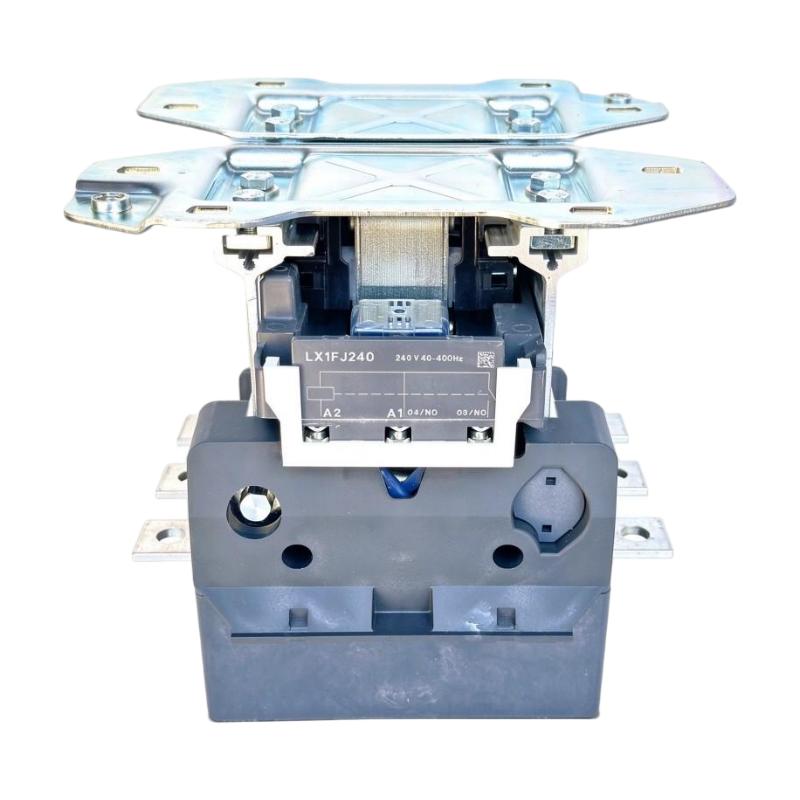
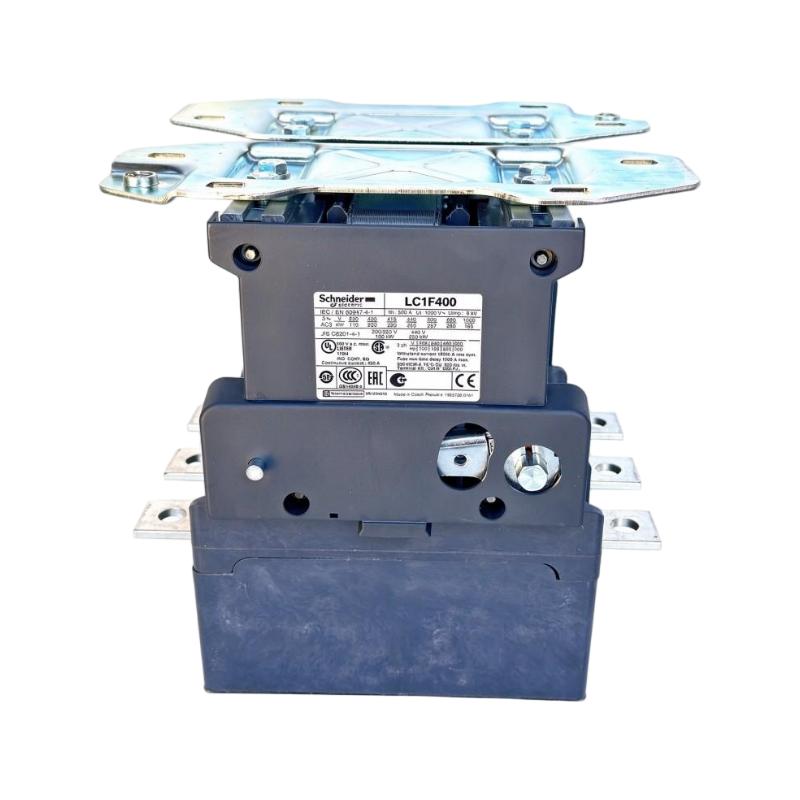
Brand:Schneider PLC Item No.:LC1F400N7 Product Origin:France Product Dimensions:206 x 213 x 219 mm Product Weight:9.1 kg Payment:T/T, Western Union, Credit Card Goods_stock:15 Shipping Port:Xiamen, China Lead Time:1-3 Days Condition:Brand New And Original Warranty:1 Year Certificate:COO
The Schneider LC1F400N7 Contactor is an industrial electrical switching component intended for use in compatible power control and automation systems. Contactors are widely used in industrial installations because they allow a low-power control circuit to operate a higher-power electrical circuit.
For maintenance, equipment upgrades, and replacement projects, confirming the exact model designation is essential. Similar contactor models can have different coil specifications, electrical ratings, or accessory requirements, so compatibility should never be assumed from appearance alone.
When selecting the LC1F400N7, consult the applicable Schneider Electric documentation to verify coil voltage, rated operational current, load category, terminal configuration, and installation requirements. Correct electrical protection and installation practices are important for safe and reliable operation.
Technical Specifications
Parameter
Specification
Brand
Schneider Electric
Model
LC1F400N7
Product Type
Contactor
Product Category
Industrial Electrical Control
Dimensions
206 × 213 × 219 mm
Dimensions (inches)
8.11 × 8.39 × 8.62 in
Weight
9.1 kg / 20.06 lb
Typical Application
Industrial switching and motor control
Coil Voltage
Confirm against model-specific manufacturer documentation
Rated Operational Current
Confirm against model-specific manufacturer documentation
Main Contact Configuration
Confirm against model-specific manufacturer documentation
Auxiliary Contacts
Verify the required configuration
Mounting Requirements
Refer to the manufacturer's installation instructions
Manufacturer
Schneider Electric
Recommended Related Models
The following Schneider Electric contactor ranges may be relevant when comparing products for industrial switching and motor control. They are not guaranteed direct replacements for the LC1F400N7.
Schneider Electric LC1F Series — Industrial contactors for power switching applications.
Schneider Electric LC1D Series — TeSys D contactors used in industrial motor-control and automation systems.
Schneider Electric LC1E Series — Contactors for selected electrical switching applications.
Schneider Electric TeSys F Range — Industrial contactors for applications requiring appropriately rated power switching.
When selecting an alternative, compare the coil voltage, rated current, utilization category, mounting arrangement, and auxiliary-contact configuration.
Popular Related Models
Schneider Electric LC1F115
Schneider Electric LC1F150
Schneider Electric LC1F185
Schneider Electric LC1F225
Schneider Electric LC1F265
Schneider Electric LC1F330
Schneider Electric LC1F400
Schneider Electric LC1D Series Contactors
Note: Verify the complete model number, coil voltage, electrical ratings, product availability, and replacement compatibility against Schneider Electric documentation before purchasing or installing the contactor.
Applications
The Schneider LC1F400N7 Contactor is an industrial electrical switching component intended for integration into power control and motor control systems. Contactors allow electrical loads to be switched through a control circuit, making them essential components in many industrial automation and electrical distribution applications.
Typical application areas include:
Industrial motor control panels and switchboards
Automated manufacturing machinery and production lines
Pumps, fans, blowers, and compressor systems
Industrial processing and material handling equipment
Electrical control cabinets and motor control centers
Power switching systems in commercial and industrial facilities
Before selecting this contactor, verify the rated operational current, operating voltage, coil voltage, utilization category, and load requirements against the manufacturer's technical documentation.
Advantages
Industrial switching: Designed for integration into suitable electrical power and control circuits.
Remote operation: Enables electrical loads to be controlled through a compatible control circuit.
Automation compatibility: Can be incorporated into appropriately designed industrial control panels.
Flexible application potential: May be used for different switching duties when the electrical ratings match the application.
Maintainability: Routine inspection of terminals and contact components helps support dependable operation.
Protective coordination: Can be integrated with appropriate overload and short-circuit protection devices.
Technical FAQs
1. What is the Schneider LC1F400N7 Contactor used for?
It is an industrial contactor used for electrically controlled switching of power circuits. The appropriate application depends on its verified electrical ratings and operating conditions.
2. Can the LC1F400N7 be used for three-phase motor control?
It may be suitable for three-phase motor control if the motor's operating voltage, current, starting conditions, and utilization category meet the contactor's specifications.
3. Why is the coil voltage important?
The coil voltage determines the control supply needed to operate the contactor. The control circuit must match the coil specification of the exact model.
4. What should be checked before replacing a contactor?
Compare the full model number, coil voltage, rated operational current, contact configuration, terminal arrangement, mounting requirements, and compatible accessories.
5. Does a contactor provide overload protection?
A contactor primarily performs switching. Suitable overload protection must be provided separately or through an appropriately designed motor starter assembly.
6. What is a contactor's utilization category?
A utilization category specifies the types of loads and switching duties a contactor is designed to handle. Selecting the appropriate category helps ensure that the contactor can manage the electrical stresses of the application.
7. Can the contactor switch inductive loads?
Contactors can switch inductive loads when the relevant utilization category and electrical ratings permit the intended operating conditions.
8. What can cause a contactor to overheat?
Potential causes include excessive current, loose electrical connections, damaged contacts, incorrect coil voltage, or unsuitable environmental conditions. Inspection should be carried out by qualified personnel.
9. How can the contactor's service life be extended?
Operate it within its rated limits, ensure secure connections, maintain suitable environmental conditions, and follow the manufacturer's maintenance recommendations.
10. Can the LC1F400N7 be controlled by a PLC?
It can be incorporated into a PLC-based control system when the control circuit and coil supply are compatible with the contactor's requirements. Appropriate interlocks and protective measures should also be considered.