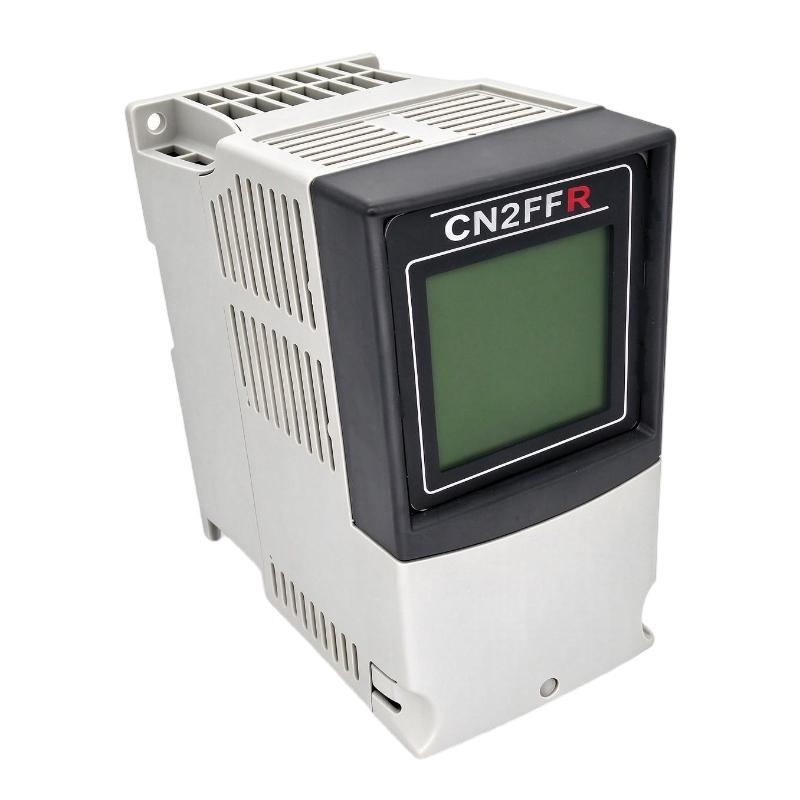
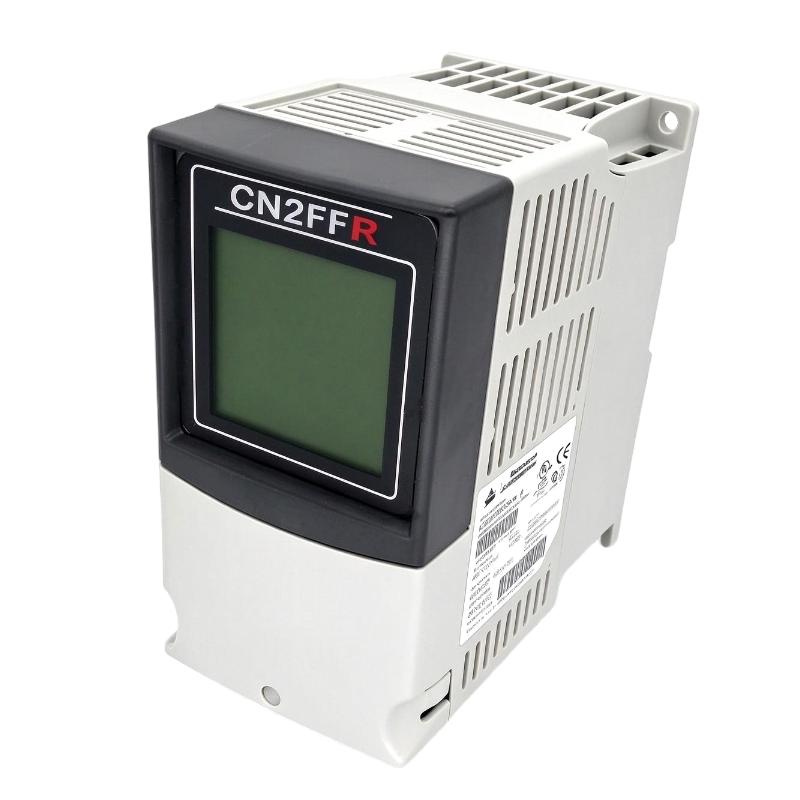
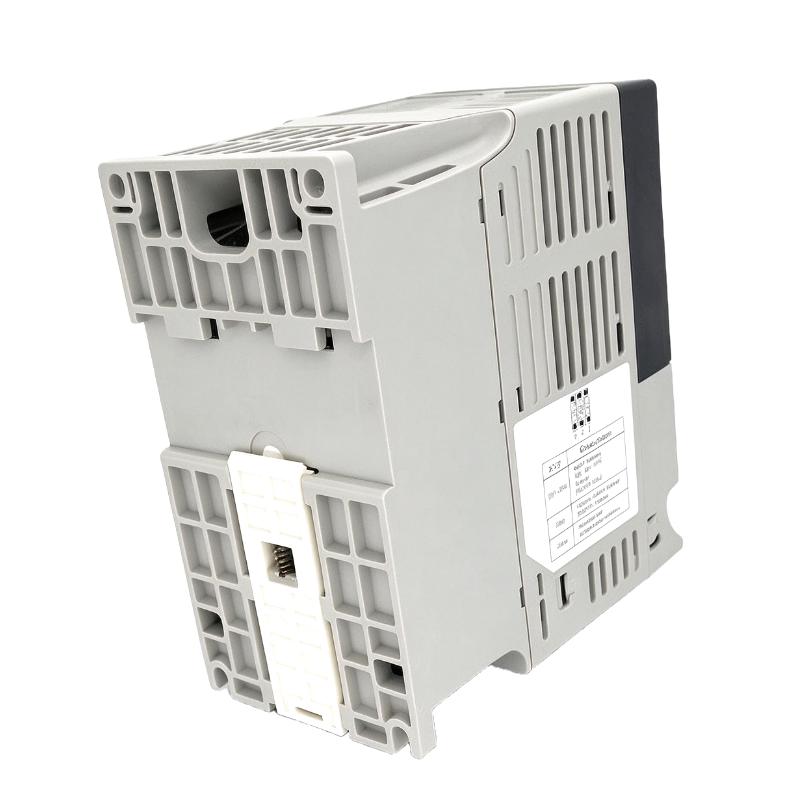
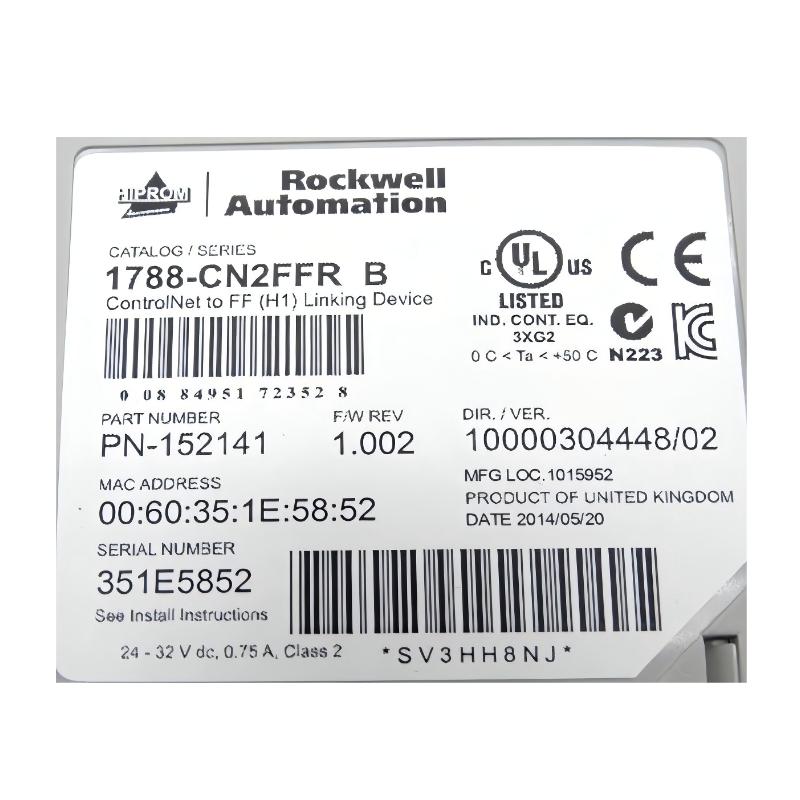
Brand:Allen Bradley PLC Item No.:1788-CN2FFR Product Origin:USA Product Dimensions:152 x 80 x 136 mm Product Weight:0.57 kg Payment:T/T, Western Union, Credit Card Goods_stock:15 Shipping Port:Xiamen, China Lead Time:1-3 Days Condition:Brand New And Original Warranty:1 Year Certificate:COO
The Allen Bradley 1788-CN2FFR Network Link Equipment is identified by the catalog number 1788-CN2FFR. In industrial automation, network-related components play an important role in connecting control devices and maintaining the exchange of information required for monitoring, coordination, and process operation.
Selecting the correct network hardware requires more than matching the external appearance or product description. Engineers should confirm the precise function of the device, its supported communication interfaces, and the equipment with which it is designed to operate. This is particularly important in established industrial installations, where an incompatible replacement can lead to communication errors or unexpected downtime.
For maintenance and procurement purposes, retain the complete catalog number and compare it with the identification label on the original device. Where possible, obtain the applicable technical documentation and confirm the required network protocol before ordering.
Product verification note: The exact function and technical characteristics of model 1788-CN2FFR should be confirmed against official manufacturer documentation. Specific protocol support, connection details, and configuration requirements should not be assumed without verification.
Technical Specifications
Parameter
Specification
Brand
Allen Bradley
Model
1788-CN2FFR
Product Type
Network Link Equipment
Dimensions
152 × 80 × 136 mm
Weight
0.57 kg / 1.26 lb
Network Protocol
Verify against the exact model documentation
Communication Interfaces
Verify against the product label and technical documentation
Compatibility
Confirm with the target control system before installation
Note: Dimensions and weight are based on the supplied product data. Verify the product designation and remaining technical details before specifying the component for an application.
Recommended Related Models
The following Allen Bradley product families may be relevant when reviewing industrial network architecture and control system maintenance requirements. They are related product groups, not confirmed direct replacements for the 1788-CN2FFR.
Product Family
Typical Application
Allen Bradley 1788 Series
Network interface and communication-related equipment; confirm the function of each catalog number
Allen Bradley 1786 Series
ControlNet network components and accessories
Allen Bradley 1756 Series
ControlLogix controllers and system modules
Allen Bradley 1769 Series
CompactLogix controllers and I/O modules
Allen Bradley 1734 Series
POINT I/O modules and accessories
Popular Related Models
When maintaining an Allen Bradley automation installation, it is useful to document the exact controller, communication, network, and I/O components already in service.
Model / Product Family
Product Category
1786 Series
ControlNet network hardware and accessories
1756 Series
ControlLogix automation platform
1769 Series
CompactLogix automation platform
1734 Series
POINT I/O system
1794 Series
FLEX I/O system
Selection recommendation: Before purchasing the Allen Bradley 1788-CN2FFR, verify its complete catalog number, intended network function, supported interfaces, and compatibility with the installed equipment. Accurate identification helps reduce replacement errors and supports reliable industrial network maintenance.
Applications
The Allen Bradley 1788-CN2FFR Network Link Equipment is an industrial automation communication component identified by catalog number 1788-CN2FFR. In control system environments, network link equipment supports communication between compatible automation devices and helps integrate different parts of an industrial control architecture.
Before selecting this model for a specific installation, engineers should verify its exact network function and supported interfaces against the manufacturer’s documentation.
Typical application considerations include:
Industrial network integration: Supporting communication between compatible control system components when the specified network interfaces match.
Control system maintenance: Providing a catalog-number reference for identifying and replacing existing network hardware.
Automation system upgrades: Helping maintenance teams assess network component requirements when modifying an established installation.
Spare parts management: Improving inventory identification through consistent recording of the complete model number.
Industrial troubleshooting: Supporting component-level checks when diagnosing communication interruptions or network integration issues.
Correct model identification is essential. Network devices may use different protocols, connector arrangements, and configuration methods, even when they appear similar.
Advantages
The Allen Bradley 1788-CN2FFR can be evaluated as part of an industrial network maintenance or replacement project, subject to confirmation of its precise specifications.
Clear model identification: The complete catalog number helps technicians distinguish the required component from similar-looking network devices.
Maintenance efficiency: Accurate component records make it easier to identify the hardware installed in existing control systems.
Network compatibility assessment: Checking supported protocols and interfaces before installation helps reduce the risk of communication incompatibility.
Spare parts planning: Maintaining accurate model information can simplify inventory control and replacement preparation.
Lifecycle support: Proper identification of installed network equipment helps maintenance teams document and manage established automation infrastructure.
Actual communication performance, supported network types, and configuration features should be confirmed using the technical documentation for the exact catalog number.
Technical FAQs
Q1: What should be verified before installing the 1788-CN2FFR?
Confirm the product's exact function, supported network protocol, electrical requirements, connector configuration, and compatibility with the target equipment.
Q2: Why is network protocol compatibility important?
Industrial networks use different communication protocols and physical interfaces. A component designed for one network cannot automatically be assumed to work with another.
Q3: Can the 1788-CN2FFR be connected directly to any Allen Bradley controller?
No. Compatibility depends on the controller model, network architecture, supported interfaces, and the documented role of the component.
Q4: What can cause communication failures in an industrial network?
Potential causes include damaged cables, loose connectors, incorrect configuration, incompatible devices, power interruptions, and network addressing issues. Troubleshooting should follow the system's documented architecture.
Q5: How should a network link problem be diagnosed?
Check device status indicators where available, inspect the network cabling and connections, review configuration settings, and consult the diagnostic information for the connected equipment.
Q6: Does replacing network equipment always require configuration changes?
Not always. Requirements depend on the component's function and the network design. Verify whether addressing, parameter settings, firmware, or controller configuration must be restored or updated.
Q7: Can a physically similar network component be used as a substitute?
Not without verification. Protocol support, electrical characteristics, connector pin assignments, and device functionality must match the requirements of the installation.
Q8: What maintenance checks are appropriate for network link equipment?
Inspect connectors, cables, mounting points, and the enclosure for damage or contamination. Review communication diagnostics and follow the manufacturer's maintenance instructions.
Q9: What precautions should be taken before replacing the component?
Follow the site's approved isolation and maintenance procedures. Determine whether removing the device will interrupt communications or affect connected processes before beginning work.
Q10: How can network reliability be improved after replacement?
Verify the correct component, restore the documented configuration, inspect all connections, and perform communication and system-function tests before returning the equipment to normal service.